

Raketa’s 24-Hour Baikonur Takes Flight
A Cold War solution to an orbital problem.
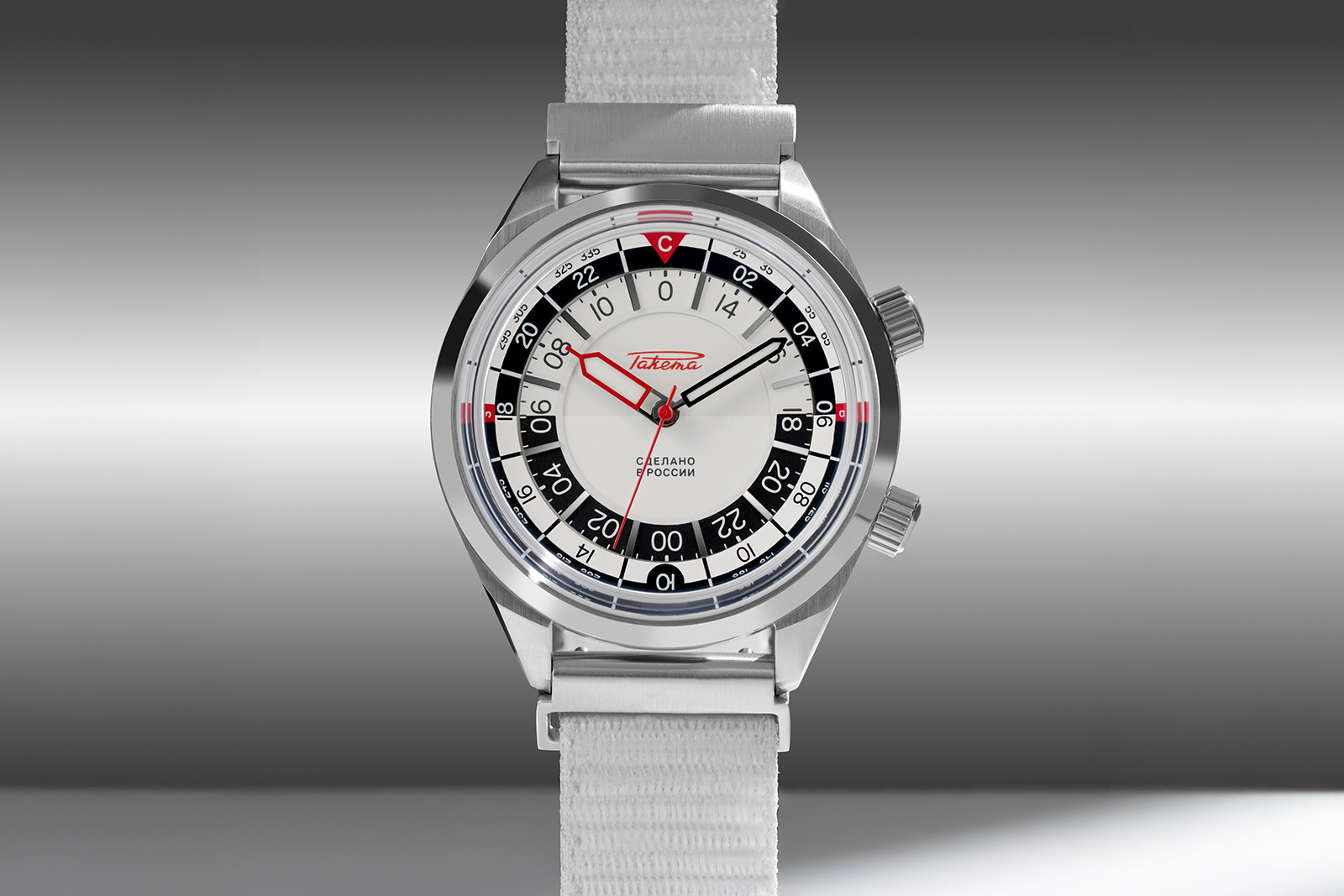
Space-themed watches represent a sizable proportion of the luxury watch industry. In fact, there are so many that at times it seems like the Space Race itself might have been contrived solely as a marketing concept for luxury watches. But with a story this good, who can say no? Of course, it helps that the Raketa Baikonur is an appealing watch in its own right with convenient dual-time functionality and an attractive instrument-like 24-hour dial.
Initial thoughts
“They’ve got a man up there! It’s Gagarin!” Even though this imagined line was written for the 1983 film adaptation of Tom Wolfe’s The Right Stuff, it sums up the tension that underpinned the Space Race between the United States and the Soviet Union. The statement refers to Soviet Cosmonaut Yuri Gagarin, who became the first human in space in 1961, orbiting the Earth in 108 minutes. It’s a suitably dramatic event to commemorate with a wristwatch, especially from Raketa, a brand named in honour of Gagarin’s flight.
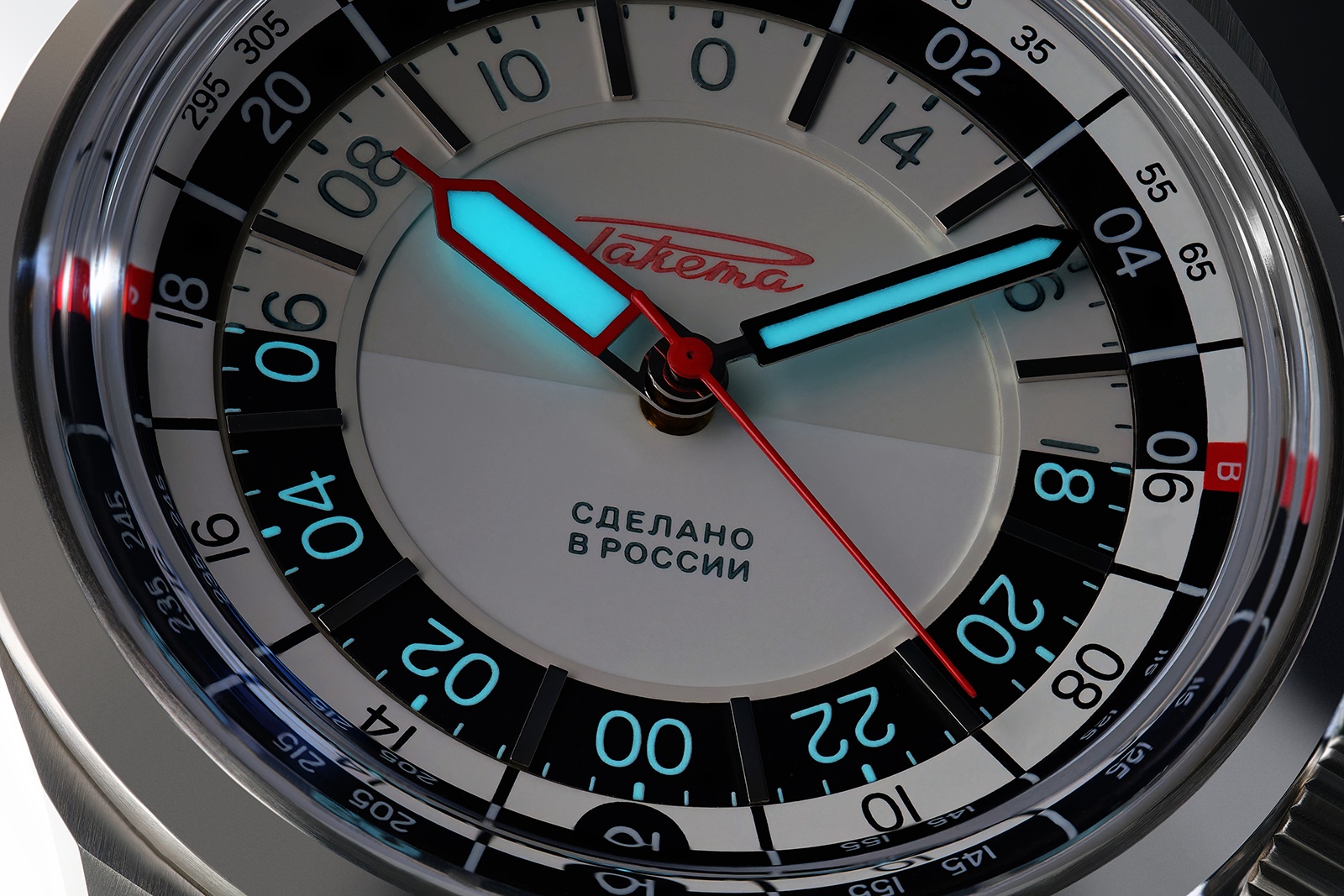
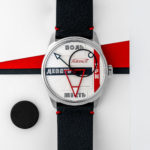
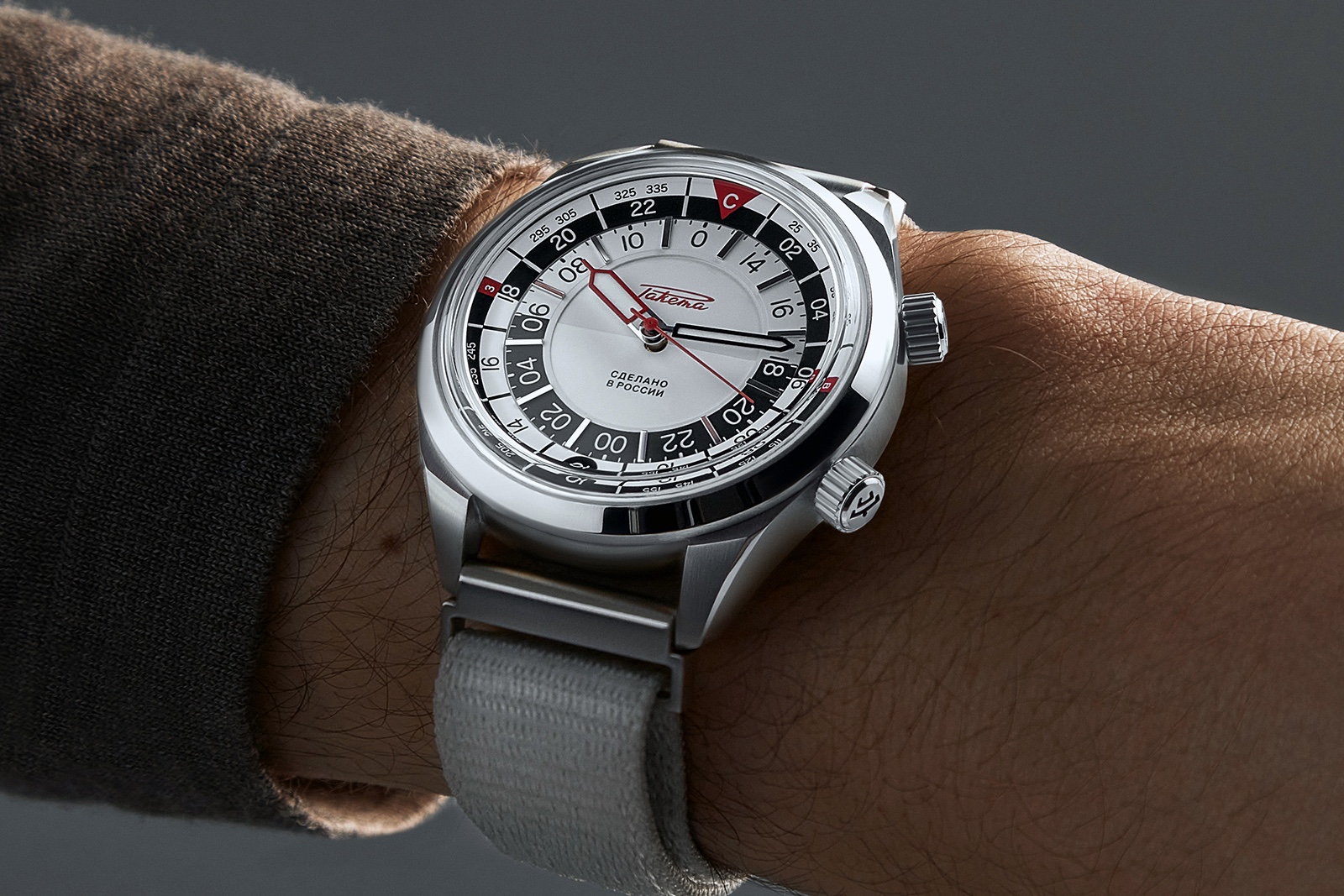
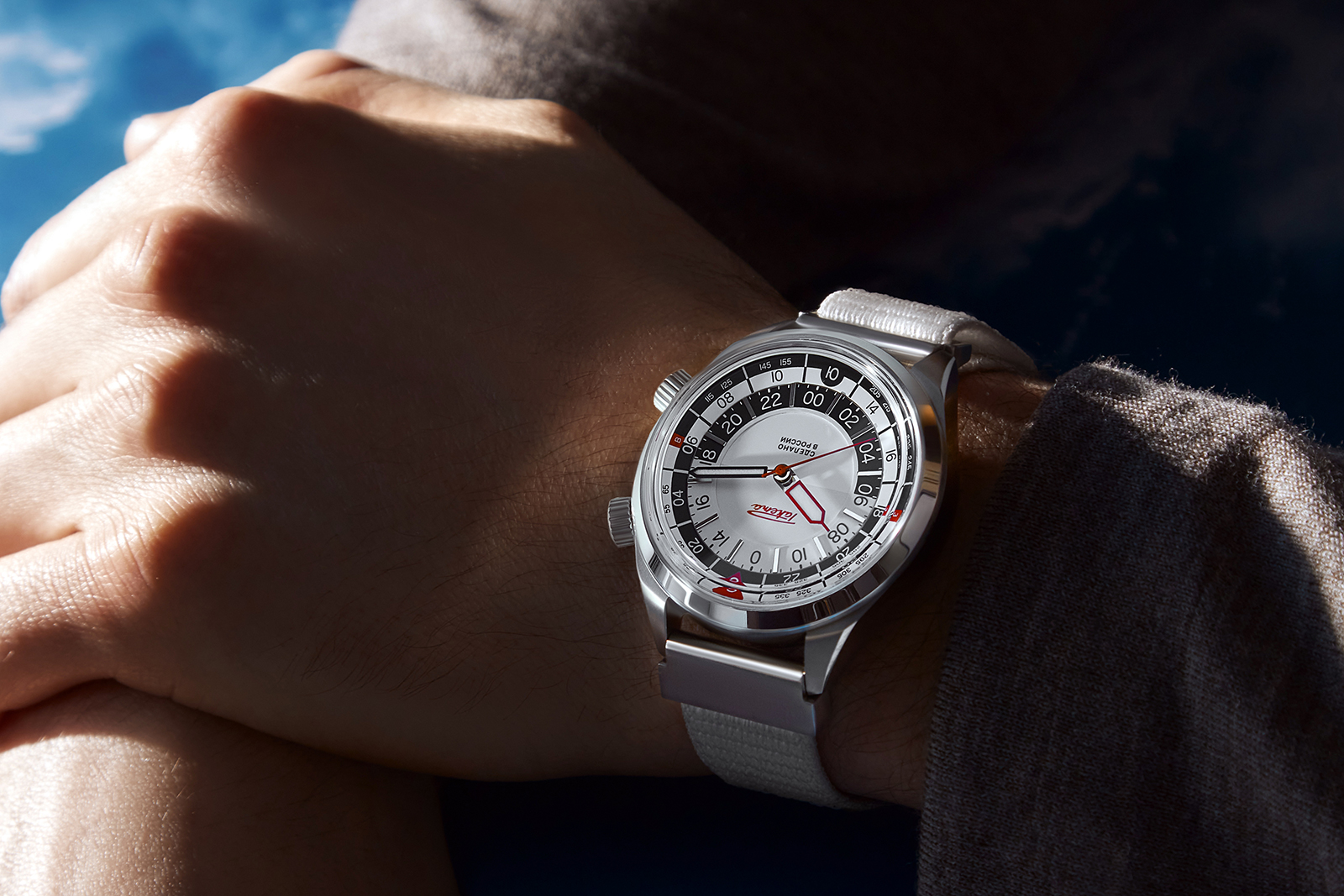
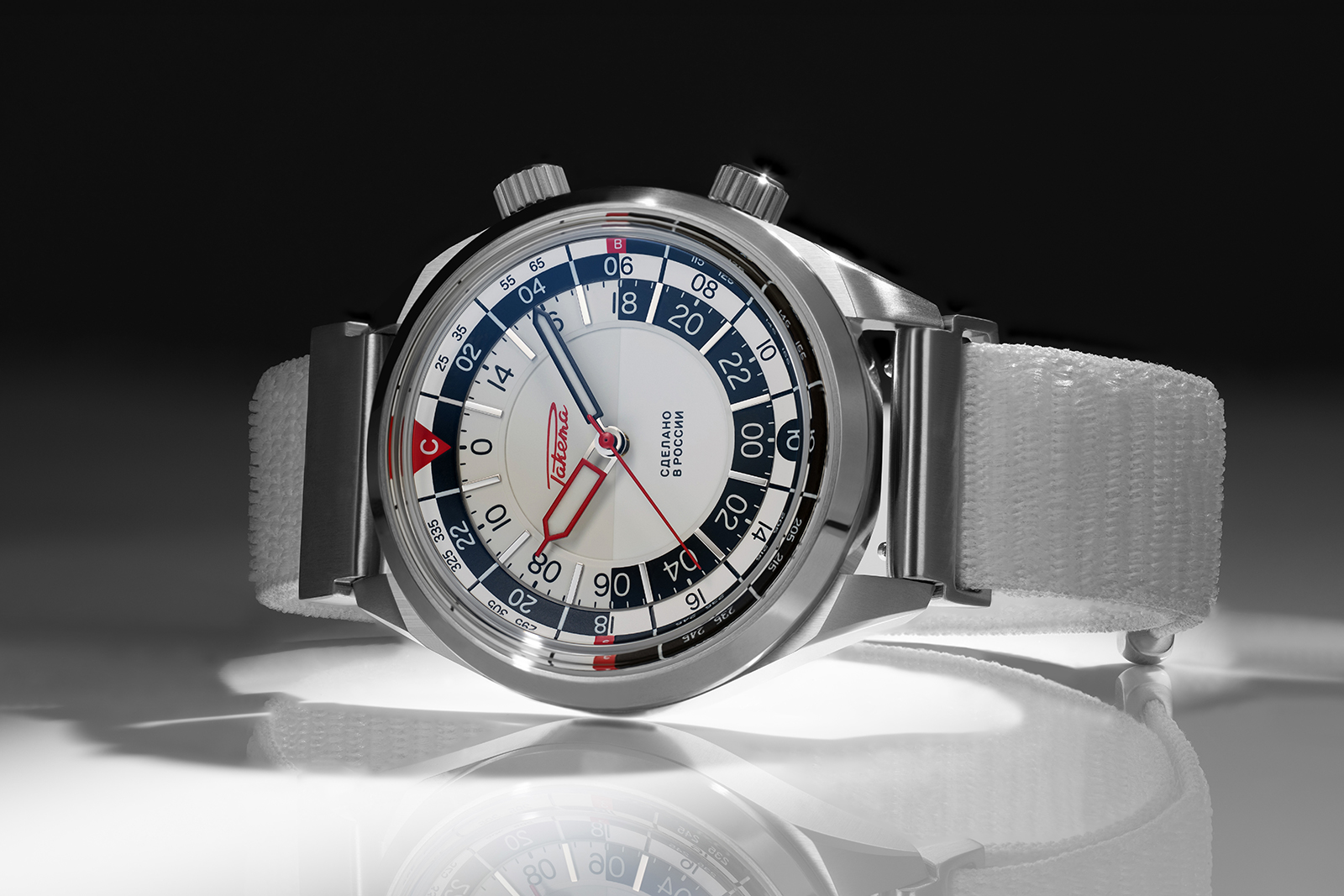
Instrument-like dials can be boring, but the designers at Raketa did just enough to keep it interesting, referencing the brand’s emblematic Big Zero at noon and midnight, without taking it too far. An internal rotating flange offers an auxiliary 24-hour scale, adjustable by the second crown. This facilitates keeping track of two time zones with full AM/PM resolution, something that’s actually quite rare. The dial also positions noon at the traditional 12 o’clock position, which is welcome.
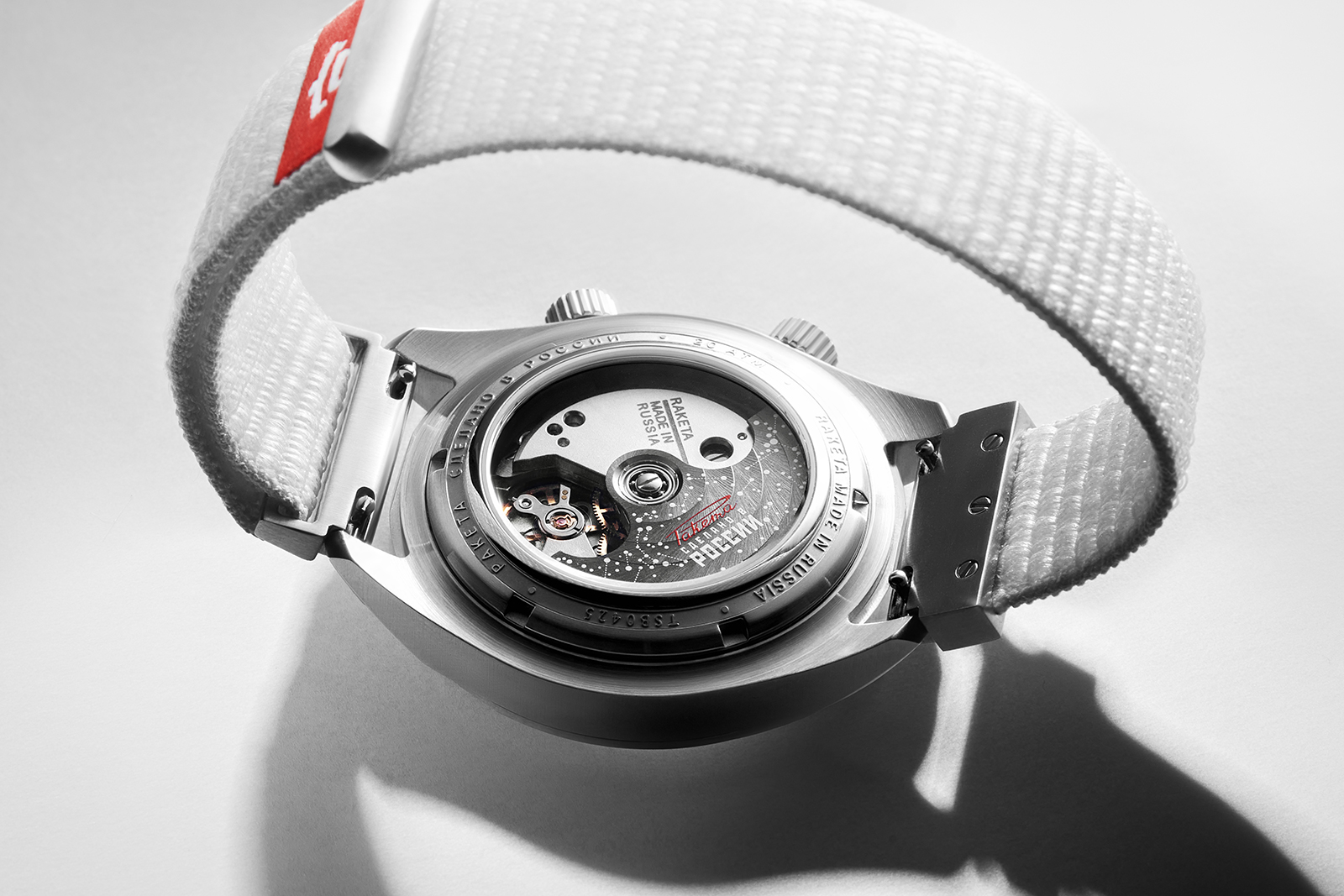
The 42 mm stainless steel watch is ostensibly designed for use in low Earth orbit, but its robust 200 m water resistance will probably be more useful at sea level. It’s a thick watch at about 14 mm, but the size works for its chunky, tool-like persona. Like other Raketa watches, the Baikonur is powered by a Soviet-era mechanical movement that is made entirely in-house in St Petersburg.
The Baikonur is not inexpensive, but it offers a compelling value proposition nonetheless. Though not made to the same clinical standards as similarly priced Swiss watches from mainstream brands, the Baikonur offers access to an altogether unique story and design language for a reasonable price of €2,400.
Cosmonaut dial
Most watches tell time on a 12-hour scale, taking it as a given that the user knows whether it’s day or night. But the seven astronauts and cosmonauts aboard the International Space Station (ISS) at any given time orbit the Earth 16 times per day, experiencing the same number of daily sunrises and sets. The difficulty of telling day from night under such conditions emerged almost as soon as humans started contemplating manned space flight. The Soviet Union was the first to encounter this issue, sending Yuri Gagarin into orbit in 1961 wearing a Moscow-made Sturmanskie wristwatch with a typical 12-hour dial.
Around the same time, Mercury Seven Astronaut Scott Carpenter, later the fourth human to orbit the Earth, asked Breitling to build a 24-hour variant of the Navitimer that later became the first Swiss wristwatch in space, flown aboard the Aurora 7 mission. Naturally, the 50th and 60th anniversaries of this event were commemorated with limited edition Navitimers, each with a 24-hour dial.
Though Raketa, which means ‘rocket’ in Russian, was named in honour of Gagarin’s 1961 achievement, the brand didn’t produce watches with 24-hour dials until 1969. That was when another mission was taking shape, specifically the 16th Soviet Antarctic Expedition, which faced a similar problem of telling day from night during the interminable polar days and nights of the antarctic region. Even though Raketa’s 24-hour dial was originally conceived for terrestrial use, the concept is no different than what is useful for space flight.
No-frills calibre
Mechanical watch movements are, almost by definition, anachronistic. This is especially true of Raketa movements, which, for better or worse, are still made using antique machines leftover from the Soviet era. This explains the outdated specifications, including the 40-hour power reserve and slow 2.5 Hz beat rate.
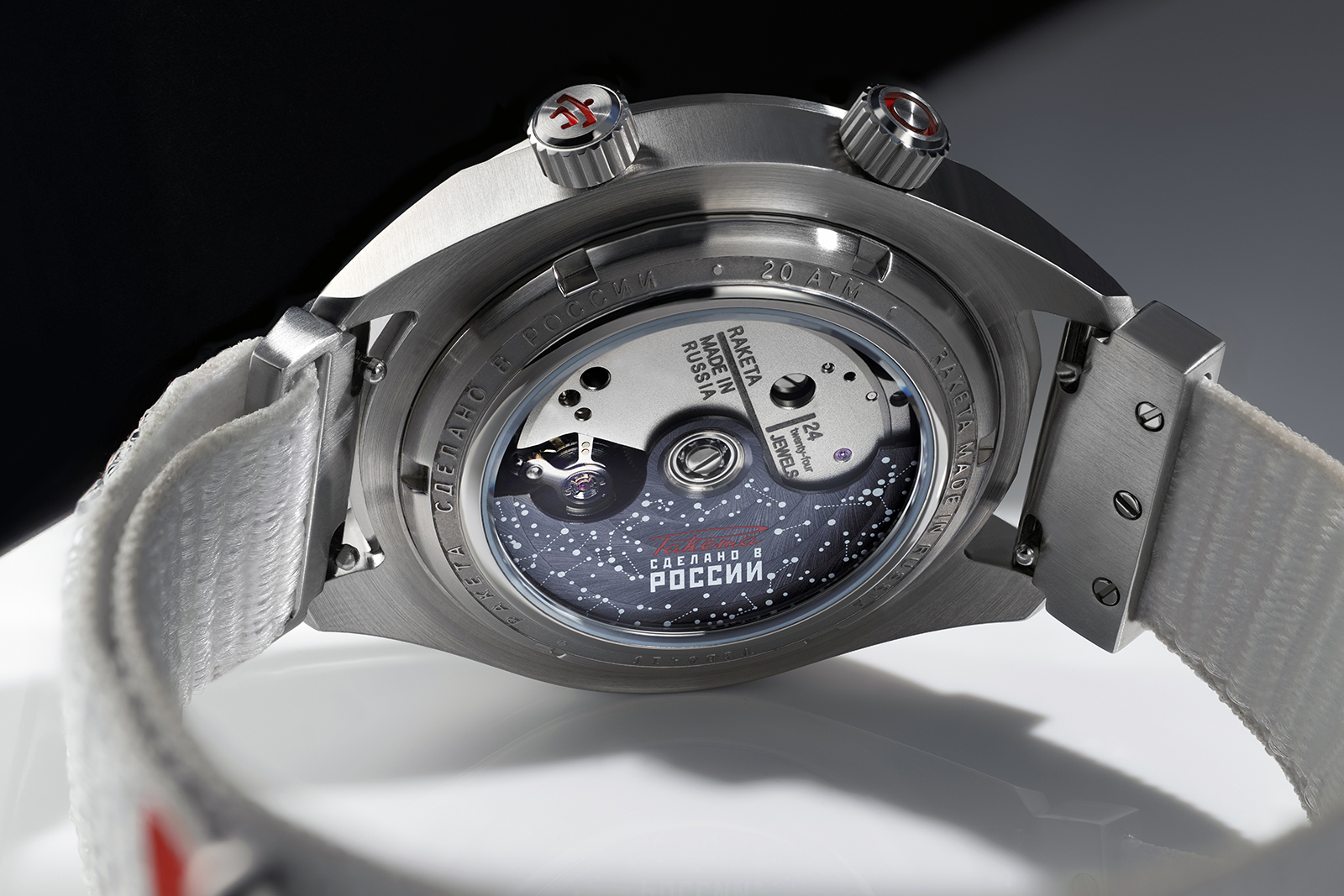
But that’s largely the point. Without CNC machines and other conveniences, the watchmakers at Raketa are more hands on. This imbues the watches with a sense of place and character that is missing from many modern watches, even those that reference historical traditions.
Despite being deprived of modern technology, the watchmakers at Raketa adjust the cal. 2624CA movement to a range of -10 to +20 seconds/day, which, for the sake of comparison, is tighter than the -15 to +25 seconds/day that Seiko specifies for the cal. 6R5x that powers the Presage collection.
Key facts and price
Raketa Baikonur
Ref. W-14-16-40-0325
Diameter: 42 mm
Height: 14.05 mm
Material: Stainless steel
Crystal: Sapphire in front, mineral on the back
Water-resistance: 200 m
Movement: Cal. 2624CА
Functions: Hours, minutes, and seconds
Winding: Automatic
Frequency: 18,000 beats per hour (2.5 Hz)
Power reserve: 40 hours
Strap: Nylon strap with additional leather strap included
Limited edition: No
Availability: Direct from Raketa
Price: €2,400 excluding taxes
For more information, visit Raketa.com.
Back to top.