

Hands On: Daniel Roth Extra Plat Skeleton Rose Gold
Extra plat and extra fine.
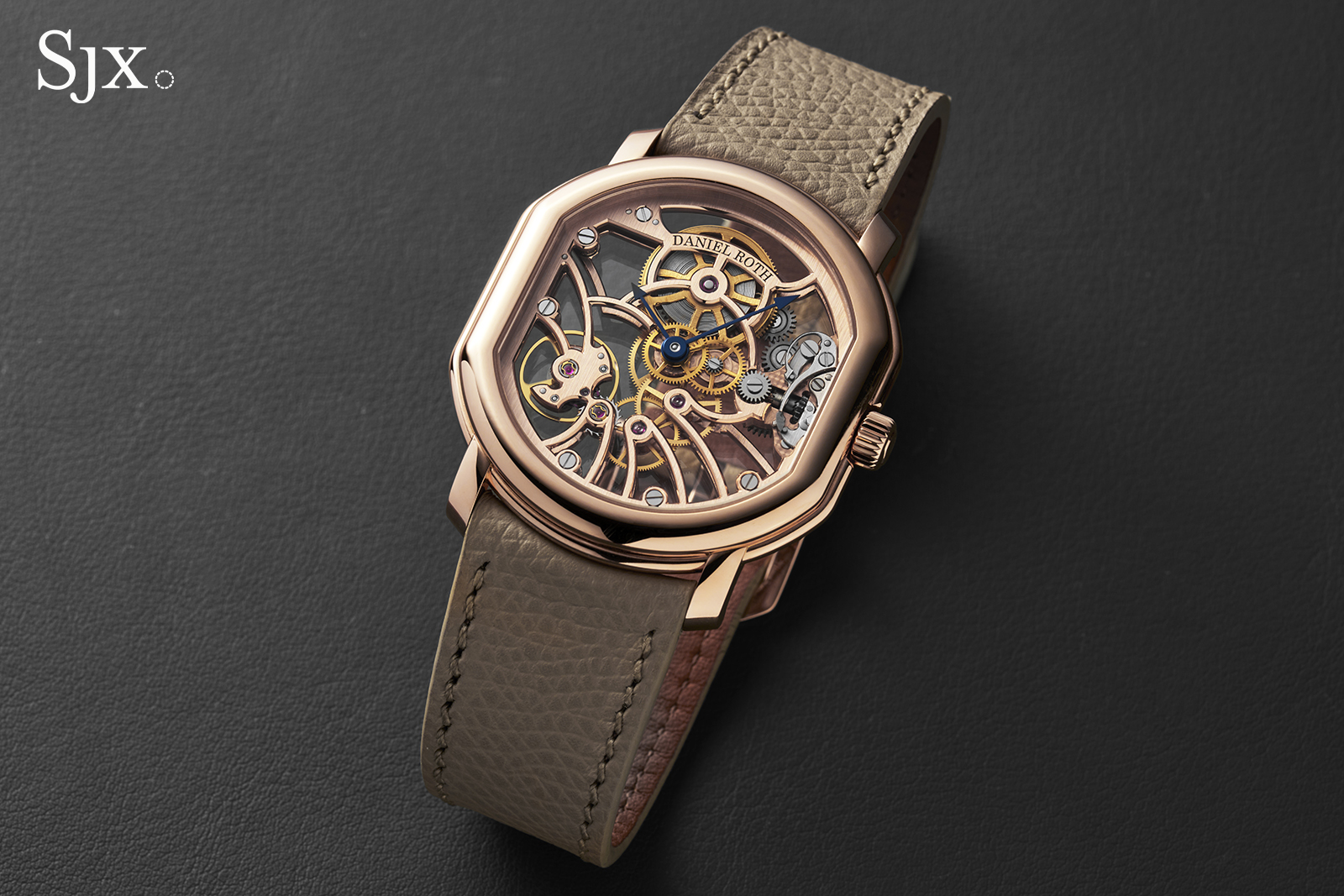
Daniel Roth announced a subtle shift in its direction with the recent Extra Plat Rose Gold Skeleton. While the brand’s prior models like the tourbillon were essentially remakes of models made by the brand in the 1990s, the Extra Plat skeleton is an entirely new model that shares practically nothing with historical designs save for the case shape.
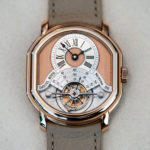
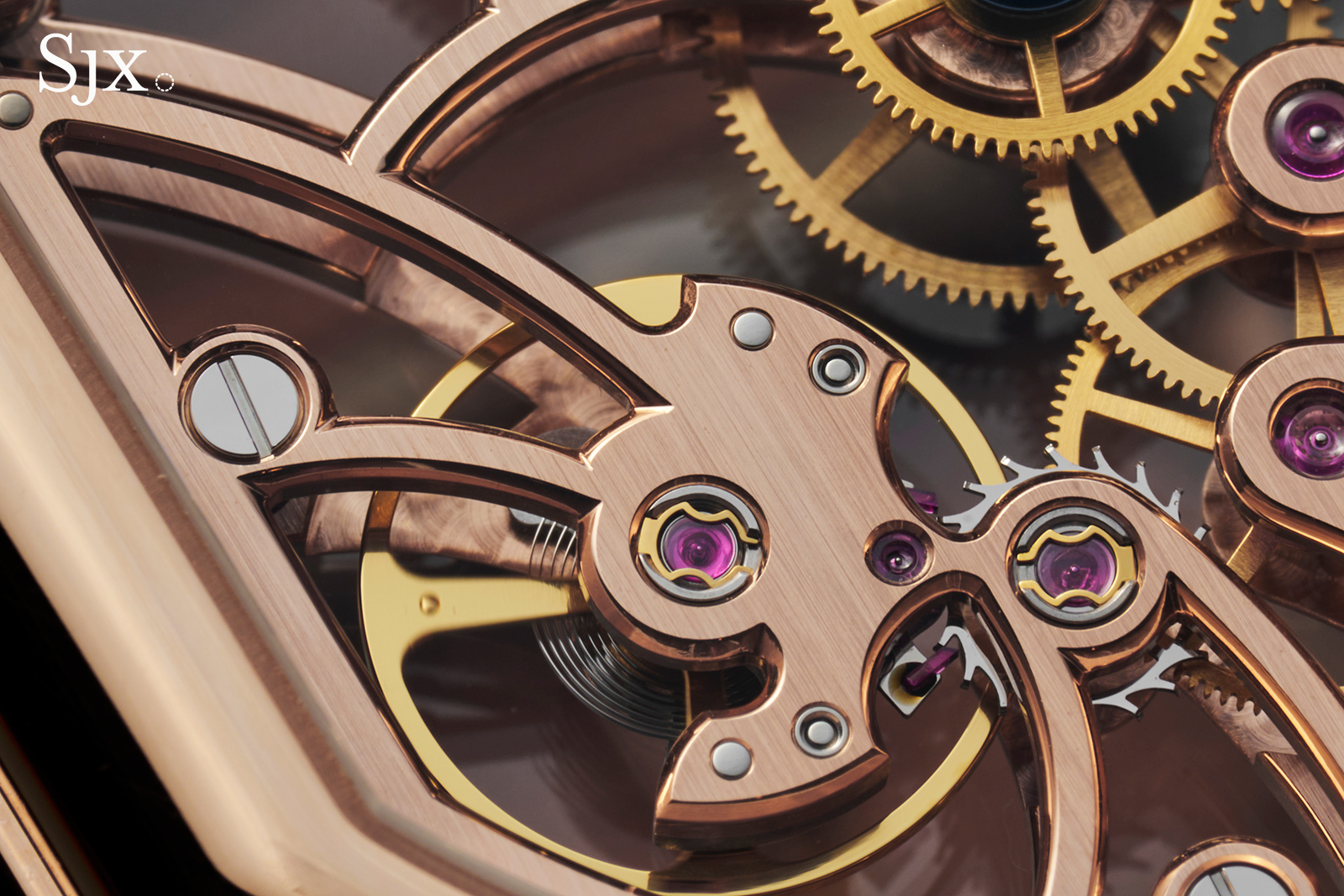
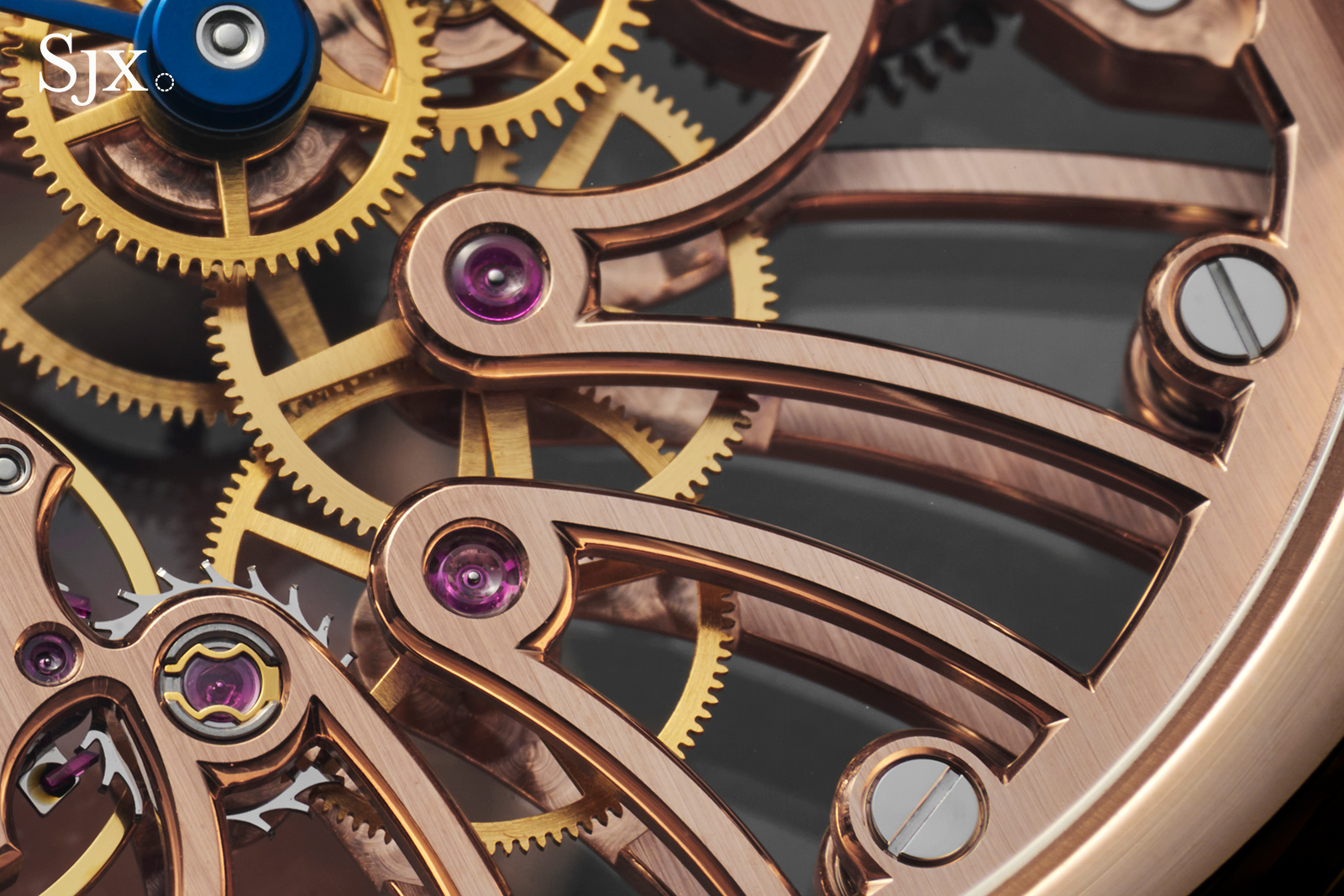
Because the Extra Plat skeleton is, well, skeleton, it ably shows off the quality of execution on both sides. Beyond finishing, the movement also stands out for details that illustrate the taste of its constructor(s). It’s telling that the movement could have been done more simply without anyone noticing, but it wasn’t.
Initial thoughts
Daniel Roth’s resurrection got off to a strong start, underpinned by watches with top quality execution. The initial models, however, were remakes of 1990s originals. A brand with Daniel Roth’s ambitions (and well-resourced backer) won’t go very far with only replicas of historical models. The Extra Plat Skeleton illustrates the people behind the brand understand that.
The Extra Plat Skeleton, in contrast, is the first all-new model rolled out by Daniel Roth in its current form. It encapsulates all of the strengths of the brand, namely the capable, high-end watchmaking of La Fabrique du Temps (LFT) and the distinctive double-ellipse case.
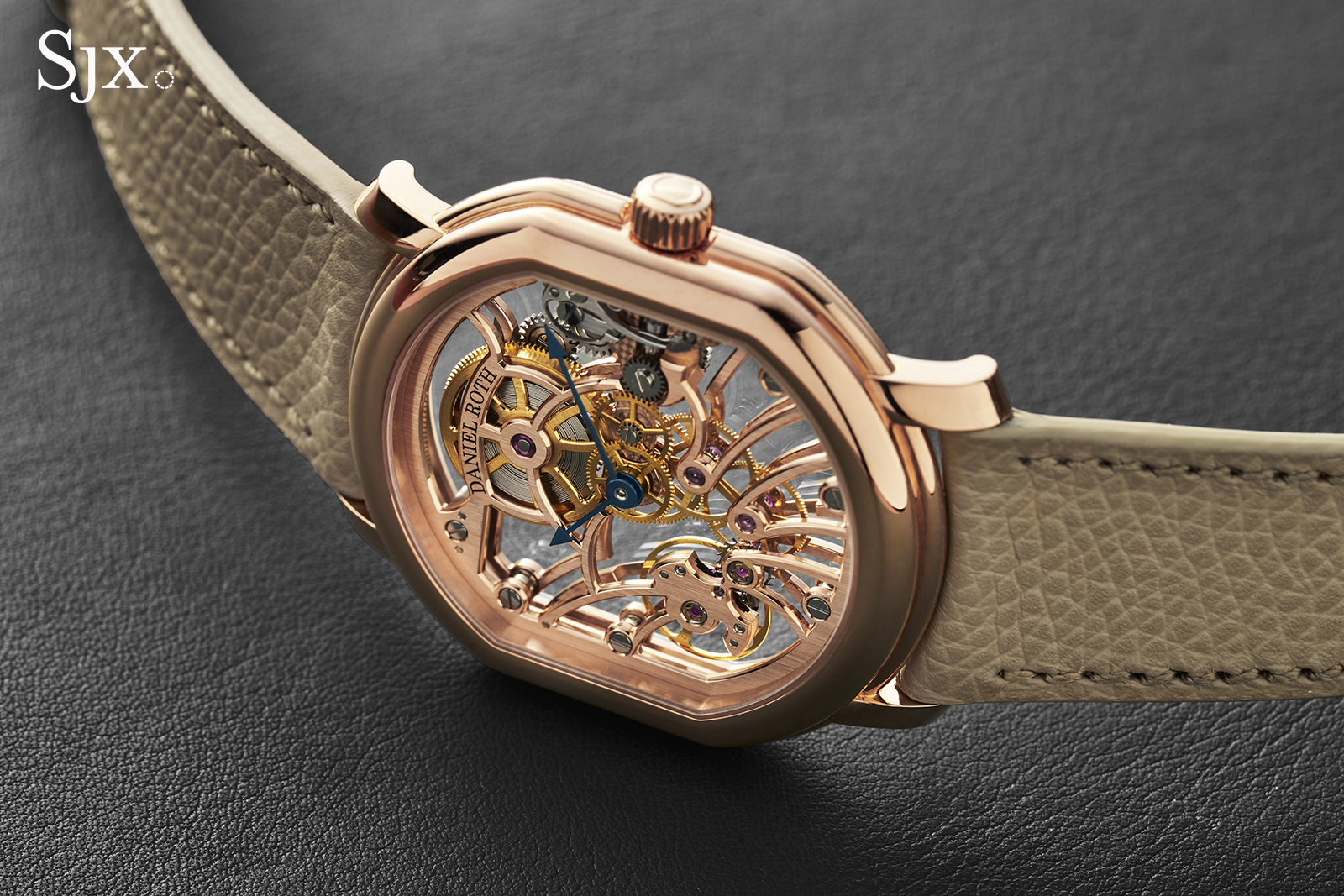
While the Extra Plat Skeleton is powered by a movement derived from that in the Extra Plat, it is clearly a different calibre. And because the movement is skeletonised, the outstanding construction and decoration are glaringly obvious, more so than in the earlier models that had solid dials (and even closed case backs).
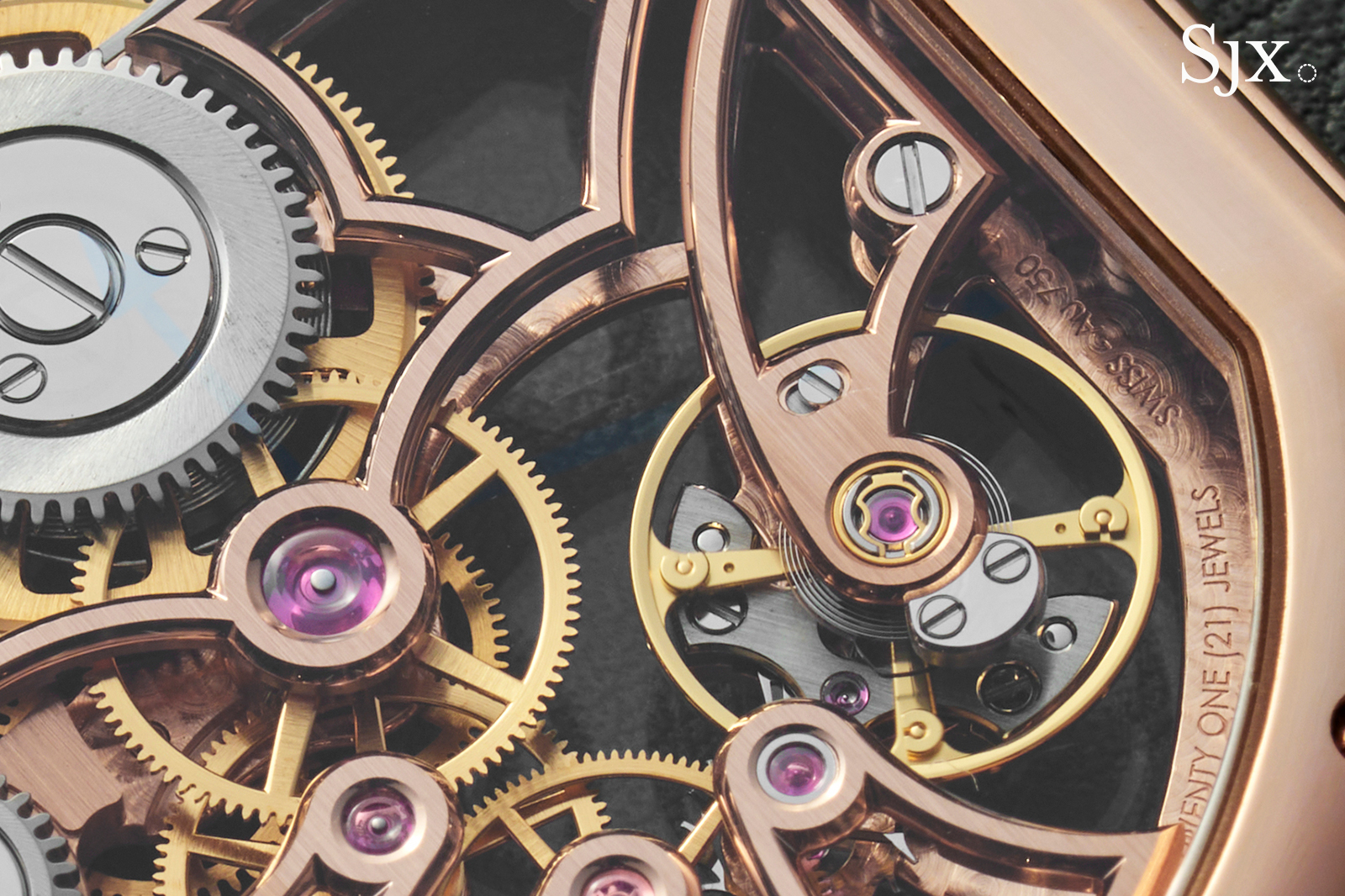
Many details in the movement are surprisingly artful, especially since it was created by a large company, rather than a one-man or small-scale independent maker. This is visible on both sides of the watch, showing the attention to detail that was paid to the top and bottom of each part, which is not always a given for a skeleton watch.
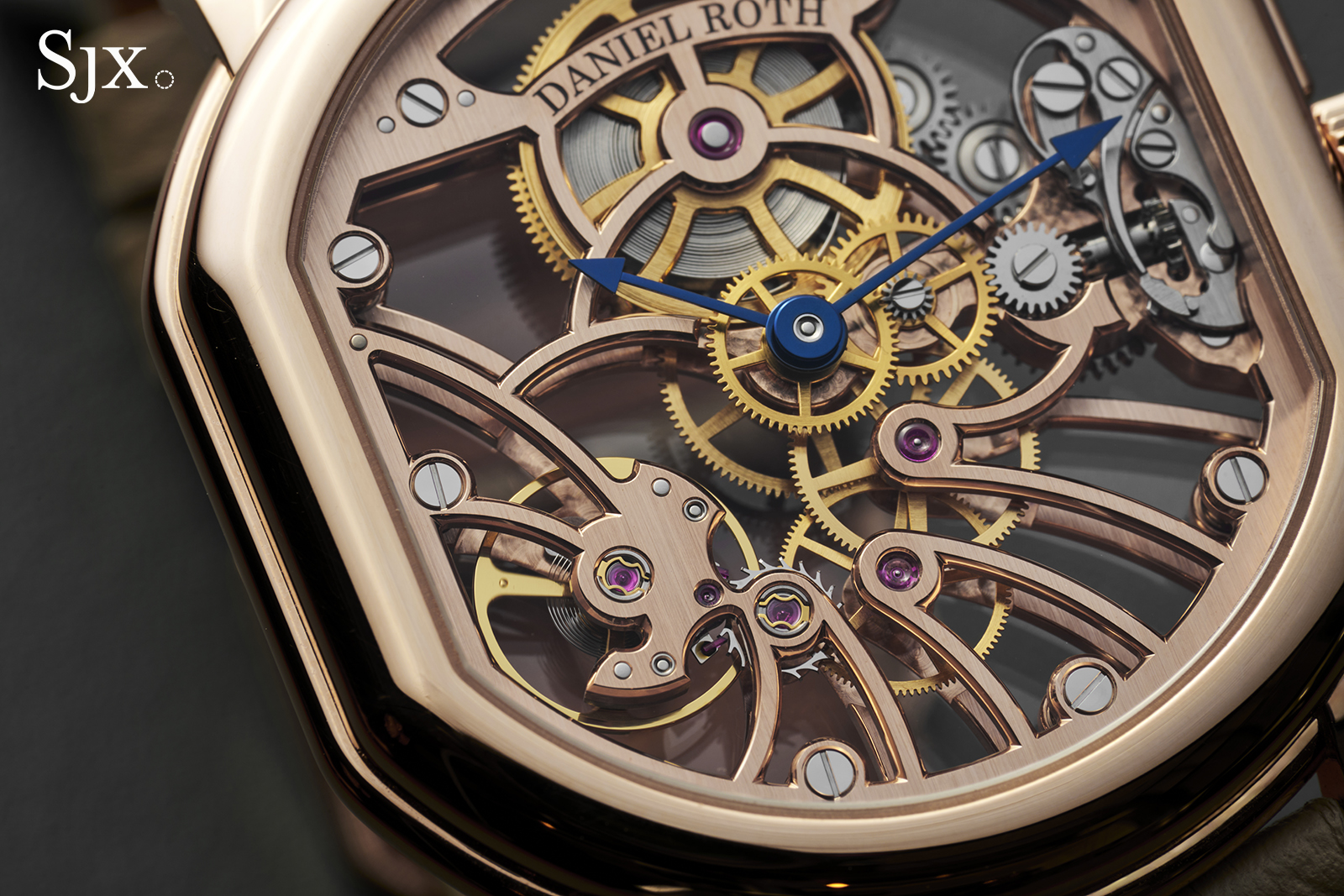
Equally surprising is the fact that the Extra Plat Skeleton is almost a full millimetre thinner than its solid-dial counterpart, resulting in a flat, elegant profile on the wrist. It really feels extra plat.
The Extra Plat Skeleton costs CHF85,000, which is also surprising, because in today’s market that is actually not so much in relative terms. The price is about the same as that of a time-only, non-skeleton watch by a newcomer independent, giving this credible value in comparative terms.

Slim and delicate
The Extra Plat skeleton sticks to the template established by the standard Extra Plat, yet it is surprisingly different. Like all current Daniel Roth models, this has the updated double-ellipse case that was artfully reworked by Matthieu Hegi, the design chief of LFT.
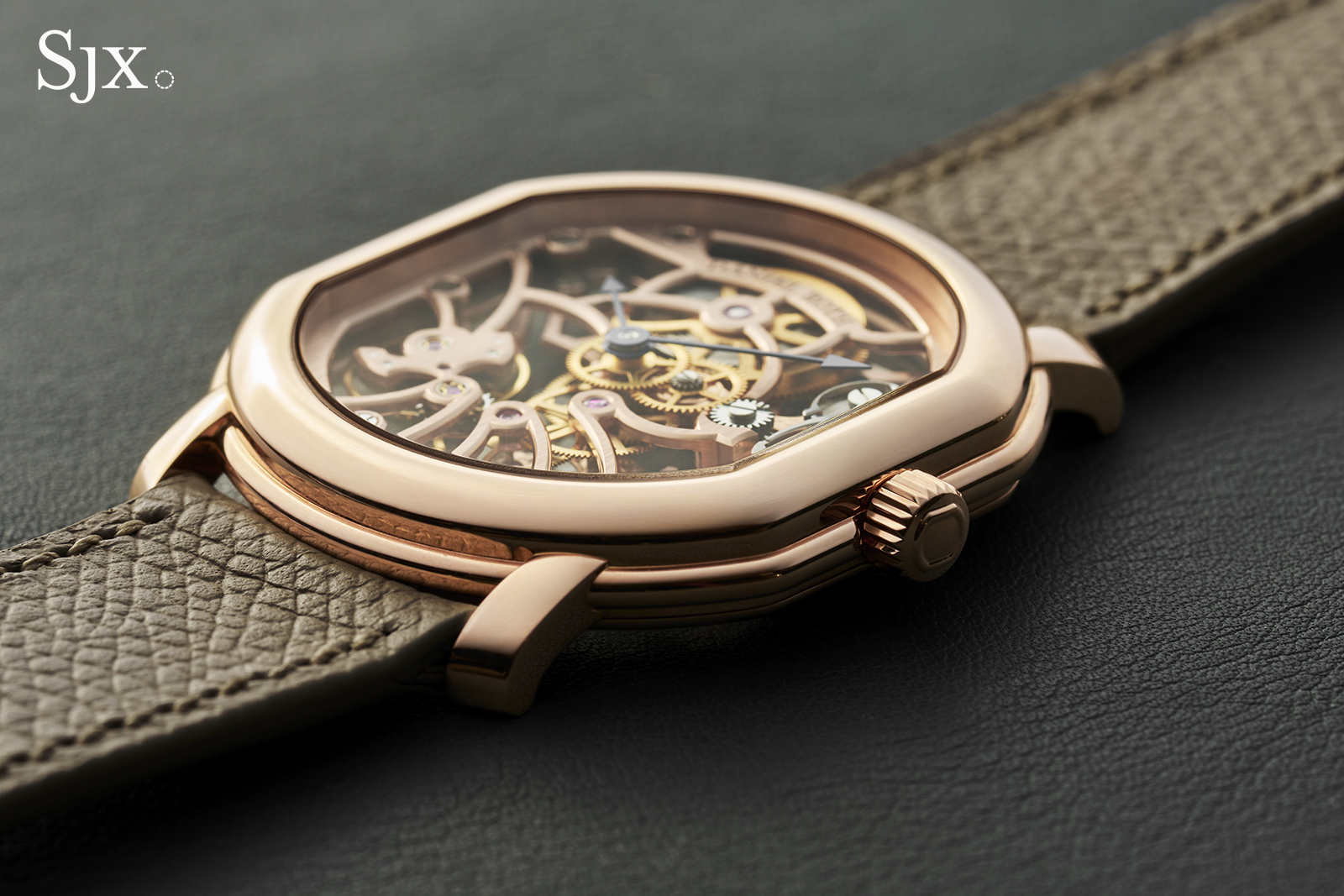
Though it has the same basic form, the new case has curved lugs and equilibrium in profile between the bezel and case back. These tweaks give the case a softer, more elegant feel, but otherwise retain the familiar look.
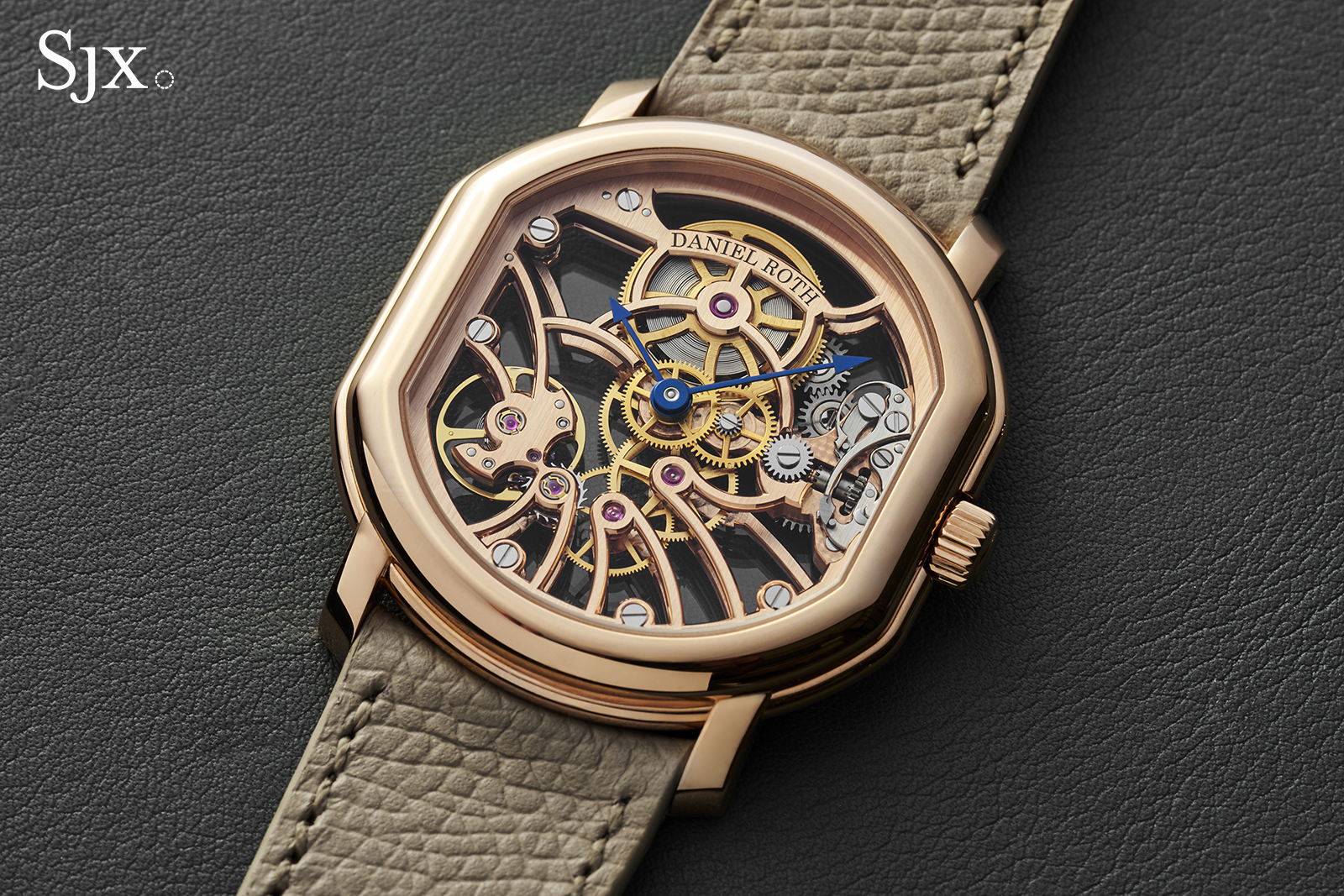
The case dimensions of the standard Extra Plat and skeleton are identical in terms of diameter and length, but the skeleton is substantially thinner. Doing away with the guilloche dial trims the case height by 0.8 mm, a reduction that is noticeable in person.
Eight-tenths of a millimetre might not seem like much, but the Extra Plat feels almost like a very, very slim dress watch of the sort that brands like Piaget specialise in. This is unusual for the double-ellipse case that was historically fairly substantial.
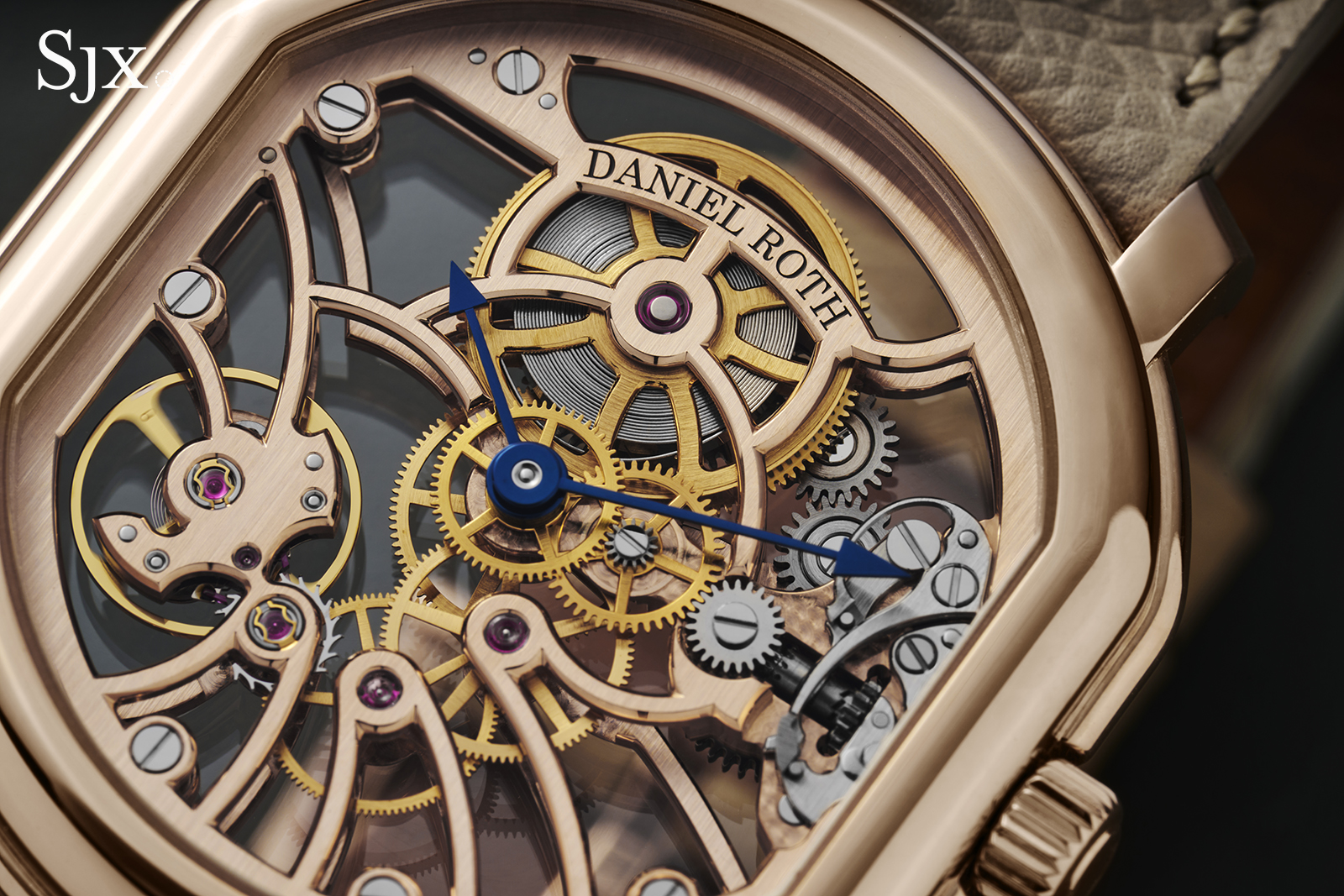
But the best thing about the Extra Plat skeleton is skeleton. The open-worked DR002SR inside is clearly based on the on the movement inside the standard model, but it doesn’t look like a calibre that was retroactively skeletonised. Everything feels cohesive, which indicates it was constructed simultaneously alongside the non-skeleton version.
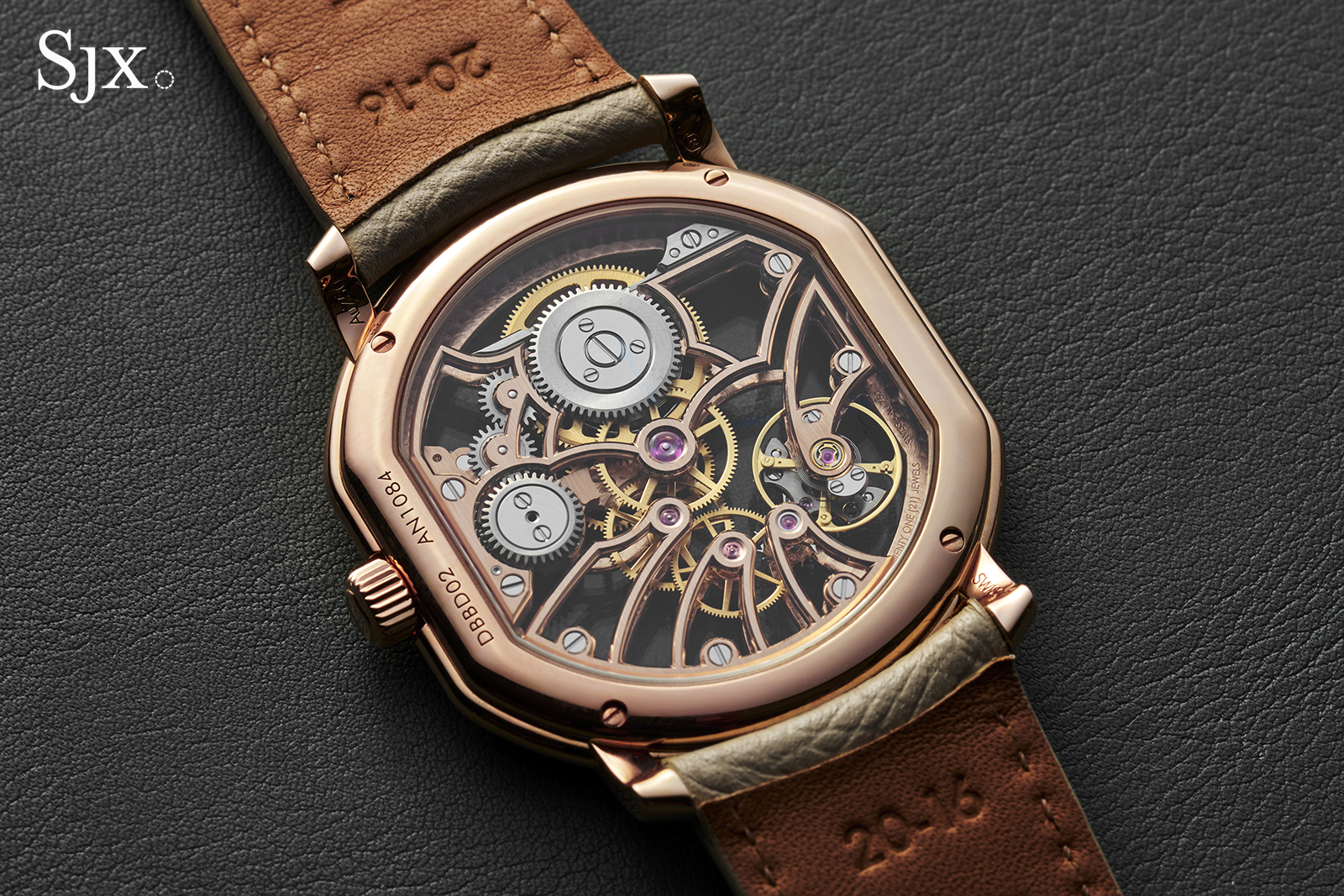
The movement aesthetic is modern, with clean lines and straight-grained bridges, unlike the original generation of Daniel Roth skeleton watches that were typically 1980s in style with fancy floral engraving.
Though the movement is clearly 21st century in style, it has a classical aspect to the bridges that brings to mind historical pocket watch movements (and also a Daniel Roth-Bulgari skeleton tourbillon though I suspect the brand now prefers to leave the Bulgari association behind).
Many other details, like the Geneva-style stud carrier, are equally reminiscent of old-school, high-end movements, adding to its charm. Some details, like the keyless works, clearly demonstrate its creators have aesthetic sensibilities that go beyond the basic.
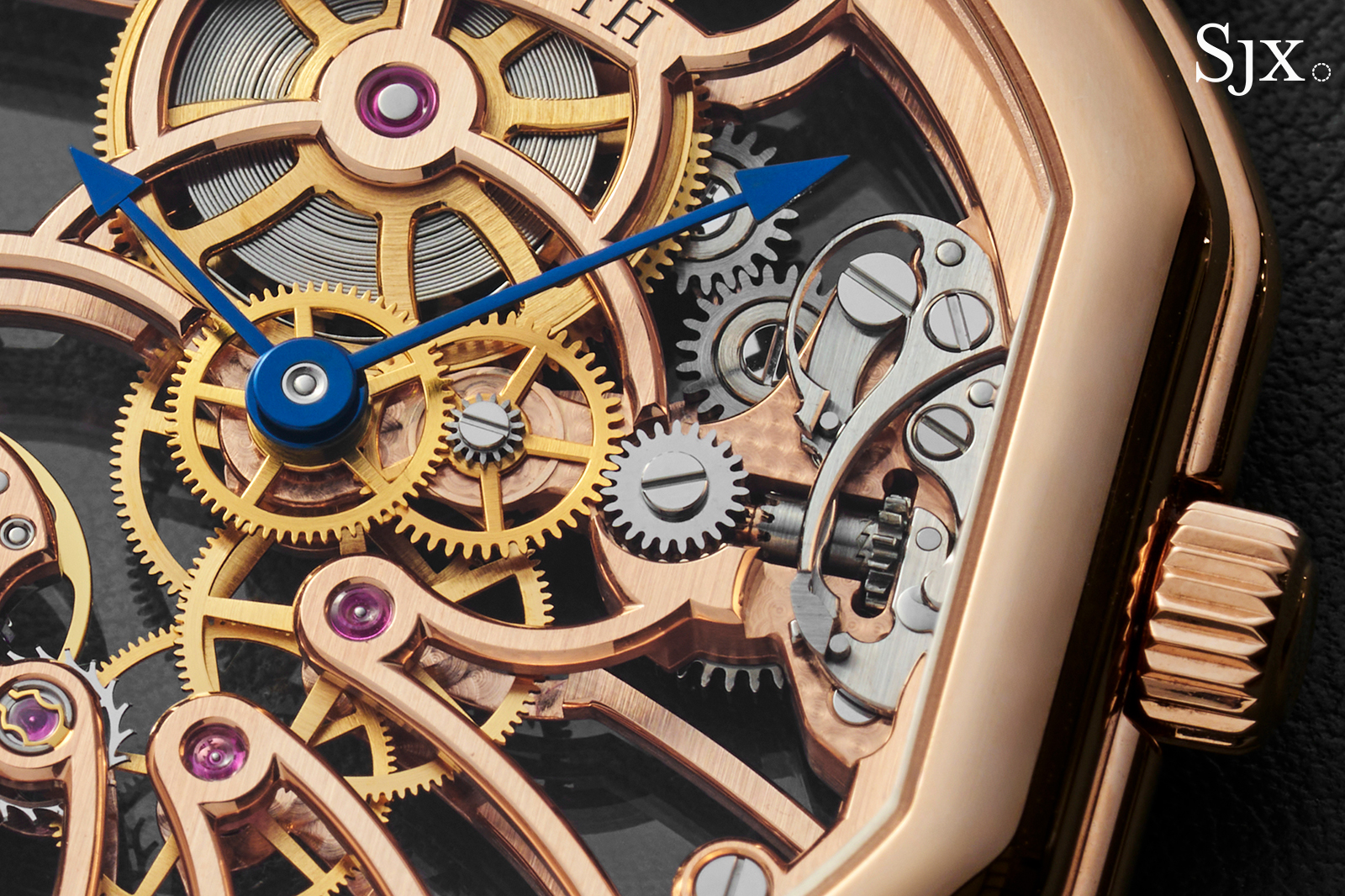
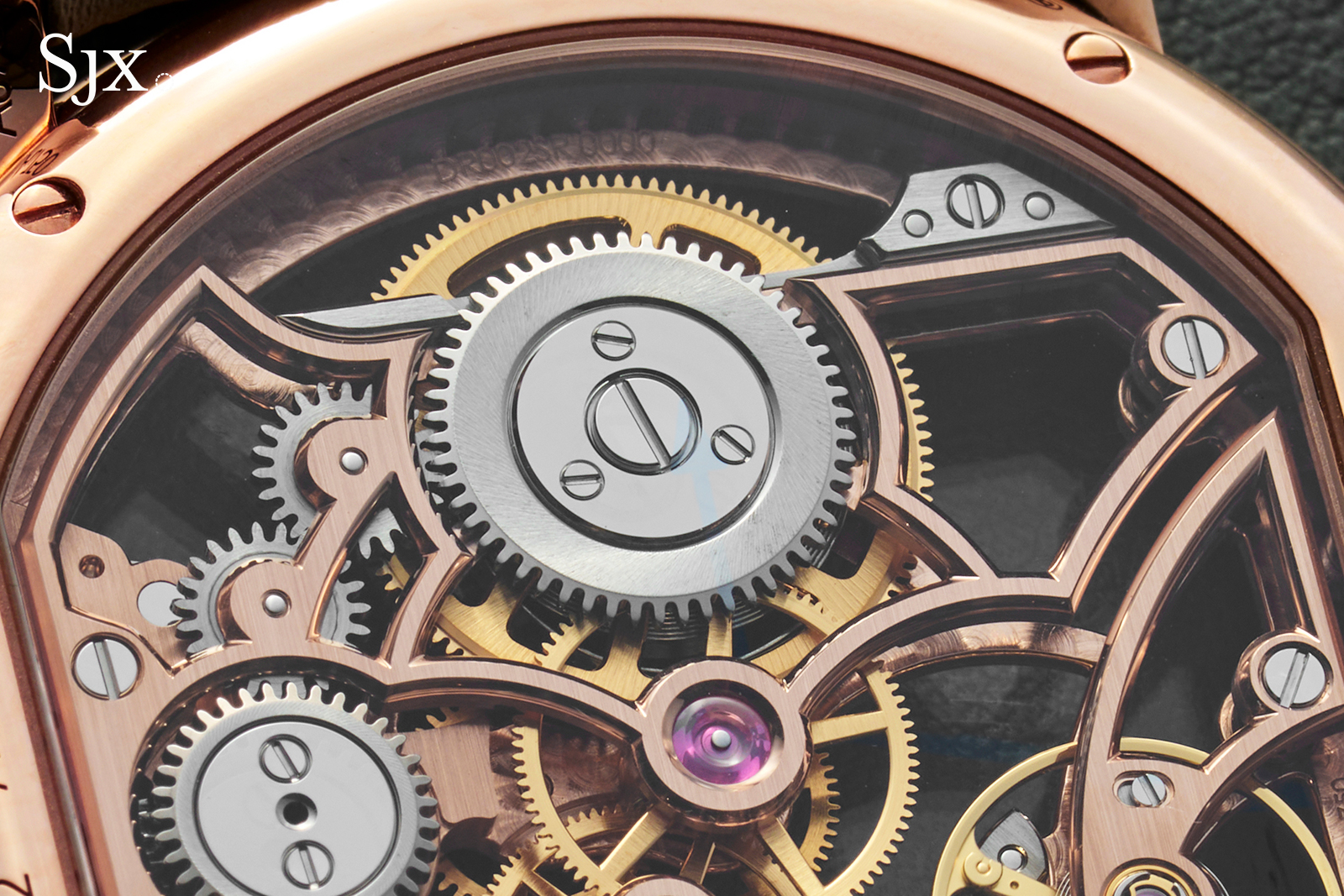
Though the moving parts are essentially identical between the two movement versions, the DR002SR is more precious – literally. The bridges and base plate are 18k rose gold, which is a thoughtful extra.
The gold bridges have been treated appropriately for such a watch. The decoration is clean and refined – on both the tops and undersides of the bridges.
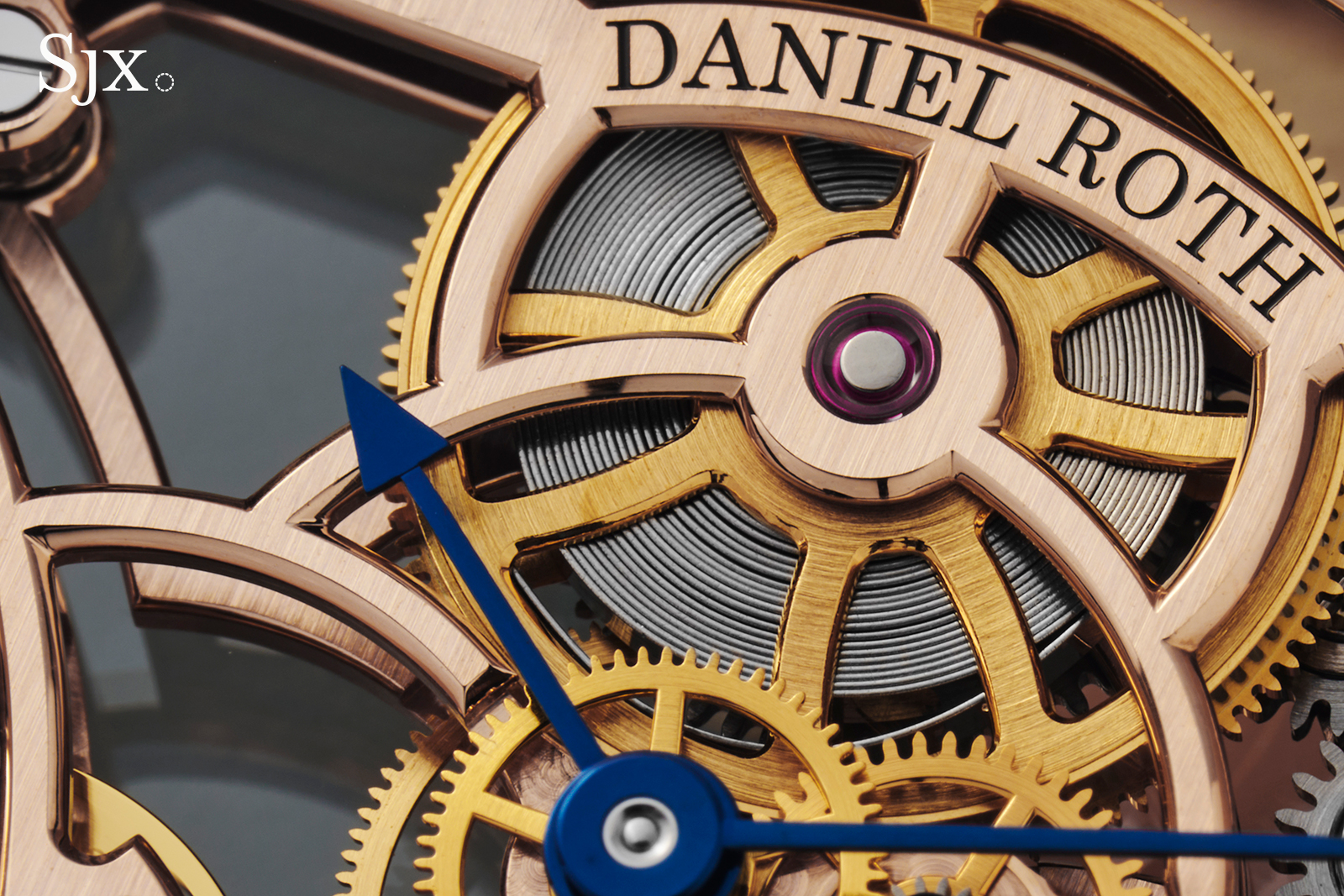
But it’s not just the big, easy components that are treated properly, but also all of the smaller, less evident bits like screws, pins, and spokes. This underlines the high-quality watchmaking practiced at LFT, exemplified here.
Key facts and price
Daniel Roth Extra Plat Rose Gold Skeleton
Ref. DBBD02A1
Diameter: 38.6 by 35.5 mm
Height: 6.9 mm
Material: 18k rose gold
Crystal: Sapphire
Water resistance: 30 m
Movement: DR002SR
Functions: Hours and minutes
Winding: Manual-wind
Frequency: 28,800 beats per hour (4 Hz)
Power reserve: 65 hours
Strap: Calfskin leather strap
Limited edition: No
Availability: At Daniel Roth retailers
Price: CHF85,000 excluding taxes
For more information, visit DanielRoth.com.
Back to top.