

Audemars Piguet’s 150 Heritage is a Universal Cultural Calendar
With a first-of-its-kind mechanical calculator.
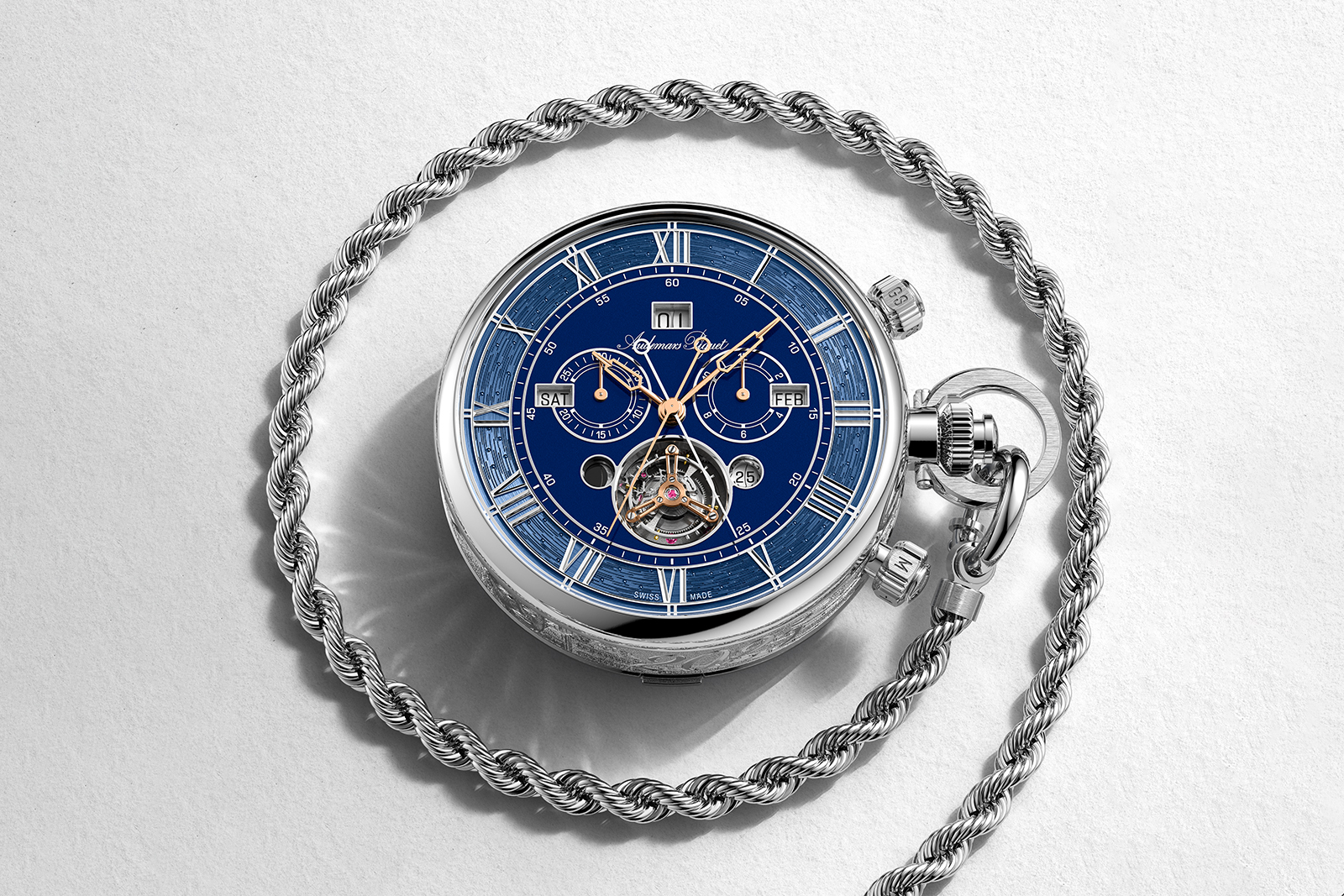
Audemars Piguet celebrated 150 years of existence in 2025, but its celebrations have continued into the new year with the 150 Heritage Pocket Watch. While many large ultra-complicated pocket watches are exercises in nostalgia, the 150 Heritage is a modern marvel of micro-mechanical engineering with never-before-seen functionality inside a surprisingly compact 50 mm case.
Initial thoughts
Few brands can match Audemars Piguet’s track record of producing Grand Complication pocket watches, but the 150 Heritage surprises by adapting a calibre originally intended for the wrist.
A complicated pocket watch with a simple name, the 150 Heritage is built around the cal. 1150, a newly developed hand-wound movement that adapts the architecture of the ambitious cal. 1000 developed for the Code 11.59 Universelle, and as such it includes past RD-series innovations.
That said, the differences between the Universelle and the 150 Heritage are quite significant, thanks to an intriguing new feature: a hinged mechanical calculator, isolated from the movement.

The intricate system is housed inside the case back and allows the user to effortlessly cycle through dates across any year to be able to read a surprising number of culturally-relevant dates based on lunar, solar and lunisolar cycles.
The device feels a bit like a time machine, as the lucky owner can go into the past or look into the future and find out the exact dates of Catholic Easter, Ramadan, Equinoxes and many others, along with the specific arrangement of days and weeks during any given year.
The visual presentation and slate of complications calls to mind the Code 11.59 Universelle thanks to the arrangement of the chronograph sub-dials, calendar apertures, and the large flying tourbillon, a feature born for the pocket watch format. That said, the cal. 1150 does away with the automatic winding works, and has been subtly tweaked to better fit the larger case format.
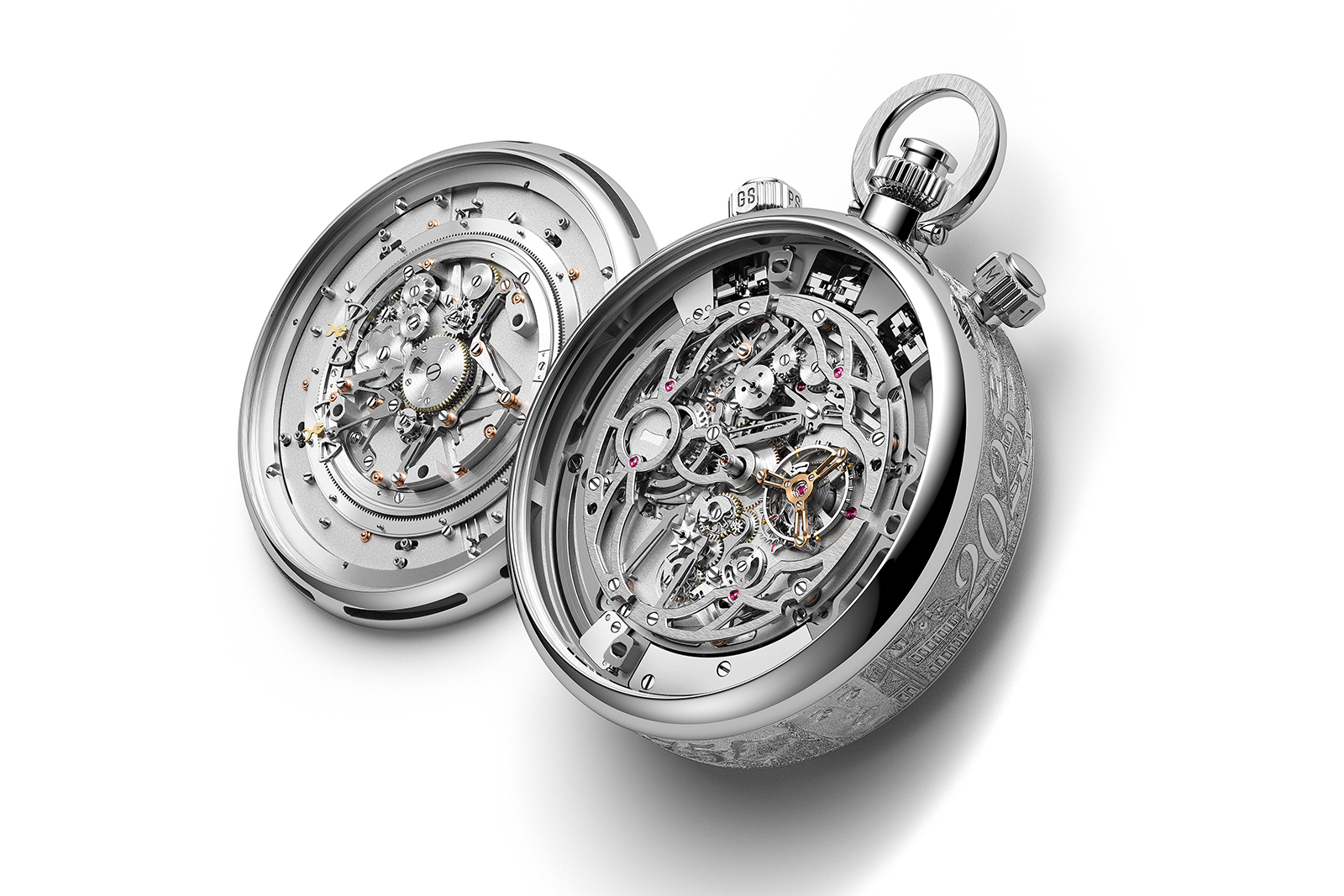
Having a larger size to work with, the artisans of Audemars Piguet also dressed the platinum case with elaborate ornamental engravings and a grand feu enamel dial in a striking blue.
While the case is larger than is typical for a wristwatch, it’s still quite small due to its technical origins. Giulio Papi conceived the 150 Heritage as a pocket watch that would actually fit in the pocket, as opposed to the paths taken by Vacheron Constantin and Patek Philippe, which opted to make massive hamburger-sized grand complication pocket watches.
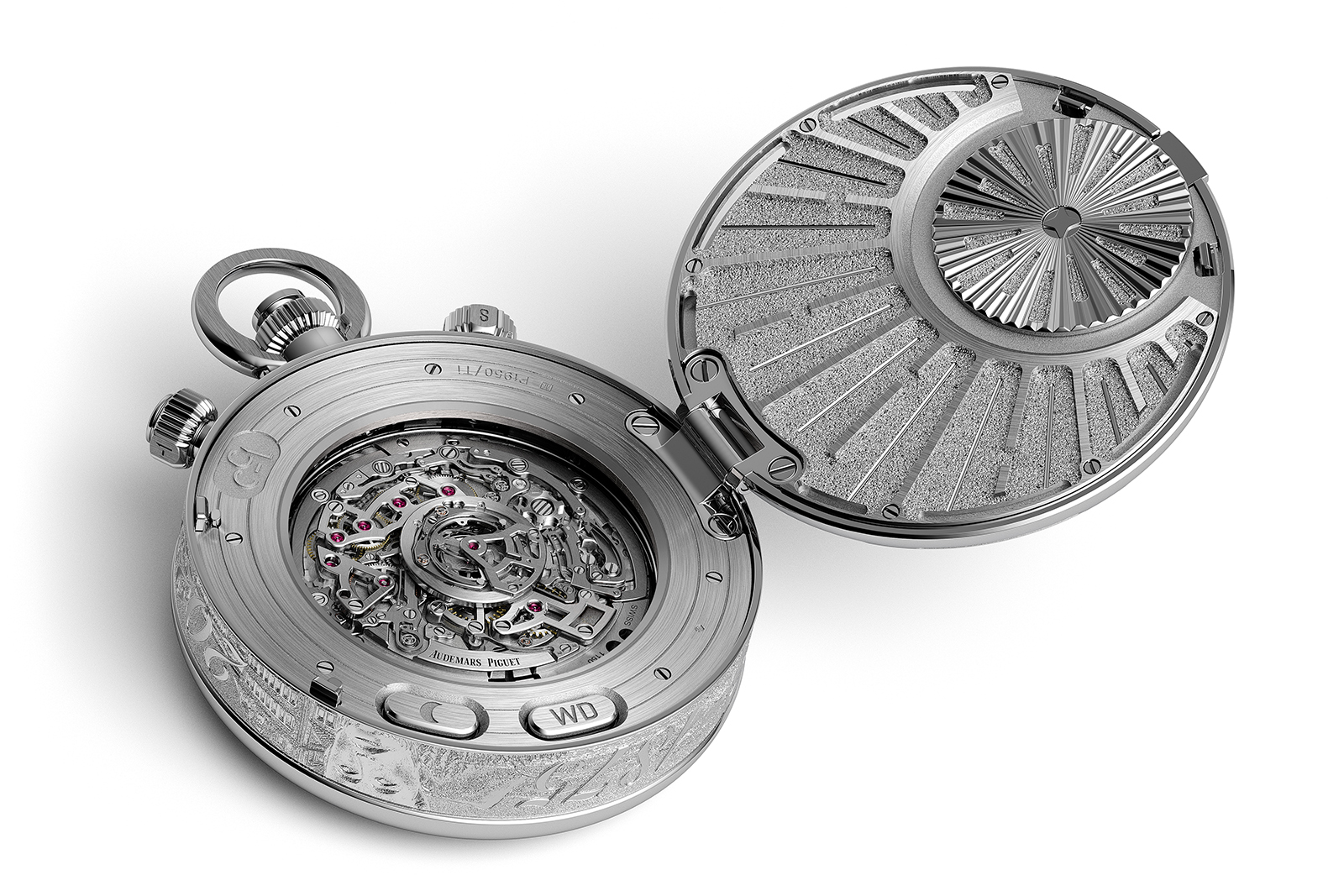
Of course, a seven-figure watch like the 150 Heritage will most likely be exhibited in a secure environment, but it’s nice to know it actually can fit in one’s pocket. It’s also surprisingly intuitive and user-friendly for something as whimsical and luxurious as a two-piece limited edition anniversary pocket watch.
Complications galore
The complication list of the 150 Heritage reads much like a catalogue of the most demanding horological systems: grande and petite sonnerie and minute repeater with Supersonnerie acoustics, a split-seconds flyback chronograph, flying tourbillon, and a semi-Gregorian perpetual calendar capable of accounting for centennial leap-year exceptions.
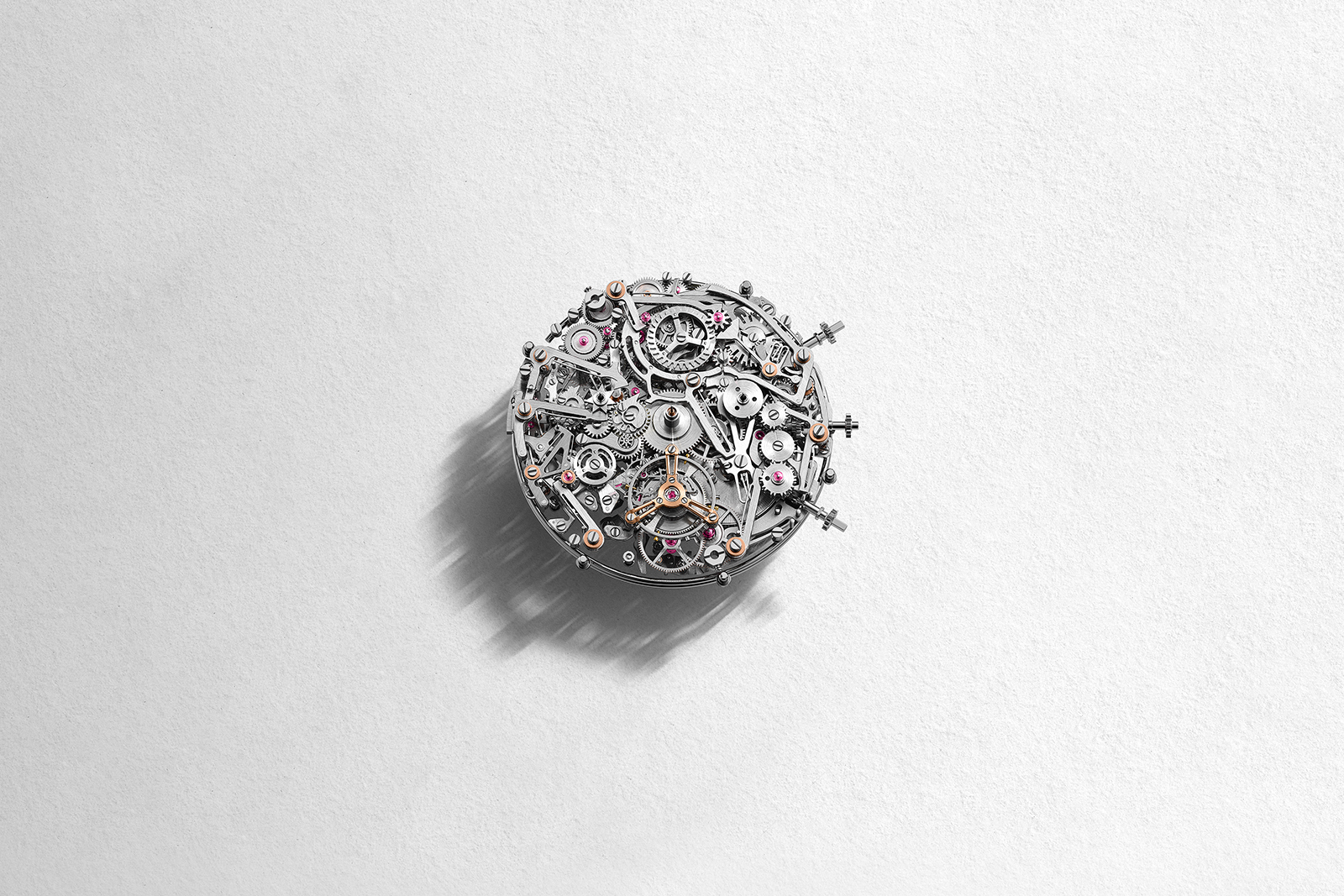
In spite of all these indications, the design doesn’t feel cluttered and retains a high degree of legibility. The dial layout is virtually identical to that of the Code 11.59 Universelle, with its large European-style date format and double-digit year indicator. The large balance inside the flying tourbillon cage beats at 3 Hz, is free-sprung and comes mounted on a Breguet overcoil hairspring.
The wristwatch format of the cal. 1000 architecture means the chronograph pushers and crown sit on the right-hand side of the case relative to the vertical orientation the dial — making for an unusual handheld operation of the chronograph.
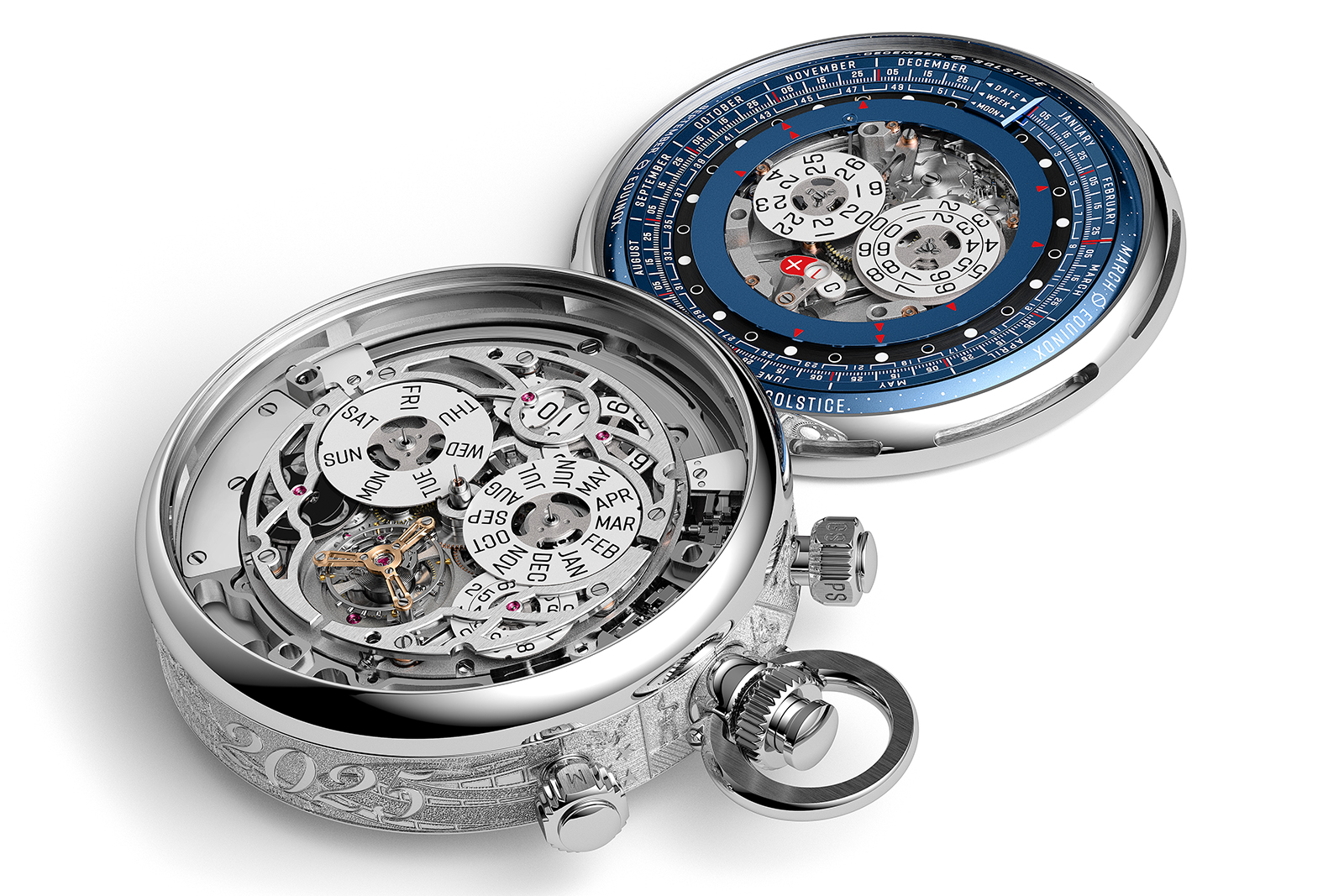
Usually pocket chronographs have the crown at the 12 o’clock position and the pushers flanking it, making the actuation more natural to the hand. This is one of a few areas where the wristwatch origin makes itself known.
Interestingly, the chronograph pushers also serve in correcting the indications on the dial — the rotatable pusher at four o’clock sets the month indicator, and the pusher co-axial with the crown aids with setting and winding the watch. Impressively, the date can be set backwards and forwards, which is quite rare for perpetual calendars.
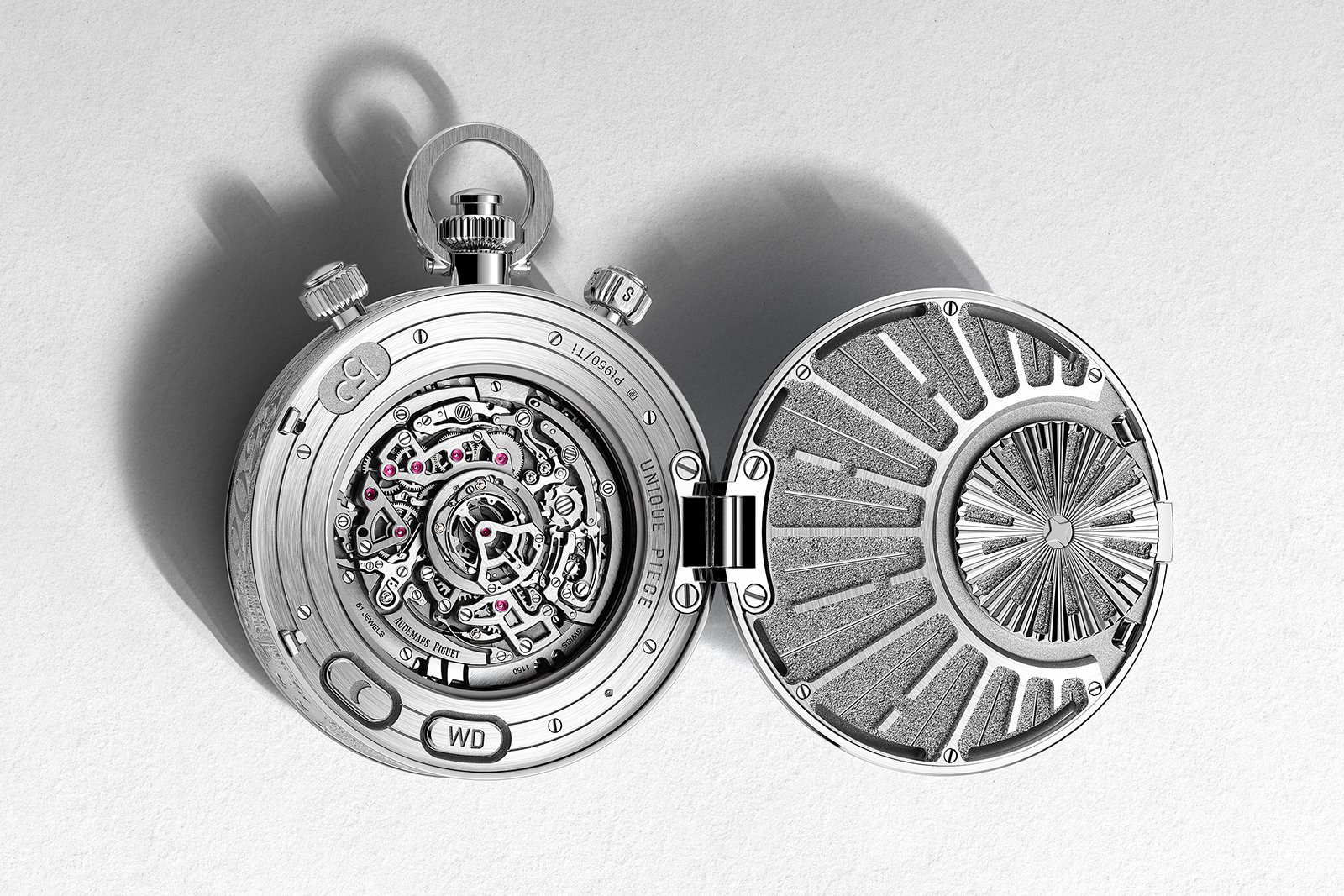
The line between case and movement was intentionally blurred making the case itself feel mechanical and interactive. For example, the day of the week and moon phase are set using broad horizontal pushers on the case back side.
Métiers d’art crafts
The 50 mm platinum case is entirely hand engraved, a demanding and rare craft typically reserved for exceptional pieces. The functional elements remain grouped along a limited section of the case flank, opening up the remaining surface as a canvas for the engraver.
The case band reimagines scenes from the manufacture’s history, including portraits of its founders and a dedicated anniversary emblem. As is usually the case with hand engraving, the metal gains an organic feel that isn’t found with other decorating techniques.
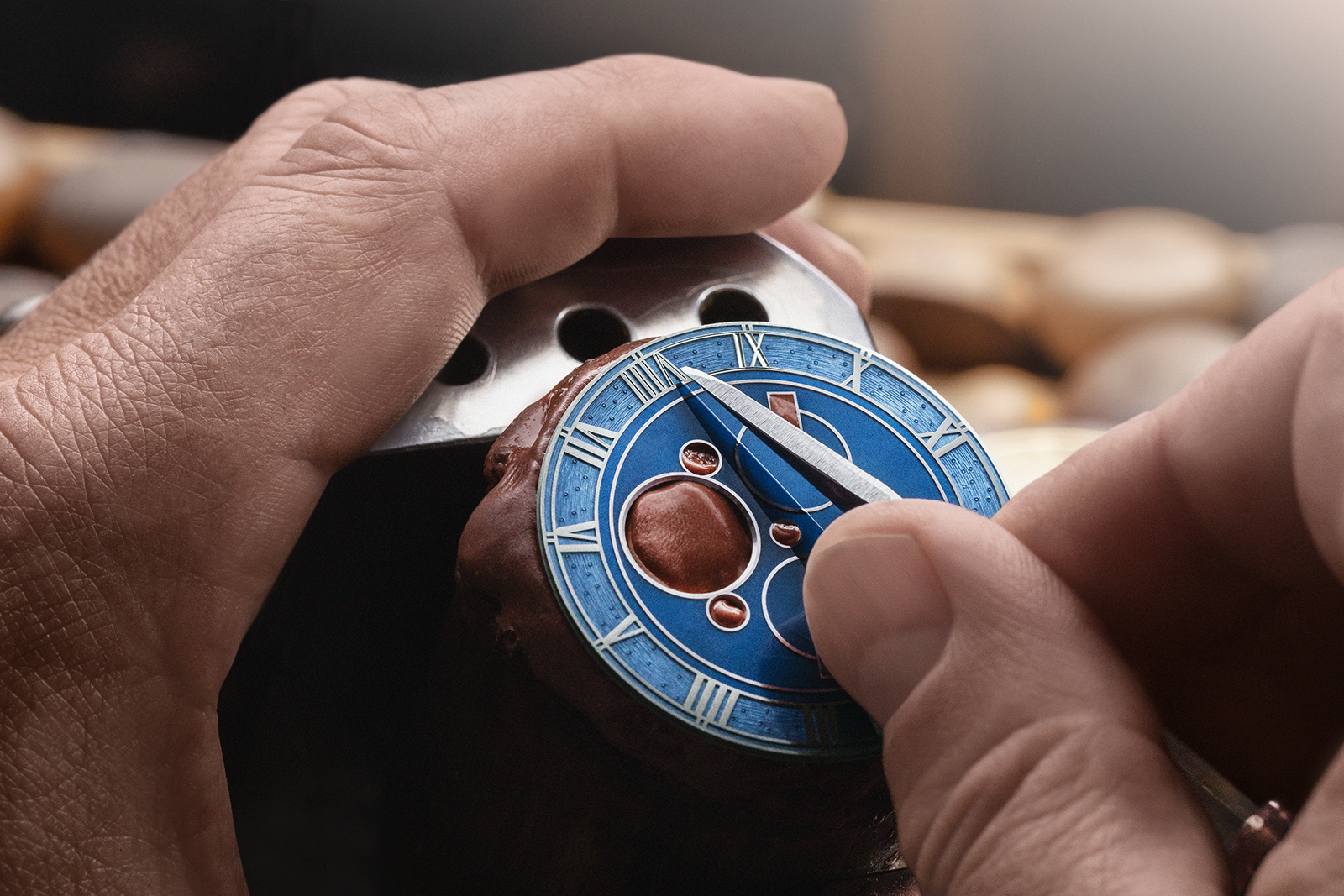
The main dial is executed from an 18k white gold base and is finished with translucent blue grand feu enamel. Applied Roman numerals, engraved by hand, sit above a backdrop of starry trails, a discreet and appealing motif that continues onto the Universal Calendar system at the back.
Completing the ensemble is a hand-made platinum chain, produced using traditional techniques. This is notable since chain-making skills have become increasingly scarce and mostly forgotten as pocket watches have fallen out of favour.
The Universal Calendar
Without question, the most original element of the 150 Heritage is found not on the dial, but is fitted inside the hinged case back. The Universal Calendar is entirely independent of the main movement and works much like a mechanical computer.
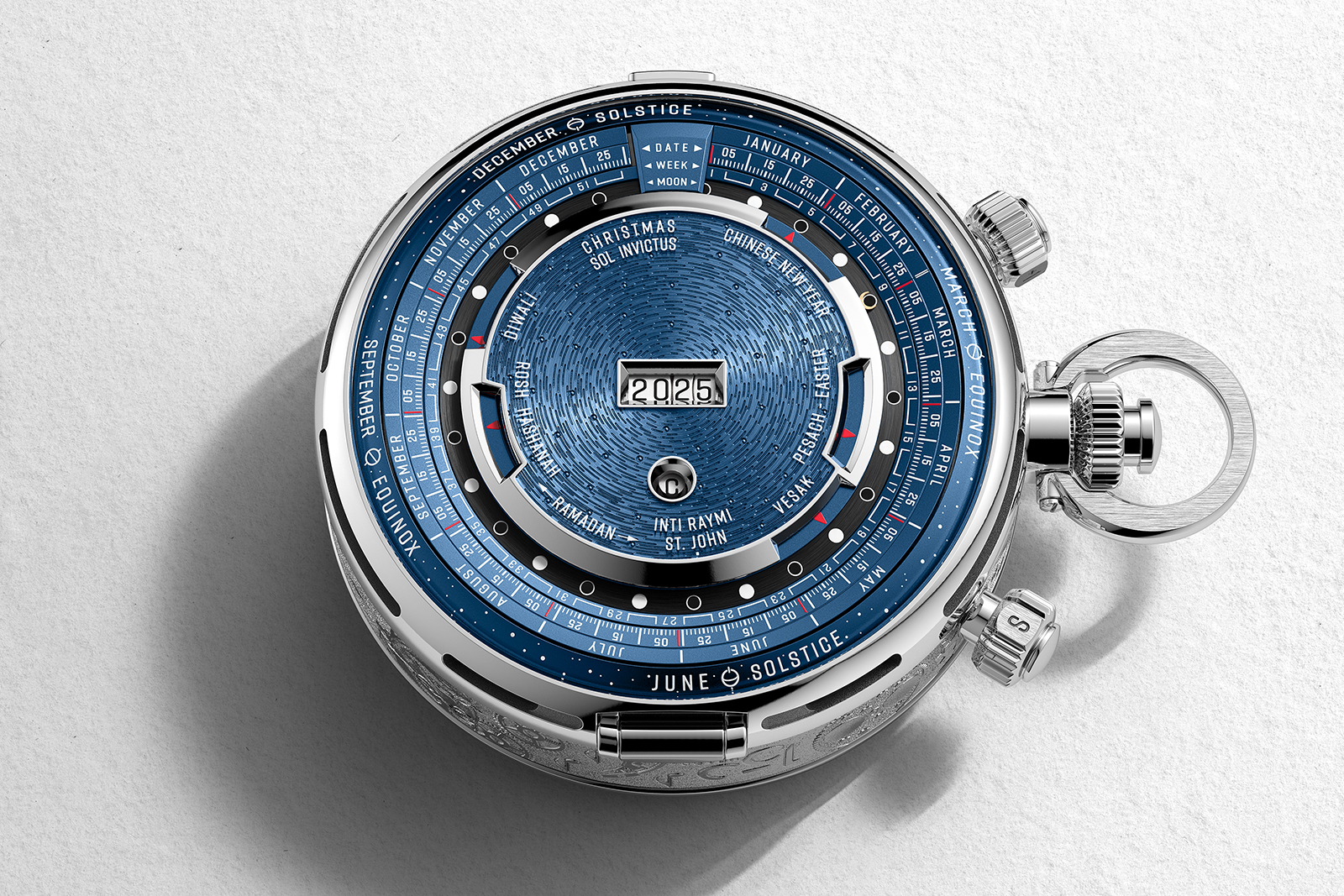
Unlike the limited functionality of a traditional Gregorian perpetual calendar format, the Universal Calendar is conceived as a broader reflection of how human societies and cultures have measured time. Using the Gregorian system as a reference point, the device overlays solar, lunar and lunisolar cycles on a single large dial, making for a panorama of temporal information.
The display incorporates 18 indications. Those include years, leap years, months, dates, weeks, moon phases, solstices and equinoxes, as well as nine cultural and religious celebrations drawn from different traditions.

Exposed mechanics inside the Universal Calendar. The array of levers and gears rivals the complexity of Calibre 1150 itself.
These include solar-based celebrations such as Christmas and Saint John’s Day, lunar-abiding events like the beginning of Ramadan, and lunisolar events such as, Catholic Easter, Chinese New Year, Diwali, Rosh Hashanah and Vesak. The Universal Calendar links each celebration directly to the astronomical phenomenon that defines it.
By using a rotary selector on the inside of the hinged case back, the user can cycle through years, instantly gaining an overview of the important dates and celebrations. Impressively, the mechanism is programmed for a wide range of dates from 1900 to 2099.

Since the Universal Calendar is not linked in any way to the movement, it doesn’t depend on the power reserve and won’t automatically advance like a normal calendar. Instead, the user can rely on the perpetual calendar on the main dial for the live date, while consulting the mechanical computer on the back to know when certain events and holidays will take place for a given year.
Mechanically programming each of these cycles and events accurately is one of the most important feats of the 150 Heritage. While all these celebrations and religiously-relevant dates are derived from the same natural cycles of Sun and Moon, the calculation rules and rigours vastly differ from culture to culture. Having all these display so naturally on a single device is nothing short of extraordinary.
Key specs and price
Audemars Piguet 150 Heritage Pocket Watch
Ref. 75150PT.OO.01
Diameter: 50 mm
Height: 23.4 mm
Material: Platinum
Crystal: Sapphire
Water resistance: Presumably dust resistant
Movement: Calibre 1150
Features: Hours, minutes, split-seconds flyback chronograph, flying tourbillon, grande et petite sonnerie, minute repeater, moon phase, semi-Gregorian perpetual calendar, Universal Calendar.
Frequency: 28,800 beats per hour (4 Hz)
Winding: Manual
Power reserve: 60 hours
Fixture: Platinum or white gold handmade chain, 40 cm in length
Limited edition: Two unique pieces in platinum, eight more in white gold to follow
Availability: Directly from Audemars Piguet
Price: CHF2.5 million in platinum (~US$3.2 million) and CHF2.35 million (~$US3 million) in white gold
Updated 4, Febuary 2026 – Added pricing and upcoming white gold variant.
Back to top.