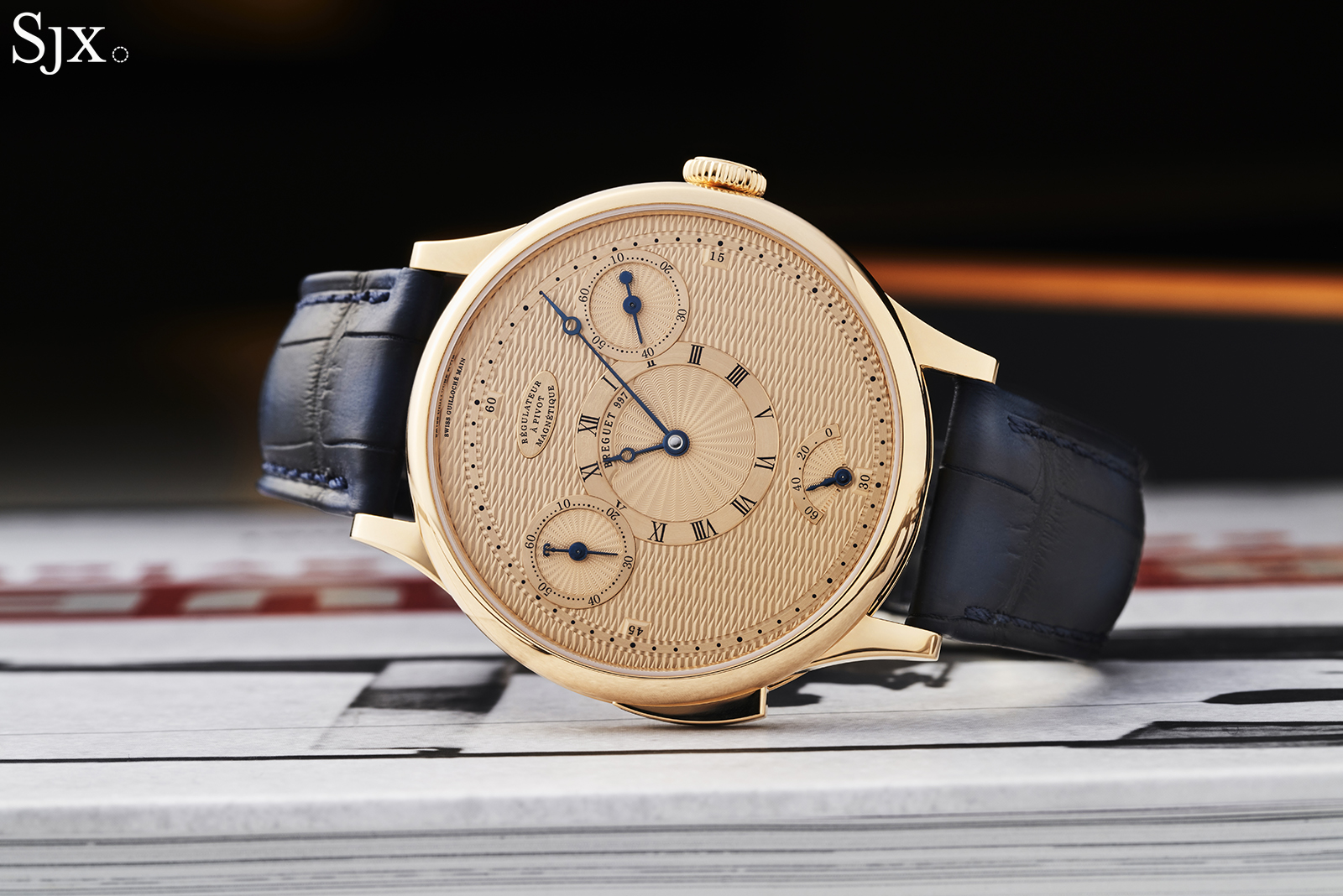
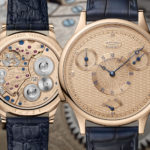
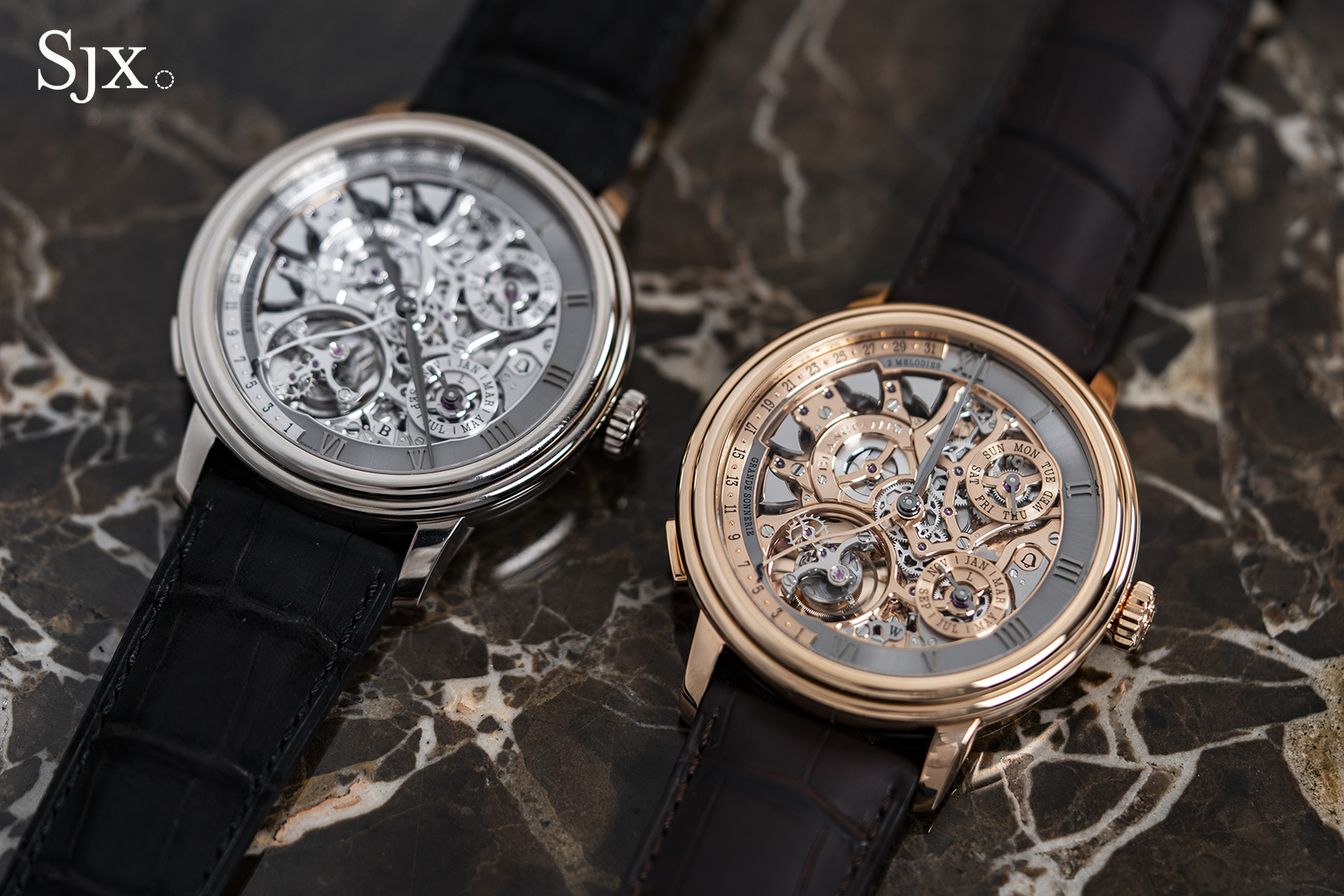
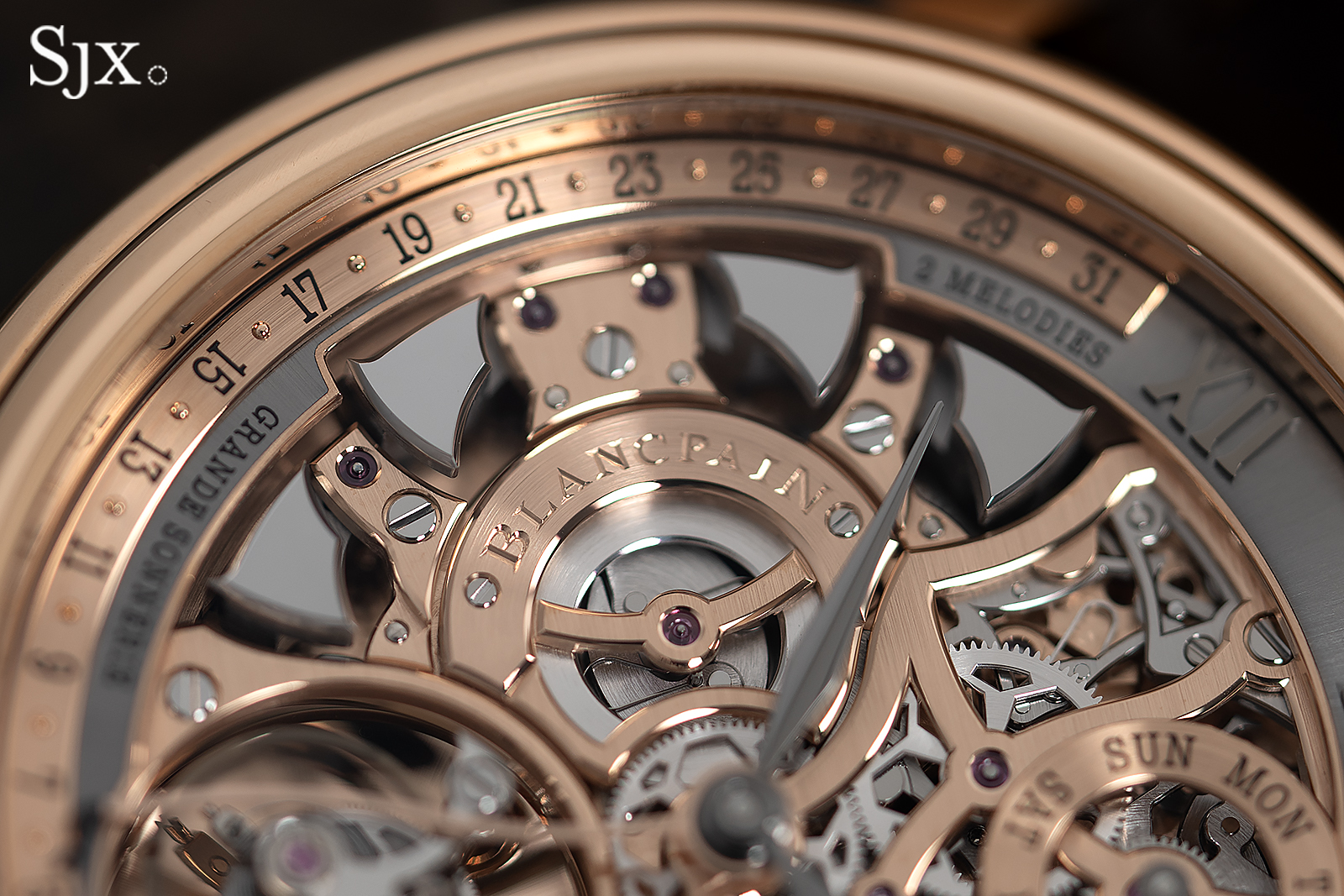
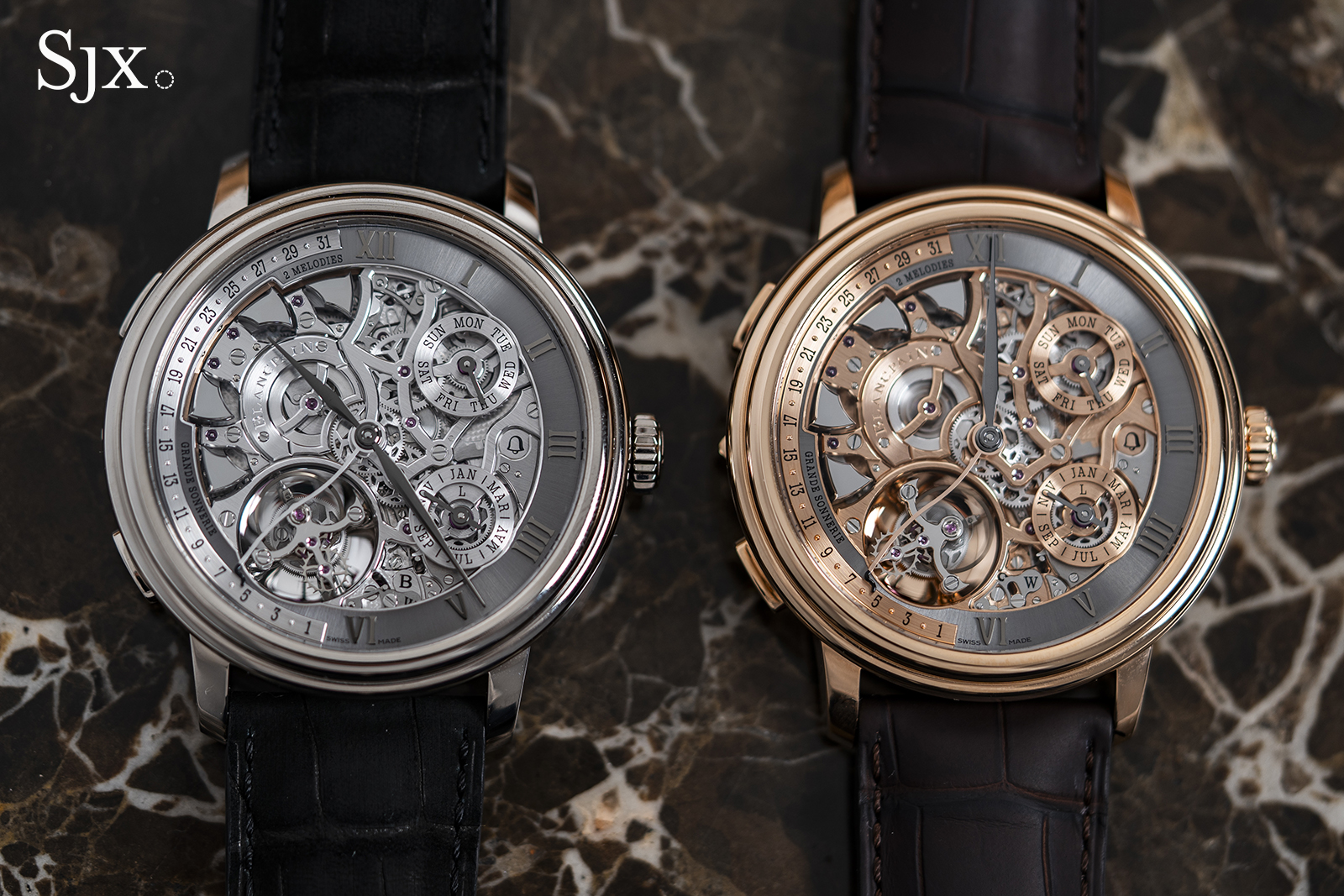
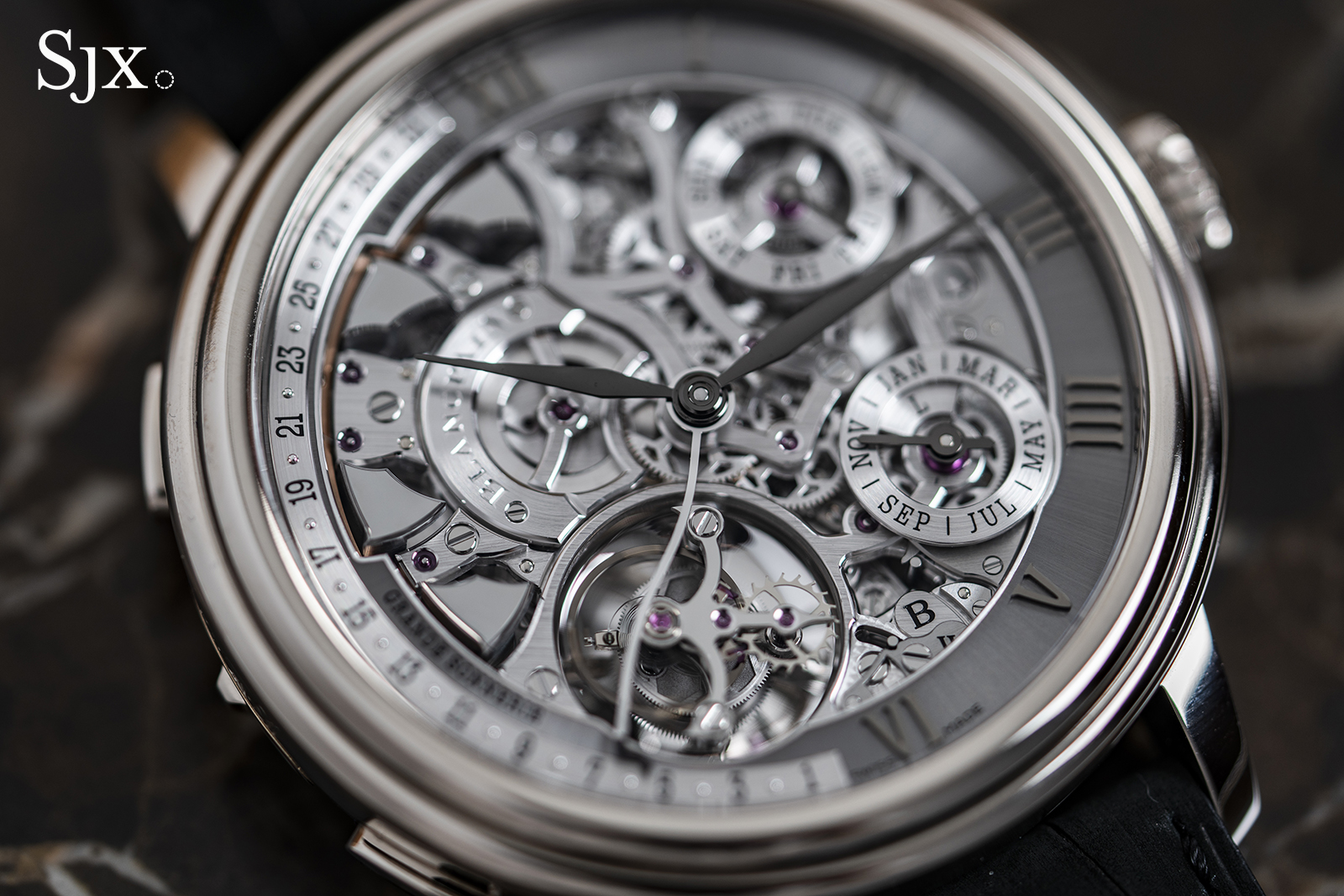
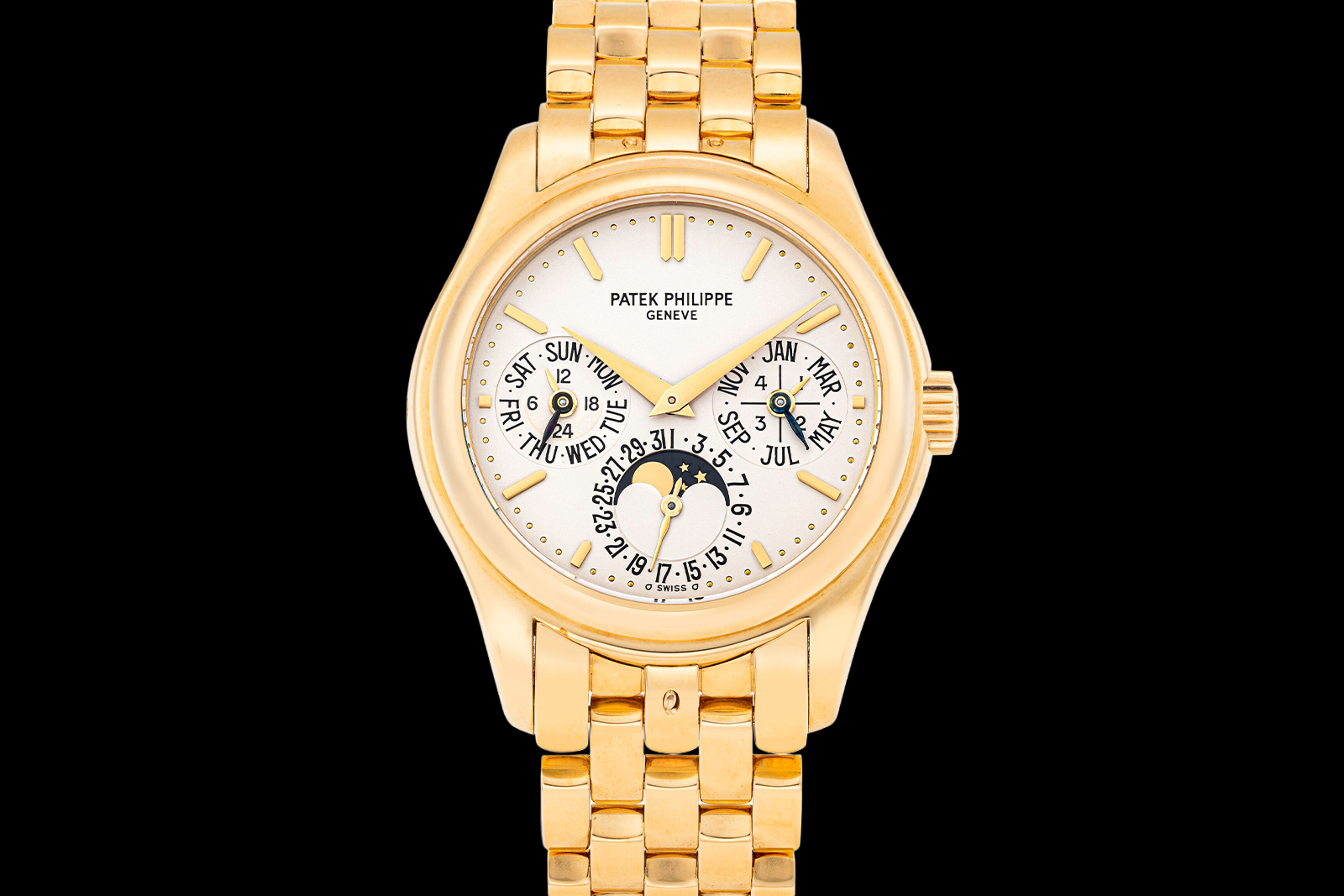
Breguet has enjoyed a great 250th anniversary year – one that promises to end with a big reveal in early December – with several commemorative editions launched for the occasion. The best of the lot, however, is undoubtedly the Classique 7225.
Equipped with one of the most advanced time-only movements on the market, the Classique 7225 combines cutting edge modern watchmaking of the best industrial-haute horlogerie variety with an unexpectedly captivating aesthetic. Some of its details don’t quite make sense, yet the 7225 as a whole makes a lot of sense.
Initial thoughts
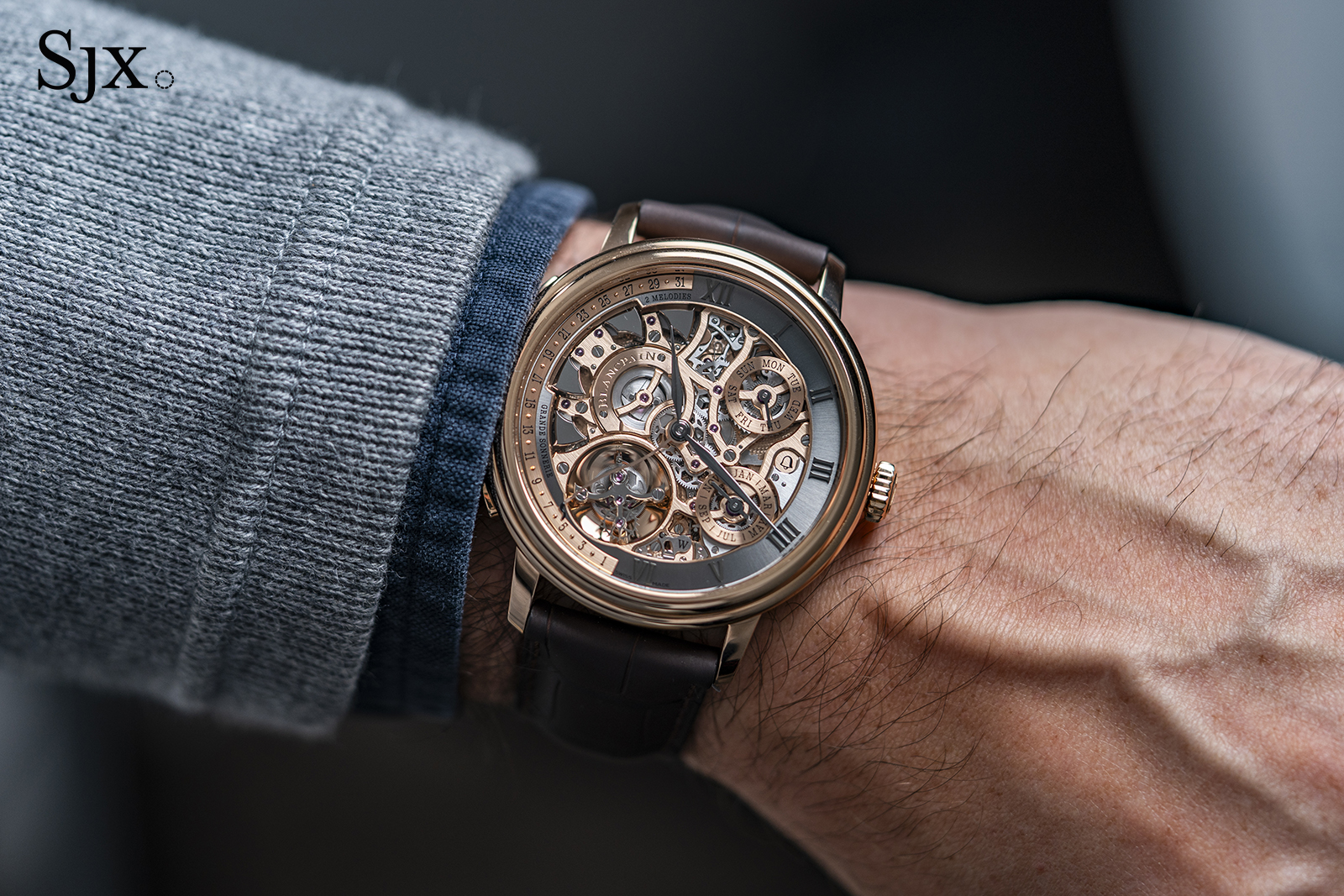
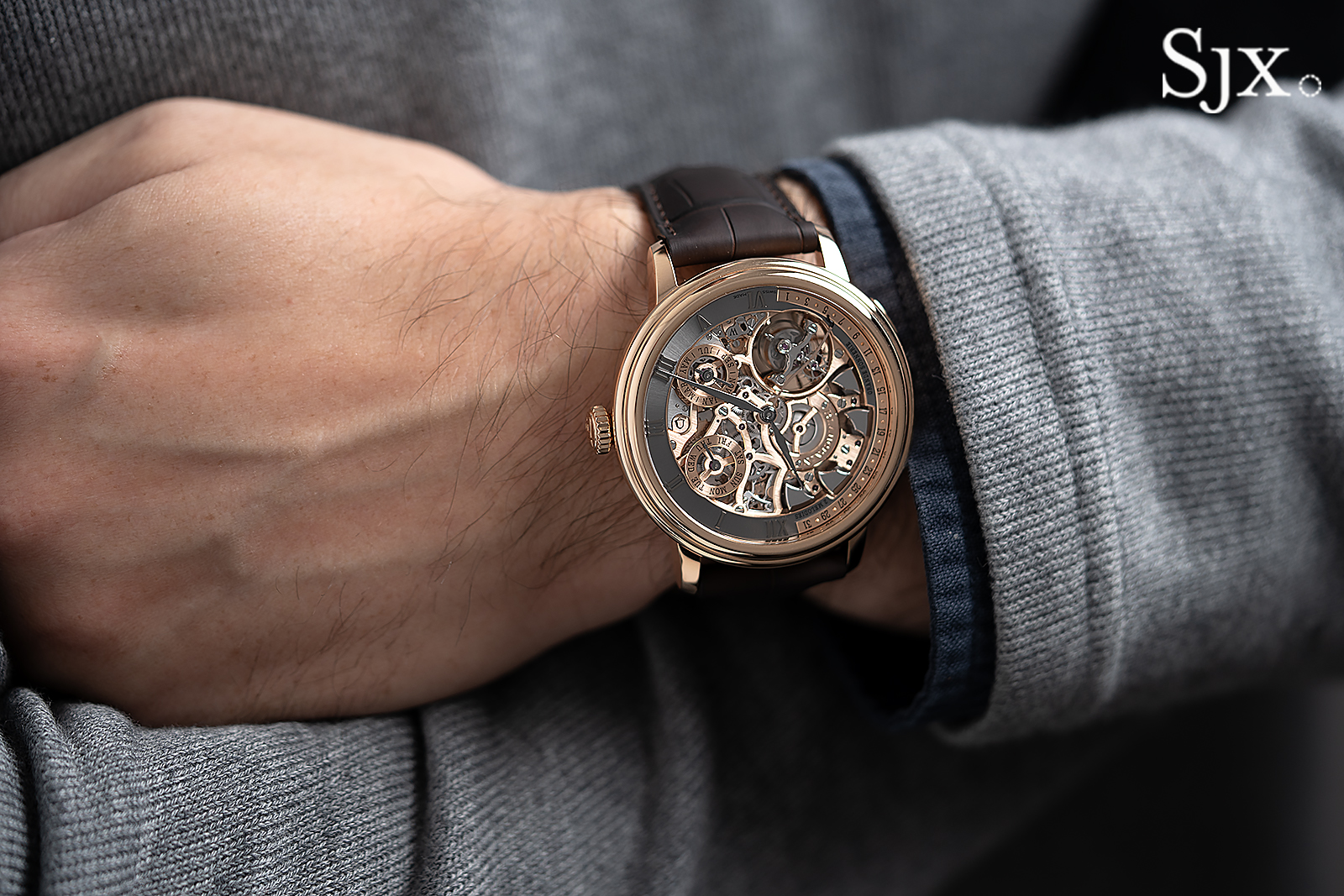
The Classique 7225 has a great deal of tactile appeal – it feels good on the wrist. In fact, the 7225 is probably the first Breguet in a long time that is sexy. If there’s one Breguet in today’s catalogue I really want, it’s this one.
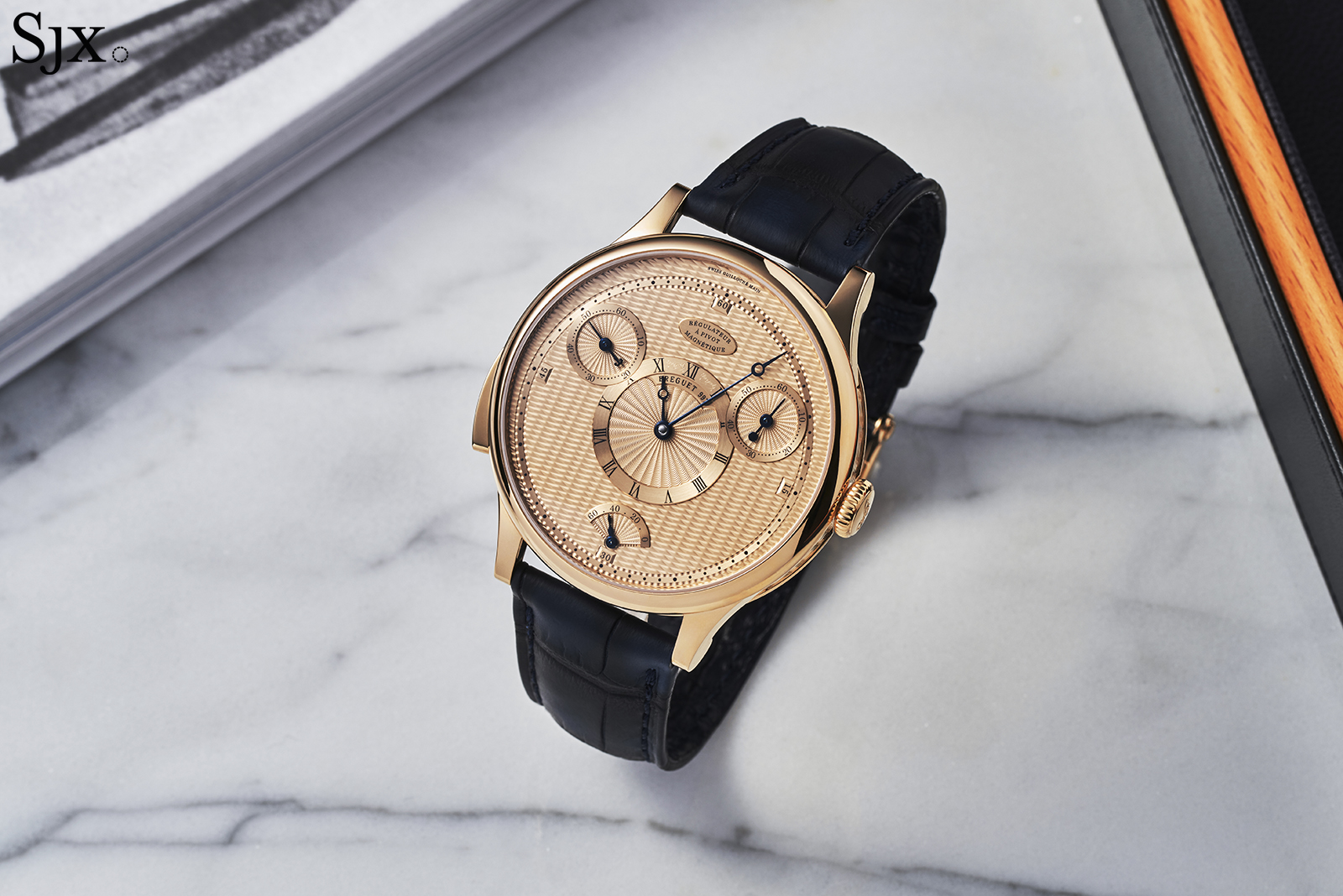
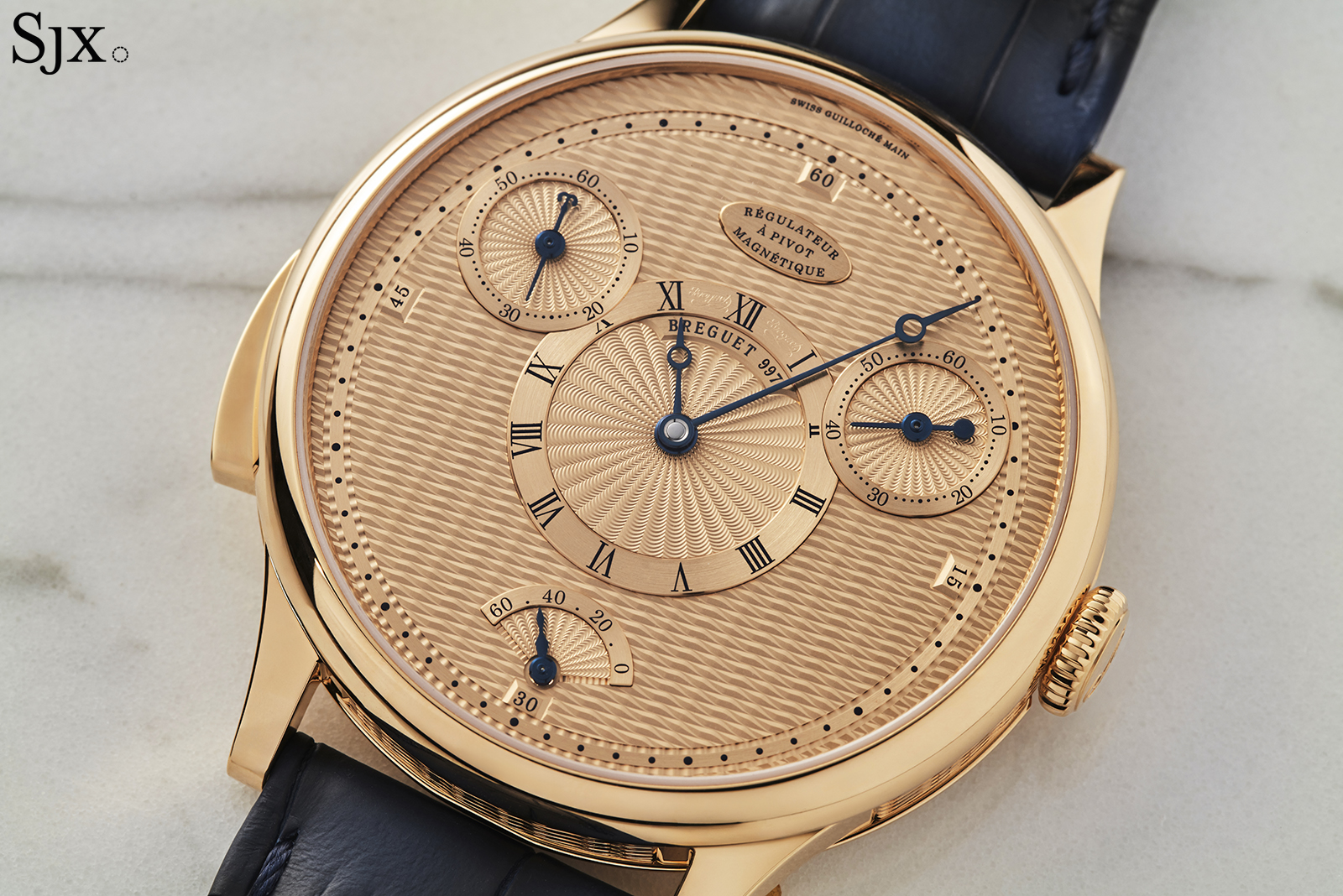
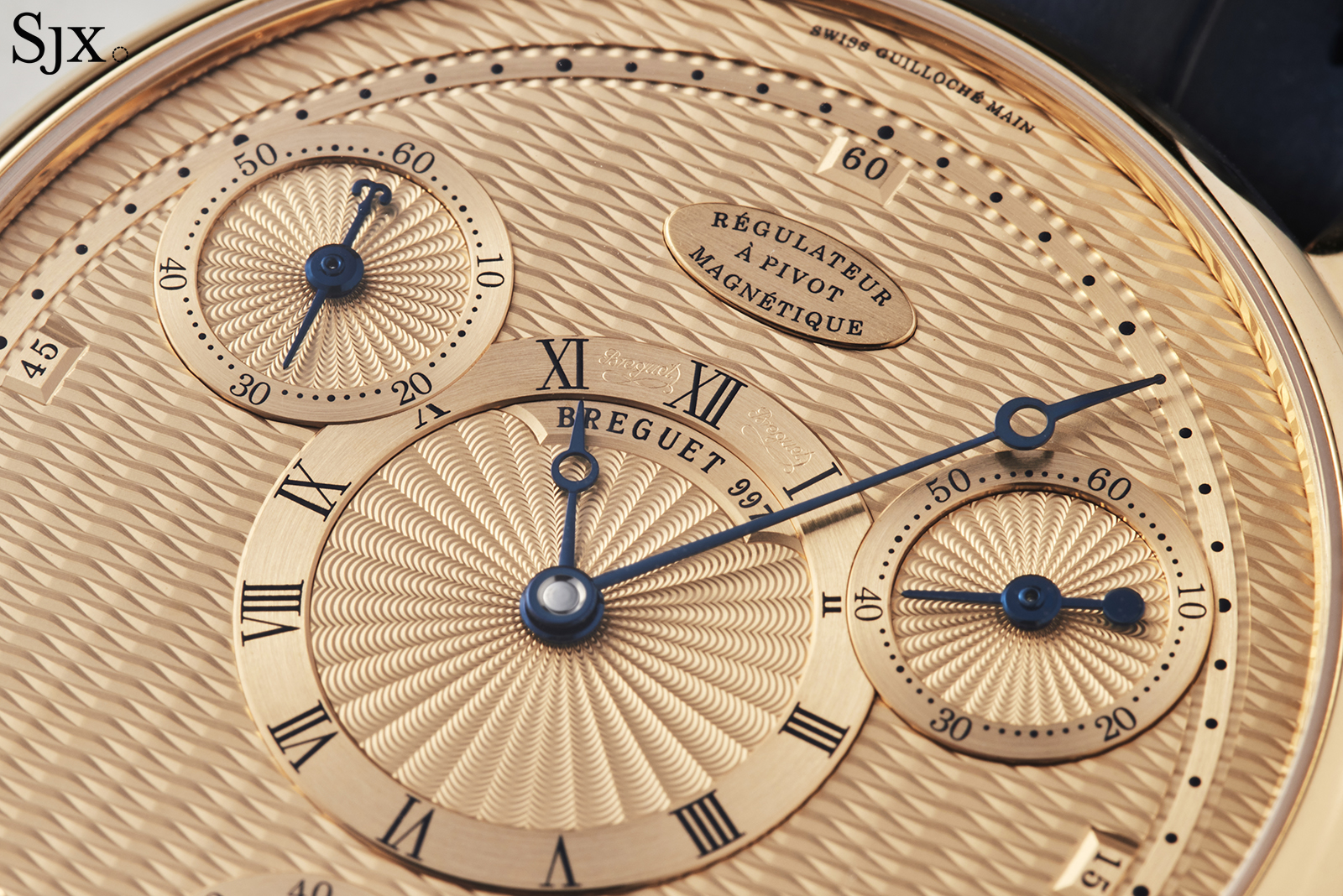
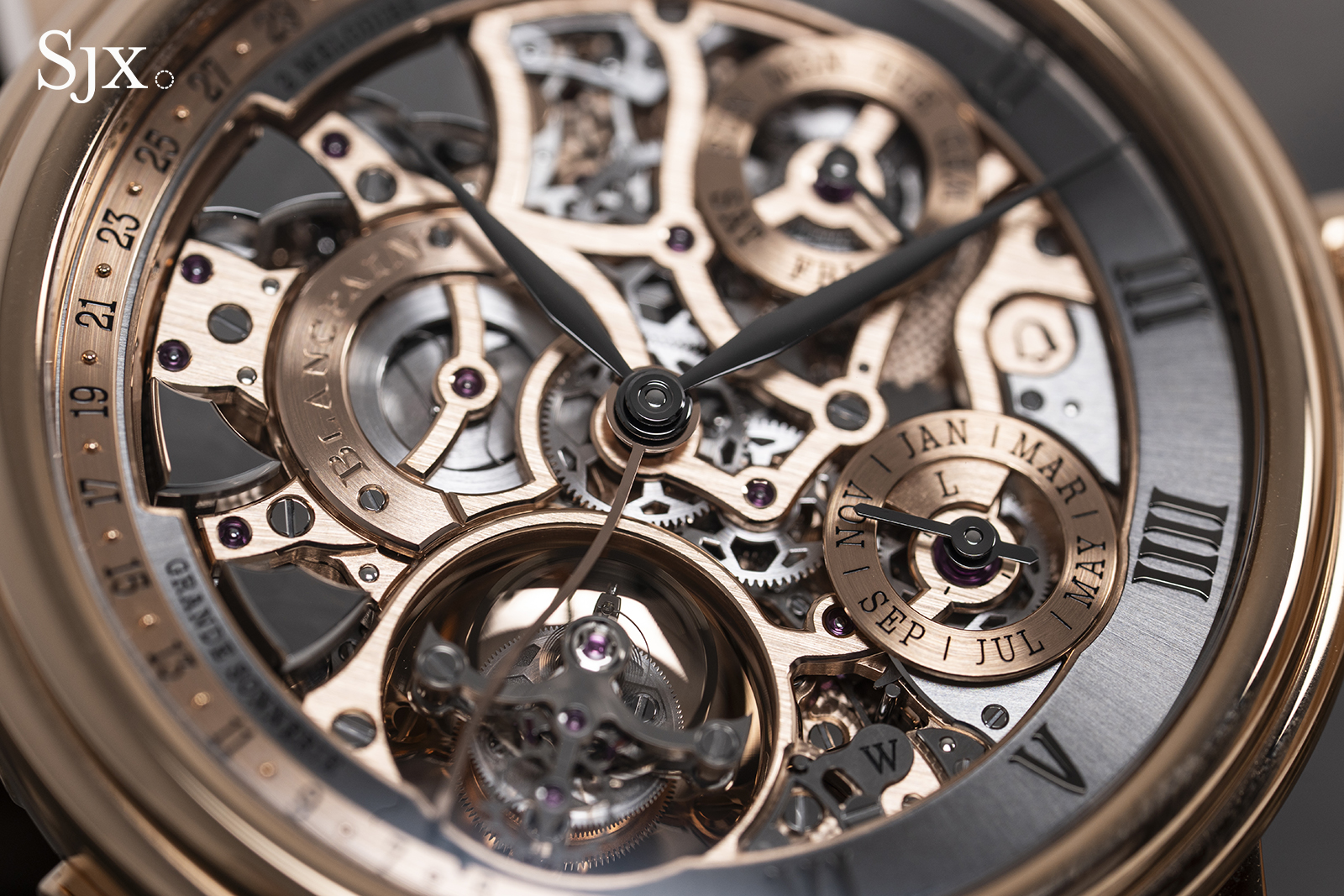
At 41 mm, the 7225 might measure large for such a watch, but the proportions are just right. The case is thin enough, while the wide dial maximises the impact of the guilloche on a gold base. If anything, the design might look odd with a smaller format, since the look comes from a pocket watch after all.
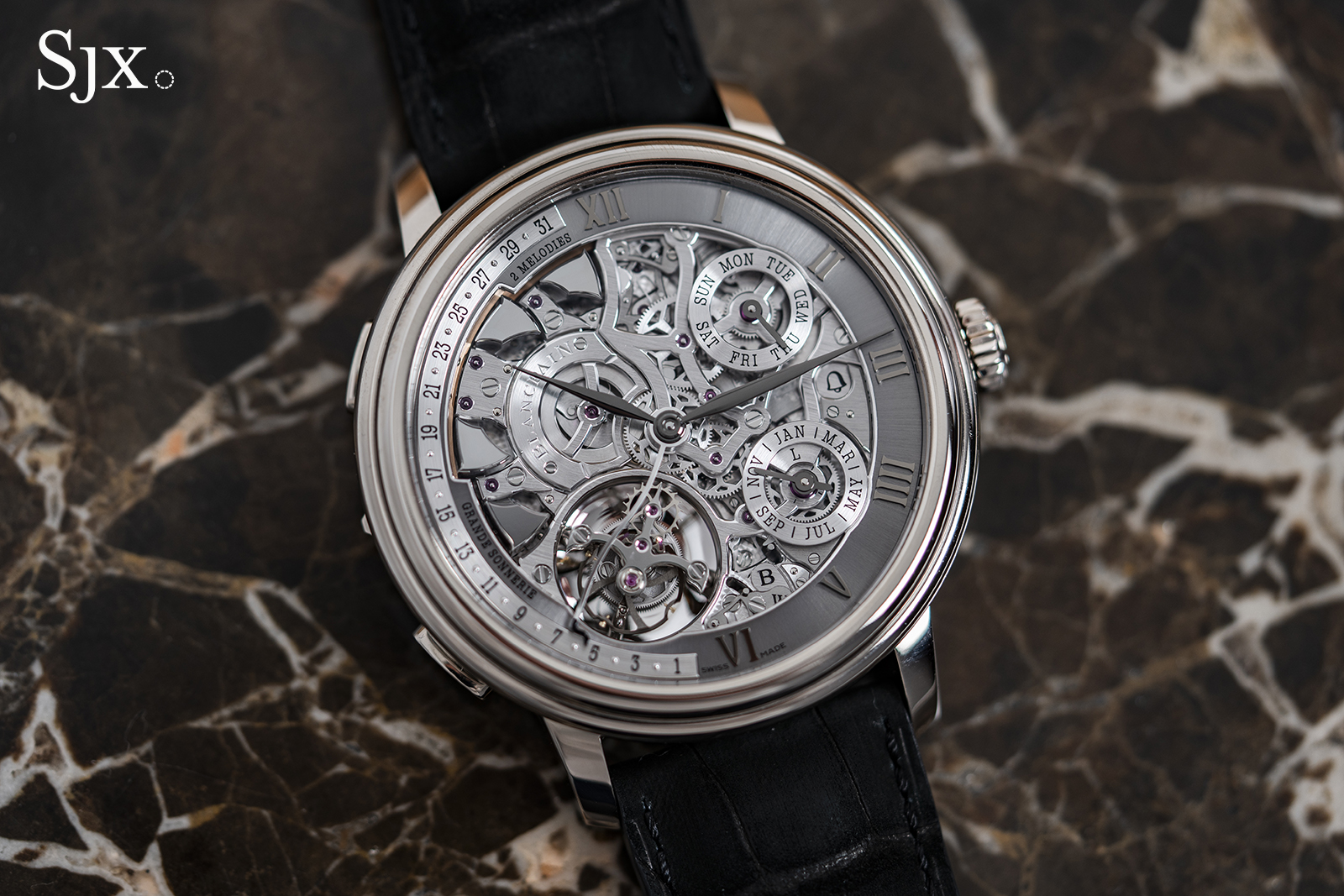
Visually, the 7225 is striking and employs the classic Breguet style to great effect. Almost all the elements are familiar so the watch is recognisably “Breguet”, yet it different from the rest of the catalogue. The 7225 instantly looks like a Breguet, which shows its creators have an instinctive understanding of the brand.
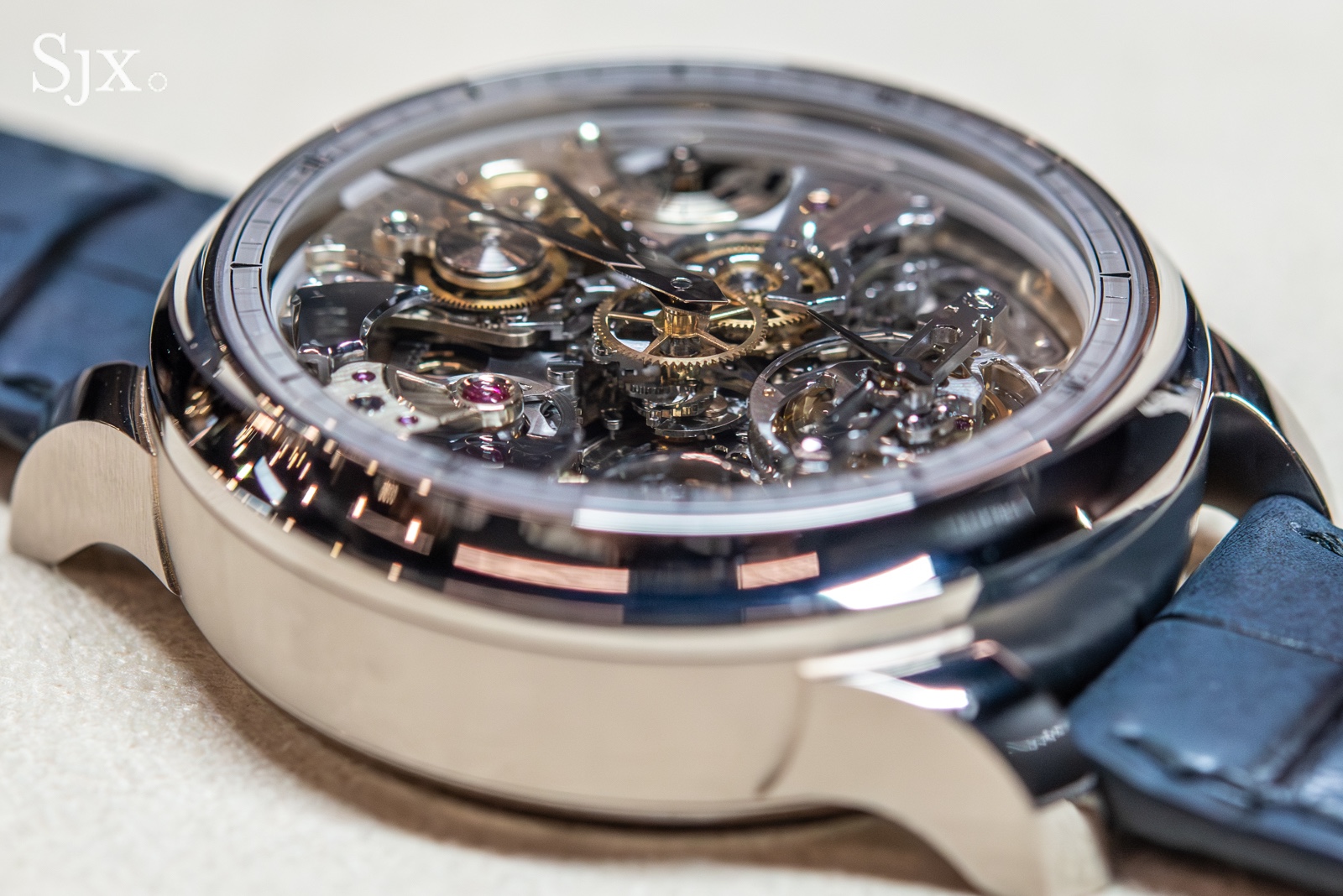
With its “floating” magnetic balance staff, the cal. 74SC inside is perhaps the most advanced hand-wind movement on the market (the cal. 7135 of the Rolex Land-Dweller is probably the most advanced overall), even though it’s over a dozen years old now, having been first launched in the Classique Chronometrie 7727. This underlines Breguet’s impressive technical know-how, but also the sparse innovation in terms of industrial-scale chronometry.
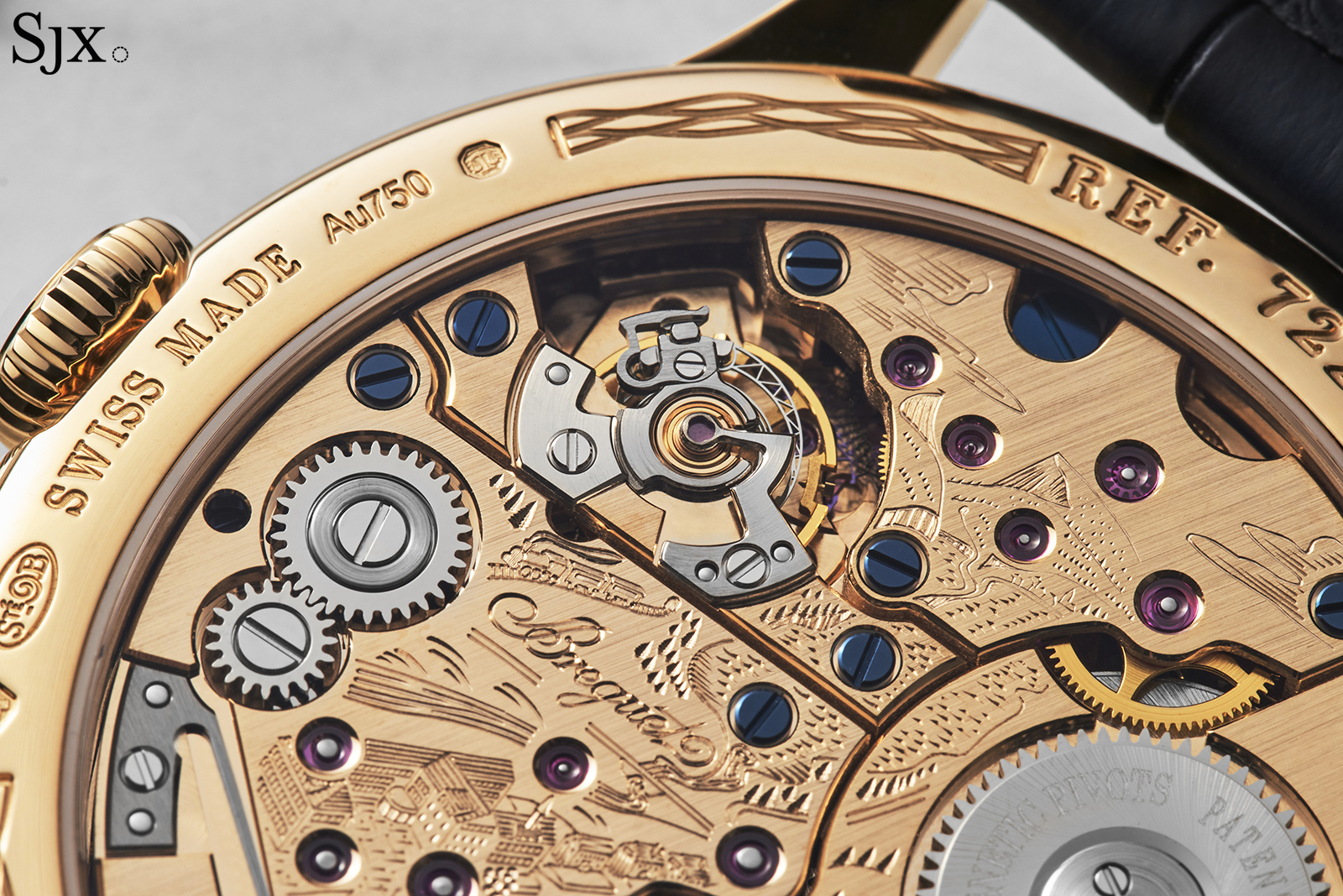
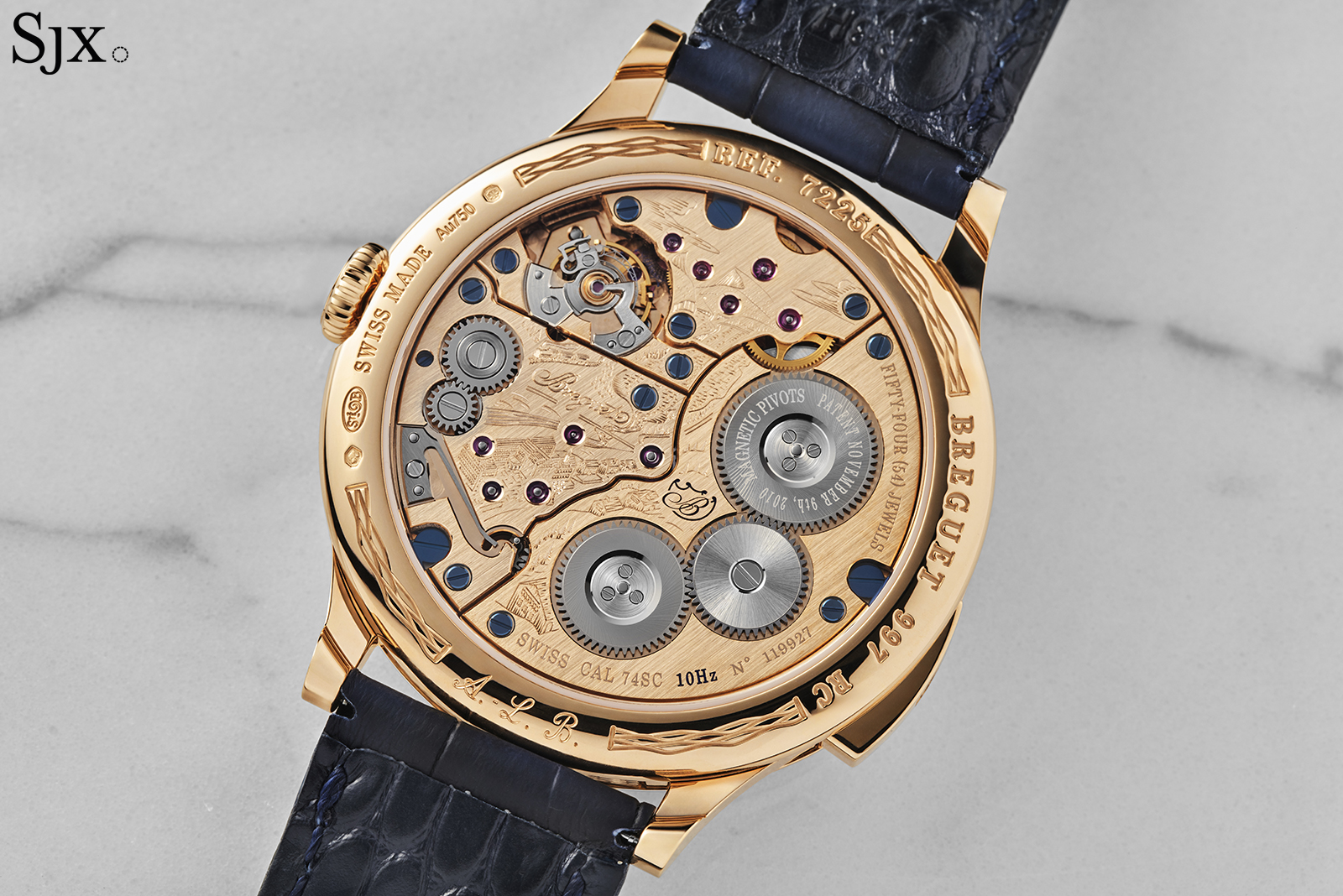
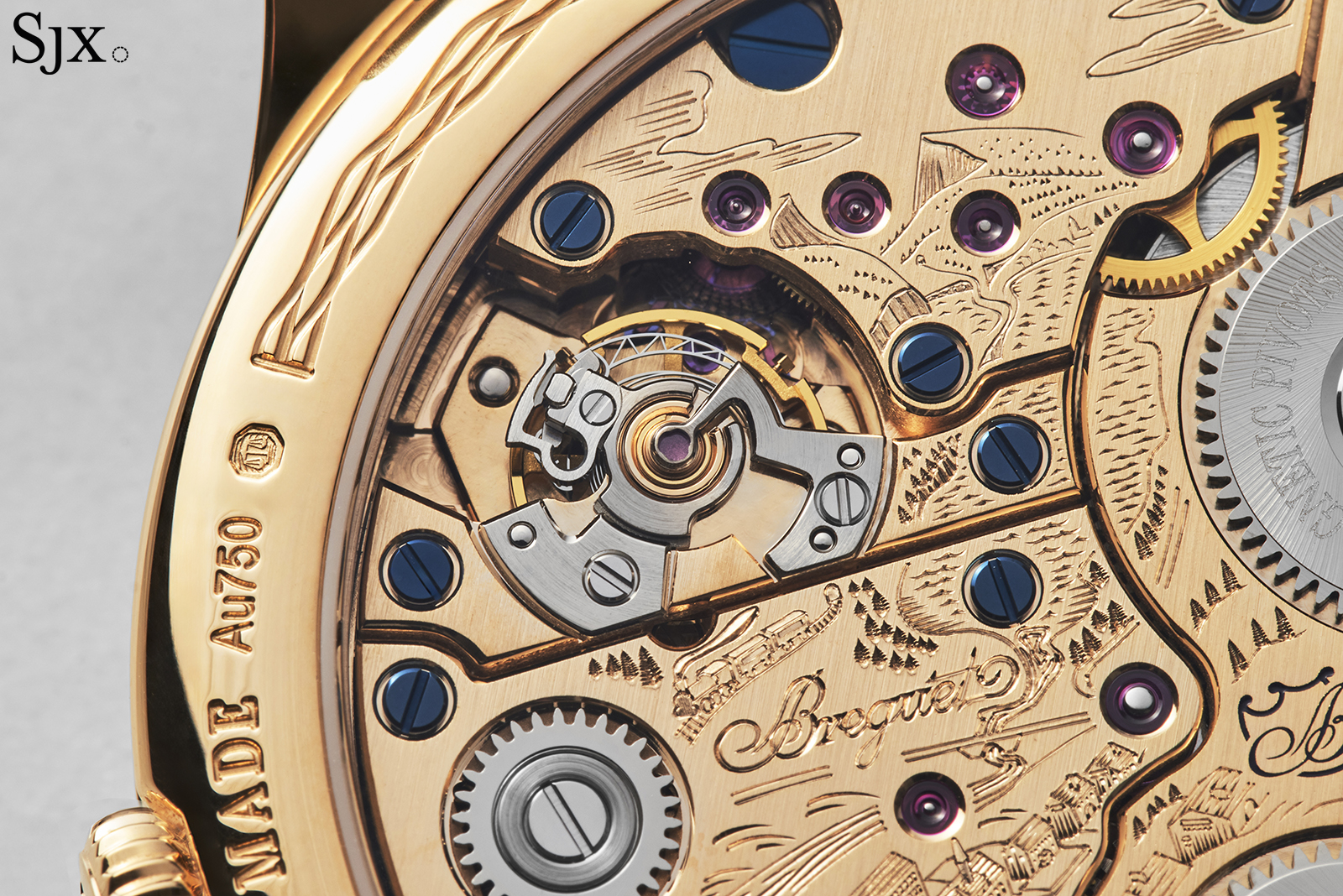
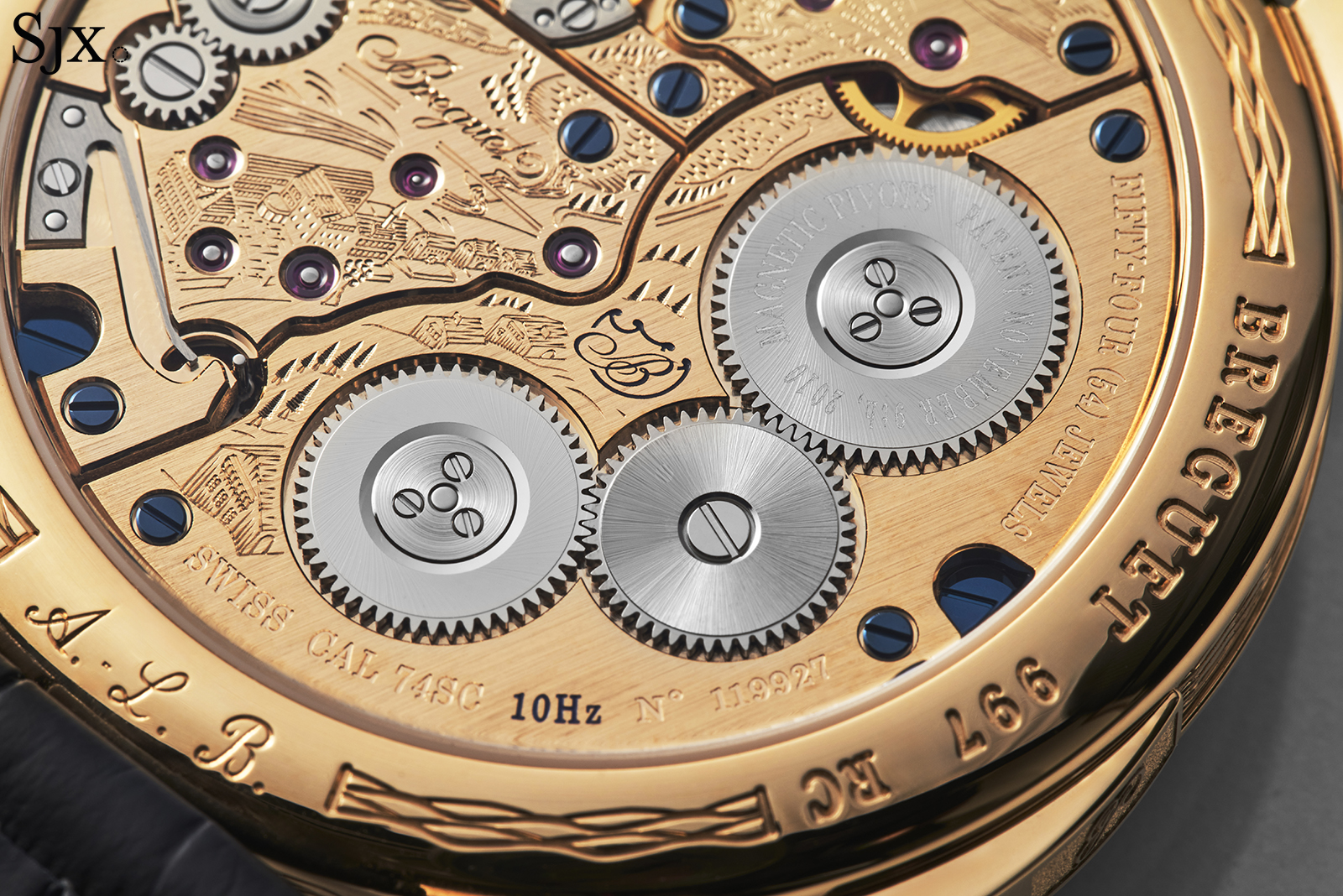
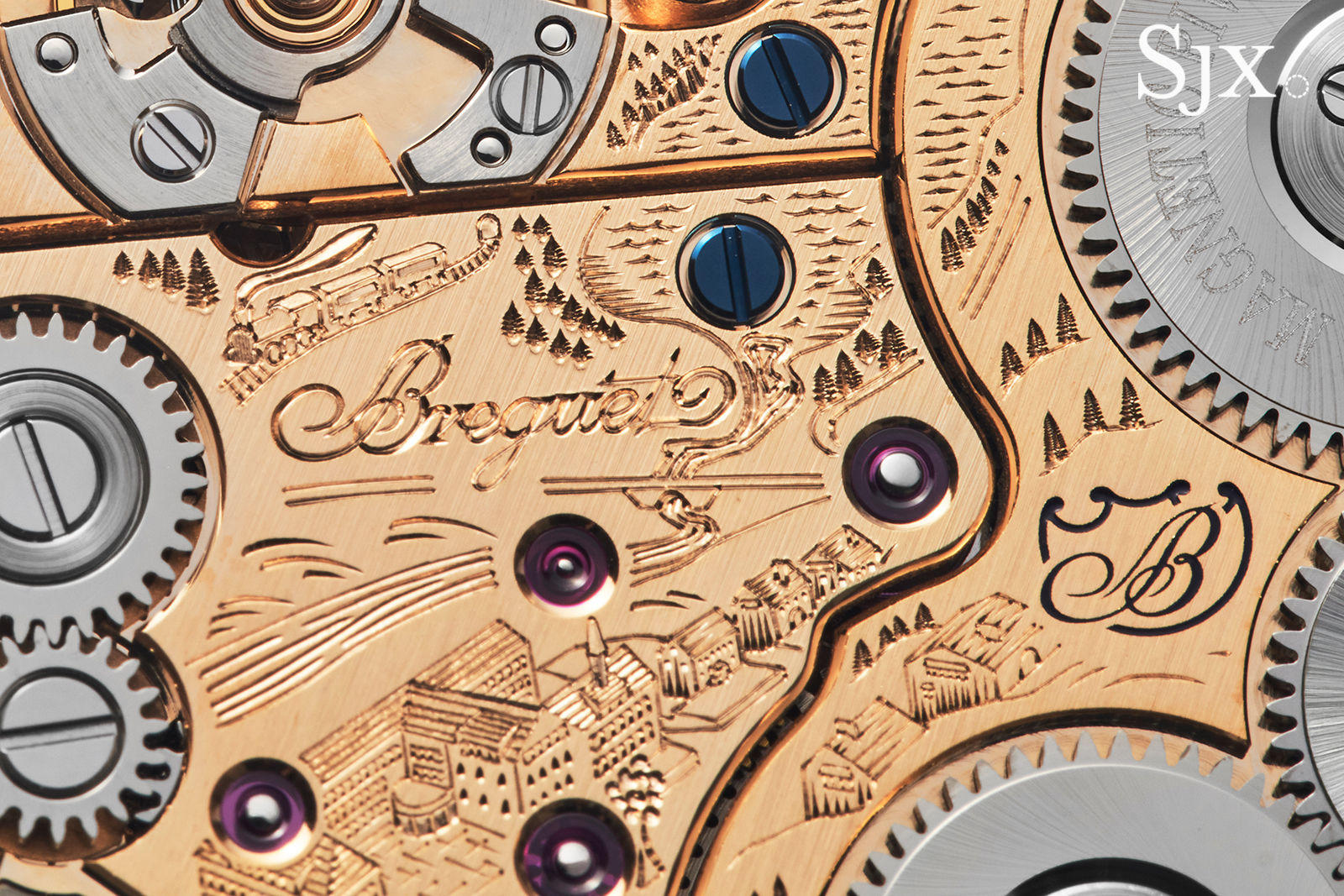
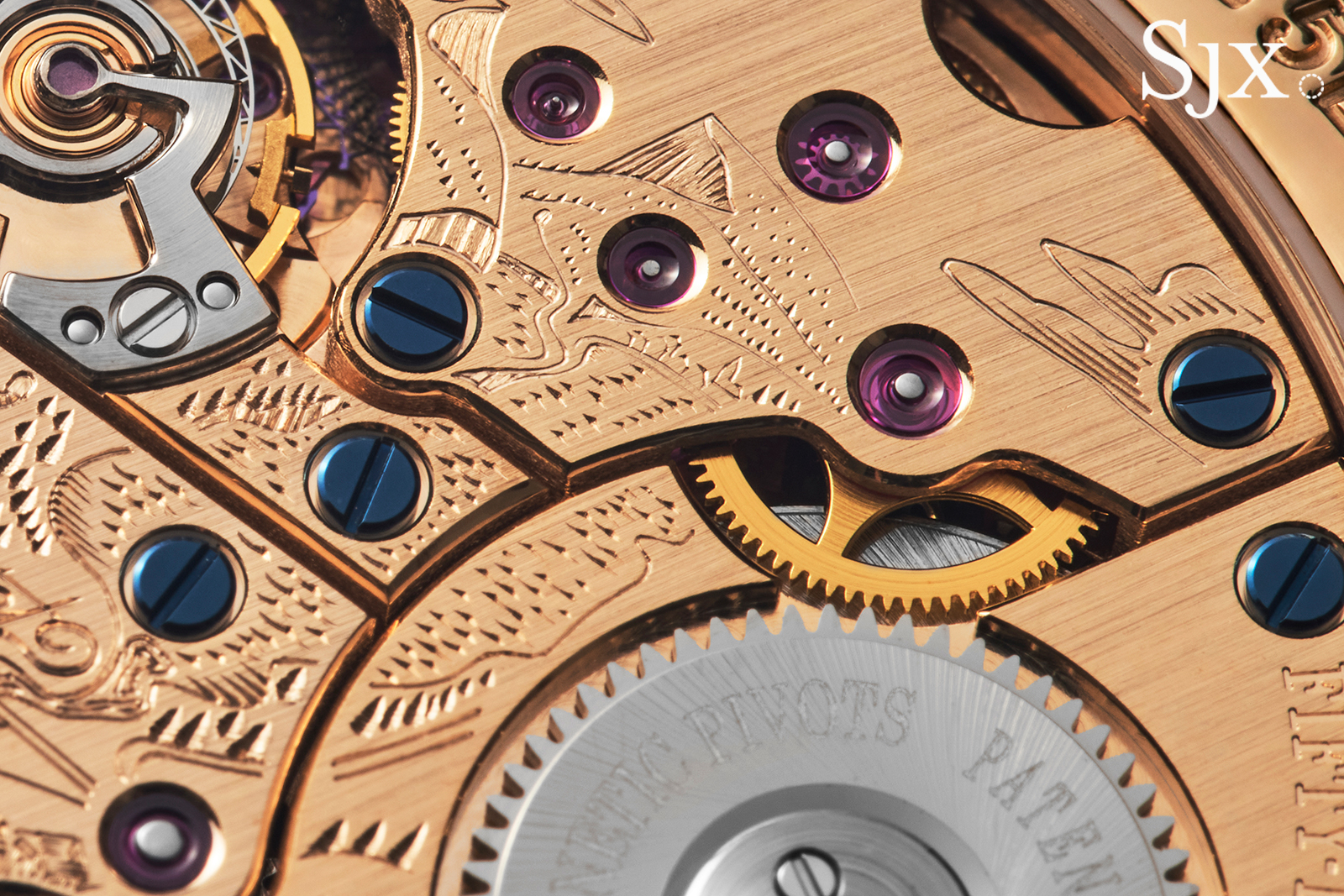
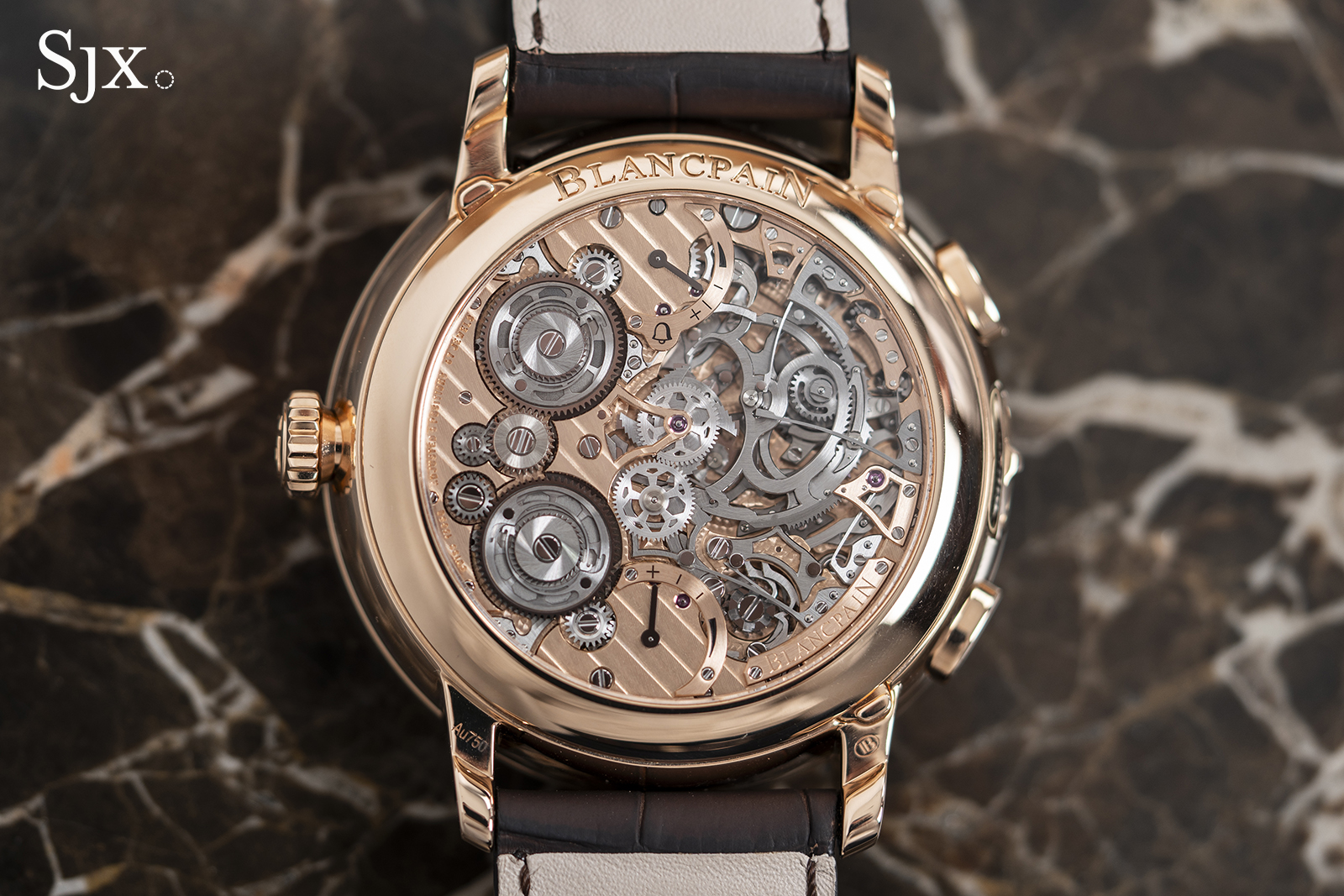
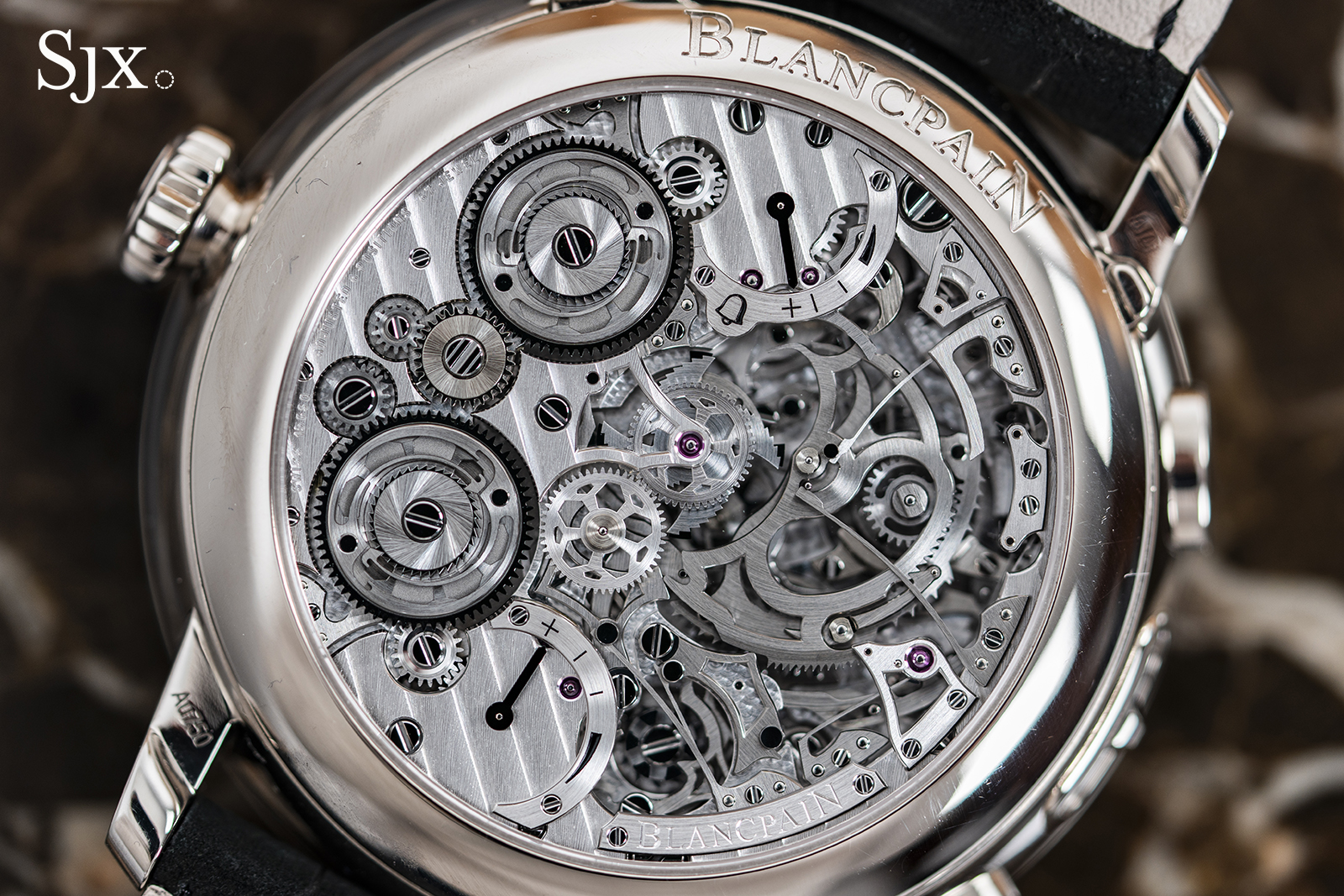
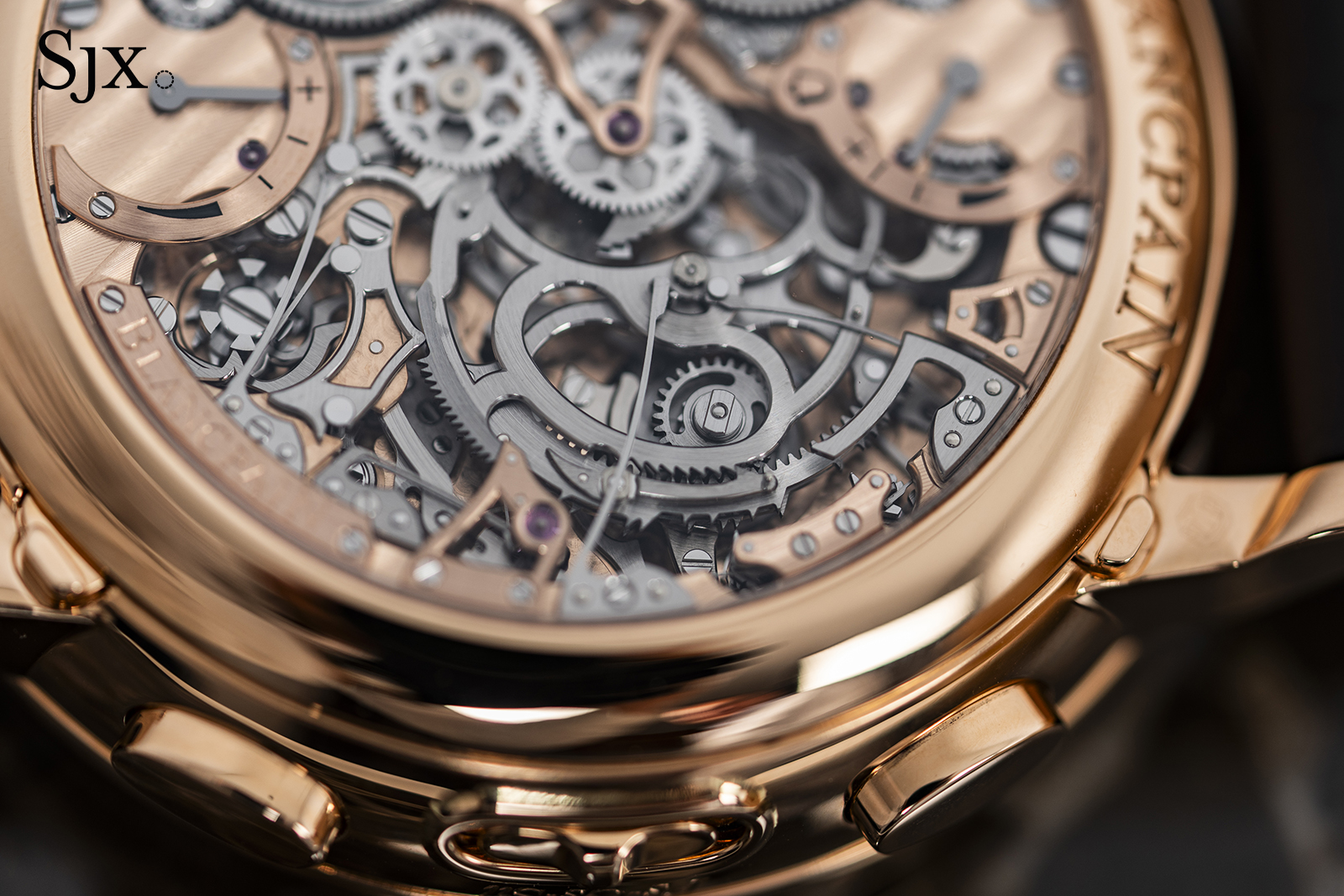
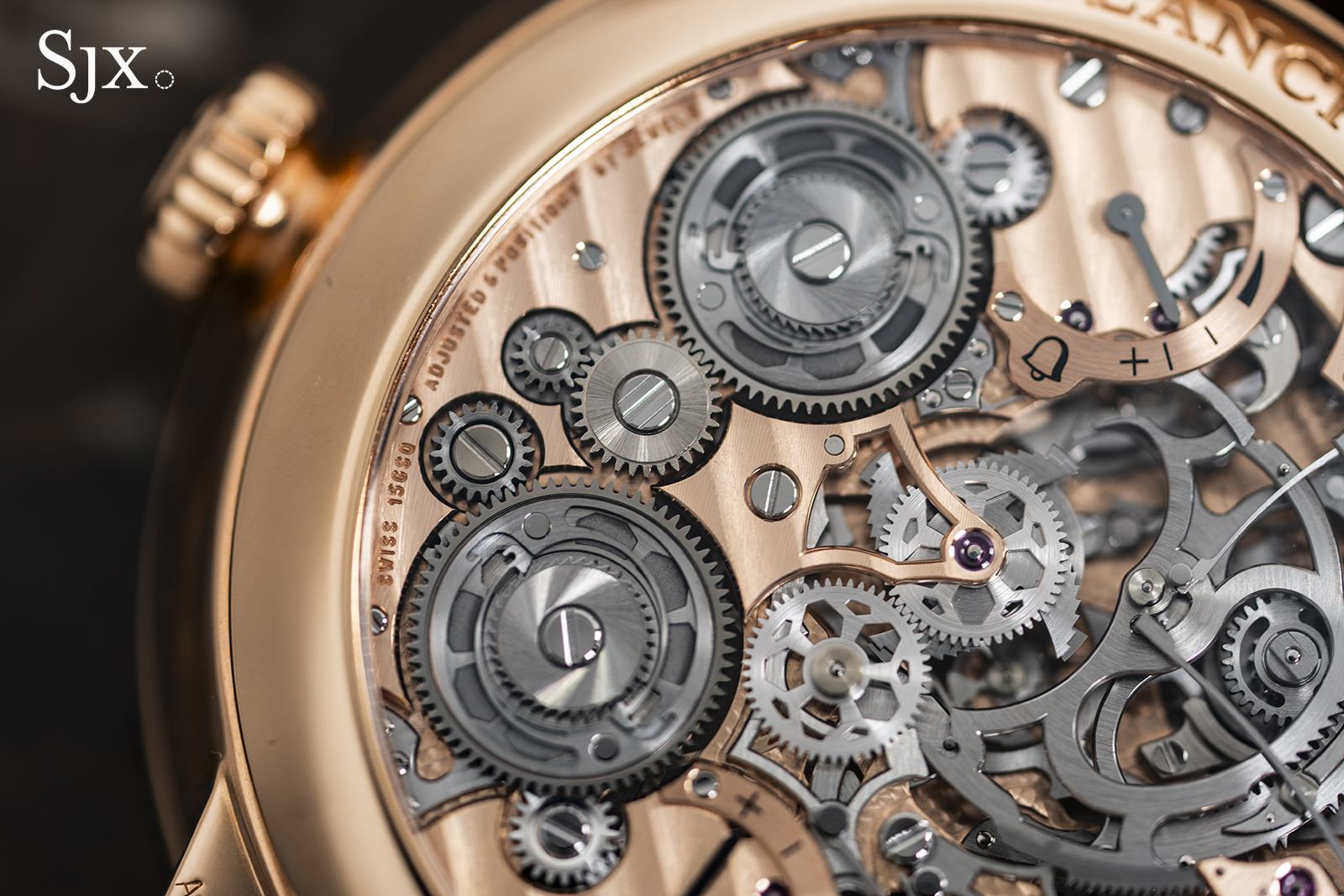
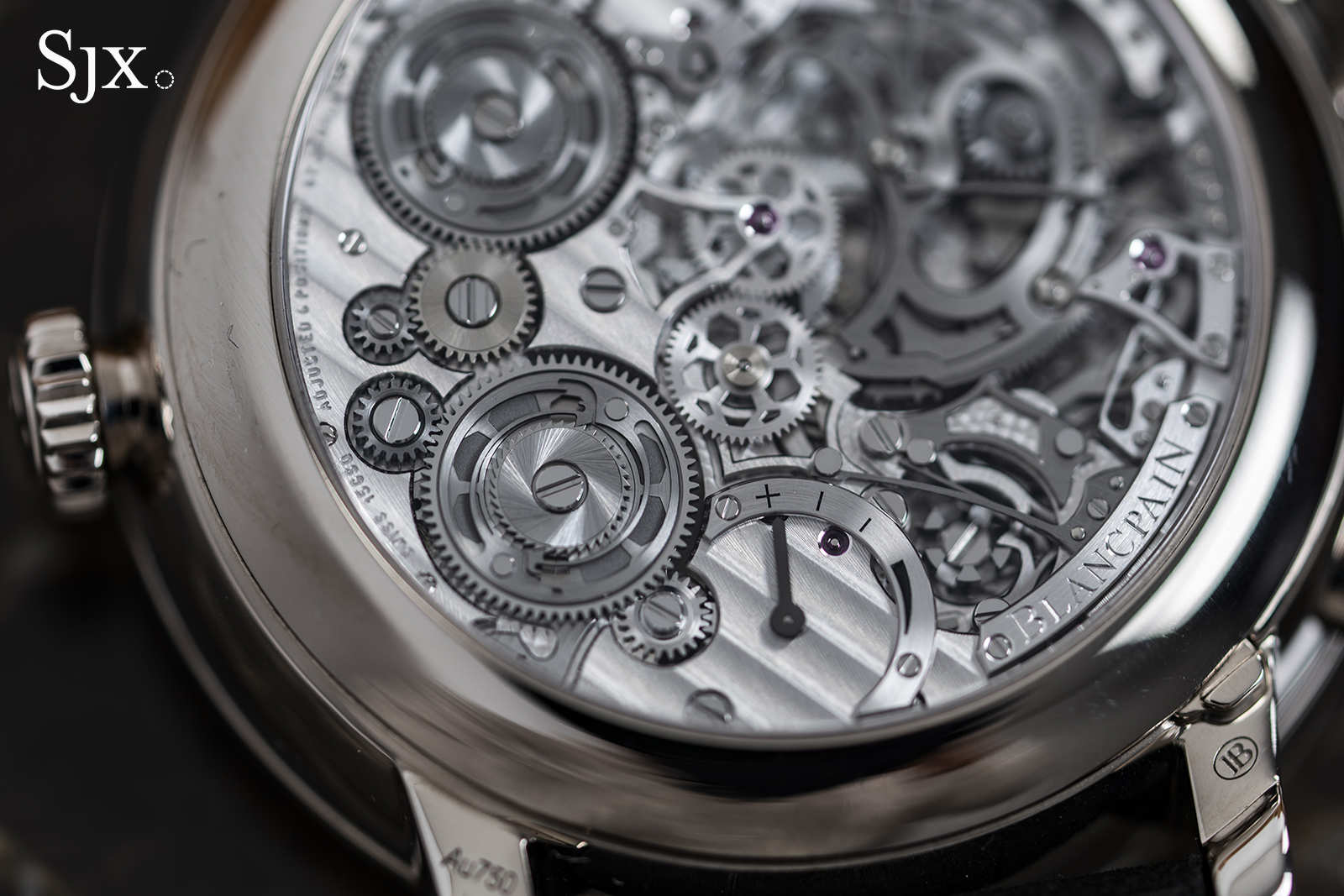
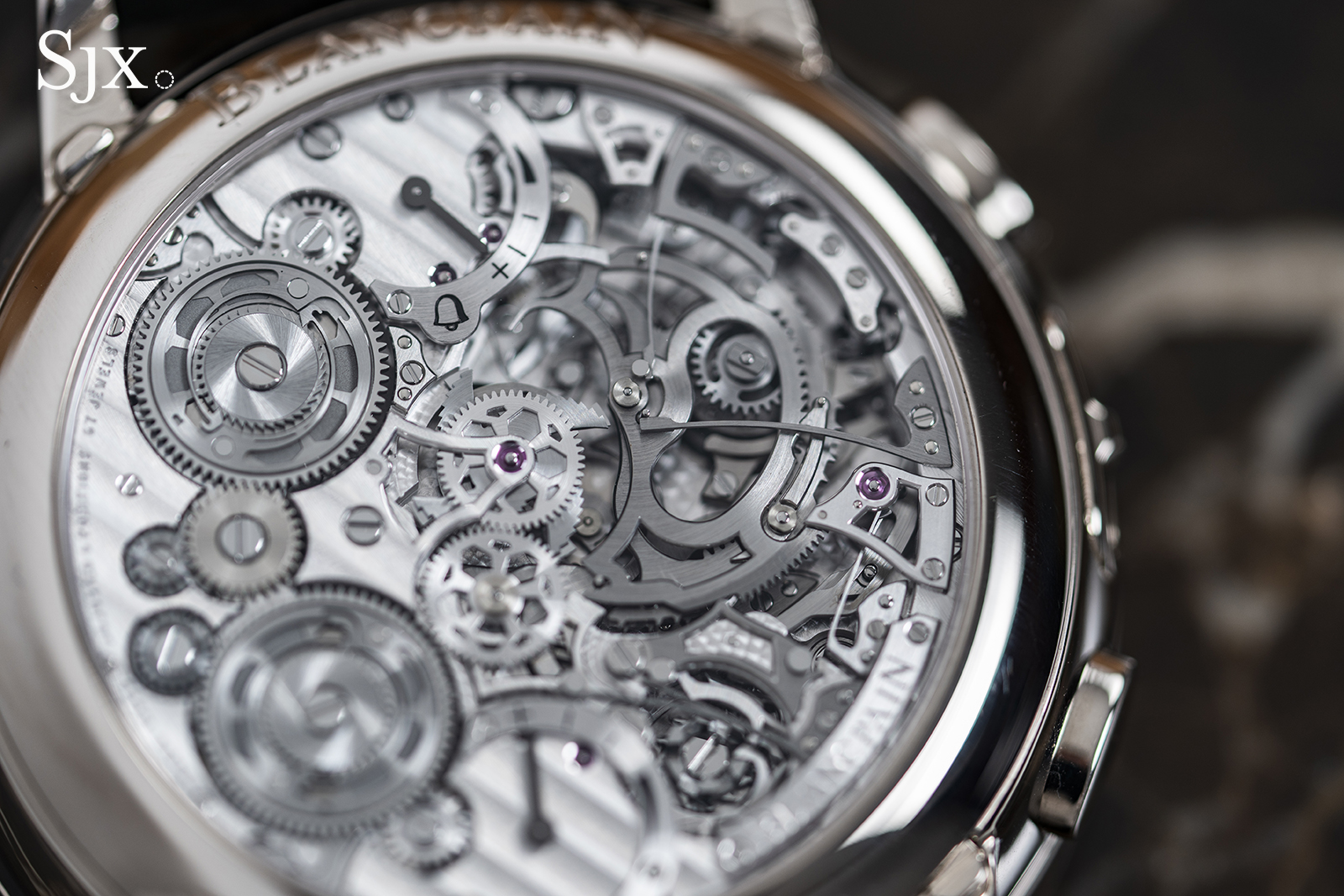
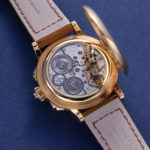
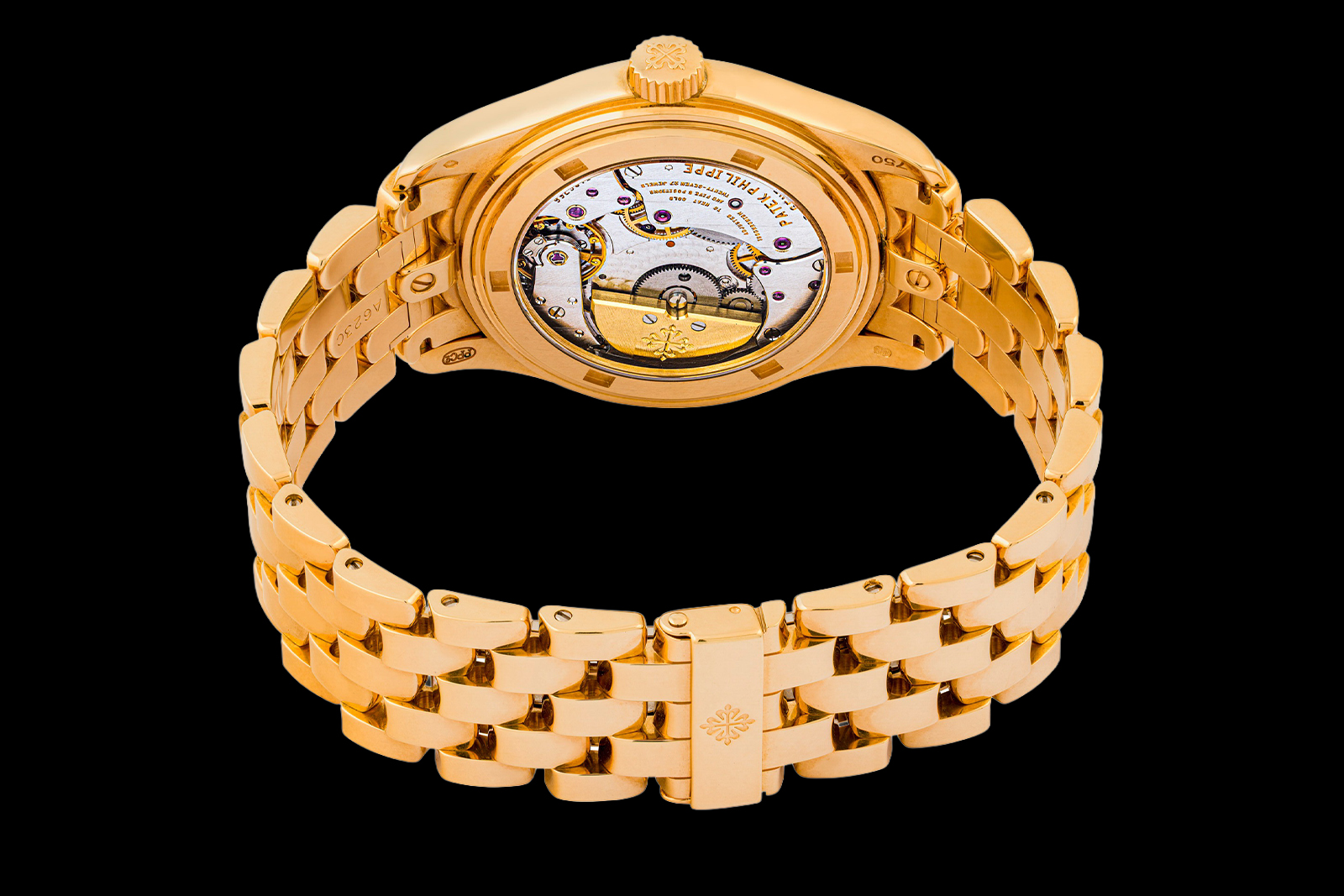
Given the movement’s background, the view from the back is unsurprisingly less classical than on the front. The movement layout is essentially unchanged from the first generation, but dressed up with a gilt finish and an engraved bird’s eye view of Vallee de Joux. I find the movement styling too modern for the overall look, and the engraving a little overdone, but the technical merit of the cal. 74SC is strong enough that it gets a pass. In fact, I would take this movement over a “hand” finished, Unitas-derived time-only calibre any day.
That said, the keen-eyed will notice the 7225 is conceptually illogical in two respects. For one, the basis of the design is a series of important pocket watch tourbillons; the 7225 is not a tourbillon.
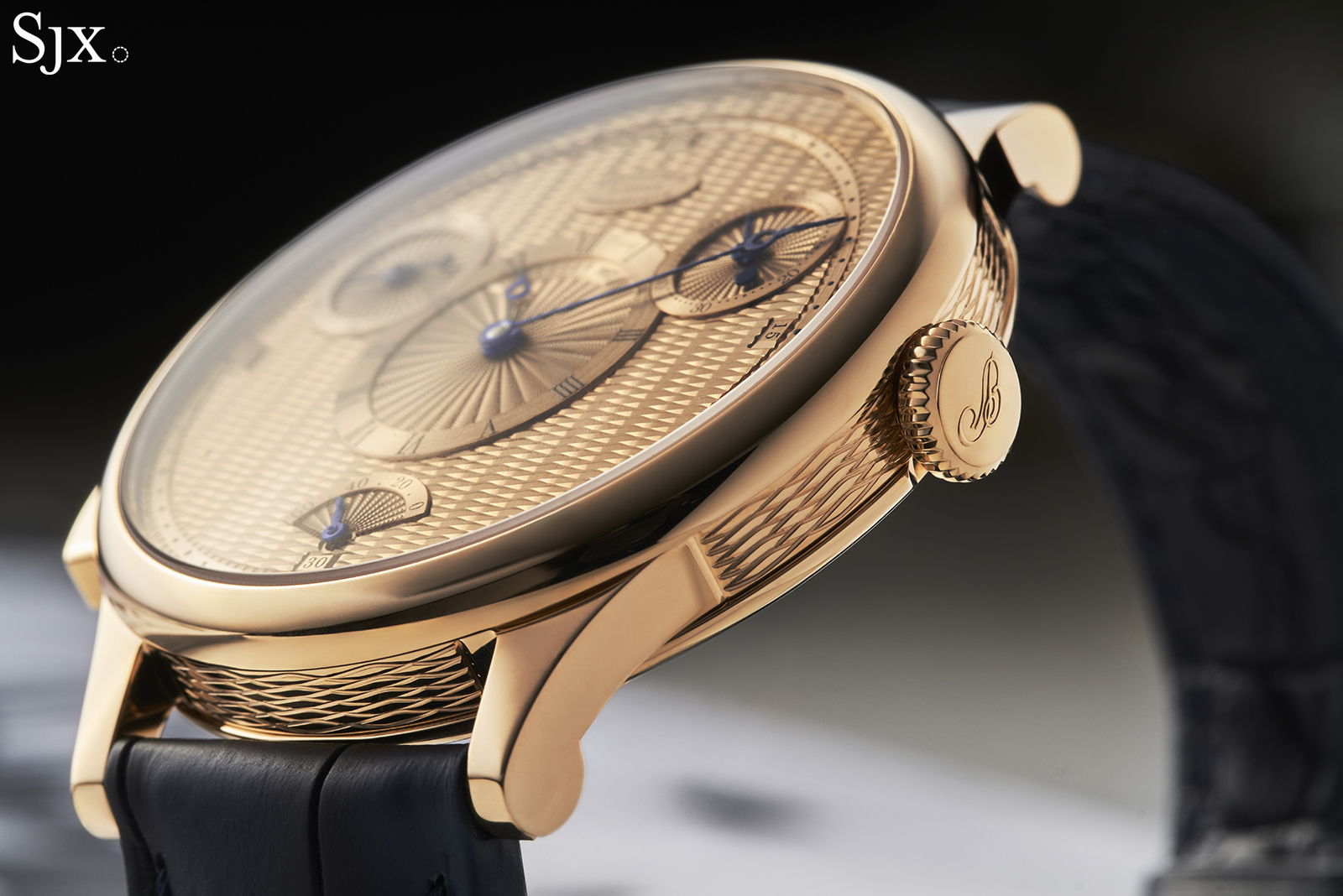
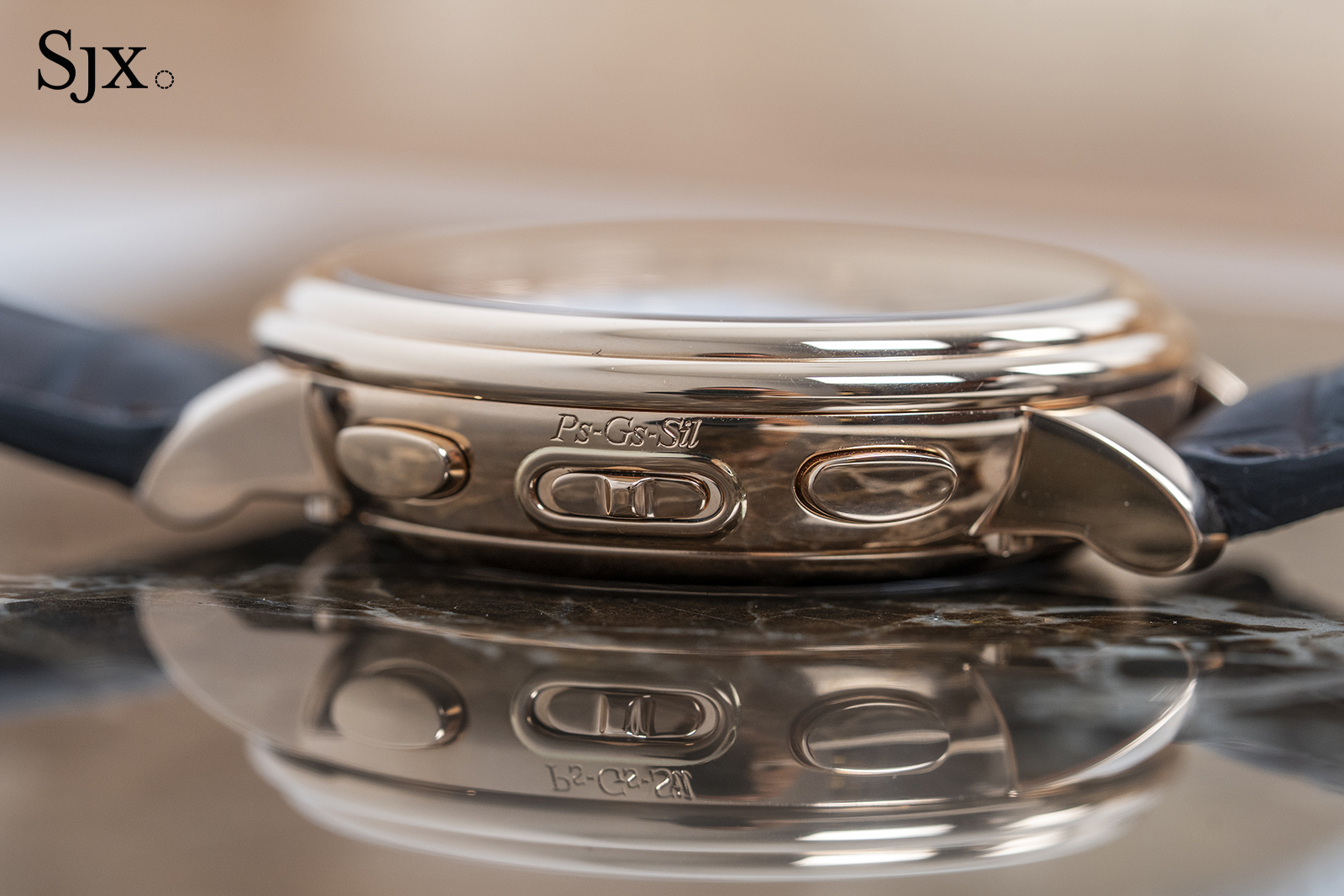
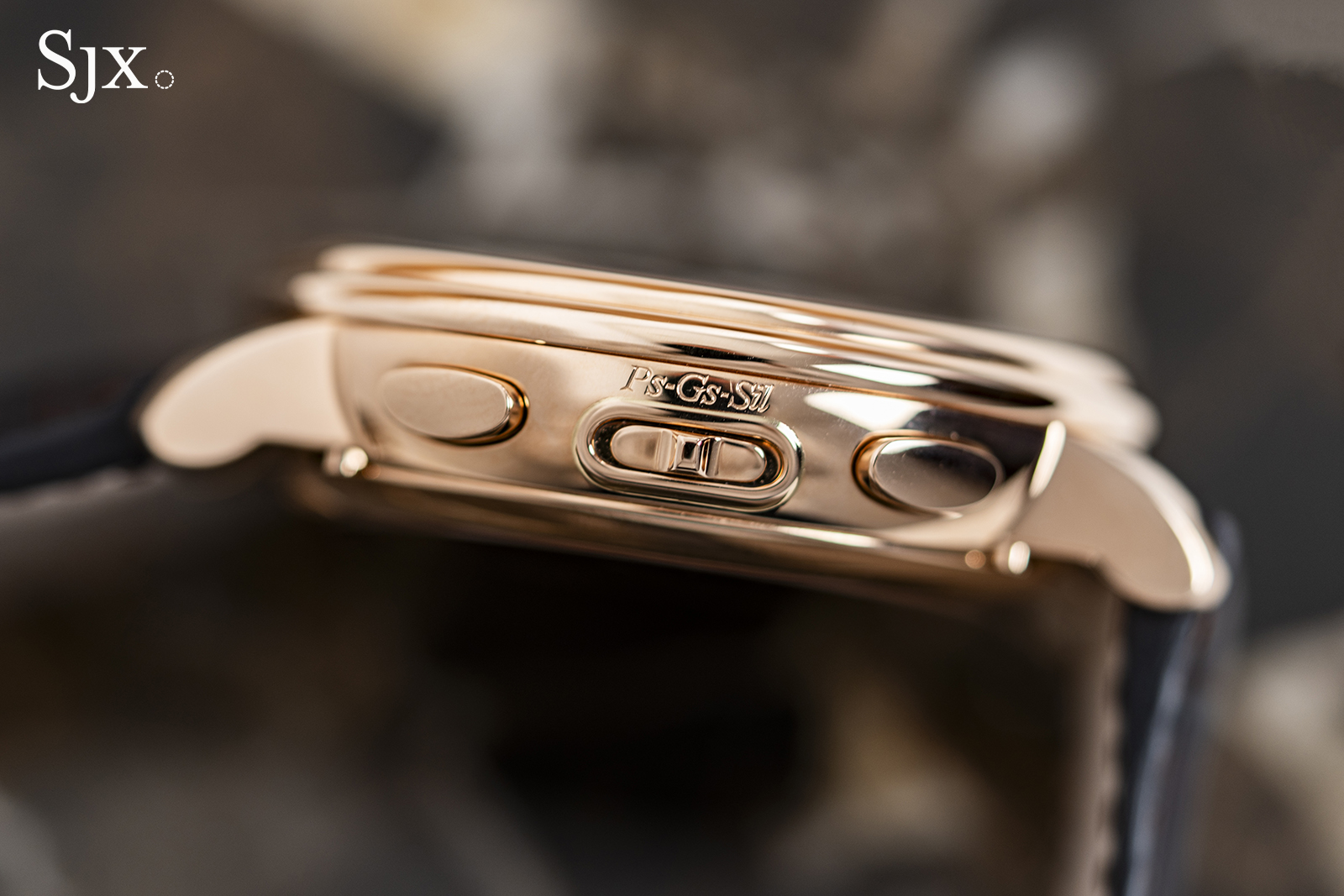
And the 7225 has a flyback seconds (sometimes also known as a “Chronostop”) that is activated by a pusher on the side of the case. The pusher, however, resembles a slide for a minute repeater for no discernible reason. But the watch is appealing enough these don’t really matter.
At CHF75,000 the 7225 is priced similar to many time-only watches from emerging independent watchmakers. In comparison, the 7225 offers tremendous value; it should be a little cheaper but the realist in me understands where the market is at today in terms of pricing. Still, the 7225 also stacks up well against watches from establishment brands, since few, if any, offer time-only watch with such advanced, high-end movements.
More broadly, the 7225 underscores Breguet’s uninspired recent history – and the modest actions needed to revitalise the line-up. Like most of the other 250th anniversary watches, the 7225 isn’t actually new since the calibre was launched in 2012, yet a simple makeover results in a magnificent watch. The early launches will no doubt be easy pickings, but the 7225 and its peers now set high expectations.
Four-minute tourbillon not
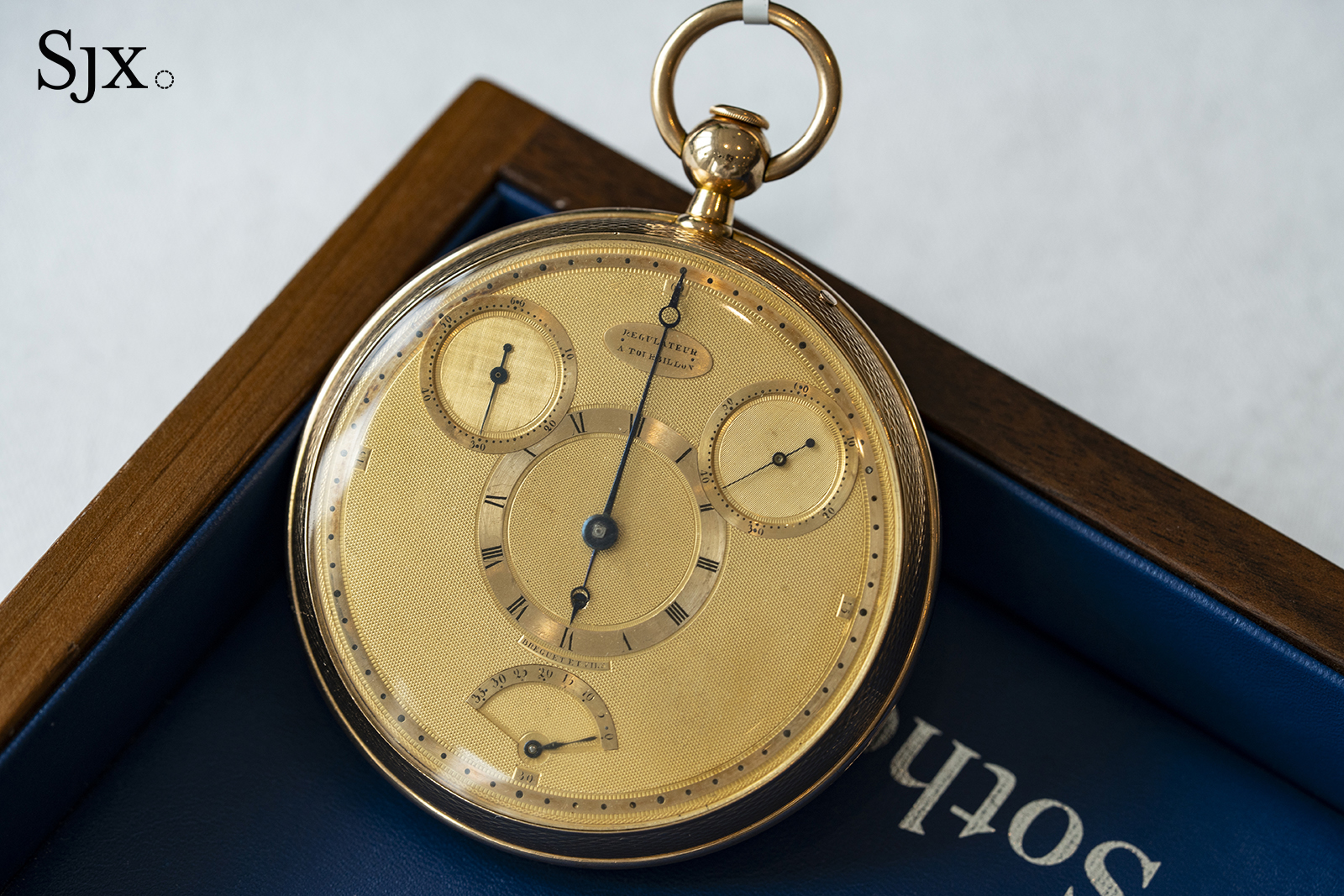
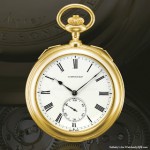
The distinctive “Hidden Mickey” dial of the 7225 has its roots in a series of exceptional and significant pocket watches made by Abraham-Louis Breguet in the early 19th century. All shared a four-minute tourbillon and natural escapement, while a handful had gilt guilloche dials that inspired the 7225. Notably, pocket watch no. 1890 featuring a gilt dial sold a few months ago at Sotheby’s in Geneva for CHF1.88 million to none other than François-Paul Journe, reflecting its importance.
Reviving the unusual dial layout makes sense given the history of the originals, though the 7225 isn’t quite linked to the originals in terms of function or technique. The argument could be made that the original pocket watches were the ultimate chronometers of their day, as the 7225 is today.
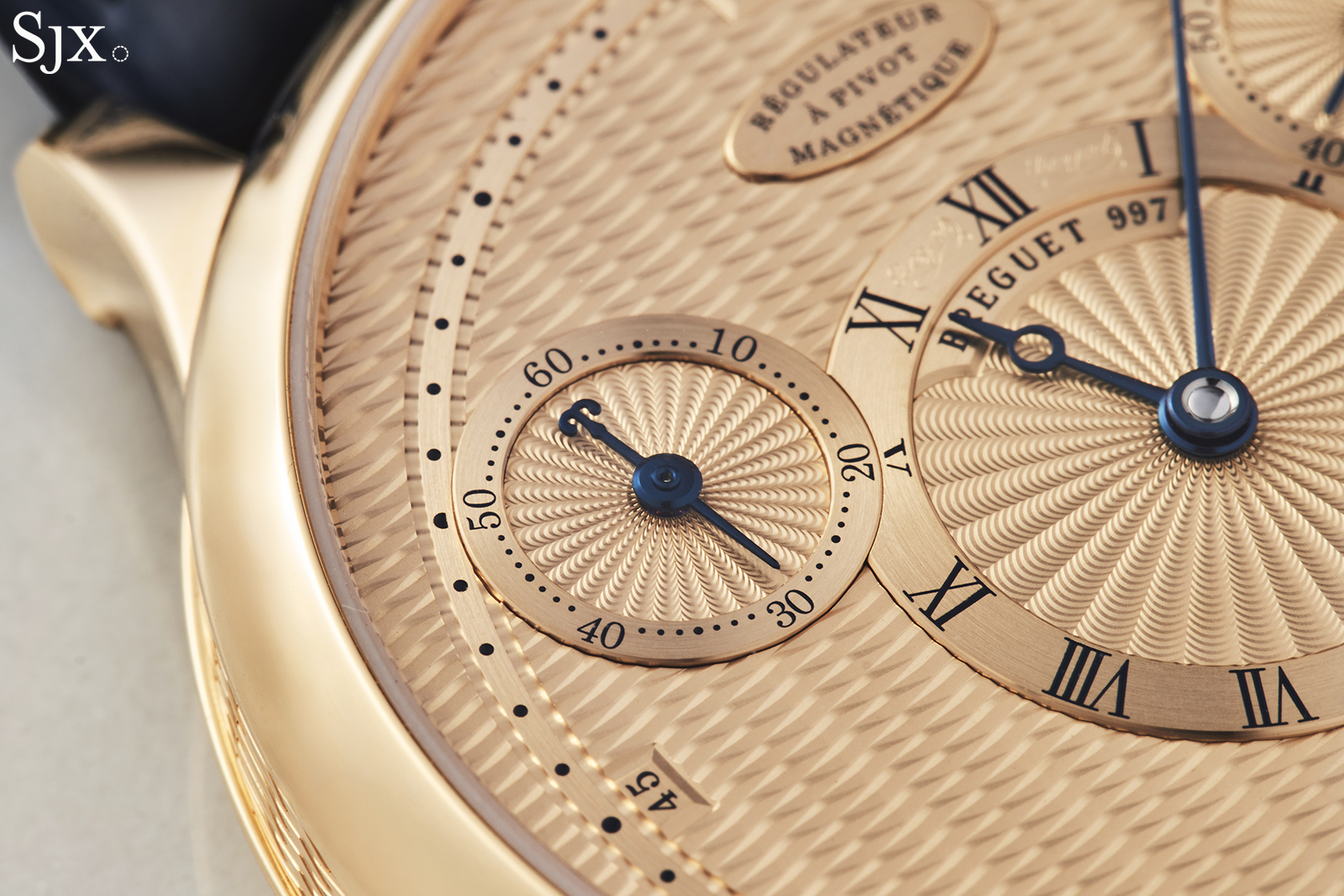
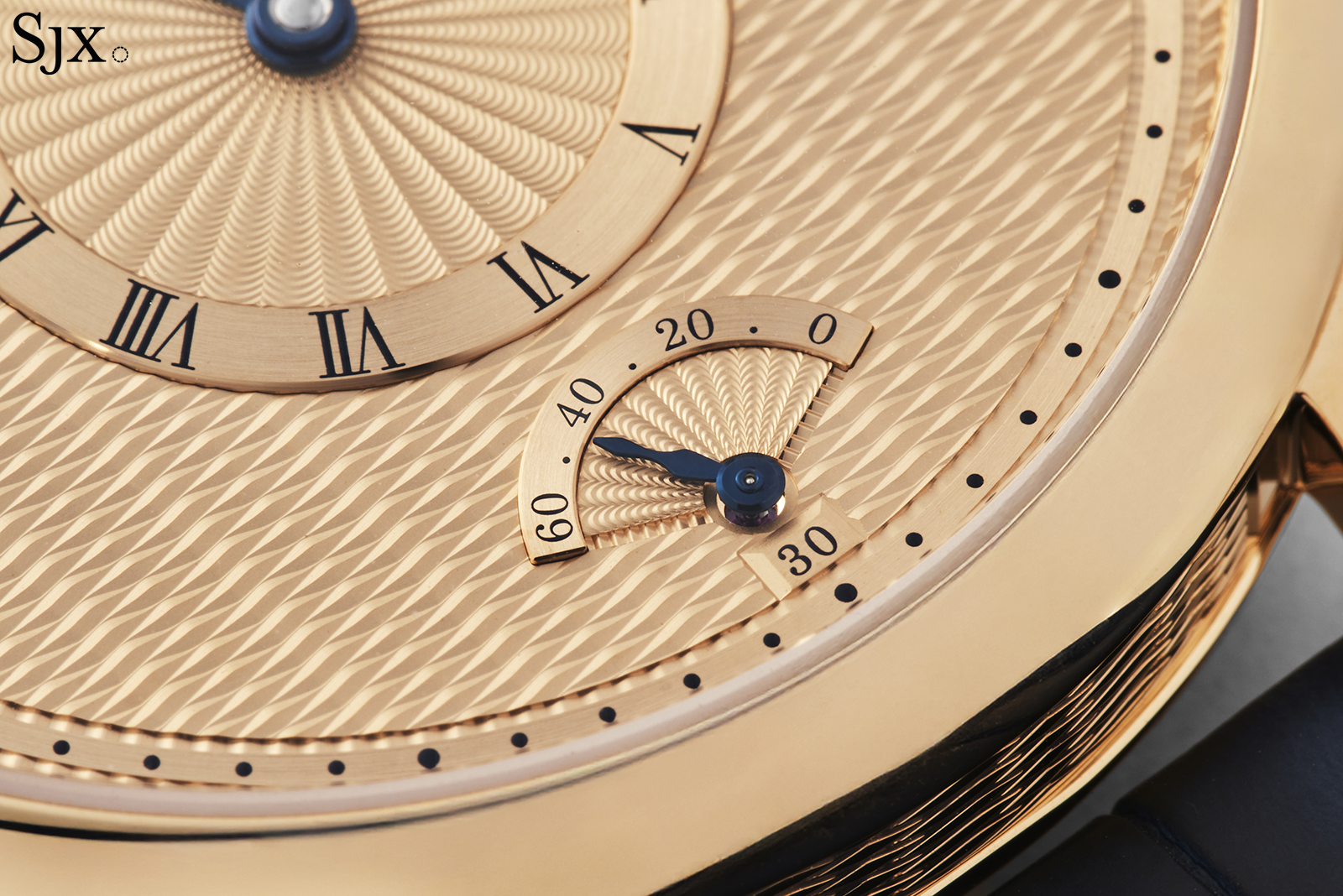
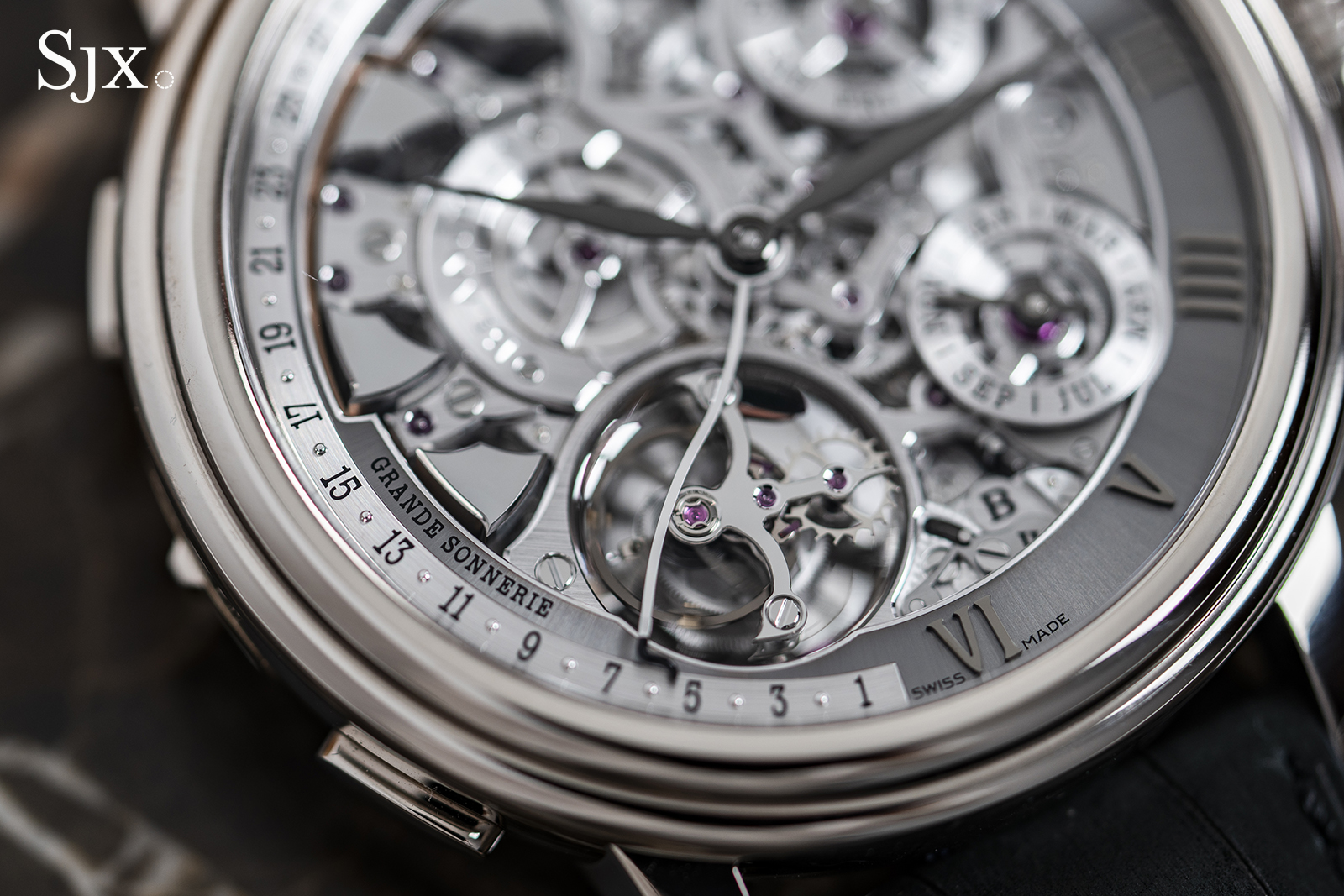
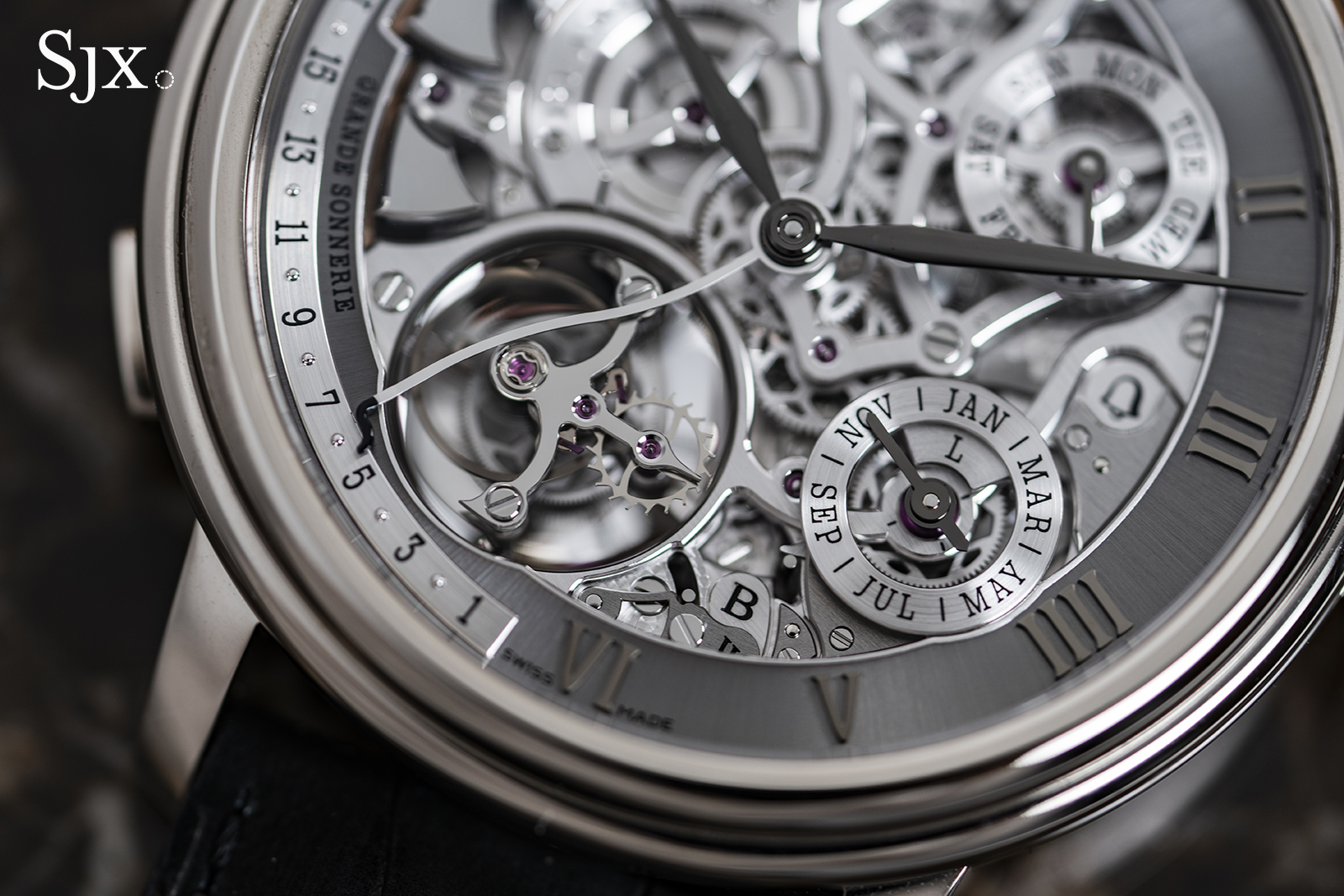
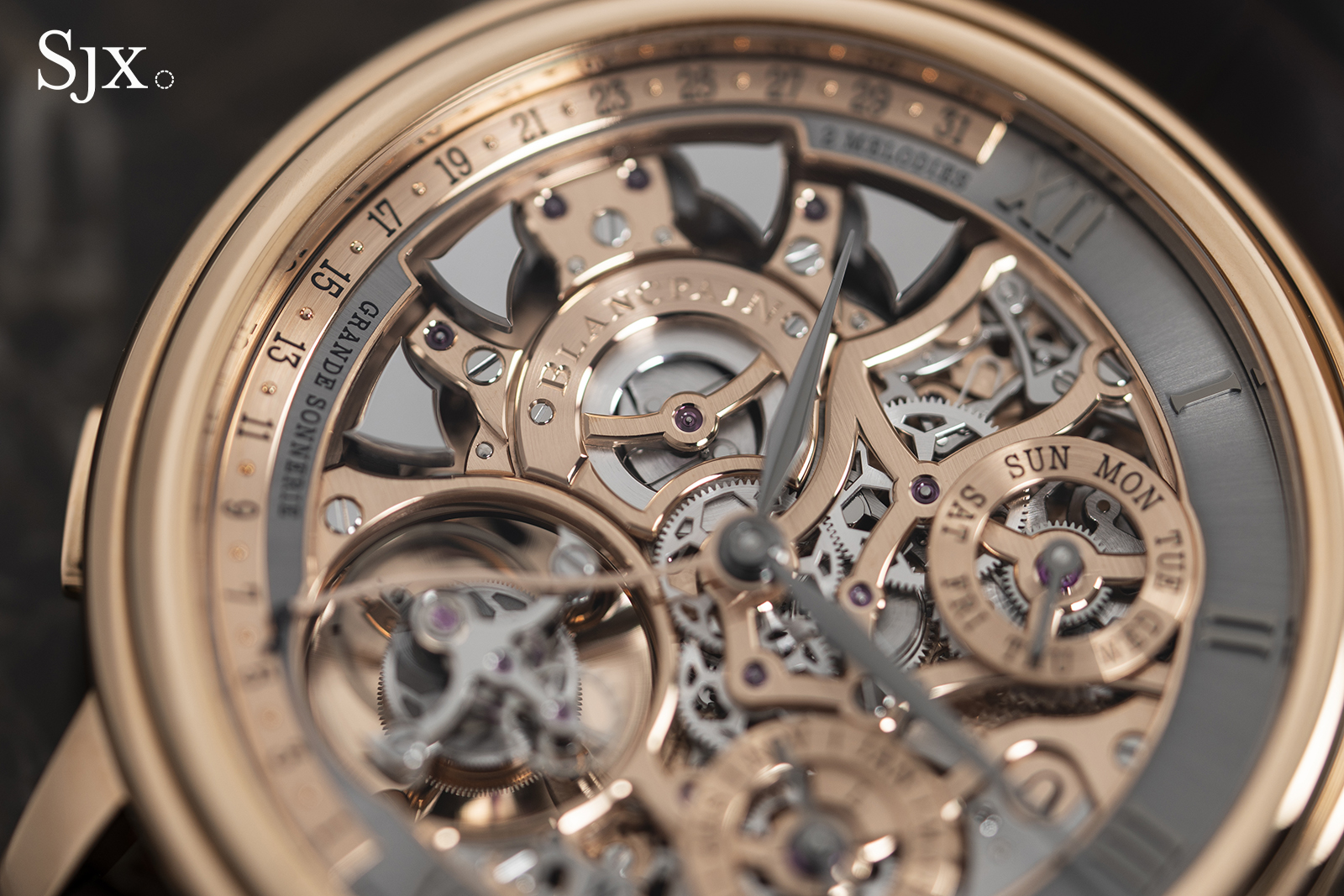
The 7225 faithful adopts the design of the pocket watches, right down to the twin seconds counters and power reserve at six. The additional seconds was an add-on that required minor work to the movement, but necessary to reproduce the pocket watch dial layout.
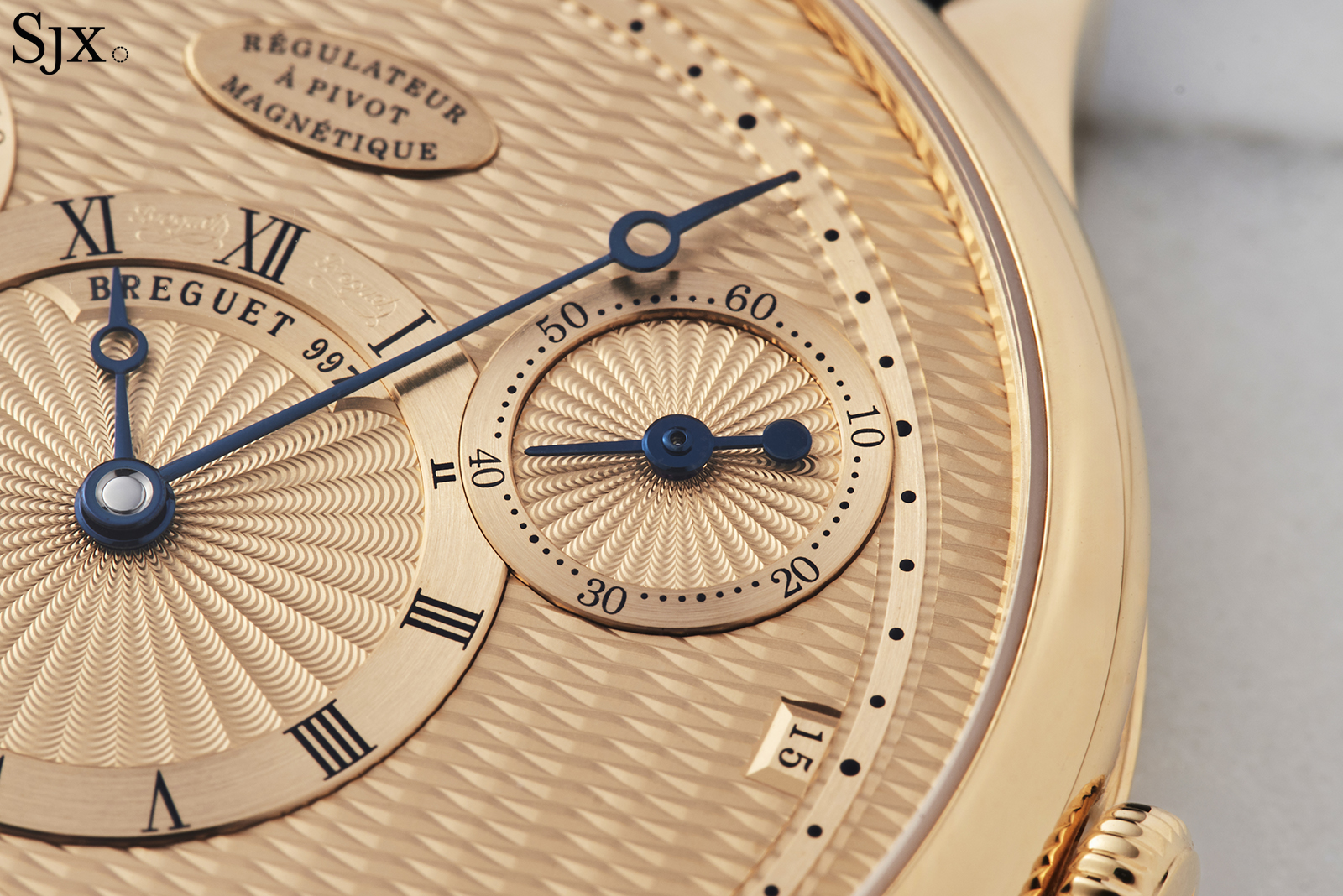
The seconds at two is a conventional seconds, while the other at ten o’clock is the “observation” seconds, otherwise known as a flyback seconds that can be instantaneously reset and restarted with the pusher at eight o’clock. I would consider this a gimmick if the 7225 was not such an impressive watch; the flyback seconds is not a major or practical complication, but adds a tiny bit of interactivity to the watch.
The main portion of the dial is decorated with wavy Quai de l’Horloge guilloche that was designed for Breguet’s anniversary
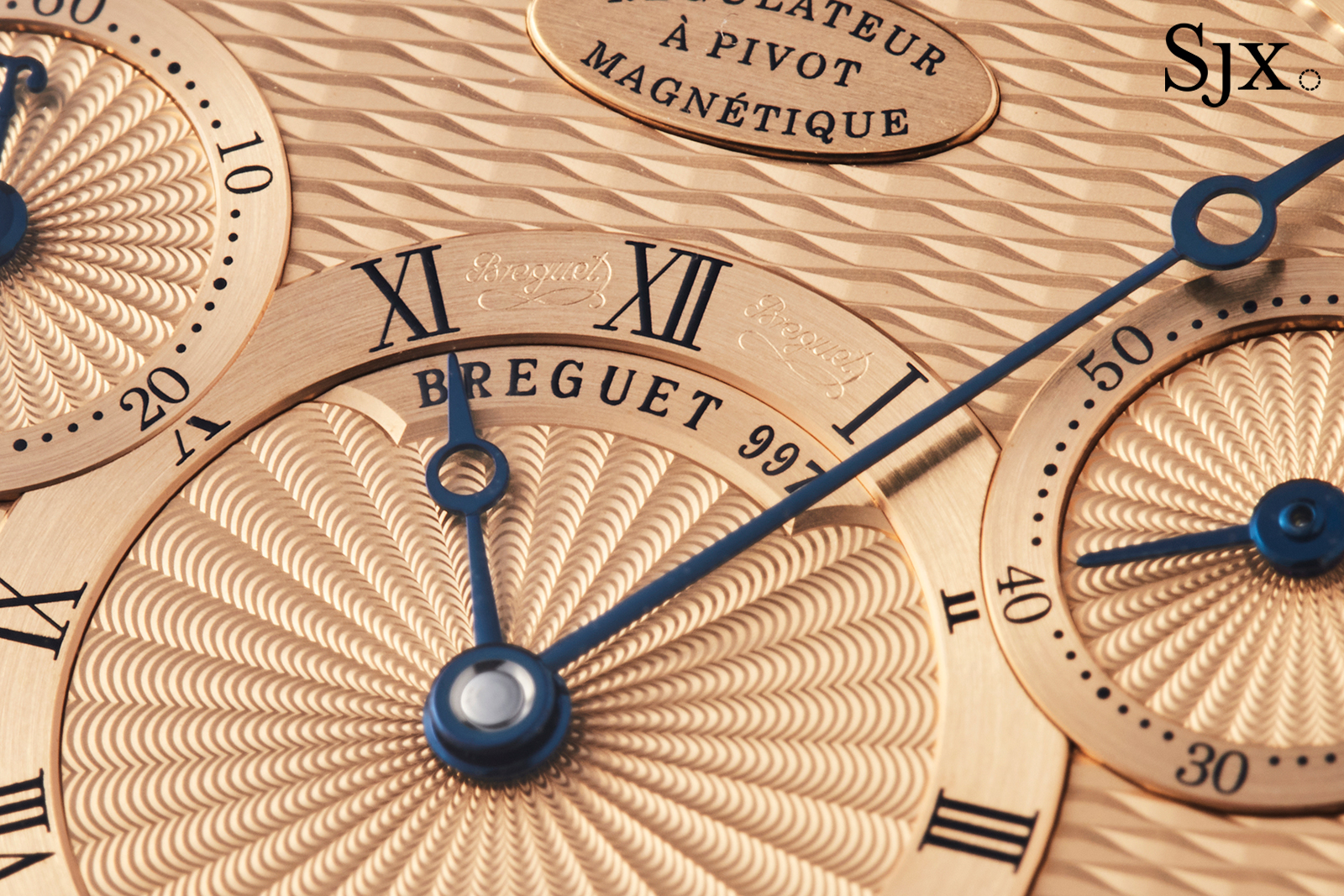
Made of several parts, the dial is impressively executed. The guilloche is sharp and refined, and according to Breguet, done on hand-operated rose and straight-line engines, as is tradition. All of the dial parts are solid 18k Breguet gold, a yellow gold alloy that’s proprietary to Breguet.
The high quality of execution also extends to the hands. The blued steel hour and minute hands show off mirror polished counter sinks on the central bosses.
The “secret” signature on either side of “XII”
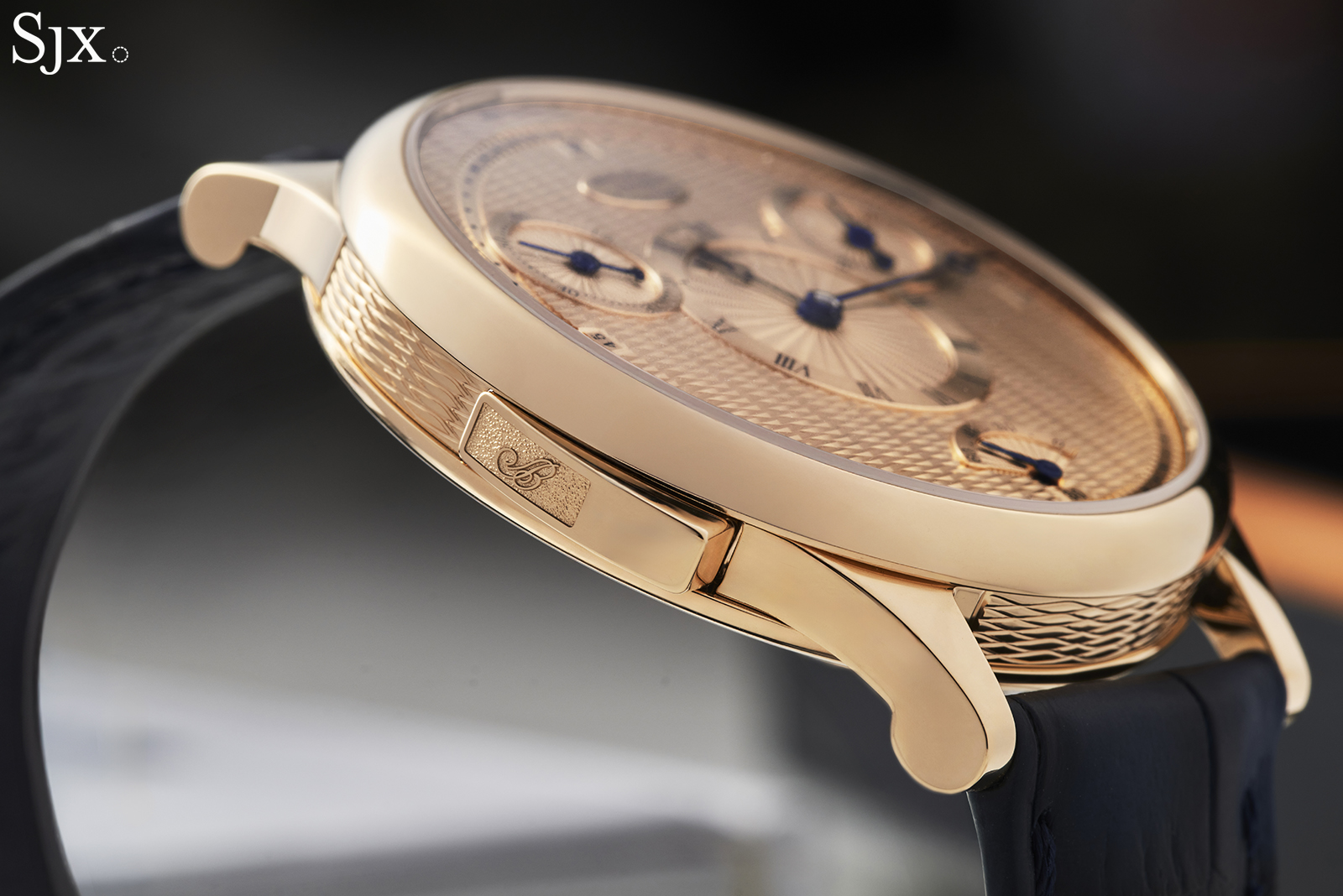
The guilloche continues onto the case band as well. Like the main section of the dial, the case sides are decorated with Quai de l’Horloge engine turning, a wavy motif conceived for the anniversary and found across the commemorative editions.
Unlike the dial that is clearly 19th century, the case is definitely 20th century and similar to that of the Classique Souscription. It has a mid-20th century style found on Breguet wristwatches made during that time, so it does have historical basis. This even extends to the flat crown, reflecting the keen eye for detail in the design. Despite being so far apart in historical terms, the elements complement each other perfectly.
The cal. 74SC inside is derived from the cal. 574 DR Classique Chronometrie 7727. Both movements are fundamentally identical, but the cal. 74SC has been reworked to accommodate the new dial layout, while also undergoing a cosmetic makeover.
The reworking of the movement is minor and probably added a little to the height. However, the defining innovation of the movement remains unchanged: magnetic pivots for the balance staff.
To quote my 2012 story on the movement, “tiny magnets on each endstone of the balance staff keep it in place, pulling [the balance] back upright when the balance is displaced by shocks. Where large balance wheels, overcoils and free sprung balance wheels were the norm in historic attempts to improve chronometry, the Classique Chronometrie is a distinctly modern approach.”
“And because the magnets keep the balance staff suspended in an identical position regardless of the position of the watch, so the friction on the pivots is constant all the time. In a regular wristwatch the vertical position tends to cause the most friction due to the weight of the balance wheel pulling downwards.”
In addition, the escapement and hairspring are in silicon. Coupling with the magnetic pivots, this allows the cal. 74SC to run at 10 Hz, or 72,000 beats per hour – double the conventional standard of 3 Hz for a high-frequency movement.
This extremely high frequency boosts chronometry by improving the stability of timekeeping and reducing errors caused by external forces like magnetism and shock. I am certain the cal. 74SC is one of the most precise hand-wind movements on the market today.
The stylised “B” emblem on the barrel bridge is the new “Breguet hallmark” that the brands says covers “component quality, performance and ethics”
The overall architecture of the movement remains unchanged, though it has been dressed up substantially compared to the cal. 574 DR. The bridges have been plated in Breguet gold and then hand engraved with a view of Le Chenit, the town where Breguet is now headquartered. As with the engraved movement on the new Type XX, this feels a little overdone in terms of visuals but I can’t fault the quality of the work.
Notably, the finishing on the movement appears improved over the cal. 574 DR of 2012. Many parts appear to enjoy some hand finishing, which is perhaps not surprising since that’s also the case for other current Breguet movements.
Key facts and price
Breguet Classique 7225
Ref. 7225BH0H9V6
Diameter: 41 mm Height: 10.7 mm Material: 18k “Breguet” gold Crystal: Sapphire Water resistance: 30 m
Movement: Cal. 74SC Functions: Hours, minutes, seconds, power reserve, and “observation seconds” Winding: Manual wind Frequency: 72,000 beats per hour (10 Hz) Power reserve: 60 hours
Strap: Alligator strap with pin buckle
Limited edition: No Availability: First availability at boutiques, but also at retailers Price: CHF75,000
Dubai has become one of the world’s most important meeting points for collectors. Its role as a crossroads is hardly new — the city sits at the intersection of historic trade routes, benefits from a strategic position between East and West, and is anchored by one of the world’s most connected airports. Within this landscape, Ahmed Seddiqi stands as a long-established pillar of the region’s horological landscape and remains a destination for collectors from around the world.
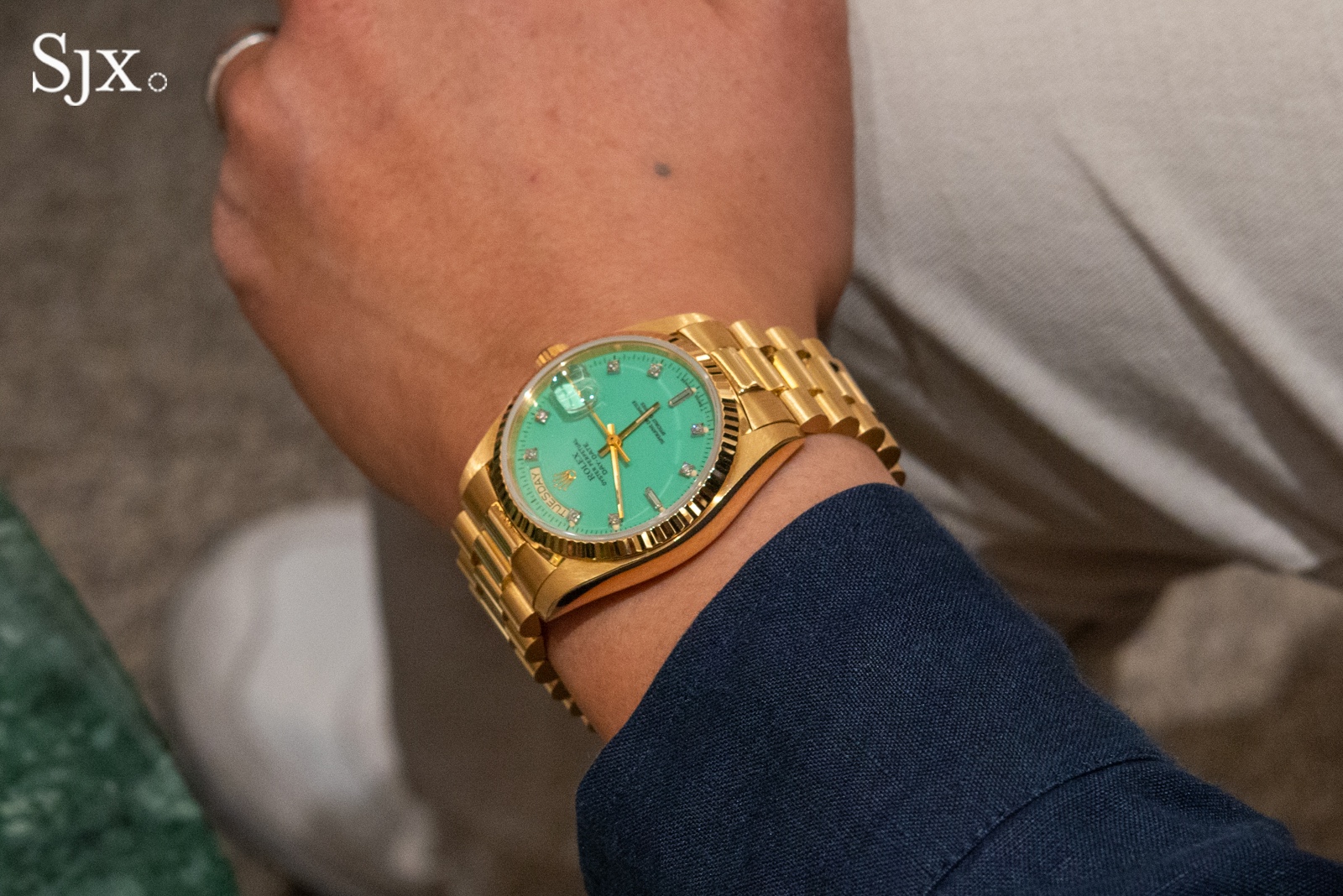
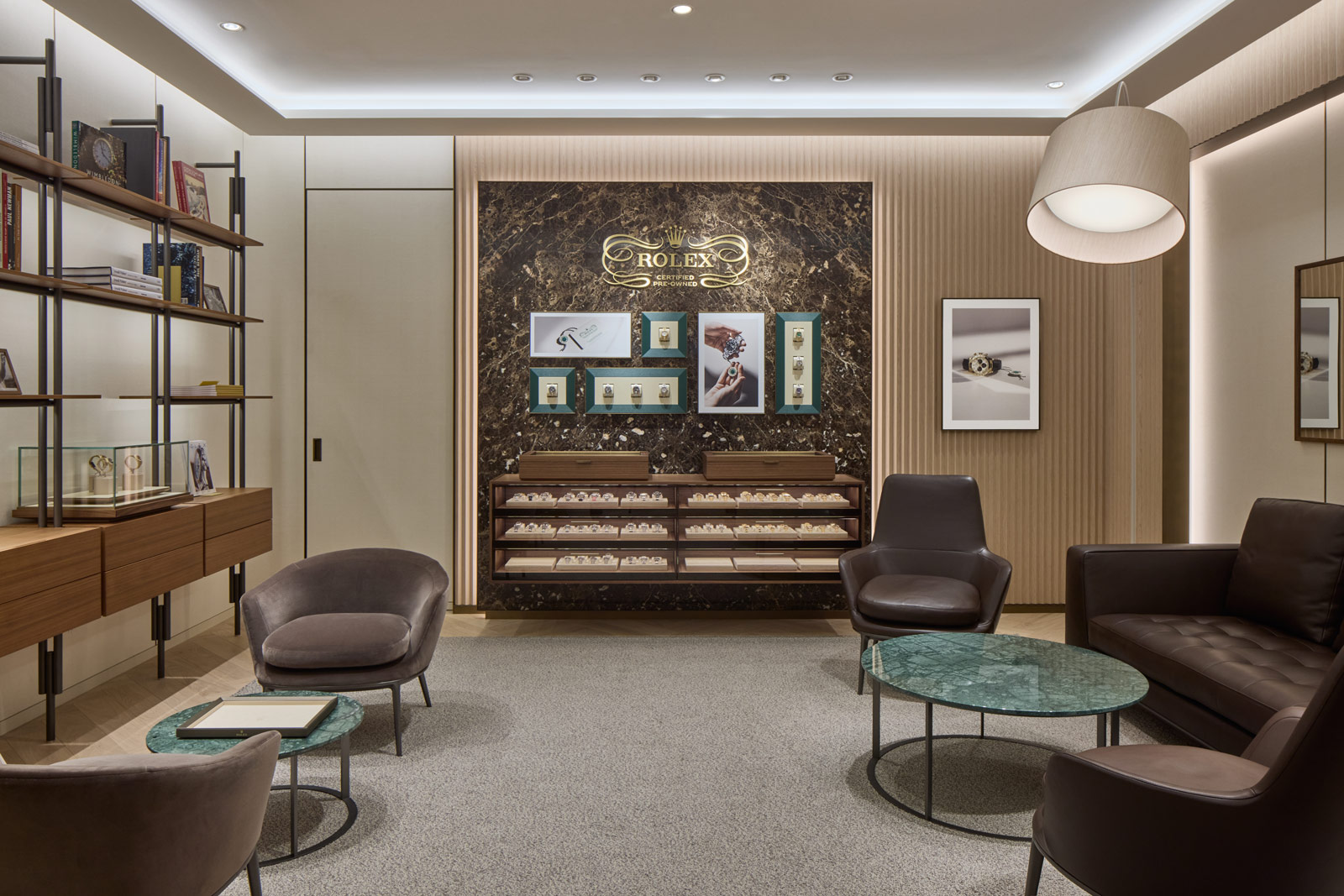
Even after the conclusion of Dubai Watch Week (DWW), the city retains a sense of momentum. Within this landscape, one destination stands out for its significance and ambition: the AhmedSeddiqi Rolex Certified Pre-Owned boutique.
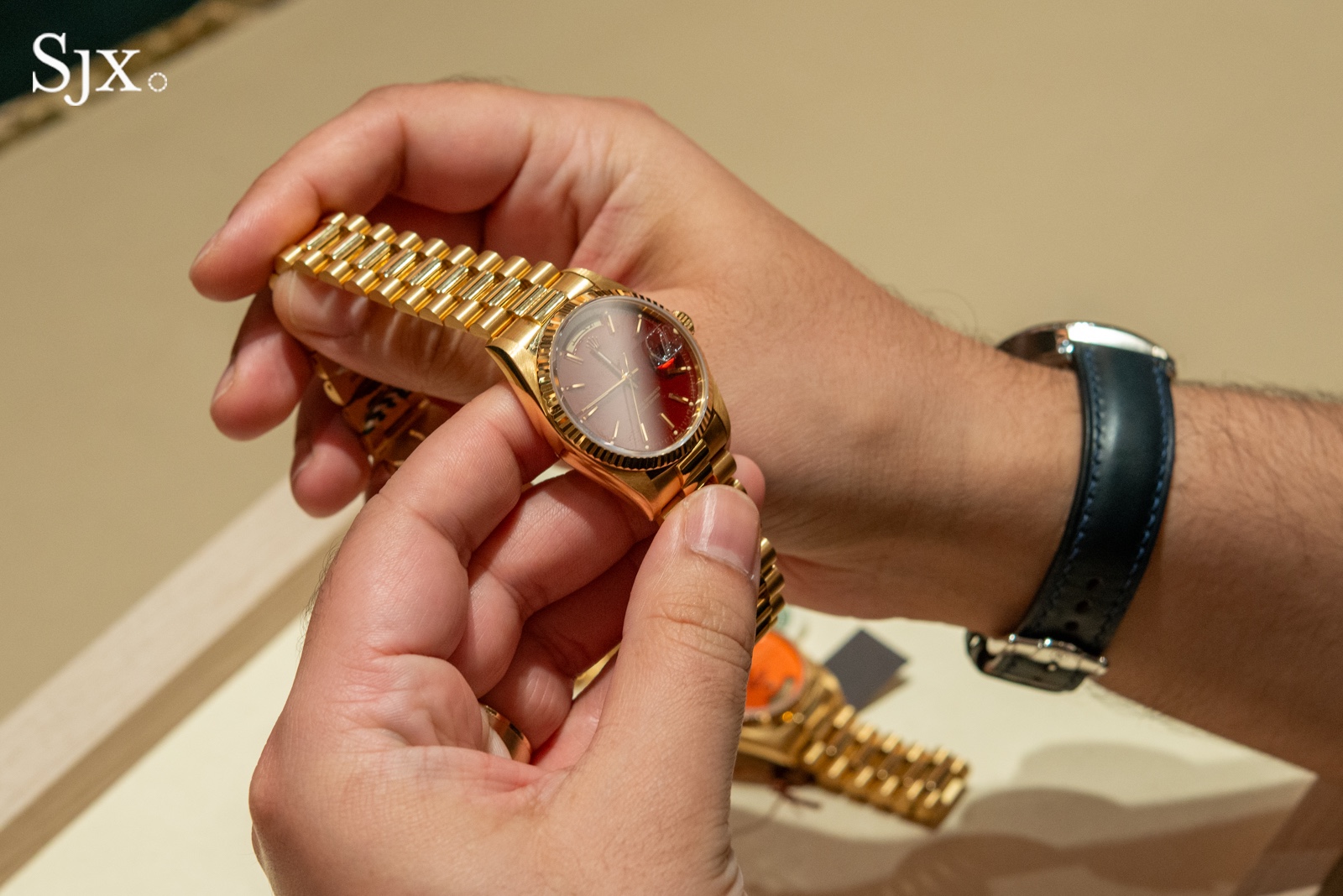
During DWW, we had the opportunity to visit the boutique and view some of the extraordinary pieces currently available.
Understanding CPO
Rolex launched its CPO programme in late 2022 and it remains one of the most strategically important evolutions in modern watch retail. The secondary market has been growing in importance for both collectors and industry leaders, but until recently it existed largely outside the brand’s official mandate.
Since the launch of the programme nearly three years ago, there are now 148 participating retailers around the world, according to WatchCharts, a data provider that tracks Rolex CPO pricing and volume. As of late 2025, these retailers carry a total inventory of about 9,000 CPO Rolex watches.
That’s either a lot of watches or not that many depending on one’s perspective, but the number is growing. Furthermore, the aims of the CPO programme extend far beyond transactional margins; it’s about protecting the Rolex brand for the long haul.
Protecting the brand
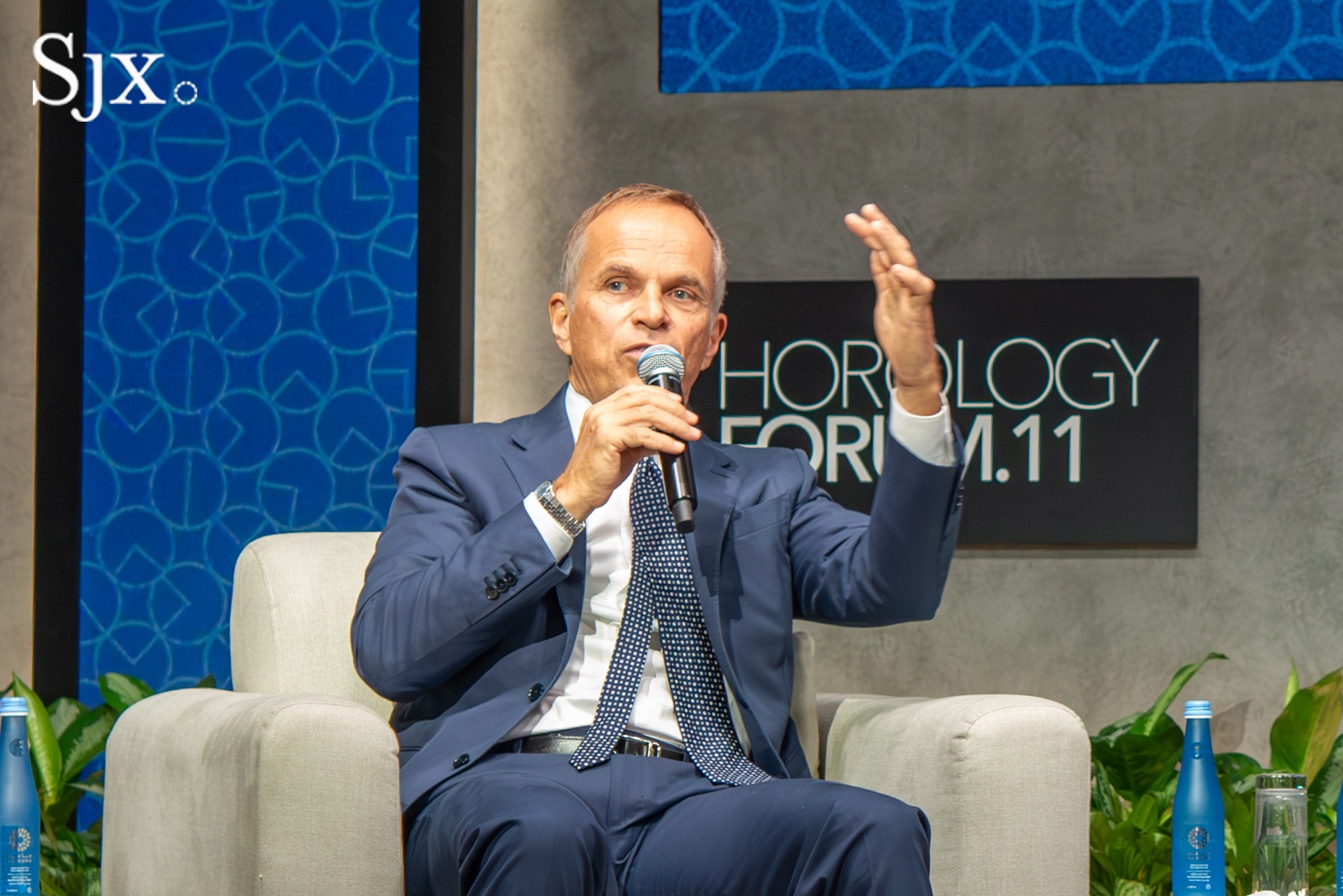
During Dubai Watch Week, Rolex chief executive Jean-Frédéric Dufour spoke candidly about the origins of the CPO programme. The idea began with an observation in the United States: “We noticed that in some points of sale, the number one brand was Rolex, and the number two brand was Rolex second-hand.”
For Rolex executives, this volume raised an alarm. Customers were buying used Rolex watches in vast numbers, yet the brand had no control over the quality, servicing, or experience — no way to guarantee the watch lived up to the name on the dial.
Rolex chief executive Jean-Frédéric Dufour.
Mr Dufour framed the issue bluntly: “Having such a level of business without being sure that there won’t be an issue, because we cannot offer any warranty on the product, it’s a little bit dangerous.” He added, “There’s nothing worse than feeling betrayed when you’ve bought something expensive… that feeling can be destroying.”
In Rolex terms, this is the essence of long-term thinking: invest in building trust today to safeguard the next 50 years. The CPO programme gives Rolex a way to take care of customers who prefer older models, anchoring the secondary market to the same standards that define the brand’s primary sales channels.
Jewels in the desert
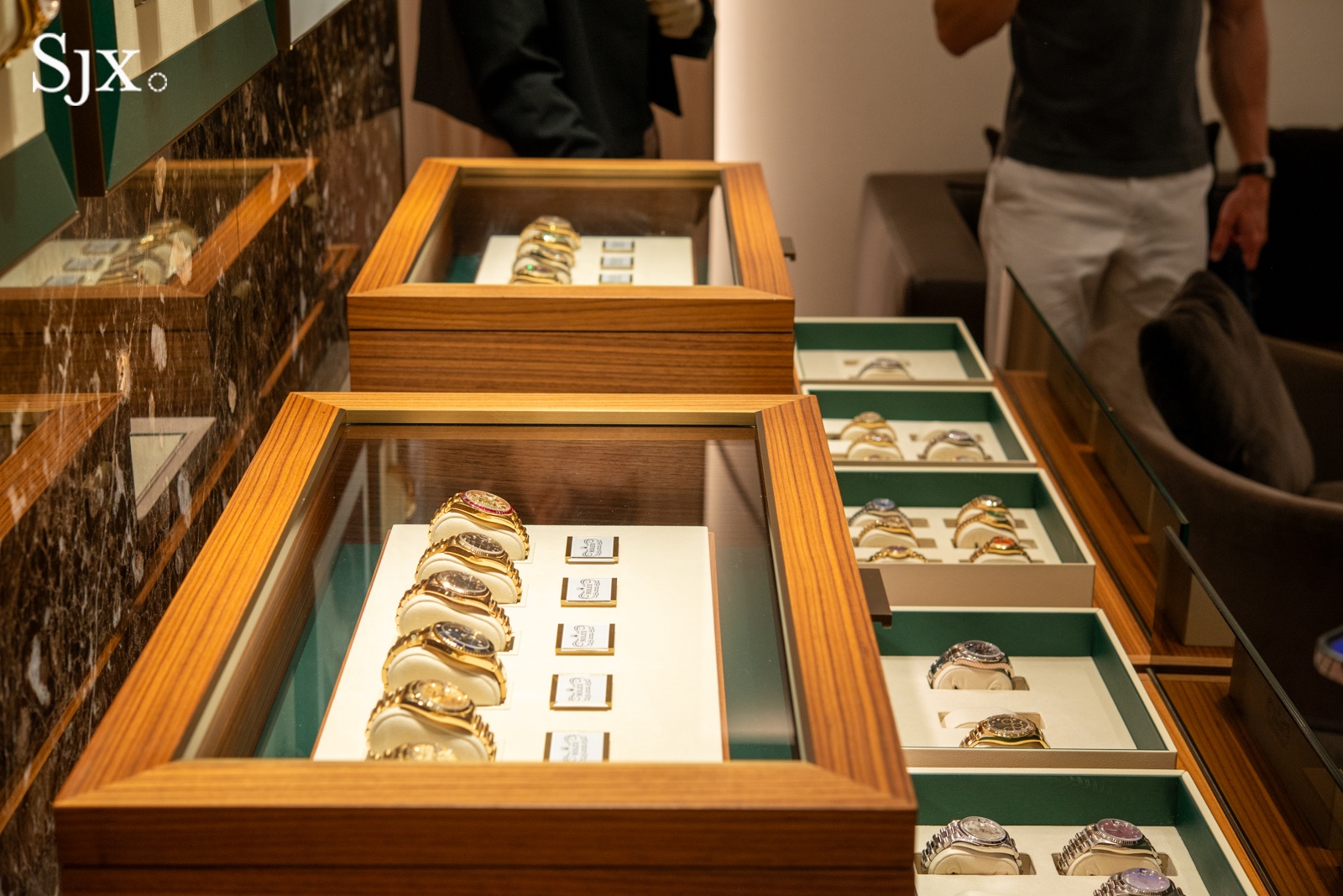
Against that backdrop, Seddiqi’s CPO boutique feels like a natural extension of Dubai’s role as a crossroads of global collecting culture. Seddiqi has approached Rolex CPO with characteristic ambition and real investment, with a large inventory and a purpose-built boutique in the Wafi Mall, about 30 minutes away from the Burj Khalifa, the tallest building in the world.
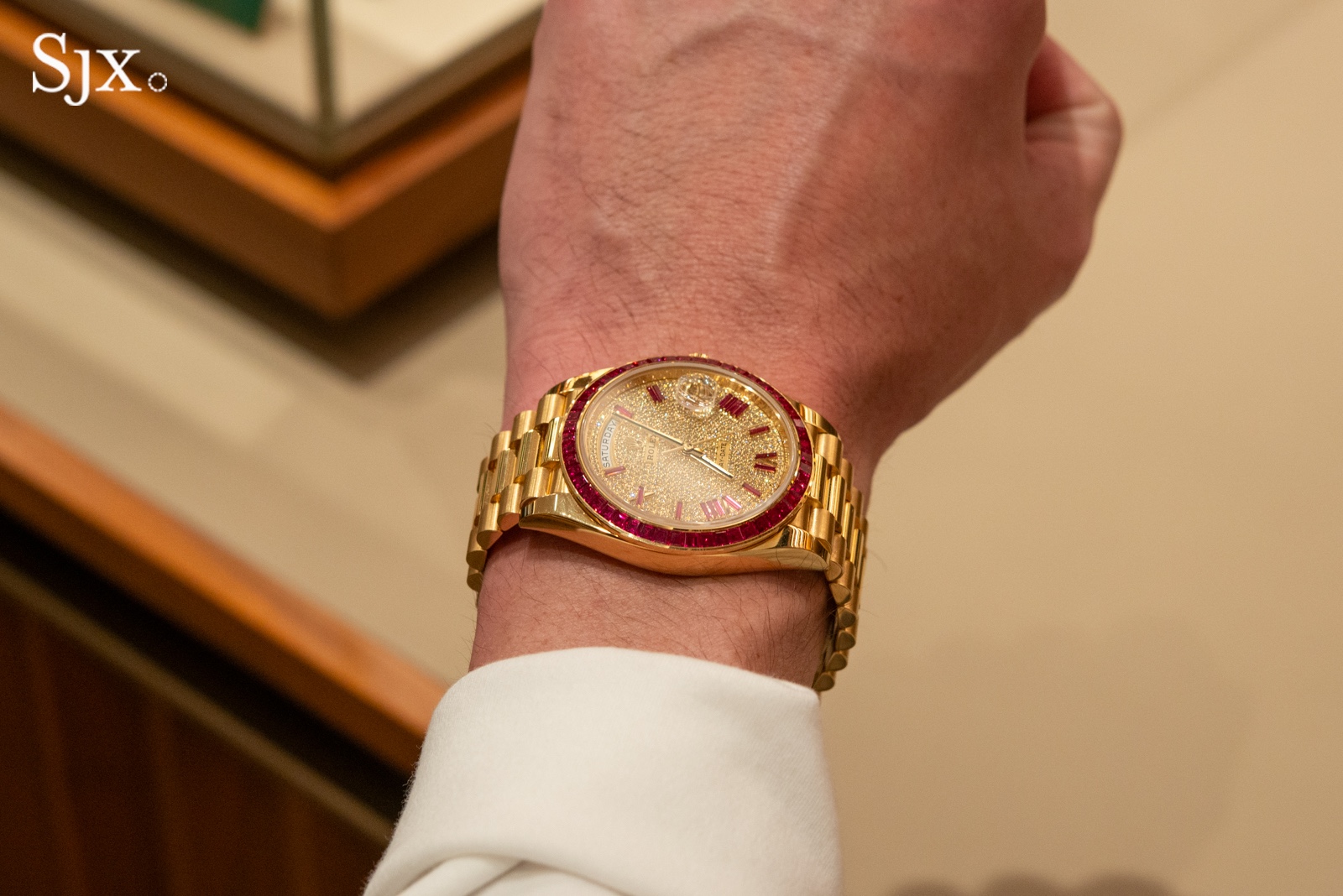
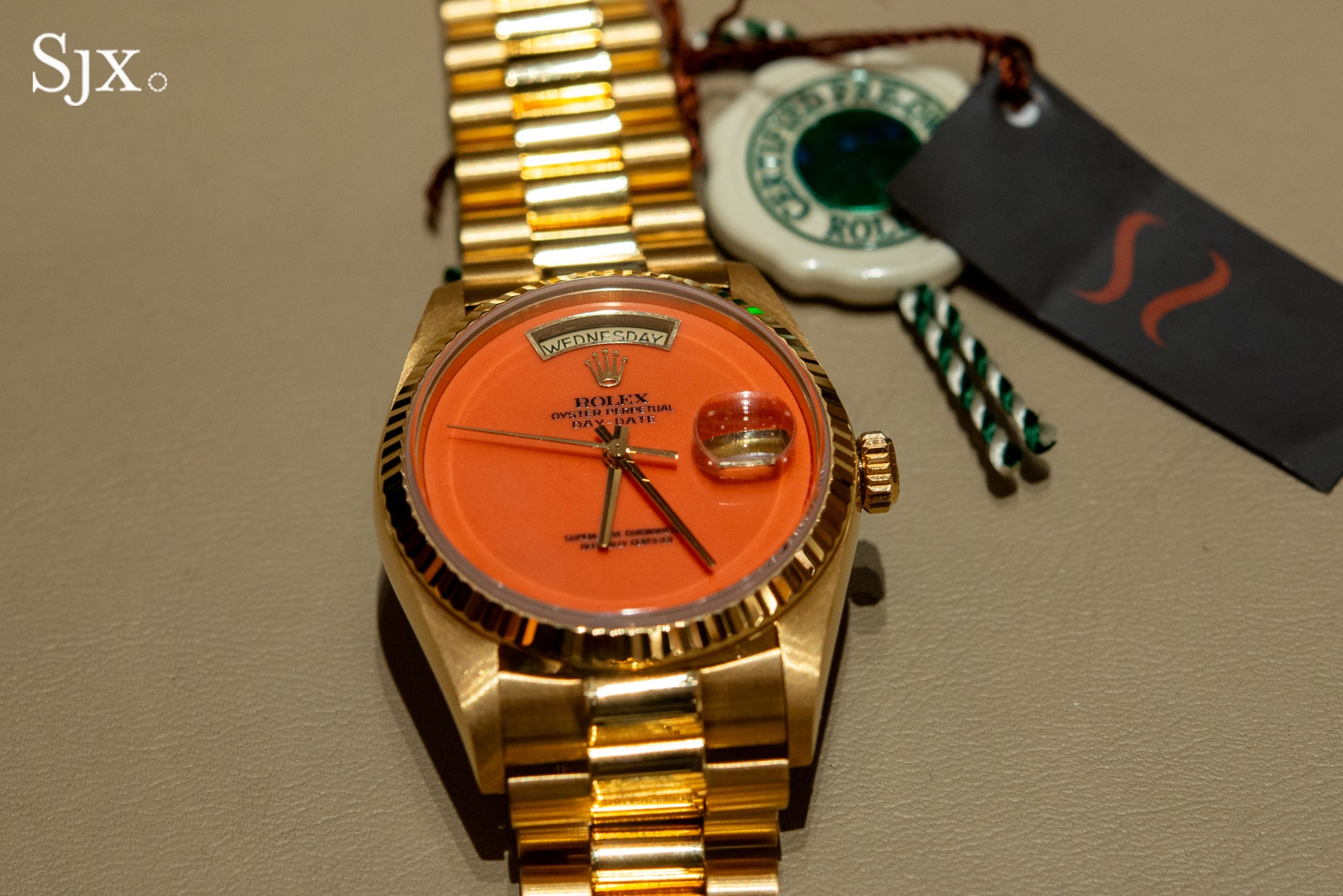
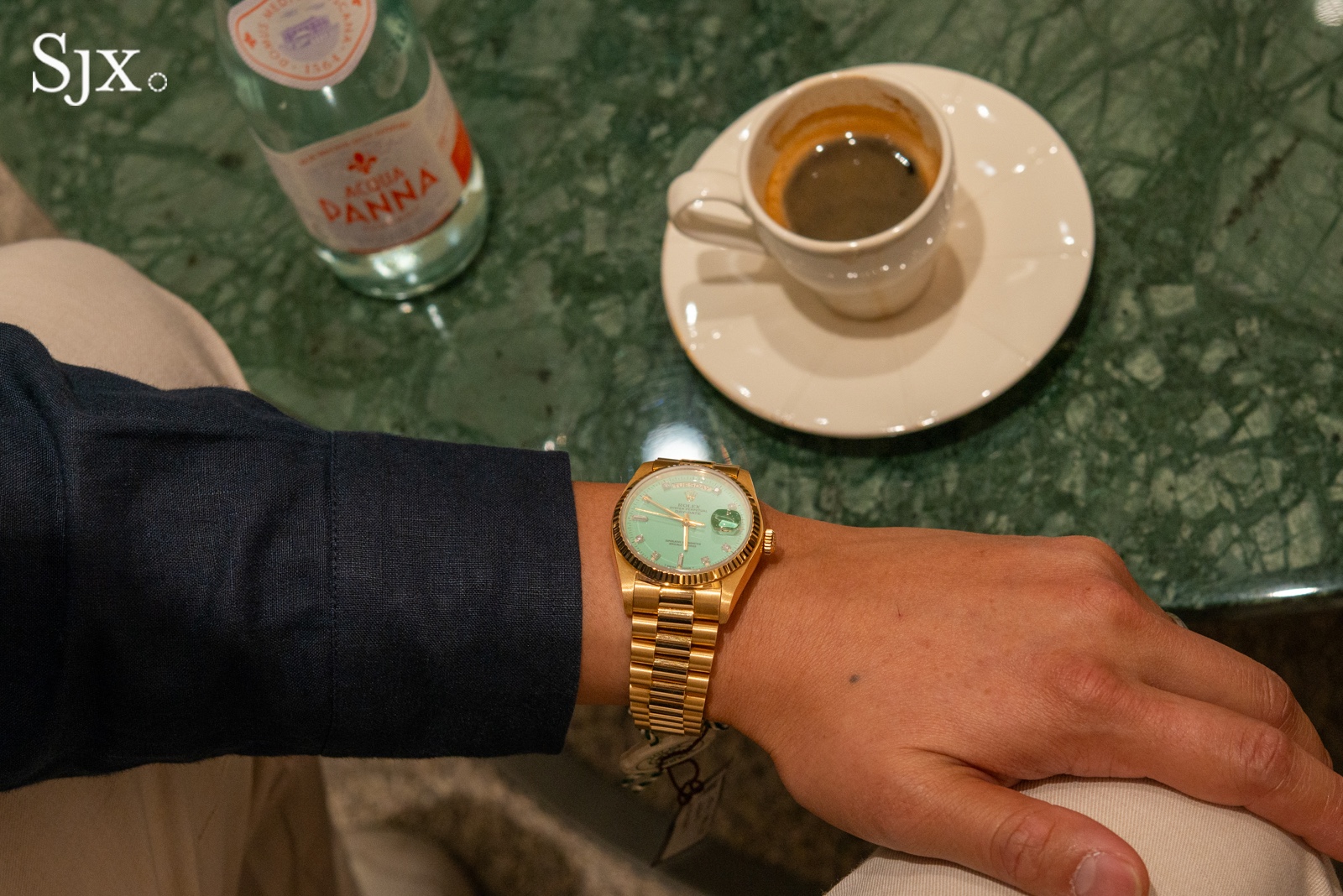
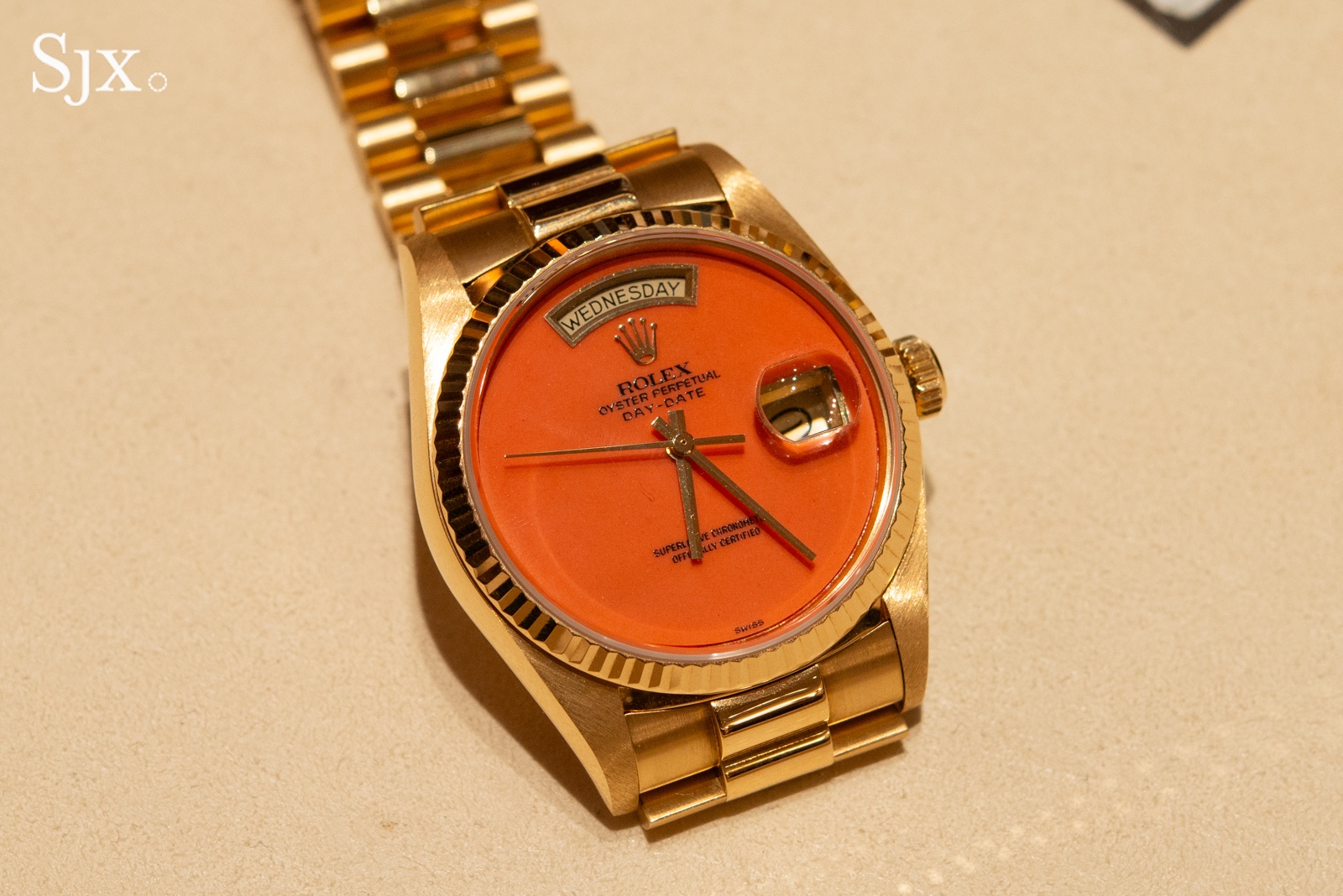
Many CPO inventories focus almost exclusively on recent watches; Daytonas, GMT-Masters, and other models that are the flavour of the day. Seddiqi has gone in the opposite direction, curating a more exotic selection.
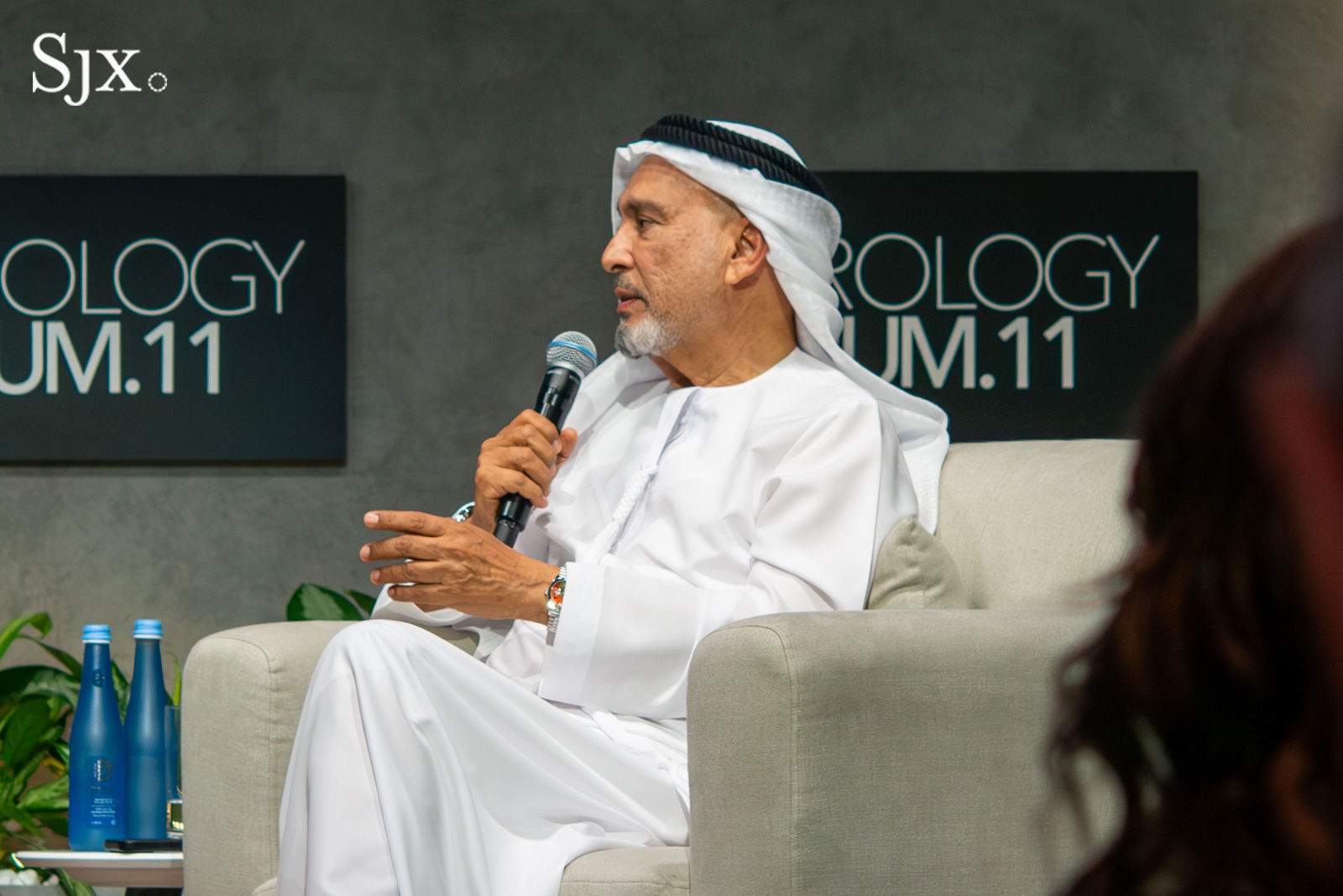
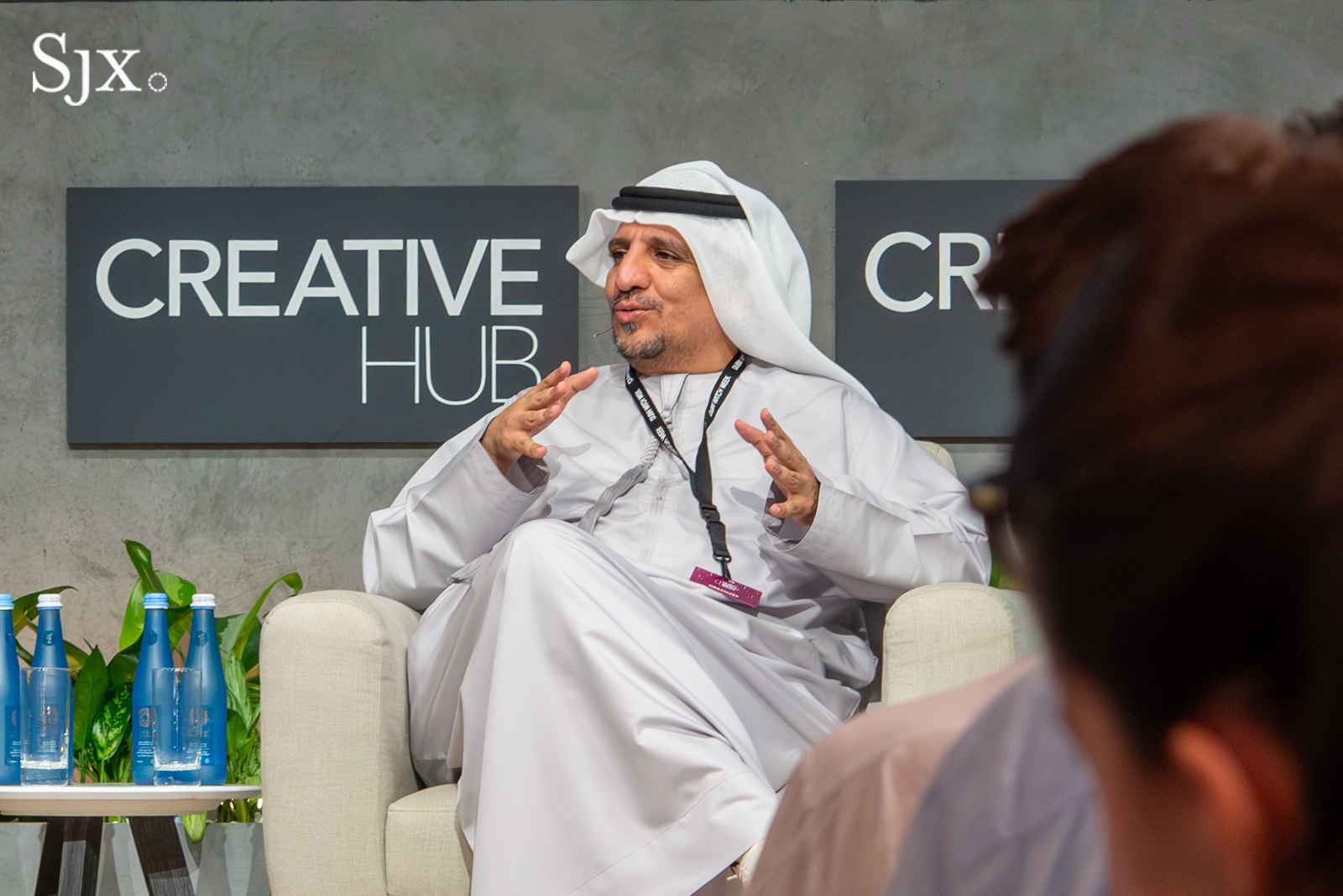
The group’s chairman, Abdul Hamied Seddiqi, affirmed his commitment to the programme: “We have really invested a lot in CPO. We have collected a lot of pieces that didn’t exist as part of the normal collection and today we have about 500 pieces of CPO Rolex.”
The Seddiqi RCPO boutique in Wafi Mall. Image – Ahmed Seddiqi
Cultivating trust
Collectors are responding to the unique selection offered by the Seddiqi boutique. Mr Seddiqi explained, “People are really buying these pieces, especially the really expensive [off−catalogue pieces]. The second thing is that people trust us and also they have a guarantee from Rolex that with CPO it’s genuine with no modification…the bracelet, the dial…everything is genuine.”
The element of trust is something that came up repeatedly during the panel, with Mr Dufour noting that in the context of vintage watches, “It’s an industry where you have some money… when you have some money you always have the right guys and the bad guys.”
That trust extends far beyond Dubai, with Mr Seddiqi noting: “We have people from outside [the UAE] even from South America and Mexico come to buy CPO [from the Seddiqi boutique].”
This should not be surprising. Dubai excels at bringing the world together, and Seddiqi’s multi-generational stewardship of the region’s horological culture gives the boutique a sense of authority few retailers can match.
Abdul Hamied Seddiqi.
Concluding thoughts
What Seddiqi has created with its Rolex CPO boutique feels less like a retail concept and more like an institution; the boutique’s depth of inventory and access to unusual references set it apart from typical CPO offerings. And while Dubai’s connectivity brings collectors to the city, it’s the Seddiqi family’s credibility and curatorial eye that will keep them returning to the CPO boutique. As the secondary market becomes an ever more important pillar of modern watch collecting, this boutique illustrates what the future of certified pre-owned can look like when executed with ambition and clarity of purpose.
Dubai Watch Week (DWW) returned for its seventh edition with a scale and ambition that surpassed every prior year. Staged in Burj Park under the shadow of the Burj Khalifa, the fair brought together 90 brands — roughly 60% more than the last edition in 2023 — and welcomed a remarkable 49,000 visitors over five days, up from just 23,000 two years ago. It was a week of new launches, discussion, and serendipitous encounters, all set against the backdrop of a temporary venue built in just six weeks but executed with the polish of a world-class exhibition.
The mood was upbeat. Despite a challenging market environment, the energy at DWW suggested a resilient, forward-looking industry. Notable figures attended, including Dubai’s ruler His Highness Sheikh Mohammed bin Rashid Al Maktoum and Rolex chief executive Jean-Frédéric Dufour, further signalling the fair’s growing stature under the leadership of the event’s chief executive, Hind Seddiqi.
This year’s event was held in Burj Park, which contributed to the jubilant atmosphere. Image – Dubai Watch Week
Initial thoughts
Rome wasn’t built in a day, but the impressive DWW venue was erected in just six weeks. The new Burj Park setting transformed a simple strip of waterfront into a miniature city, complete with large air-conditioned structures, full-service restaurants, and a visual identity befitting a major fair. Step outside at night and you were greeted with the laser shows of the Burj Khalifa reflected across the lake—an unmistakably Dubai tableau.
Dubai is arguably better positioned to host this type of event than any other city in the world, with a multi-lingual population and near-absolute safety and security for attendees. And that ease bled into the culture of the fair itself. You couldn’t walk ten paces without running into notable industry figures like Max Büsser, Kari Voutilainen, and Roger Smith, or a normally low key collector wearing something extraordinary.
The atmosphere was both jubilant and intimate. Despite the vast number of attendees, it remained possible to have impromptu conversations with leading lights of independent watchmaking, often without formal introductions or appointments. It is this blend of scale and accessibility — big enough to attract the world, small enough to feel personal — that makes the event unique.
Hind Seddiqi – Chief Executive Officer of Dubai Watch Week.
An open forum
A key attraction of DWW is the opportunity to engage with brand executives and industry leaders during the panel discussions. This year’s panels were something of a mixed bag; some delivered real substance, while others felt like they were planned in anticipation of announcements that ultimately didn’t materialise. But when they were good, they were very good.
The standout of the week was undoubtedly Jean-Frédéric Dufour’s appearance — a genuine rarity given how seldom the Rolex chief executive speaks publicly. His comments during a discussion with Seddiqi Holding Chairman Abdul Hamied Seddiqi revealed more about the inner workings of Rolex than we’ve heard in years. He reaffirmed Rolex’s long-term belief in silicon, noting that future remanufacturing of silicon components will be easier, cheaper, more precise, and less energy-intensive.
Abdul Hamied Seddiqi – Chairman of Seddiqi Holding.
On distribution, he clarified that the Bucherer acquisition was opportunistic; Rolex has no plans to expand further into retail. The long-term vision remains partnerships with authorised dealers. The Certified Pre-Owned (CPO) programme was another area of emphasis. He and Hamied Seddiqi both encouraged other brands to adopt CPO, echoing what many regard as an emerging structural pillar of the market.
Mr Dufour also revealed a few interesting details about the brand’s vast internal infrastructure. Among the more striking details: the average age of machine tools in the Rolex manufacture is just eight years. The company invests roughly CHF100 million each year to retire older machines to ensure that every component is made using exclusively state-of-the-art equipment. On this point, Rolex is using artificial intelligence to improve efficiency in the way that machining operations are programmed and carried out.
He also disclosed that Rolex employs 1,900 watchmakers in after-sales service along with 85 PhD-level researchers in R&D, 2,000 engineers, and 500 apprentices across dozens of disciplines. “These people don’t want to work in a boring industry,” he said, arguing that leadership must keep watchmaking exciting not only for consumers, but for the next generation of talent.
This sentiment resurfaced during the CEO roundtable featuring Audemars Piguet chief executive Ilaria Resta alongside Georges Kern of Breitling, Julien Tornare of Hublot, and Karl-Friedrich Scheufele of Chopard. Topics ranged from tariffs to the need for long-term thinking even in volatile periods. Ms Resta echoed Mr Dufour’s view that desirability must be cultivated continuously, especially when macroeconomic signals are as mixed as they are now.
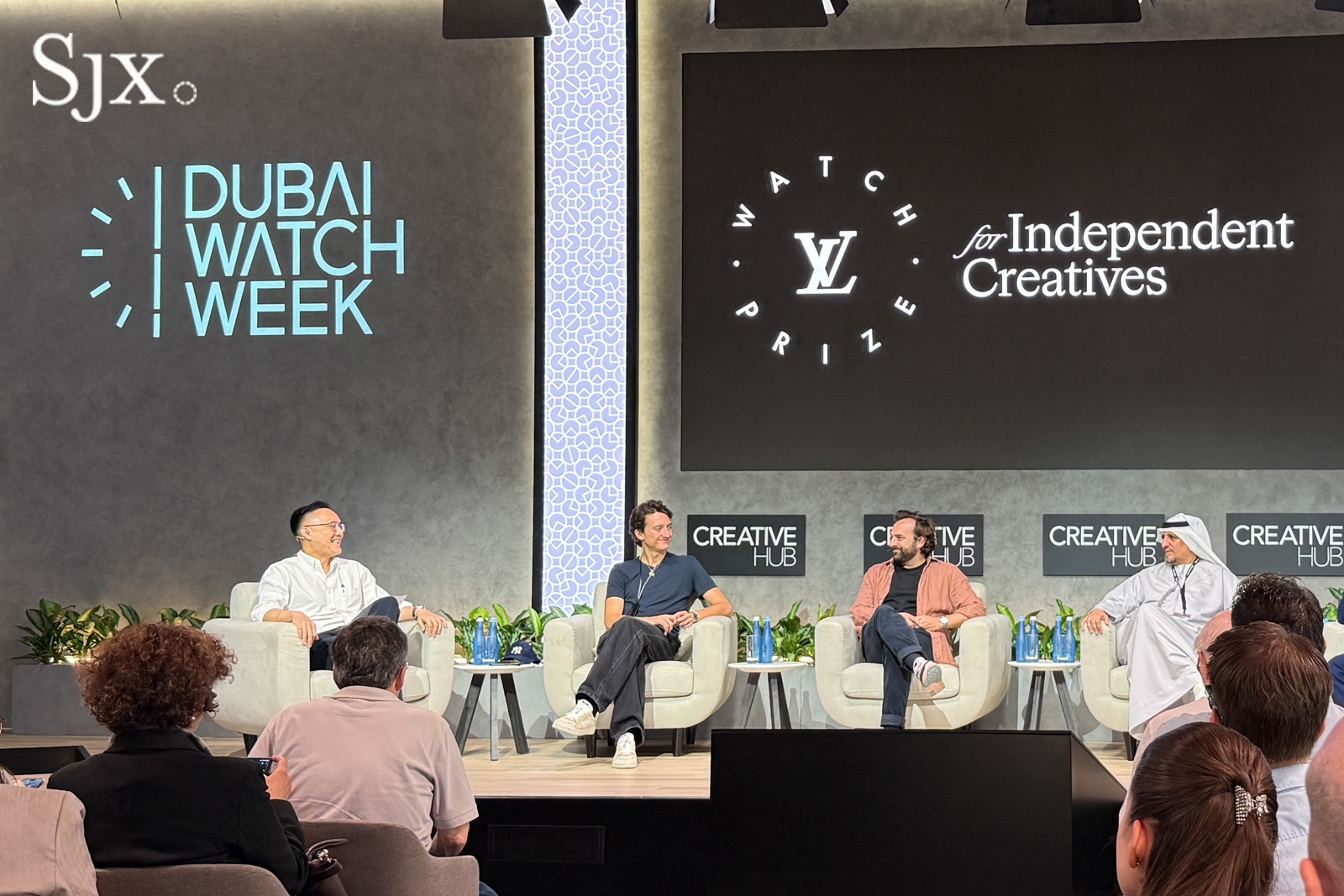
Another productive session was the Louis Vuitton Watch Prize panel moderated by SJX, featuring Jean Arnault, Mohammed Seddiqi, Raúl Pagès, and Wei Koh. Mr Seddiqi set the tone with a simple principle: buy what speaks to you, not what your neighbour admires — a reminder that independent watchmaking is an artistic pursuit best approached on personal terms.
As for the prize itself, Mr Arnault explained that it’s intentionally inclusive, with the committee actively scouting emerging talent across Asia to keep the field diverse and competitive. Mr Pagès, last year’s winner, summarised what it takes to stand out to the jury: commit to your design language, stay true to what makes you unique, and pursue it consistently over time.
Mohammed Seddiqi, Chief Executive Officer of Ahmed Seddiqi.
Elsewhere, Mr Kern formally introduced the House of Brands, his growing ecosystem around Breitling that includes Gallet and Universal Genève. And the succession panel featuring Max Büsser and Kari Voutilainen proved unusually candid. Each outlined their approach to building resilience beyond the founder — a subject that will loom larger as more first-generation independents plan for the future.
New releases
The growing prominence of DWW means brands are increasingly using the fair as a launchpad for significant products. This year saw a broad spectrum, from major complications to accessible tool watches.
The exhibition space. Image – Dubai Watch Week
The most technically significant debut was the Chopard L.U.C Grand Strike, a compact grande et petite sonnerie with sapphire gongs and a clear, resonant tone that carried across the hall. It builds on the Full Strike of 2016 but introduces a new case architecture with soldered lugs and concealed thickness, giving it a more refined profile.
Chopard’s overall momentum was notable. With the Grand Strike arriving just after Ferdinand Berthoud’s Naissance d’une Montre 3, it’s easy to argue that 2025 is shaping up to be the manufacture’s most important year since the original L.U.C launch in 1997.
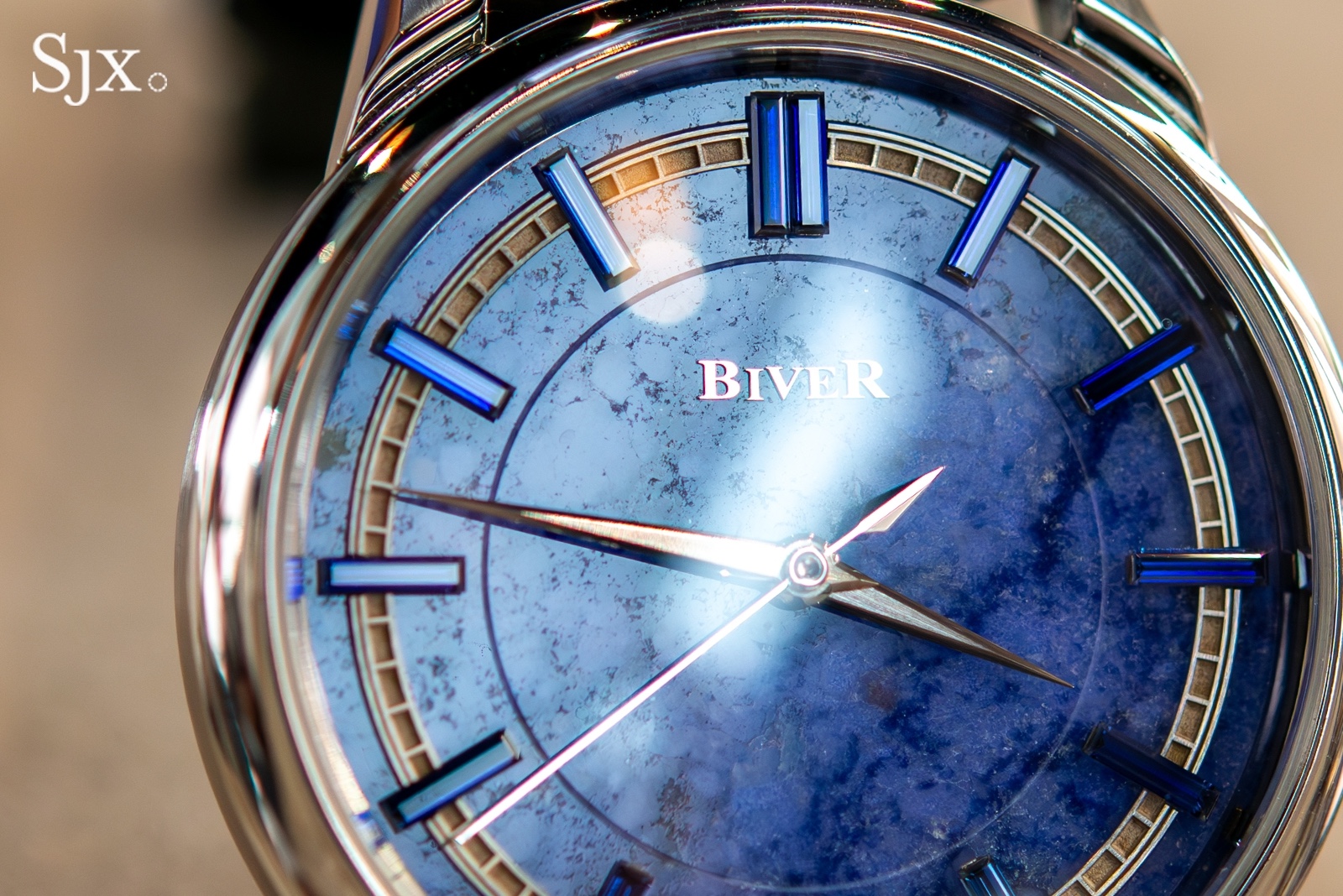
Smaller brands showed up in force as well. Biver expanded the Automatique line with a range of exotic stone and enamel dials — mahogany obsidian, lavender jade, blue quartzite, oeil de fer — alongside new Clous de Paris and two-tone options. While stone dials are increasingly common, Biver’s selection felt genuinely fresh, supported by a technically ambitious micro-rotor movement with zero-reset seconds and 18k gold bridges.
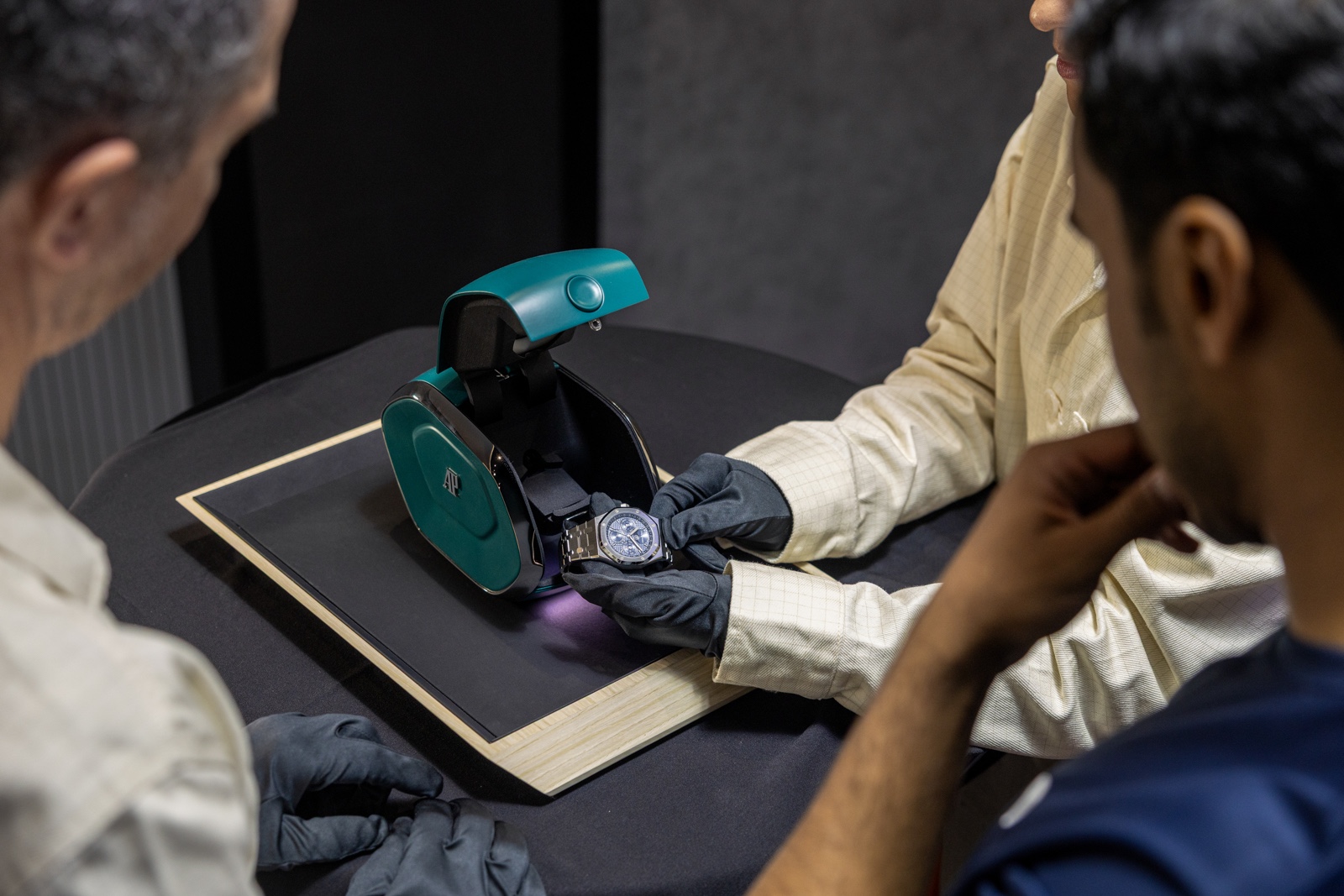
Audemars Piguet, meanwhile, unveiled an intelligent watch winder, developed with Dubai Future Labs, capable of reading the dial of a perpetual calendar via a built-in camera and adjusting all indications through a motorised crown-gripping arm. Still in development and limited to the new calibre 7138, it felt more like a conceptual talking point than a commercial product—but in the context of DWW, its blend of robotics and watchmaking felt perfectly at home.
The intelligent watch winder is compatible with Audemars Piguet’s latest generation of perpetual calendars. Image – Audemars Piguet
Ulysse Nardin and Urwerk debuted the UR-Freak, a collaboration that merged the Freak’s rotating movement architecture with Urwerk’s wandering hours satellite display. Conceptually, it’s a collaboration that feels almost inevitable. At the more accessible end of the spectrum, Tudor introduced the Ranger 36, a truer-to-vintage proportion with an attractive “dune white” dial.
Concluding thoughts
Dubai Watch Week 2025 appeared to be a success by any measure. The new Burj Park venue elevated the fair into something approaching a permanent fixture, even if it will be dismantled and rebuilt again in two years’ time. The combination of safety, accessibility, and scale created an atmosphere few other fairs can match. Panels ranged from revealing to philosophical, offering real insight into the direction of the industry. And the slate of new products — from Chopard’s Grand Strike to independent highlights and even an AI-powered winder — underscored the fair’s role as a global stage for both tradition and experimentation.
More than anything else, DWW illustrates that the watch world still values a gathering place where brands, collectors, and watchmakers can meet on equal footing.
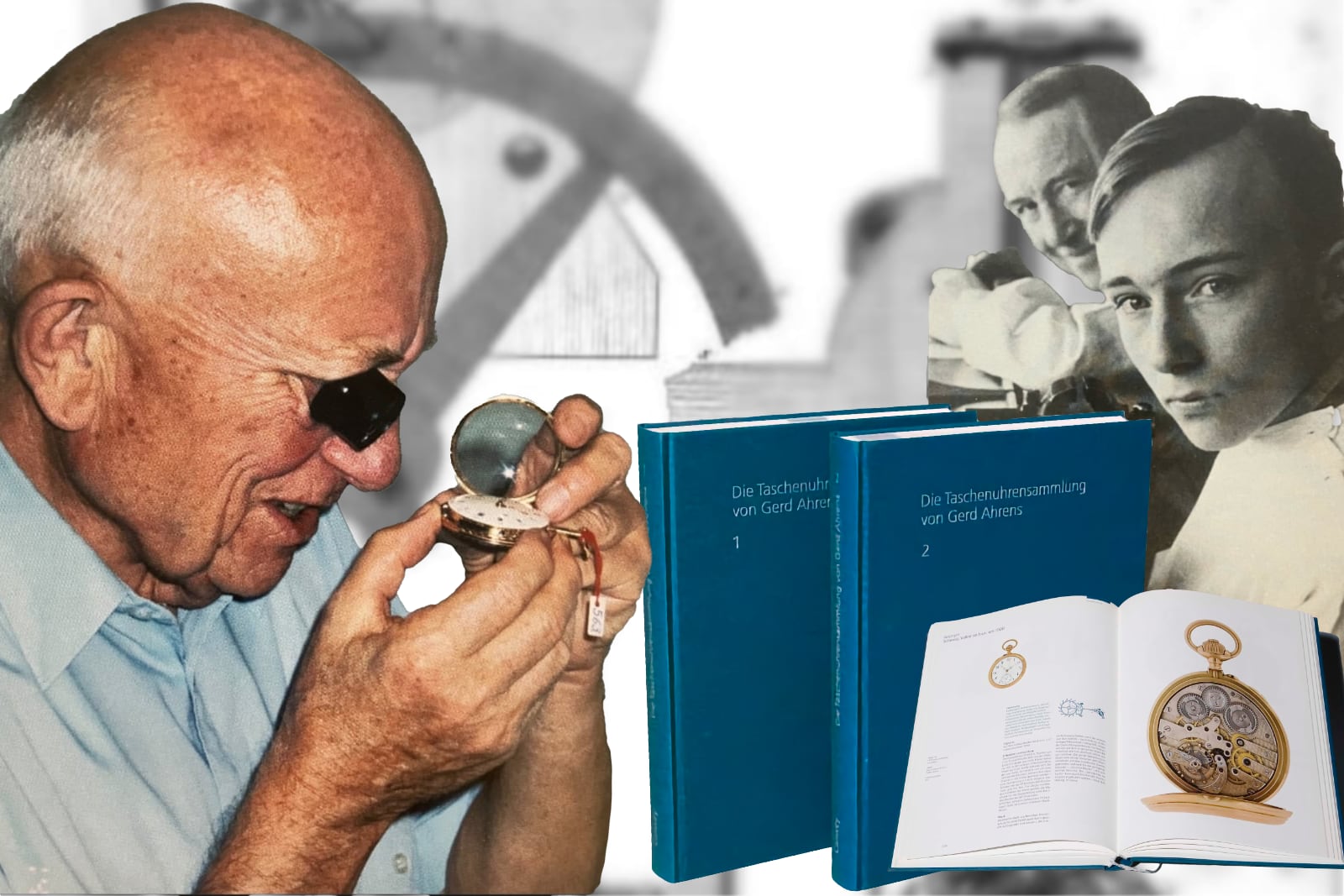
In the autumn of 1948, at Galerie Fischer’s auction house in Lucerne, a young Swiss watchmaker secured Lot 155, a Breguet pocket watch, No. 4763, circa 1848, with a straight-line club-tooth lever escapement. The case, fitted later by E. Brown at George Daniels’s suggestion to employ original movements and parts held in stock, aligned with his purpose. For most collectors, such a purchase might not have represented a pure Breguet. But for Gerd Ahrens, it was something altogether different: the first sentence in what would become a four-century narrative of mechanical ingenuity.
Gerd Ahrens in his shop office on Schwanenplatz 7 around 1955. Image – Gerd Ahrens
Foundation: a life built on wheels and springs
Gerd Ahrens was born on September 18, 1920, in Hamburg, Germany, at a time when mechanical watches represented the pinnacle of portable precision. His father, Otto Ahrens, born in 1877, had already established himself as a highly respected watchmaker. Otto’s path, however, would be marked by the upheavals of the twentieth century. Before World War I, he had operated a successful shop in Paris and had built connections throughout the watchmaking centres of Inner Switzerland. The evidence of his skill was tangible: Otto personally built ten pocket watches, demonstrating not just commercial acumen but genuine mastery of the craft.
Then the war came. Otto was forced to close his Paris shop in 1914, and the conflict left him penniless. A trained craftsman of the highest order found himself working as a janitor and technical handyman in postwar Germany, a humbling descent that must have burned deeply. But Otto’s prewar network would prove his salvation. His contacts in Switzerland and Paris led to an offer that would change the family’s fortunes: a position as workshop chief at the renowned Gübelin watchmaking house in Lucerne.
Otto Ahrens’ shop (on the right) in St. Cloud, Paris, around 1910. Image – Gerd Ahrens
The family moved to Switzerland, and Otto threw himself into the challenge with characteristic intensity. He was responsible for renovating Gübelin’s workshop, a task he completed “to the fullest satisfaction” of his employers. His work there demonstrated both his technical prowess and his exacting standards, qualities that would profoundly shape his son.
By 1929, Otto felt ready to establish himself independently once more. He opened his own watchmaking shop on Alpenstrasse 9 in Lucerne, where nine-year-old Gerd was initiated into the world of wheels, springs, and escapements. For a boy growing up in that environment, watches were the family’s livelihood, the daily subject of conversation, and the pieces that filled the workshop with quiet ticking.
Otto Ahrens was, by all accounts, a formidable personality. Christian Pfeiffer-Belli, who would later edit the catalogue of Gerd’s collection, described him as “strict, often volatile, unrelenting in his demands on himself and his employees and apprentices.” Yet this severity was paired with genuine openness to innovation. Otto “was very open to new developments in watch technology. He improved escapements, optimised gear trains, was always searching for the best watch, which, of course no one built, only he kept trying.”
This pursuit of perfection became Gerd’s lifelong standard. The young apprentice learned not only the techniques of watchmaking but absorbed his father’s philosophy: that excellence required relentless refinement, that there was always a better solution waiting to be discovered, that understanding meant not just reading but building with one’s own hands.
Gerd Ahrens and his father at the bench, ca. 1937-1938. Image – Gerd Ahrens
In 1934, when Gerd was fourteen, Otto made a strategic business decision. He moved the shop from Alpenstrasse to Schwanenplatz, in the heart of Lucerne’s old town tourist area. The location offered better foot traffic but also placed the Ahrens establishment between two formidable competitors: Bucherer toward the train station and Gübelin (Otto’s former employer) toward the city exit. For the next three decades, father and son would work at this location, building a reputation for technical excellence in one of Switzerland’s most competitive markets.
The businessman: continuity and transition
Gerd carried out his apprenticeship in the family business, learning to disassemble and reassemble the intricate mechanisms that transformed raw materials into instruments of precision. This was practical knowledge forged at the workbench through thousands of hours. His hands learned to recognise quality by touch, his eyes to detect imperfection at a glance, and his mind to grasp the logical elegance of a well-designed escapement.
In the atelier of Schwanenplatz. Gerd Ahrens is the second from the right. Image – Gerd Ahrens
In 1955, at the age of thirty-five, Gerd Ahrens assumed control of the family business from his father, who had operated it for more than four decades. This transition came at a fascinating moment in horological history. The mechanical watch industry was approaching its zenith, with Swiss manufacturers dominating world markets, yet the seeds of disruption had already been planted. Quartz technology, still decades from commercial viability, was being researched in laboratories.
The business operated under his direction until the end of December 1966, a span of nearly four decades. Yet even as he managed the practical demands of a retail business, balancing accounts, satisfying customers, maintaining relationships with suppliers, Ahrens was pursuing a parallel passion that would ultimately define his legacy.
The collector emerges: a philosophy takes shape
That first purchase in 1948, the Breguet with its unusual escapement, was far from a random acquisition but a deliberate choice that revealed Ahrens’ emerging philosophy. Abraham-Louis Breguet, who had died in 1823, represented the apotheosis of watchmaking genius. But Ahrens had not chosen a typical Breguet. He had selected one with a pierced pin-pallet escapement, a technical curiosity that spoke to his interest in mechanical solutions.
Safe drawer with watches, ca 2005. Image – Gerd Ahrens
This choice foreshadowed what would become his collecting motto: “rare escapements in pocket watches.” In this simple phrase lay a profound approach to collecting that set Ahrens apart from his contemporaries. As he would later explain in his own words: “It is the collection of an old watchmaker who understands something of the technical side.” He was interested in “the purely technical watch,” and his philosophy revealed the craftsman’s perspective: “To appreciate a polished balance staff or a cleanly ground steel part, you must have made it yourself first, then you understand the work behind it.”
The escapement is the soul of any timepiece, the mechanism that converts the steady release of energy into the regulated ticking that marks seconds, minutes, and hours. It is the component that separates a simple spring-driven machine from a precision timekeeping instrument. Throughout horological history, watchmakers had devised dozens of escapement designs, each attempting to solve the fundamental problems of friction, accuracy, and reliability. Some designs succeeded and dominated the industry. Others represented brilliant dead-ends, technically sophisticated but commercially unviable.
Ahrens articulated his unique challenge: “The challenge for me was always to collect precisely functioning watches from times when there were actually no precise watches.” This statement captures his entire project, to document the evolution of precision through the accumulated attempts, both successful and failed, of generations of craftsmen.
Over the next fifty-six years, from 1949 until 2005 when he acquired his last watch, Ahrens pursued this vision with remarkable discipline. He treated the collection as a research project, gathering material proof to tell a clear story of ingenuity and the quest for precise time.
The research network: a scholar among collectors
Gerd Ahrens approached collecting with the rigor of an academic researcher, though he operated outside formal institutions. His multilingual abilities, he could read horological literature in multiple languages, gave him access to scholarship and commercial networks across Europe and beyond. He kept himself informed about watch news from Italy, France, England, and the United States, hoarding “piles of newspaper articles, magazines, catalogues, countless calendars.”
His personal library included rarities that would make any horological scholar envious: Breguet by David L. Salomons (1921), Feinstellung der Uhren by Giebel/Helwig (1952), Drehganguhren by Helwig (1927), and Verzahnungen by Curt Dietzschold (1885). He subscribed to the major collector magazines, publications of the Antiquarian Horological Society (AHS), the French Association (AFAHA), ANCAHA, the National Association of Watch and Clock Collectors (NAWCC), Chronometrophila, and the German magazine Alte Uhren.
From the late 1970s, Ahrens began corresponding with Alte Uhren magazine, sending letters on gray, embossed stationery accompanied by black-and-white photographs. These missives demonstrated his scholarly approach: he would send photos to explain signatures, show escapement details, share technical observations. Through collecting, correspondence, and publication, he took part in the international discourse on horological history.
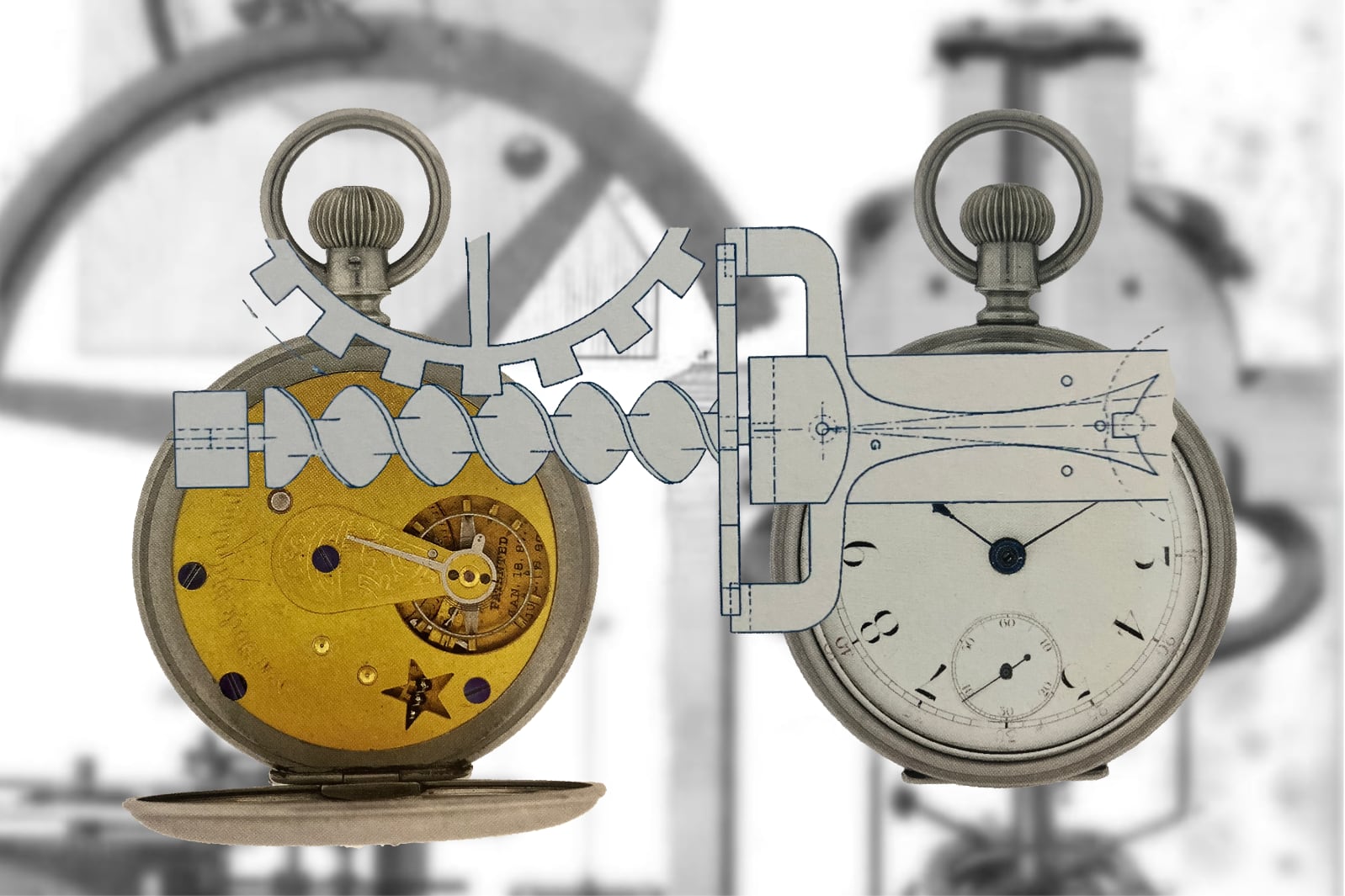
Ferdinand Berthoud, Paris, ca. 1780. Cylinder escapement by Ferdinand Berthoud. Escape wheel in brass; two-arm brass balance; flat, under-slung spiral; Tompion-style regulator. Image – collage
He treated the catalogues of Christie’s, Sotheby’s, Antiquorum, Ineichen, Koller, and Galerie Fischer as a syllabus, reading them for learning and for leads. Each catalogue taught him about market trends, provenance, and the migration of significant pieces through the collector ecosystem.
Ahrens regularly attended auctions at Antiquorum in Geneva and Ineichen in Zürich, and also traveled to London and Paris for important sales. These were opportunities to handle watches firsthand, meet dealers and fellow collectors, and absorb the culture of high-level collecting.
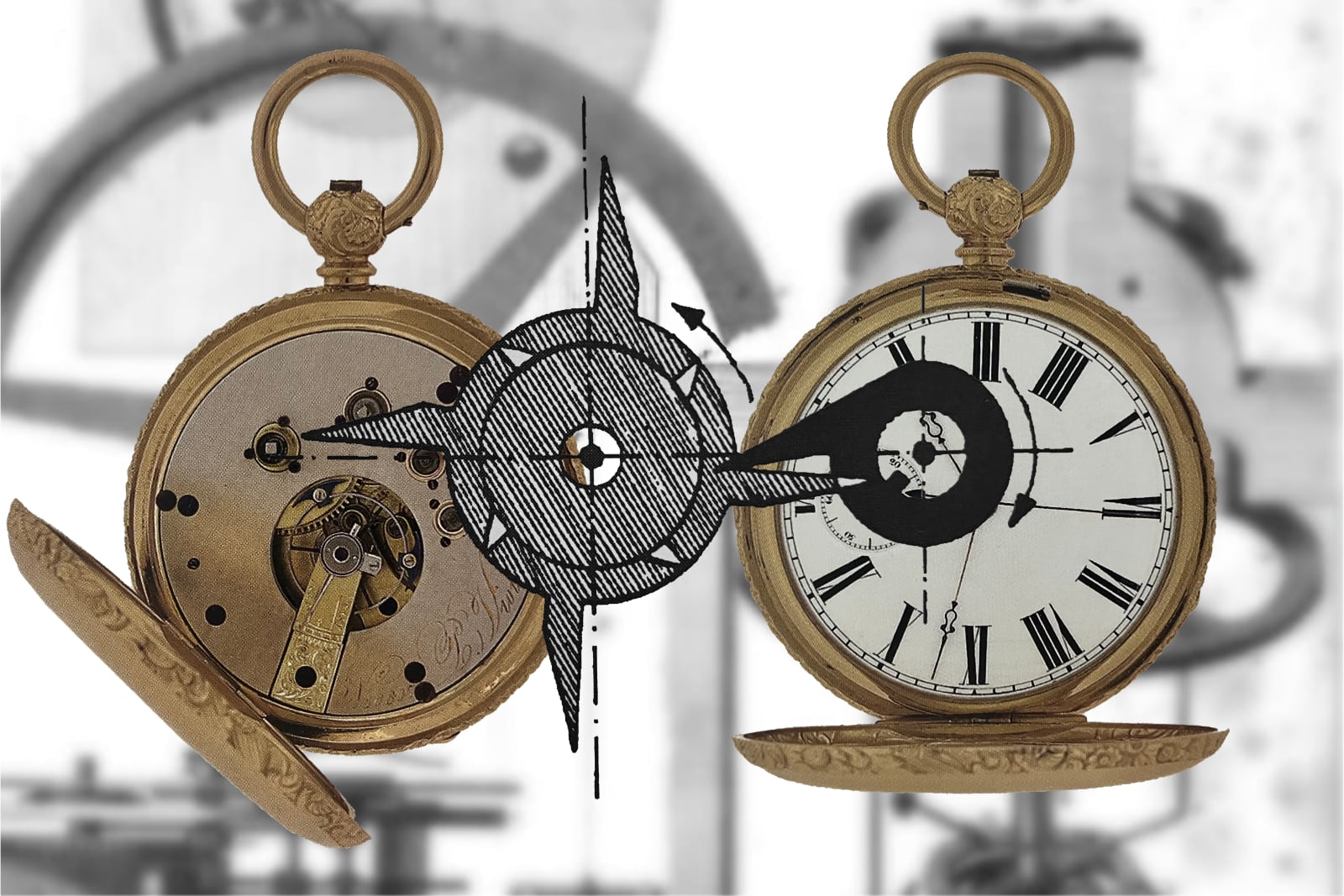
Abraham-Louis Breguet, Paris, no. 1666, ca. 1805. Cylinder escapement with ruby cylinder by Abraham-Louis Breguet. Steel escape wheel; three-arm brass balance; flat, upper hairspring; regulator index with a bimetallic curb. Image – collage
One particularly memorable trip occurred in November 1980, when he attended a Paris auction with expert Jean-Claude Sabrier, then working for auctioneer Hervé Chayette. This was the first such auction in Paris in over twenty-five years, and Ahrens, knowing Sabrier well, had “a reserved seat in the first row.” During this sale, he acquired a nickel ship’s chronometer by Paul Buhré for approximately 1,100 Swiss francs and a silver savonnette with Garnier escapement and enamel dial with colourful landscape for about 5,500 francs. He even engaged in an old-fashioned trade, exchanging an old Lepine movement for a silver pocket watch with scissors escapement.
These auction experiences reveal Ahrens as an active participant in the marketplace, knowledgeable about values, strategic in his bidding, and connected to the key figures in the trade. He bought directly and attentively, a hands-on collector who insisted on seeing, touching, and understanding every piece he considered.
The architecture of a collection
By the time Gerd Ahrens died in 2005, he had assembled more than 550 significant pocket watches. When the catalogue team examined his holdings, they reviewed over 750 watches before selecting 538 for documentation. The number itself is impressive, but what distinguished the collection was its systematic organisation. Ahrens had created a four-century timeline of escapement evolution, with each watch serving as a data point in the larger story.
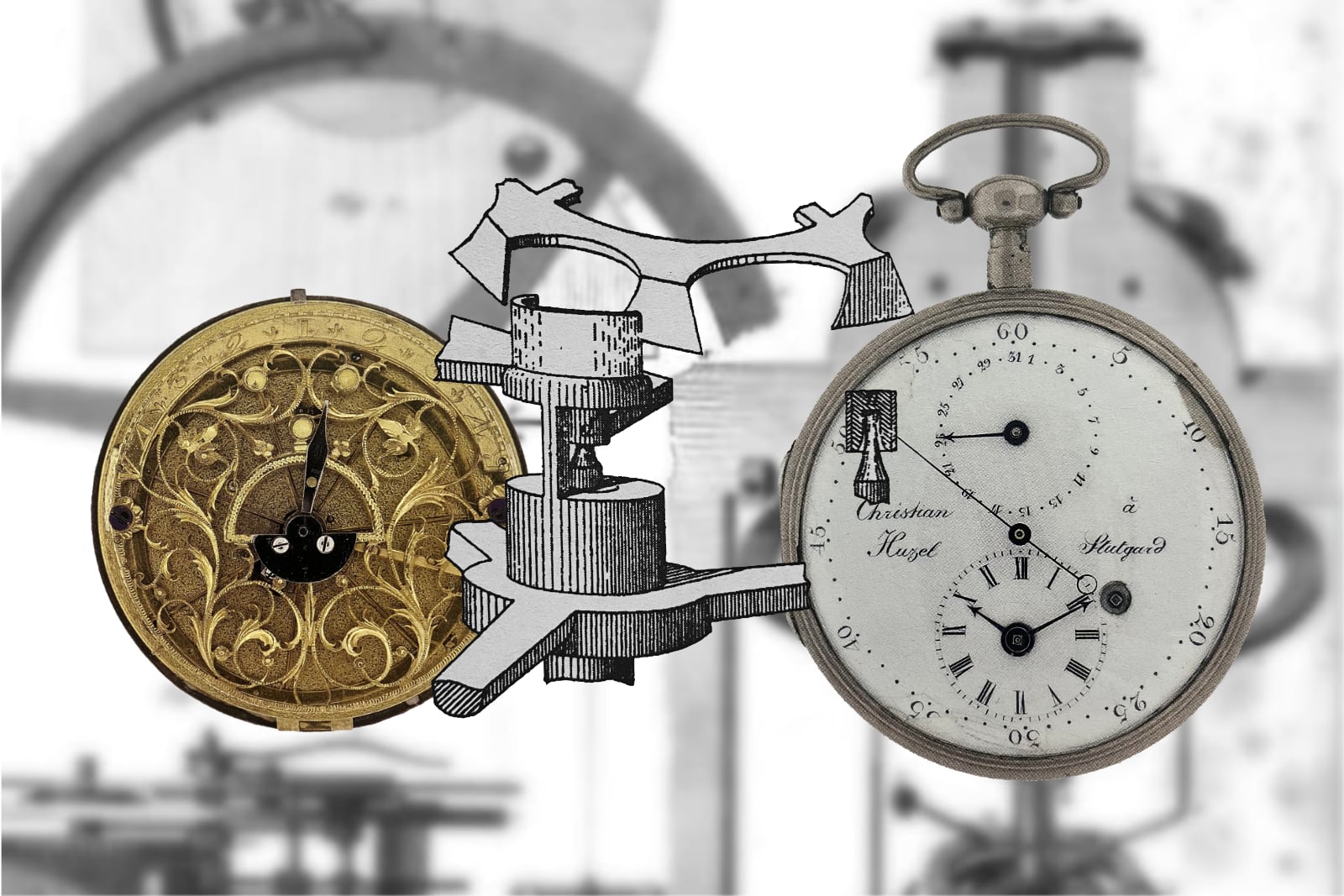
Christian Huzel, Stuttgart, Germany, ca. 1800. Cylinder escapement with ruby cylinder after Abraham-Louis Breguet. Steel escape wheel with eight teeth; seven-arm brass balance; flat, upper hairspring with three and a quarter turns; simple regulator index. Image – collage
Of the 538 watches selected for the catalogue, 68 feature with verge escapements. These represent the earliest watches in the collection, dating from the very origins of mechanical timekeeping in the medieval period. These primitive but ingenious mechanisms, with their crown wheel and foliot, represented humanity’s first successful attempts to regulate mechanical motion. Ahrens owned examples that allowed scholars to trace the verge’s evolution from crude early forms to refined later iterations.
The next phase of history is represented by 75 watches with cylinder escapements: an eighteenth-century innovation that offered improved performance over the verge. Invented by Thomas Tompion and George Graham, the cylinder escapement represented a significant leap in precision and became the preferred mechanism for high-grade watches throughout the 1700s. Ahrens’ examples documented how different makers adapted and refined this design.
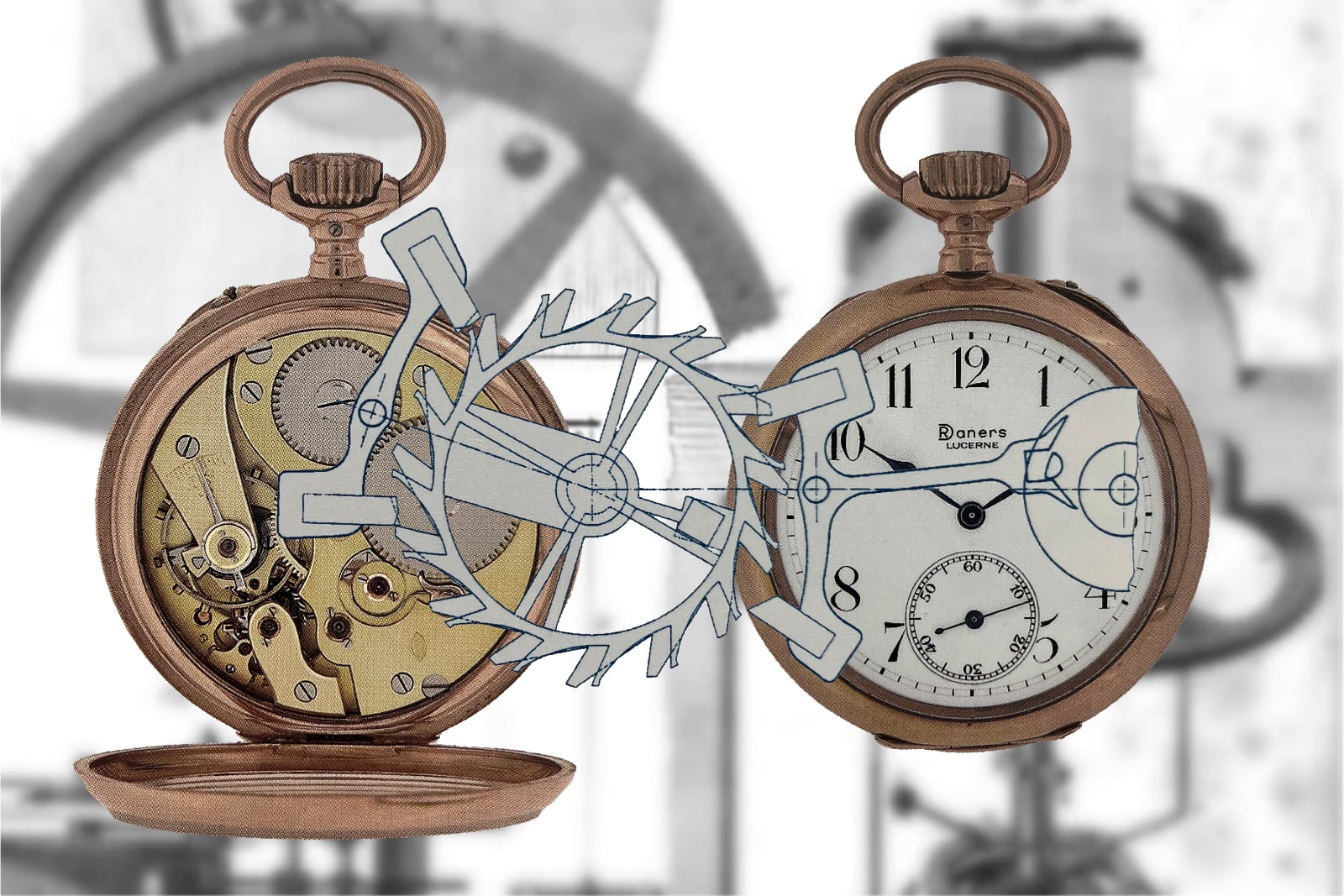
Pierre Frédéric Droz, l´Orient, ca. 1780. Double-wheel duplex escapement. Twin escape wheels with short, blunt teeth and slight lift on the locking wheel; three-arm brass balance; flat, upper hairspring; Tompion-type regulator but with a fixed regulator scale. Image – collage
There are also 27 watches with duplex escapements: a sophisticated but challenging design that enjoyed a period of popularity in high-grade watches during the late eighteenth and early nineteenth centuries. The duplex was notoriously difficult to manufacture and adjust, requiring exceptional skill from the watchmaker. That many makers attempted it anyway spoke to the competitive pursuit of accuracy that characterised the era.
More than 10% of the catalogue comprises watches with chronometer escapements; 64 in total. These mechanisms, descended from John Harrison’s revolutionary work on marine chronometers, represented the successful solution to one of the great scientific challenges of the eighteenth century: determining longitude at sea. His chronometer collection included pieces by the greatest makers in this specialised field.
Jean-Pierre Viollier, Geneva, ca. 1840. Star-duplex escapement after Charles-Édouard Jacot. Steel escape wheel with four teeth; flat three-arm steel balance; balance rim with the characteristic screwed-on, built-up “devil’s horns”; blued, upper hairspring with Breguet overcoil; simple regulator index. The impulse finger is steel. Amplitude limiting renewed by a brass pin set vertically at the balance arm; the original limiter was a small brass block on the spring acting against two pins in the balance cock. Image – collage
Finally, there are eight watches with tourbillons or carrousels: Abraham-Louis Breguet’s revolutionary 1795 invention designed to counter the effects of gravity on watch accuracy, plus the related carrousel mechanism. The tourbillon, with its rotating escapement cage, represented the ultimate achievement of traditional watchmaking. Each example in Ahrens’ collection cost a fortune to acquire, yet he pursued them systematically because they were essential to his narrative.
The remaining watches documented specialty escapements, experimental and rare designs that showcased individual watchmakers’ ingenuity and ambition, and lever escapements, the design that eventually triumphed over all others to become the standard mechanism in virtually all mechanical watches. Invented in its modern form by Thomas Mudge in the 1750s but not widely adopted until the nineteenth century, the lever escapement combined reliability, accuracy, and manufacturability in a way that no previous design had achieved.
The notable pieces: stories within the story
While every watch in Ahrens’ collection had been selected for its contribution to his historical narrative, certain pieces stood out for their exceptional significance, technical innovation, or illustrious provenance. Every piece combined function with history, an artefact with a story to tell.
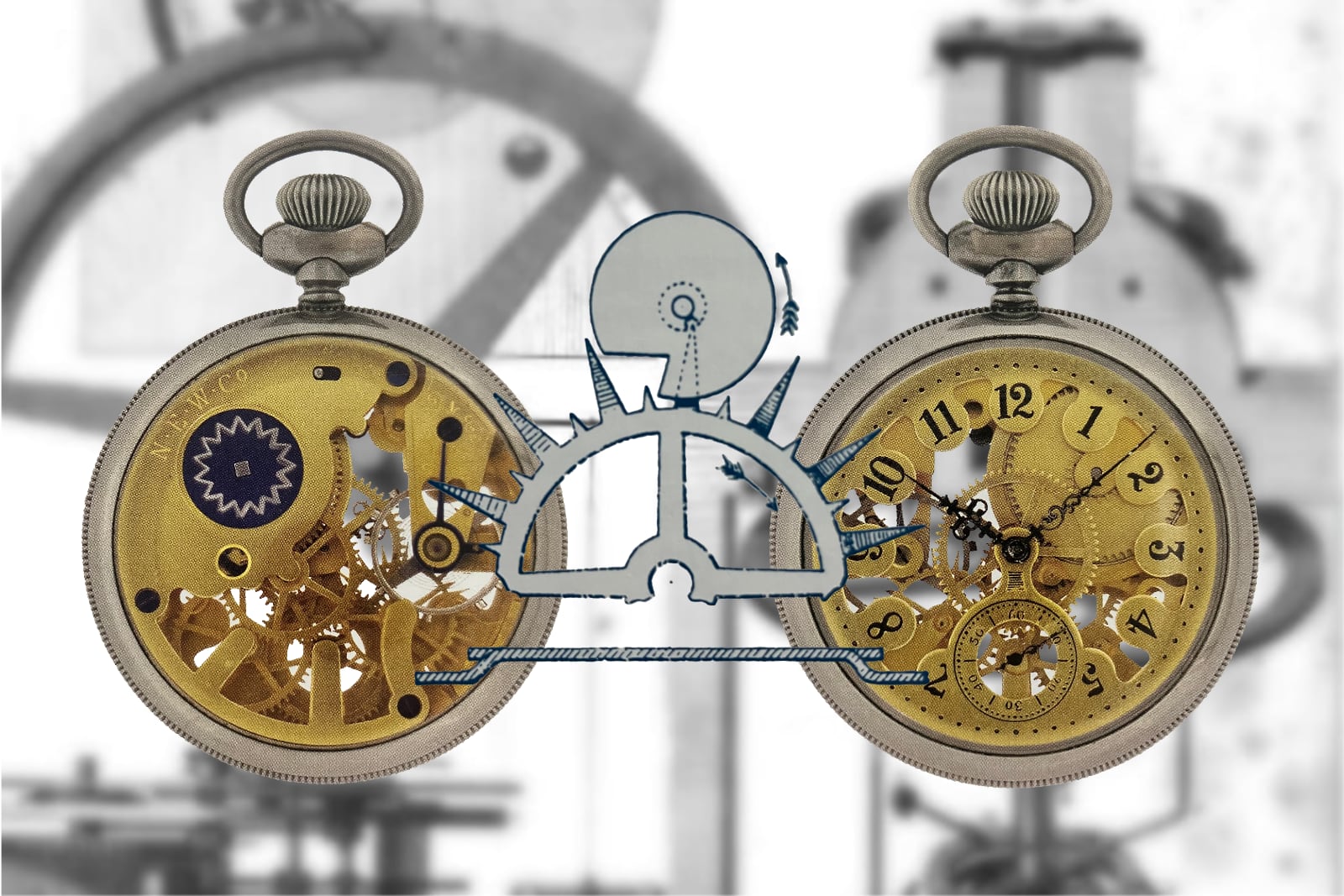
New England Watch Company, Waterbury, ca. 1900. Waterbury duplex escapement. Brass escape wheel with locking and impulse teeth arranged on two levels; two-arm nickel-silver balance with rim screws; flat, upper hairspring; simple regulator index. Image – collage
His Breguet holdings formed a collection within the collection. In addition to that first watch, No. 4763, Ahrens eventually acquired Nos. 125, 1666, 2118 and 2645, among others. Each represented different aspects of Breguet’s genius, his innovations in escapement design, his elegant approaches to complications, his unmatched aesthetic refinement. For a collector focused on technical achievement, Breguet was essential because he represented the complete synthesis of mechanical excellence and artistic vision.
One watch in particular combined technical innovation with historical drama: Abraham-Louis Breguet’s “Simple Garde Temps Médaille Excentrique” No. 3469. This chronometer had been sold to Count Tolstoye on March 9, 1815, and subsequently became one of six deck chronometers used in an Arctic rescue expedition. The watch had witnessed one of the great adventures of the age of exploration, keeping time in conditions of extreme cold and motion that would have defeated lesser mechanisms.
The Jules Jürgensen decimal time watch (Movement No. 10201′) occupied a unique position in the collection. Made in 1900 for the World Exhibition in Paris, this silver watch featured revolutionary decimal time and seconds indication, a system where the day was divided into ten hours, each hour into one hundred minutes, and each minute into one hundred seconds. The decimal time system had been officially adopted during the French Revolution but never achieved popular acceptance. By 1900, it was an antiquarian curiosity, yet Jürgensen had created this technically demanding piece as a demonstration of watchmaking virtuosity. Ahrens acquired it in 1983 from Auktion Koller in Zürich, recognising it as both a technical achievement and a fascinating historical footnote.
The contemporary commission: preserving living traditions
In 1999, Gerd Ahrens did something that revealed another dimension of his character: he commissioned a new watch. This might seem contradictory for a collector focused on historical pieces, but it demonstrated Ahrens’ understanding that watchmaking was not a dead tradition but a living craft that required support and patronage.
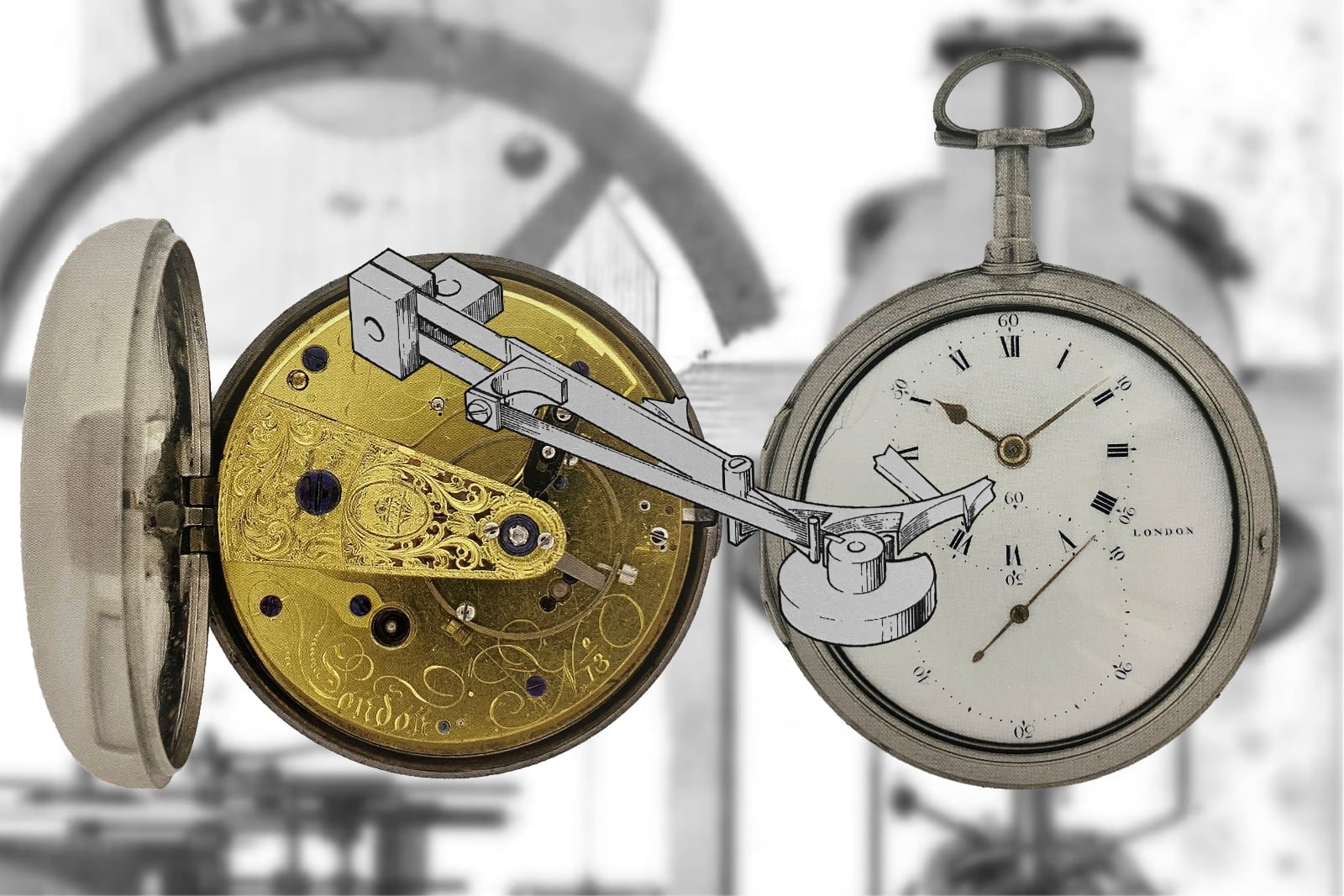
George Margetts, London, ca. 1797. Chronometer escapement with Earnshaw spring detent. Steel detent spring; two-arm compensation balance; white cylindrical balance spring; balance with special tangential screws for fine compensation adjustment; adjustable attachment for the outer terminal of the balance spring. Image – collage
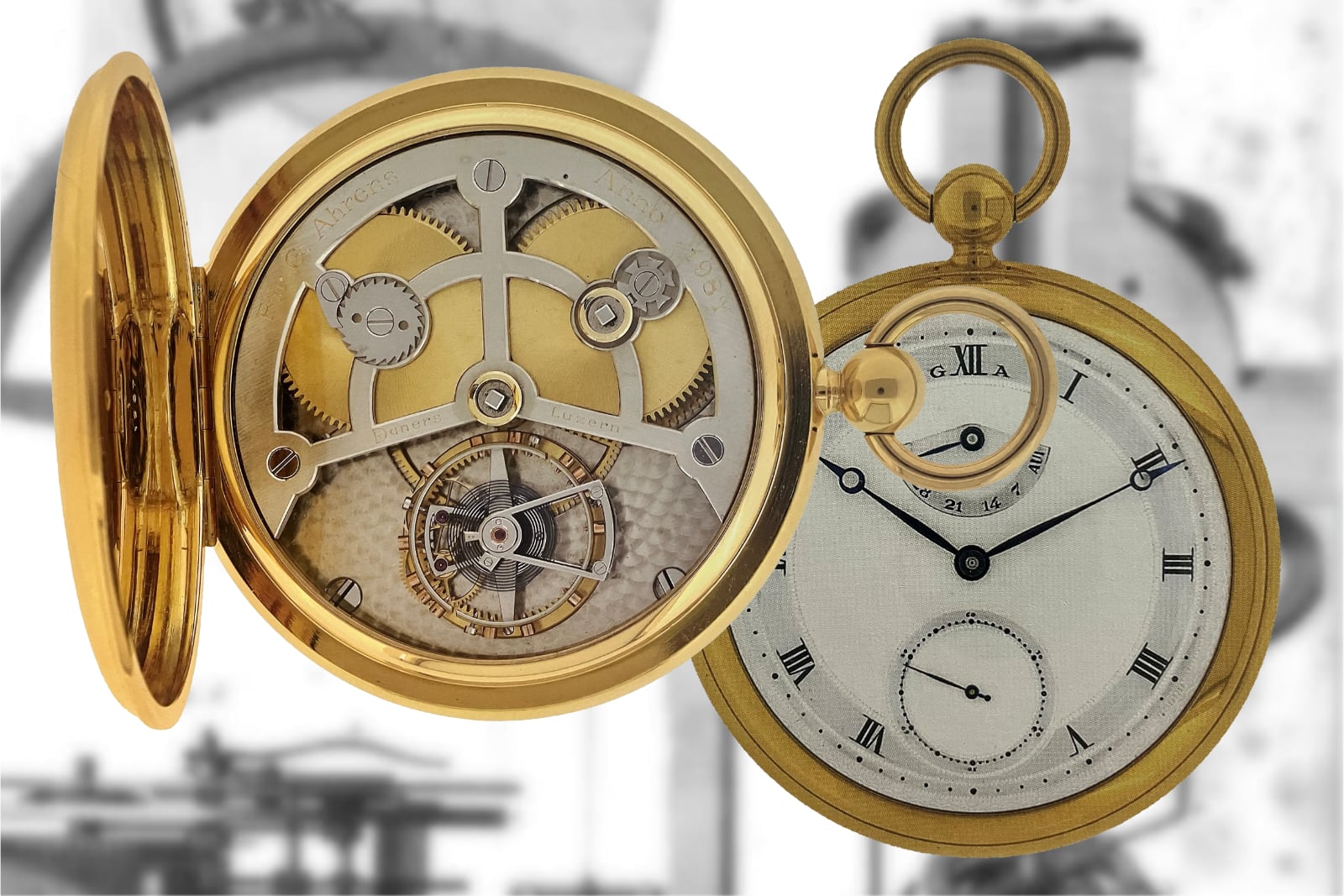
He approached Richard Daners to create a tourbillon pocket watch using traditional methods. The movement was to be made entirely from raw materials, no modern components, no compromises with industrial production. Thomas Engel, a fellow collector, provided the balance and escape wheel from his stockpile of vintage Ulysse Nardin parts and executed the exquisite guilloche work on the dial. The finished watch was signed “Für G. Ahrens Anno 1999” (For G. Ahrens, Year 1999).
This commission represented a philosophical statement about the relationship between past and present. Ahrens understood that the historical watches in his collection had once been contemporary cutting-edge technology. They existed because patrons had commissioned them, supporting the craftsmen who pushed boundaries and maintained standards. By commissioning a new piece made to historical specifications, Ahrens was participating in that tradition, ensuring that the skills required to create such watches would not die with the masters who still possessed them.
The scholar: contributing to knowledge
Gerd Ahrens sought understanding as well as ownership, documenting his findings and sharing them widely. In 1989, he published an article titled “Frühe tragbare Ankeruhren in Deutschland” (Early Portable Anchor Watches in Germany) in Schriften der Freunde alter Uhren (Writings of the Friends of Old Clocks), Volume XVI, pages 31-42. This scholarly work examined the early development of anchor escapement watches in Germany, combining technical analysis with historical research.
The article demonstrated Ahrens’ methodology. He had likely purchased several early German anchor escapement watches for his collection, not only because they were desirable objects but because they raised questions about the development and dissemination of this technology. Who were the makers? How did the design reach Germany from England where it had been invented? How did German watchmakers adapt the design? What were the regional variations? Ahrens investigated these questions systematically, examined the watches themselves for evidence, consulted historical sources, and presented his conclusions in a rigorous scholarly format.
The article has been cited in subsequent academic literature, including scholarly works on Philipp Matthäus Hahn and his successors, demonstrating that Ahrens’ contributions to horological knowledge extended beyond his collection to include original research that advanced the field.
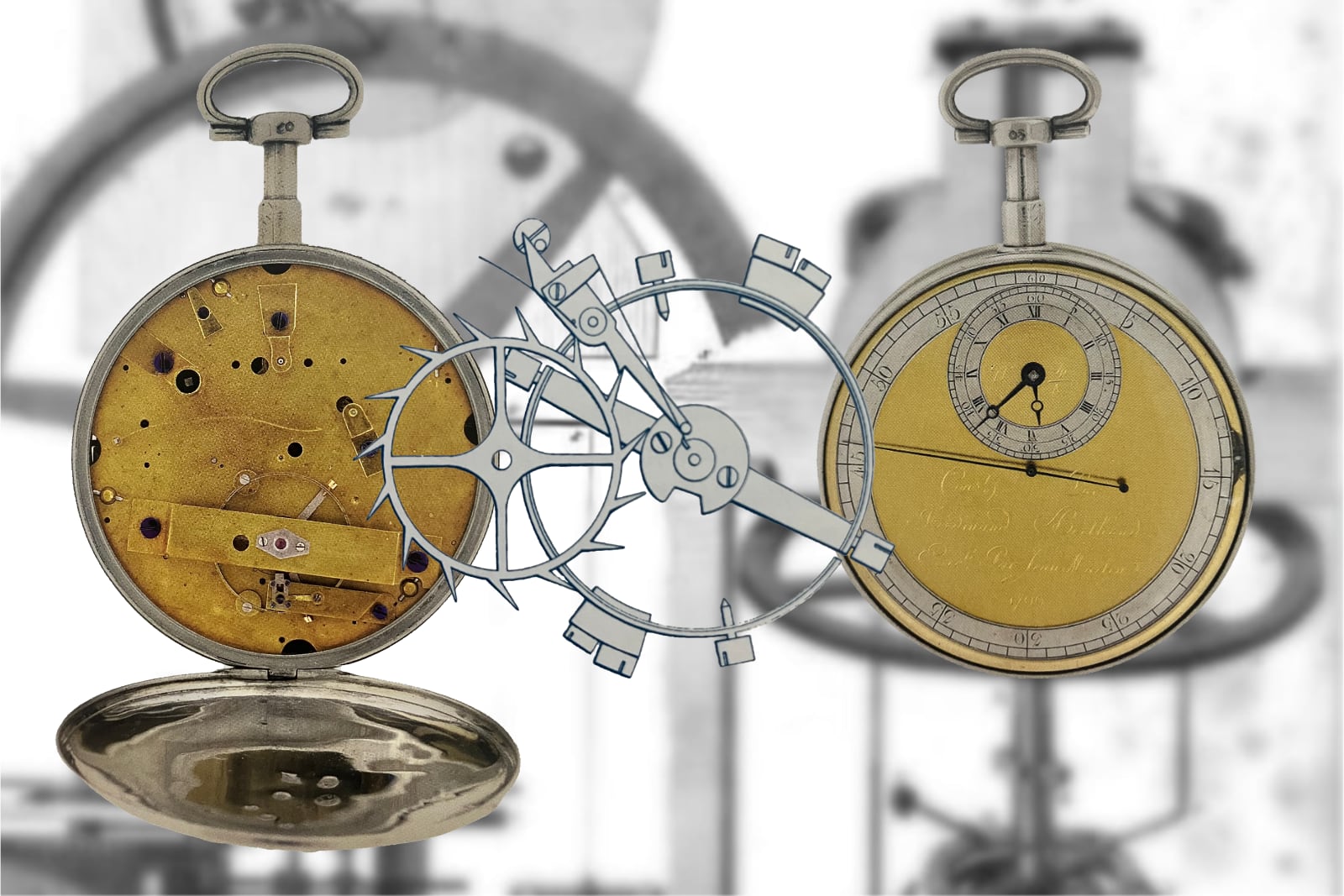
Ferdinand Berthoud and Jean Martin, Paris, ca. 1799. Chronometer escapement with pivoted detent after Ferdinand Berthoud. Brass escape wheel with 15 teeth; three-arm bimetallic compensation balance with three round weights and three gold timing screws on the rim; the bimetallic rim is riveted with steel pins. Flat, blued steel hairspring mounted above, with the outer terminal fixed to an adjustable stud on a separate cock. Image – collage
Throughout his collecting career, Ahrens maintained meticulous personal archives that constituted detailed documentation of his research and observations. He kept handwritten catalogue notes for each watch, recording technical specifications, condition reports, provenance information, and his own analysis. These index cards, accumulated over forty years, varied greatly in their detail and format, some brief, others extensive, reflecting his evolving methodology and deepening knowledge.
In 1977, Ahrens received a letter from Ruedi Wehrli, conservator of the Kellenberger Watch Collection in Winterthur, that proved remarkably prescient. Wehrli praised Ahrens’ “unique collecting achievement,” noting that “a achievement that only ‘specialists’ can fully appreciate, but will soon be recognised by laypeople as a historical achievement.” He continued: “I believe that a collection like yours will soon be more important than the currently ‘popular’ collections of beautiful watches.” His reasoning was prophetic: “Beautiful watches will exist in the future, but the mechanical precision watch is already a historical period whose end we are experiencing.”
This letter came just as the quartz crisis was reaching its peak. Wehrli understood that Ahrens was documenting a dying tradition, or at least one that would soon be transformed beyond recognition. The collection privileged technical ingenuity at a moment of impending obsolescence, with lasting beauty present but secondary.
Market realities and personal philosophy
By the late 1970s and early 1980s, Ahrens was witnessing dramatic changes in the watch collecting market. Banks were hoarding watches like gold, speculation was driving prices to unprecedented levels, and the nature of collecting itself was transforming. His reactions to these changes reveal much about his character and values.
In 1979, he wrote: “I think I have to give up collecting or switch to beer coasters and the like, the prices are going crazy.” By March 1981, his frustration had deepened. In a letter to Helmut Mann, he observed: “The whole watch market seems to me like the wave of speculation with tulip bulbs that raged in Holland in the 17th century.”
The comparison to tulip mania is telling. Ahrens recognised that prices had decoupled from intrinsic value, driven by speculation rather than appreciation. For someone who collected based on technical merit and historical significance, this market transformation was deeply troubling. Watches were becoming investment vehicles rather than objects of study.
Courvoisier Frères, La Chaux-de-Fonds, ca. 1904. Tourbillon by Mobilis with club-tooth lever escapement; steel escape wheel; bimetallic, uncut two-arm balance with gold rim screws; flat blued steel upper hairspring; simple regulator index. Image – collage
Yet Ahrens maintained his equilibrium through a personal philosophy he had inscribed on his safe door, a quote from Christian Fürchtegott Gellert: “Enjoy happily what is given to you, gladly do without what you do not have, every station has its peace, every station has its burden.” This stoic wisdom allowed him to continue collecting according to his principles even as the market swirled around him. He could not control prices or speculation, but he could control his own response, focusing on what he could acquire, accepting what he could not, finding satisfaction in what he had achieved.
The monument: a catalogue for the ages
In the early 1990s, an idea began to take shape: a comprehensive catalogue documenting the Ahrens collection. The project was first discussed with Josef M. Stadl, a pocket watch collector with a pronounced interest in watches with rare escapements and a member of the German Society for Chronometry (DGC). Stadl understood the significance of what Ahrens had assembled and believed it deserved proper documentation.
Anonymous, France (?), ca. 1790 (case 1823). Sully escapement with “pirouette”: the balance can swing through more than a full revolution, hence the term. Double brass escape wheel; three-arm brass balance with three small steel rim screws; flat, blued upper hairspring; simple regulator index. Image – collage
An initial cost estimate was prepared, but Ahrens declined. His response was characteristic: he said “he’d rather buy more watches.” For someone still actively building his collection in his seventies, the choice between spending money on documentation and spending it on additional watches was no choice at all. The watches themselves came first.
The project lay dormant until 2005, when Ahrens’ son-in-law wrote to Christian Pfeiffer-Belli, longtime editor of the prestigious magazine “Klassik Uhren.” Mr Pfeiffer-Belli assembled an extraordinary team to undertake this massive project.
Louis Tavernier, ca. 1800. Garnier escapement. Twin steel escape wheels; three-arm steel balance; flat, upper hairspring; simple regulator index. The escapement features a thin impulse roller with a ruby. Image – collage
Josef M. Stadl returned to the project as a contributor. Wolf Brüggemann, dedicated to escapement research and documentation, brought deep technical knowledge. Norbert Enders, a long-time author for “Alte Uhren,” was tasked with writing the introductory texts that would contextualise each escapement category. Peter Frieß, then the Director of the Deutsches Museum Bonn and later President of the Tech Museum in Silicon Valley, took on the enormous task of building a database from Gerd’s handwritten index cards. Ingrid Seeger joined as a contributor.
Martin Otzenberger, Gerd’s grandson, provided biographical information and family perspective. Susanne Stadl assisted with research. Peter Frieß also served as the principal photographer, documenting each watch with meticulous attention to detail. Birgit Binner handled design. And technical line drawings that would explain each escapement type with clarity and precision were supplied by an illustrator based in the United Kingdom.
Robert, London, ca. 1840. Anchor-duplex escapement. Steel escape wheel with double locking teeth; uncut two-arm bimetallic balance with gold rim screws; flat, blued upper hairspring; simple regulator index. Image – collage
The scope of the challenge was immense. Over 750 watches needed to be examined from Ahrens’ collection. As the project progressed, Gerd’s health began to decline. The catalogue, intended as his eightieth birthday present, would not be ready in time.
The team prepared sample pages and bound them together so that Gerd could at least hold a physical representation of the work in progress. He understood that the full catalogue would be completed, but he would not see it.
Gerd Ahrens died on December 11, 2005. He was eighty-five years old. His funeral was held at the Matthäuskirche in Lucerne, just steps from the Schwanenplatz shop where he and his father had worked for thirty-two years. The catalogue project continued without him.
“Die Taschenuhrensammlung von Gerd Ahrens” (The Pocket Watch Collection of Gerd Ahrens) finally appeared in 2009, published by Callwey Verlag in Munich. The scale of the undertaking was unprecedented. Two large-format volumes housed in a substantial slipcase contained 1,184 pages printed on heavy stock. The physical dimensions and weight alone reflected the ambition of the project. Published as a limited edition of 1,000 numbered copies, it was priced at €398 (approximately US$500) a price that, according to reviewers, barely covered the marginal production costs of such an elaborate publication.
The catalogue documented 538 watches from Ahrens’s collection and treated each across one or two pages in a disciplined format that reads as a working tool. Every entry opens with a life-size photograph of the dial and a movement image reduced to 60 or 80 percent to clarify layout and finish, with supplementary details when needed for case back, signatures, or technical features. A line drawing explains the escapement in clear sequence, while the text describes movement, case, dial, and hands with the economy of a bench note.
Signatures and marks are recorded in full, Ahrens’s own handwritten remarks are quoted where they illuminate construction or history, and exact dimensions in millimetres, diameter and thickness, fix the scale. Each page closes with provenance and a compact set of references to books and auction catalogues, so the reader can move directly from plate to literature without breaking the thread.
Abraham-Louis Breguet, Paris, no. 1919, ca. 1808. Lever escapement after Robert Robin. Very light escape wheel; three-arm bimetallic compensation balance with gold and platinum rim screws; upper hairspring with Breguet overcoil; simple regulator index. Image – collage
Beyond the individual entries the catalogue frames the whole project with context and navigation. It opens with a biographical sketch of Ahrens by his grandson, Martin Otzenberger, and a foreword by Christian Pfeiffer-Belli that sets out the genesis of the work. Each chapter begins with an illustrated explanation of how the featured escapement functions, so the reader arrives at the plates with the mechanism already in mind.
James Foggo, London, ca. 1810 (case 1871). Lever escapement after Robert Robin. Brass club-tooth escape wheel in the Foggo pattern; three-arm bimetallic compensation balance with sliding weights and platinum rim screws; flat blued upper hairspring; simple regulator index; rotating ruby impulse pin, as on the early levers of Josiah Emery. Image – collage
The catalogue has since become a standard reference in horological literature, regularly cited in auction catalogue, scholarly articles, and publications about pocket watches.
The dispersal: an end and a beginning
Following Gerd Ahrens’ death in 2005, the family made the decision to sell the collection at auction. This was not an unusual choice since few families have the expertise or facilities to maintain such specialised collections, and public sale ensures that the watches can find new homes with collectors who will appreciate them.
The November 2009 sale was entrusted to Auktionen Dr. Crott, one of Germany’s leading auction houses for vintage horology. Founded in 1975 and based in Mannheim, Dr. Crott had established itself as a specialist in fine, rare, and antique timepieces.
Designated as Auction No. 103, the sale was titled “Sammlung Gerd Ahrens – Luzern. 400 Jahre Entwicklung der Uhrenhemmung” (The Ahrens Collection – Lucerne. 400 Years of Development of Watch Escapements). The catalogue was prepared by Stefan Muser of Crott Auktionen and comprised approximately 500 horological lots.
Prior to the public auction, however, an important transaction had taken place. The International Museum of Horology in La Chaux-de-Fonds, with the assistance of a patron, acquired ten particularly significant pieces from the collection, as well as Ahrens’ personal workbench, the bench he had used to study and restore his watches over decades. This acquisition ensured that a representative sample would remain accessible for public education and research.
Abraham-Louis Breguet, Paris, ca. 1845. Club-tooth lever escapement by Abraham-Louis Breguet, in a straight-line layout. Brass club-tooth escape wheel with drilled teeth for improved oil retention; two-arm bimetallic compensation balance with gold rim screws; blued upper hairspring with Breguet overcoil; simple regulator index.Image – collage
The workbench holds particular significance, a tangible link to Ahrens’s working methods. The scratches on its surface, the arrangement of its drawers, the tools it once held, all speak to the hands-on approach that characterised his collecting. He bought at first hand and worked as a trained watchmaker, opening watches, studying their mechanisms, restoring their function, and documenting their construction.
In 2016, eight years after Ahrens’ death, the family made another significant donation to the same museum: his personal archives and approximately thirty additional watches. These archives represent decades of accumulated knowledge, the handwritten index cards, the correspondence, the research materials, the notes and observations that had guided his collecting decisions. For researchers studying both the history of watchmaking and the history of collecting itself, these papers are invaluable.
The auction itself was a success by any measure. Individual watches commanded significant prices, their Ahrens provenance adding to their desirability. The Abraham-Louis Breguet chronometer No. 3469, with its connection to Count Tolstoye and Arctic exploration, sold for more than €160,000. The Jules Jürgensen decimal time watch later appeared at Christie’s in 2019, where it realised CHF30,000.
Vacheron Constantin, Geneva, ca. 1845. Club-tooth lever escapement, right-angle layout. Steel club-tooth escape wheel; three-arm brass balance; flat blued steel upper hairspring; regulator index with a metal “compensation curb”; single roller on the balance staff. Image – collage
In the years since that November day in Frankfurt, watches from the Ahrens collection have continued to circulate through the market, appearing at major auction houses and in the inventories of specialised dealers. Each one carries the Ahrens provenance as a mark of quality, an assurance that the watch was selected by someone with profound knowledge and refined taste.
The legacy: what endures
Gerd Ahrens died nearly twenty years ago, yet his influence on watch collecting remains profound. This influence operates on multiple levels, philosophical, scholarly, and practical.
Anonymous, Switzerland, ca. 1870. Lever-chronometer escapement after Robert Robin. Robin “perfectionné” lever; steel escape wheel; two-arm bimetallic compensation balance with gold rim screws; blued upper hairspring with Breguet overcoil; simple regulator index. Small lifting faces on the lever pallets, so the lever—beyond its usual locking and holding role in the standard Robin design—also imparts the impulse. Image – collage
Philosophically, Ahrens demonstrated that collecting could be an intellectual pursuit rather than an exercise in acquisition or status display. His organising principle, documenting the evolution of escapement mechanisms, provided a coherent narrative framework.
His approach showed that it was possible to build a world-class collection through knowledge and discipline rather than unlimited wealth. While Ahrens certainly acquired expensive watches, his selections were always justified by their contribution to his narrative. A rare experimental escapement by an obscure maker might take precedence over a more famous piece if it filled a gap in the story he was telling.
New York Standard Watch Co., New York, ca. 1888. Worm-gear lever escapement after Robert J. Clay’s patent, with the escape wheel set perpendicular to the balance staff; worm gearing drives the escape wheel. Brass escape wheel; uncut two-arm bimetallic balance with brass rim screws; flat upper hairspring; simple regulator index. One-piece steel lever with steel pallet faces (unjeweled). Image – collage
Gerd Ahrens is consistently mentioned alongside other great twentieth-century collectors such as Hans von Bertele, Cecil Clutton, and Courtenay Ilbert. That era has passed. Rising prices, institutional collecting, and the simple fact that historical watches are finite resources make it unlikely that anyone will assemble another collection quite like Ahrens’.
The watches are too dispersed, too expensive, too sought after by museums and corporate collections. In this sense, Ahrens’ collection may represent something irreproducible, a comprehensive documentation of four centuries of escapement evolution that could only have been assembled by someone with his particular combination of knowledge, access, resources, and timing.
International Watch Co. (IWC), Schaffhausen, ca. 1894. Club-tooth lever escapement with constant-force (per Xavier Theurillat’s patent); conversion executed by Richard Daners. Twin steel escape wheels; two-arm compensation balance with gold rim screws; flat blued steel upper hairspring with Breguet overcoil; simple regulator index. Image – collage
Born into watchmaking, trained in its techniques, and steeped in its culture, Ahrens carried an insider’s understanding that moved from surface to principle. His collection reflected his personality, systematic, disciplined, focused, and profoundly knowledgeable. There was nothing haphazard about his acquisitions; each watch was selected because it reinforced the overall theme of “rare escapements in pocket watches”.
Yet he was more than a scholar in his study. The contemporary commission from Richard Daners showed his engagement with living traditions. His published research demonstrated his willingness to share knowledge. His meticulous archives revealed his commitment to documentation. His donations to the International Museum of Horology ensured that his knowledge would outlive him.
Richard Daners, Luzern, 1987. Flying tourbillon with chronometer escapement; short detent after Richard Lange; rotation period five minutes. Two-arm bimetallic compensation balance with gold and platinum rim screws; flat blued steel upper hairspring with Breguet overcoil; simple regulator index. The seconds pinion runs on the fixed, internally toothed ring wheel; the rear three-quarter plate is skeletonised. Image – collage
Setting an example
In an age when collecting increasingly focuses on investment returns, brand prestige, and social display, Gerd Ahrens’ example offers an alternative vision. He reminds us that collecting can be an intellectual pursuit, a form of scholarship practiced outside academic institutions, a contribution to preserving and understanding human achievement. His collection was not about him, it was about the watches, the makers, the evolution of technology, the accumulated wisdom of four centuries of craftsmen solving problems.
As Christie’s auction house summarised, the collection of Gerd Ahrens “was one of the most significant private collections ever assembled, impressively documenting the technical history of the pocket watch.” This assessment captures both the magnitude of his achievement and the nature of his contribution.
Ahrens’ watches have been dispersed, sold to collectors and museums around the world. But the knowledge remains, preserved in that monumental catalogue, in the archives at La Chaux-de-Fonds, in the memories of those who knew him, and in the example he set for what collecting can be at its highest level. In the end, that may be the truest measure of legacy — not what one owns, but what one contributes, preserves, and passes forward.
Amendment November 28, 2025: Images by David Penney removed from article as they were used without prior permission.
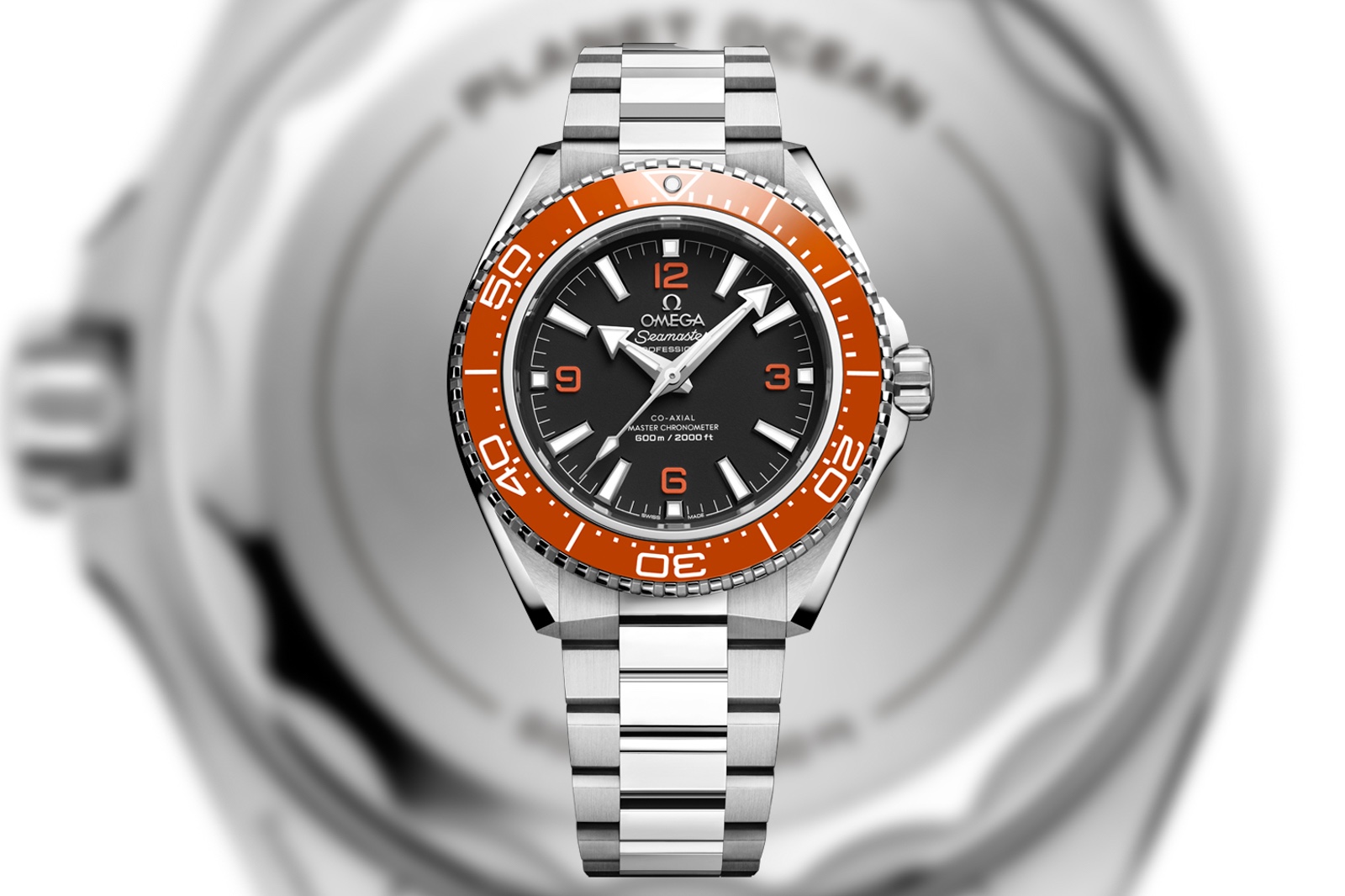
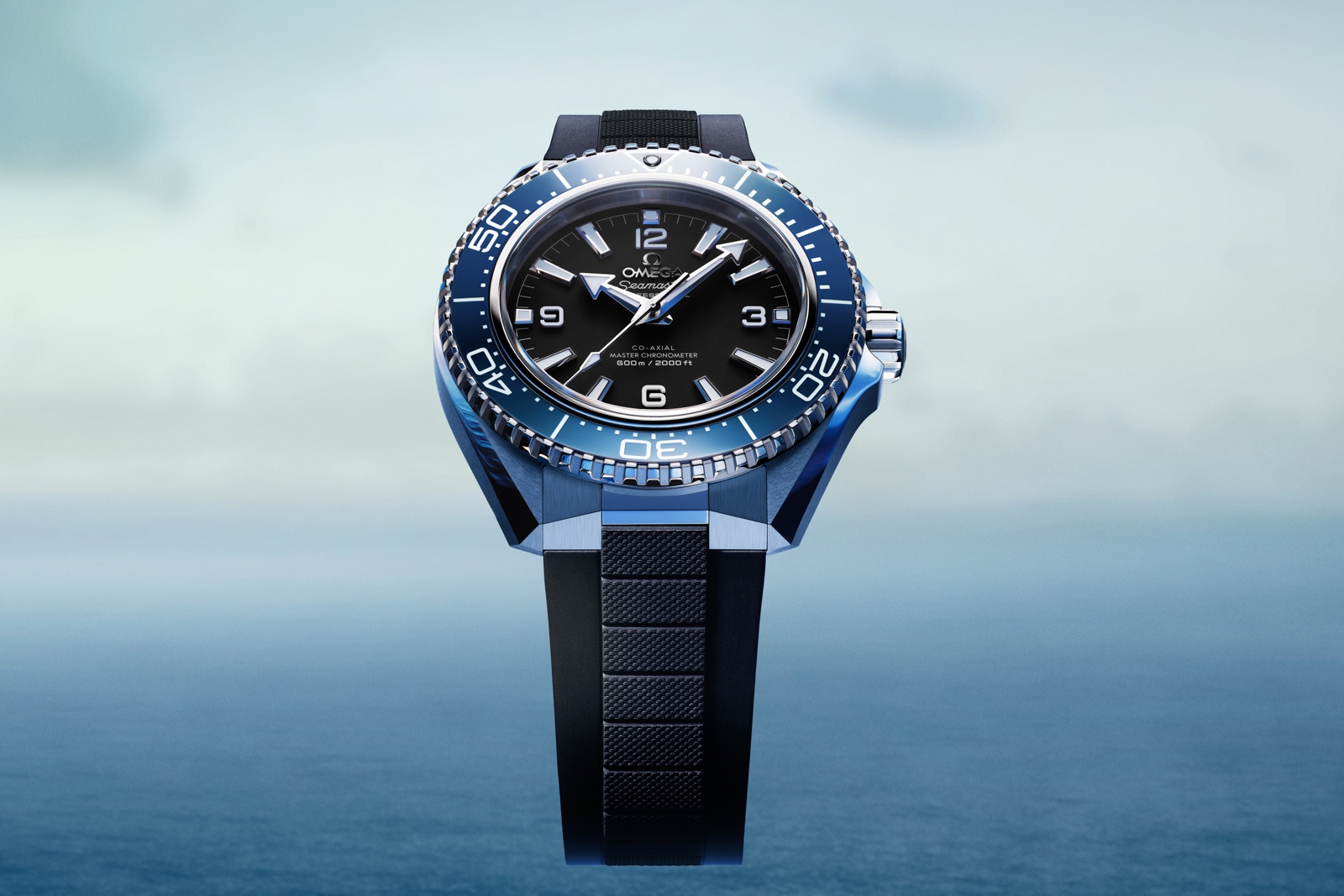
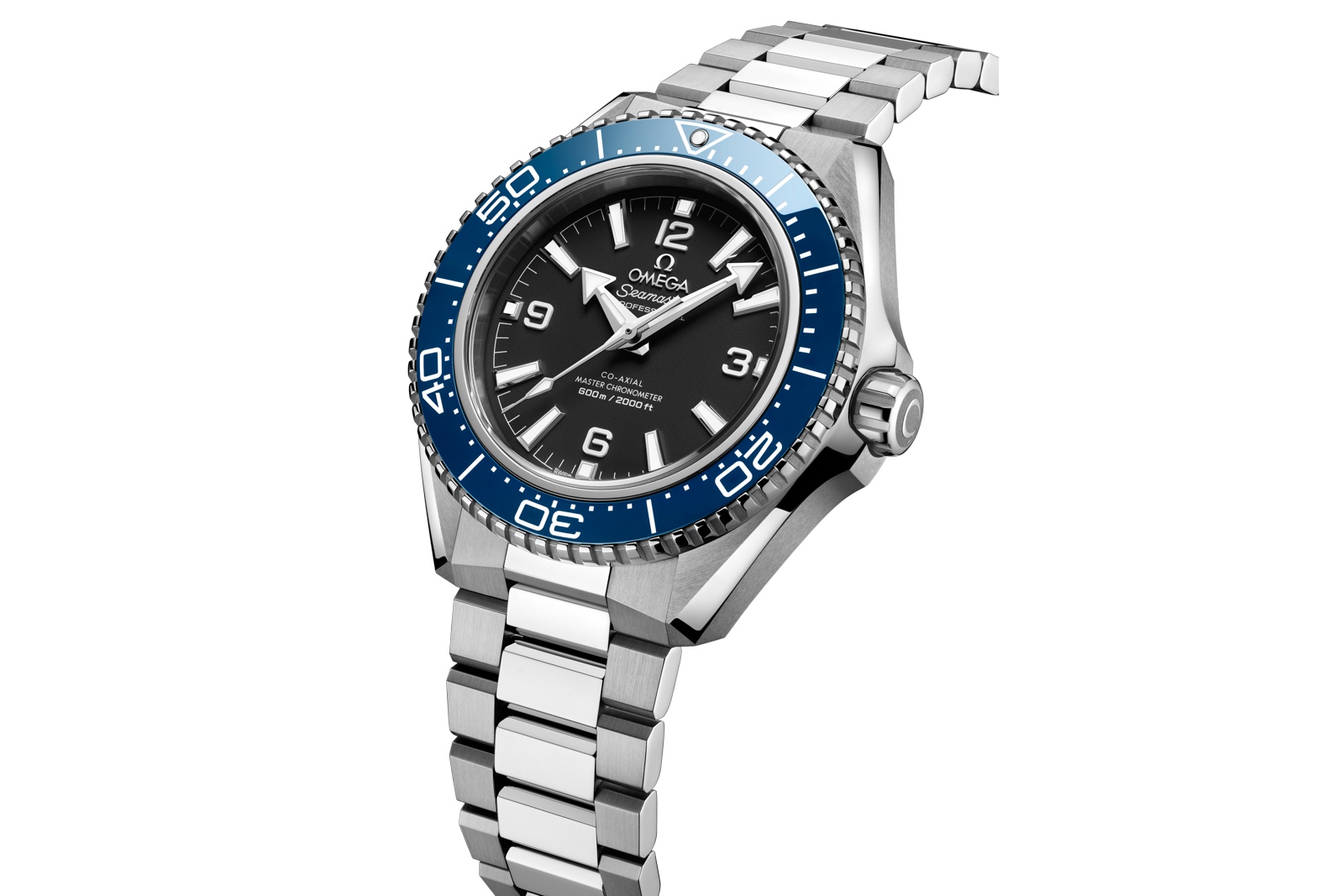
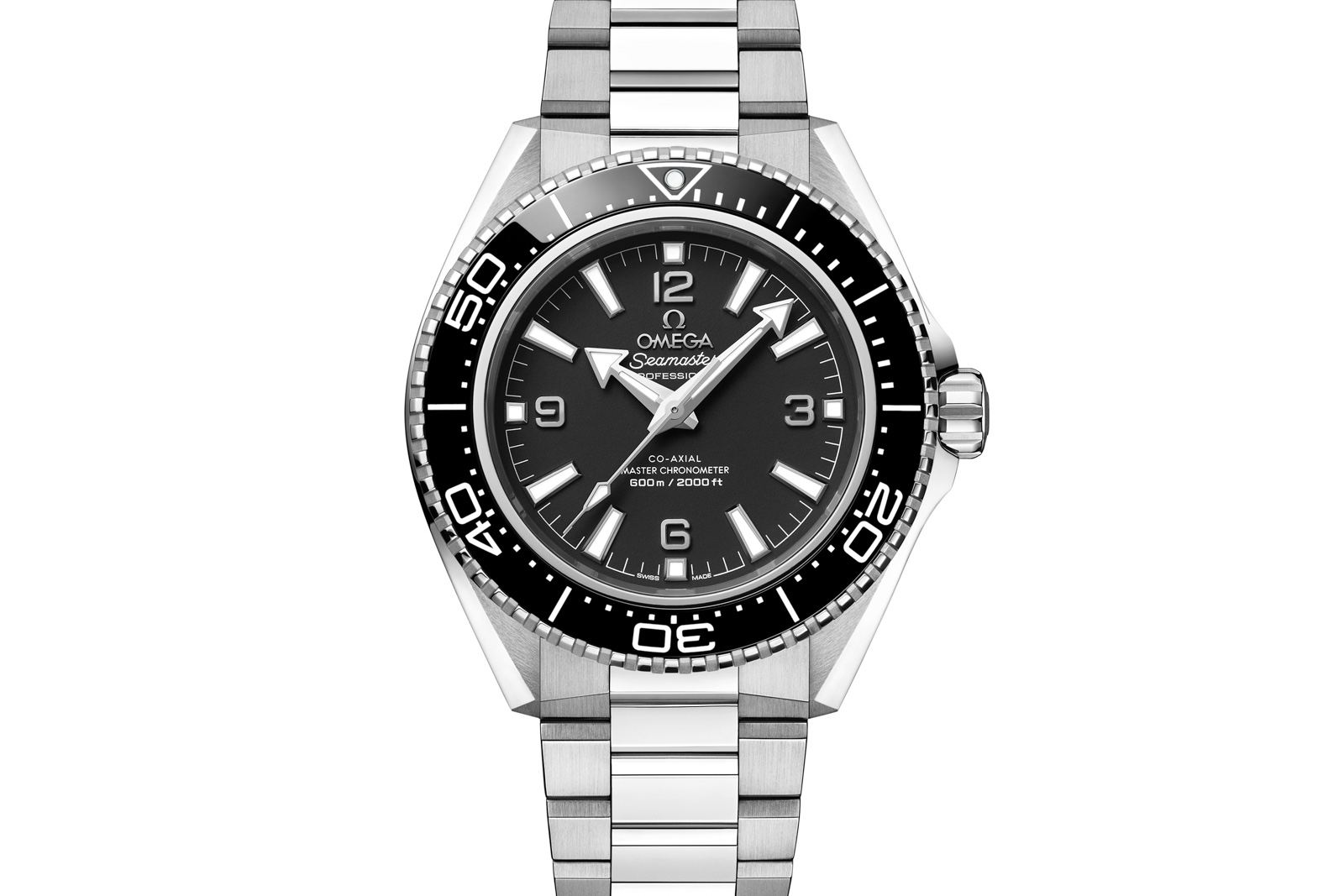
Omega marks the 20th anniversary of the Seamaster Planet Ocean with a full redesign, introducing a sharper, faceted case and a slimmer profile that addresses long-standing concerns about about the model’s thickness. The fourth generation design retains the headline 600 m water resistance and METAS-certified movement, but adopts a more contemporary silhouette that differentiates it from earlier generations.
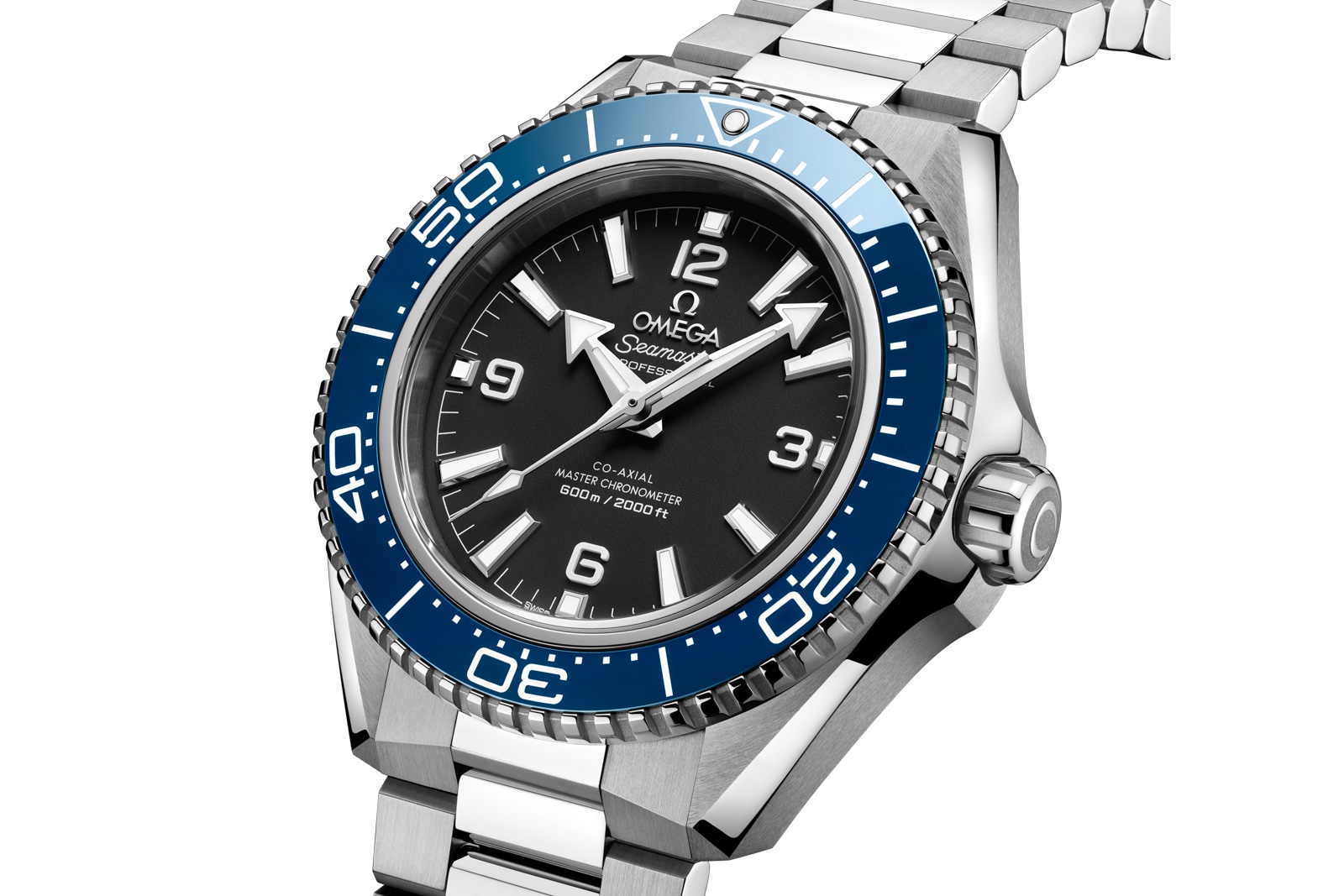
The anniversary launch spans three colourways — black, blue, and the signature orange — with the latter now priced in line with the Rolex Submariner. While the refresh enhances everyday wearability, it also moves the Planet Ocean slightly away from the recognisable aesthetic that has defined the collection since its 2005 debut.
Initial thoughts
The Seamaster Planet Ocean is a watch that carries a lot of nostalgia for me personally. The first generation model, launched in 2005, was the first mechanical watch I purchased for myself in my student days and while my watch, powered by the slim cal. 2500C, has seen the inside of the Omega service centre more times than I would have liked, it still has a place in my regular rotation, especially when the weather turns warm.
The appeal of the Planet Ocean is its fresh interpretation of historical Omega motifs; it features details like the broad arrow hands without attempting to be a vintage remake. The collection was refreshed in 2011 and again in 2016, but it seemed to get chunkier with each new iteration, to the dismay of many collectors.
For the collection’s 20th anniversary, the Planet Ocean gets a full refresh with an angular faceted case and a slightly slimmer profile, but arguably loses some of its distinctive Omega aesthetic.
The price has also crept upward, with the emblematic orange model matching the Rolex Submariner’s US$9,500 list price. While the comparison is arguably trivial since the Rolex remains in infamously short supply, it illustrates the pace at which the price of the Planet Ocean has increased.
A bit less chunky
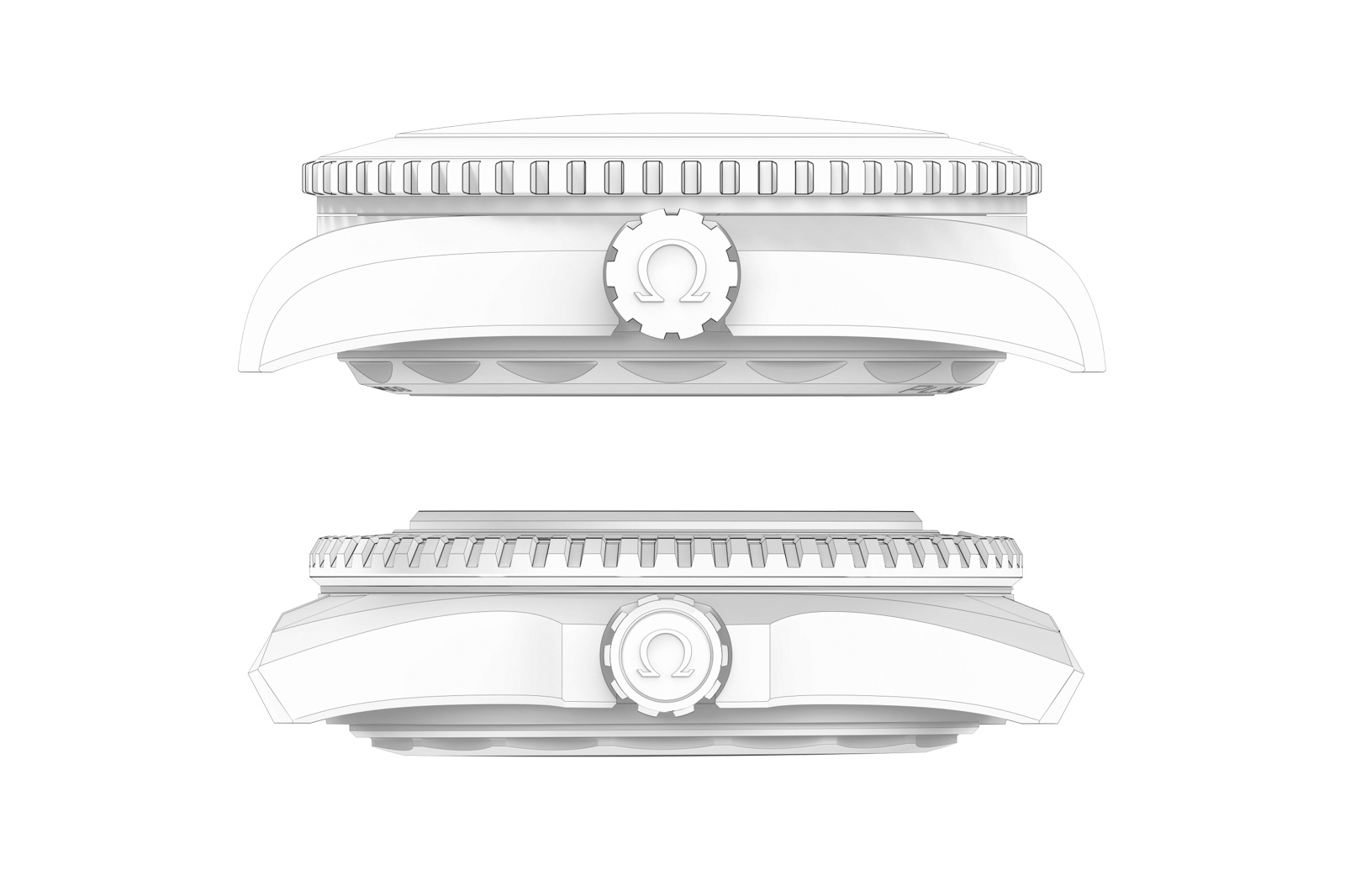
Talk to any collector about the Planet Ocean, and the conversation invariably turns to the case thickness. Omega has clearly listened and has managed to keep the high-spec METAS-certified movement and 600 m water resistance while slimming the case from 16.09 mm to 13.79 mm.
The fourth generation case (bottom) is significantly thinner than that of the third generation (top).
With a manageable 47.5 mm lug-to-lug length, this slimmer profile will transform the wearing experience. But it’s still a chunky watch that weighs 124 g on a rubber strap and a hefty 177 g on the bracelet.
Speaking of the bracelet, it now features polished centre links for the first time, which detracts a bit from the toolish nature of the original. It’s also 21 mm wide at the lugs, which will limit third-party strap compatibility to some extent.
Flipping the watch over, the new case back is made from grade 5 titanium and features a lower profile, which helps with the thickness. While the first generation models featured a deeply relief-engraved depiction of Omega’s iconic seahorse emblem and later models offered a sapphire crystal case back to show off the movement, the fourth generation model returns to the seahorse motif, albeit with a shallower engraving.
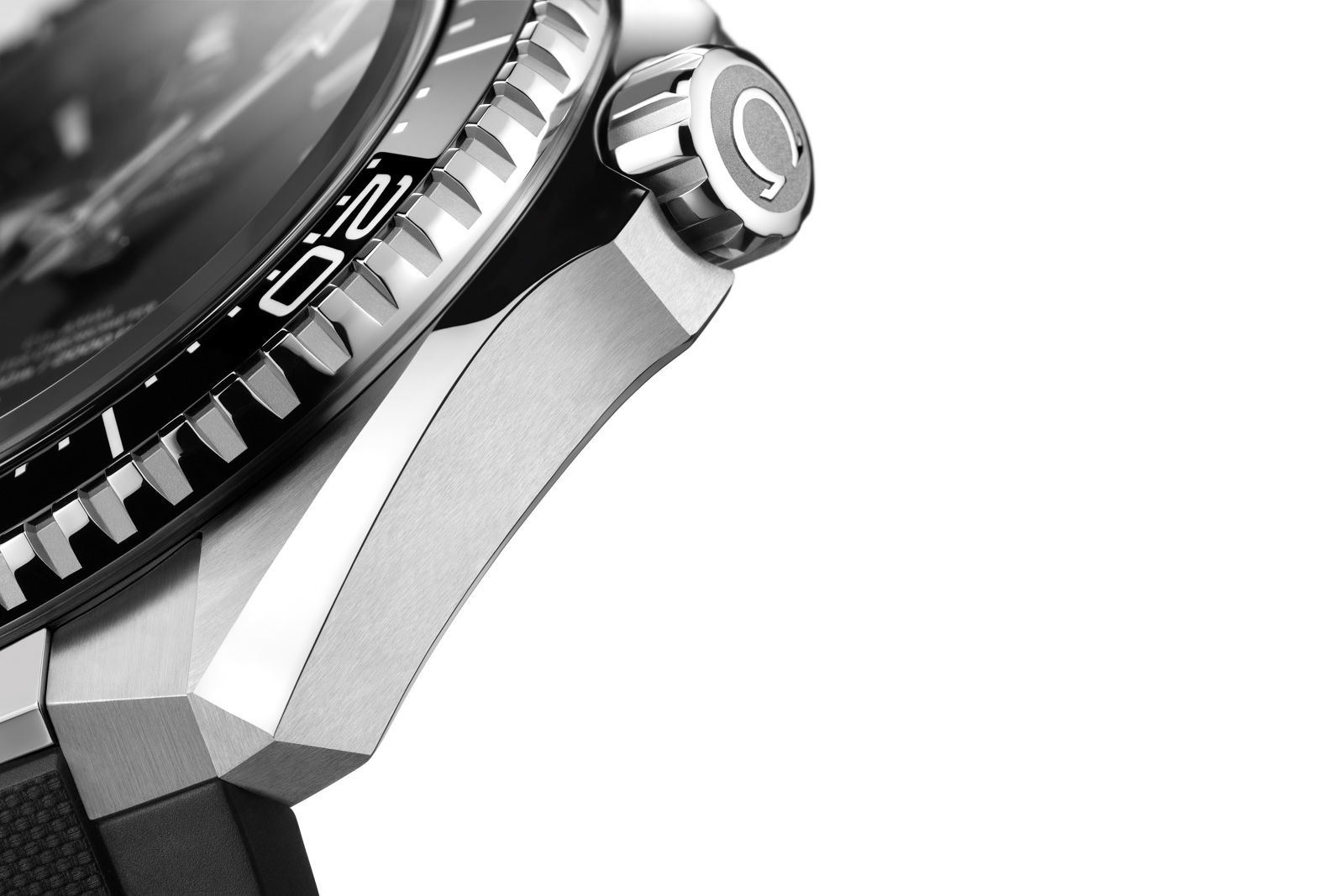
The case also sports a new angular interpretation of Omega’s signature lyre lugs, with a facet that continues across the bracelet end links. The new design helps create distance between the Planet Ocean and the other divers in the Omega collection, but arguably loses some of Omega’s recognisable DNA; the case looks like it could have been made by any number of brands.
On the bright side, the bracelet now features female end links which will shrink the effective lug-to-lug length and improve the fit on smaller wrists, solving a major shortcoming of earlier generations.
High-spec calibre
Thickness, or the lack of it, is a major theme of the new Planet Ocean. This became the defining narrative of the Planet Ocean with the transition from the first to the second generation, which saw the slim ETA 2892-based cal. 2500 replaced by the larger in-house cal. 8500.
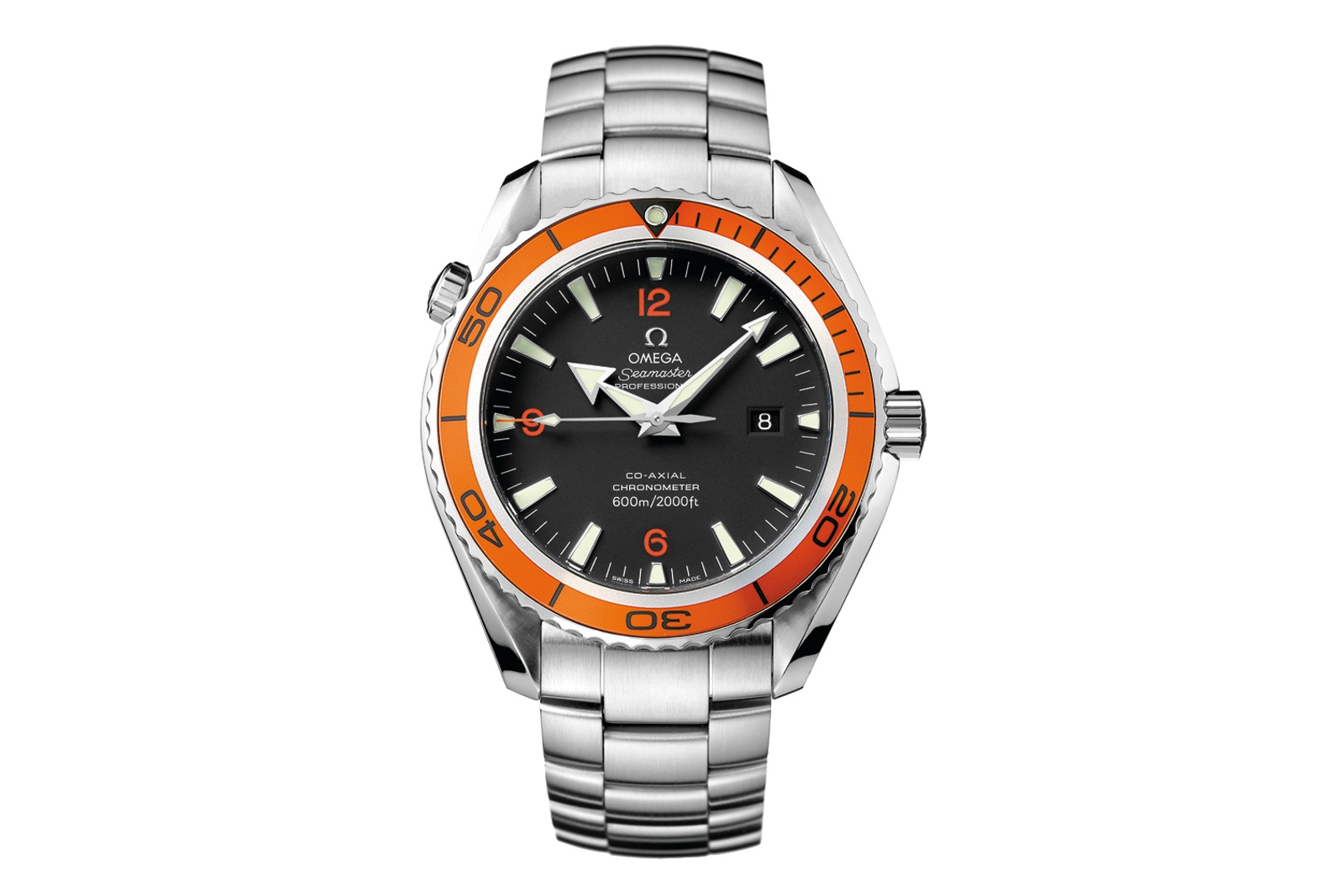
The first generation Planet Ocean.
Technically, this movement was a big upgrade, being the brand’s first movement purpose-built for the co-axial escapement. But its dimensions demanded a thicker case, which the brand has finally managed to slim down thanks to a titanium case back and other nips and tucks.
Fortunately the movement is still excellent. The cal. 8500 has evolved, but it is still recognisable in the current cal. 8912. Key features include a convenient 60-hour power reserve and an hour hand that can be adjusted in hourly increments when crossing time zones.
Like other Master Chronometer movements, the cal. 8912 is antimagnetic and rated to run within a range of +/- 2 seconds per day.
Diameter: 42 mm Height: 13.79 mm Material: Stainless steel Crystal: Sapphire Water resistance: 600 m
Movement: Cal. 8912 Features: Hours, minutes, and seconds Frequency: 25,200 beats per hour (3.5 Hz) Winding: Automatic Power reserve: 60 hours
Strap: Stainless steel bracelet or rubber strap
Limited edition: No
Availability: At Omega boutiques and retailers Price: US$8,600 (black or blue bezel with rubber strap), US$9,200 (black or blue bezel with bracelet), US$8,900 (orange bezel with rubber strap), US$9,500 (orange bezel with bracelet) excluding taxes
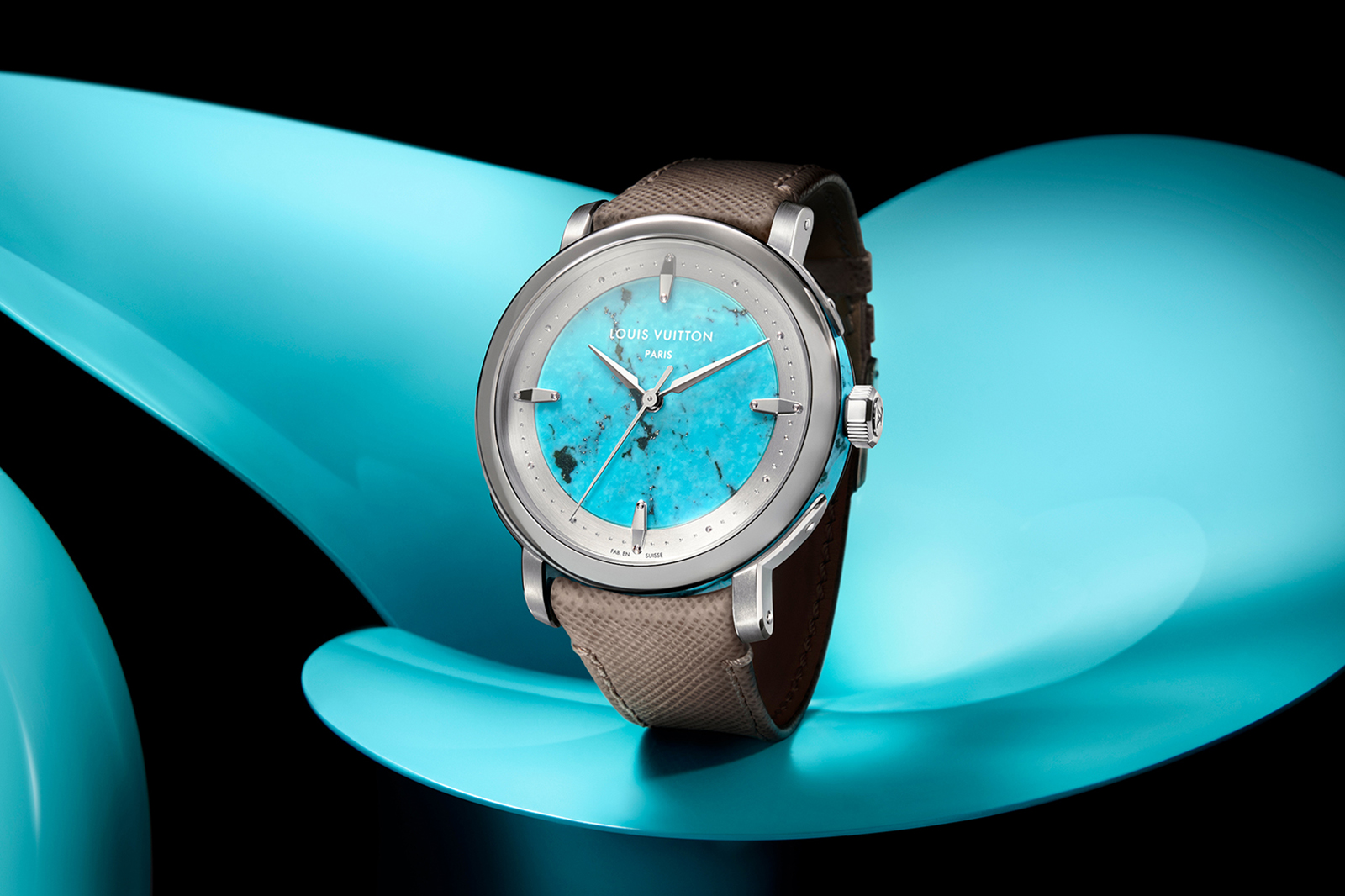
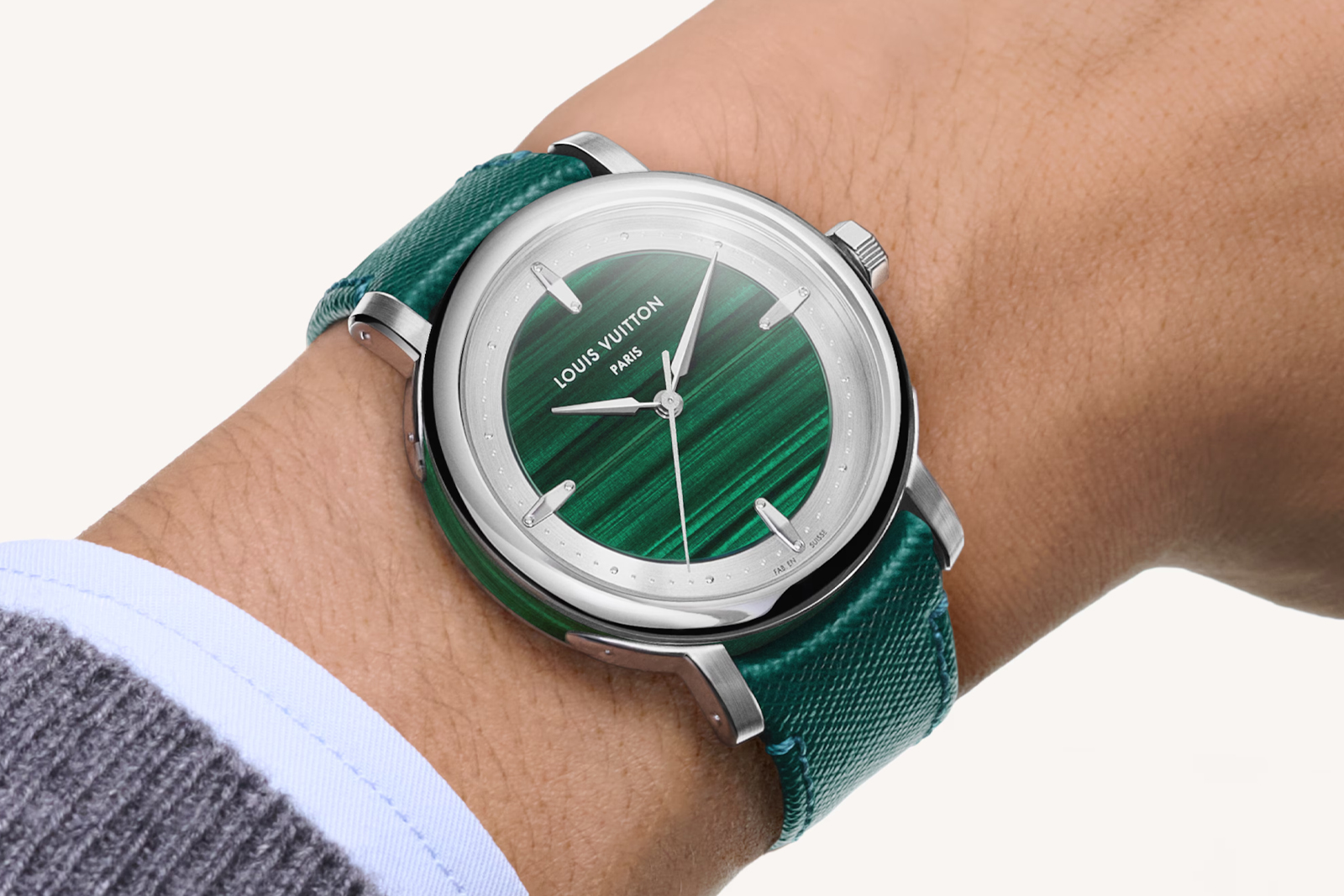
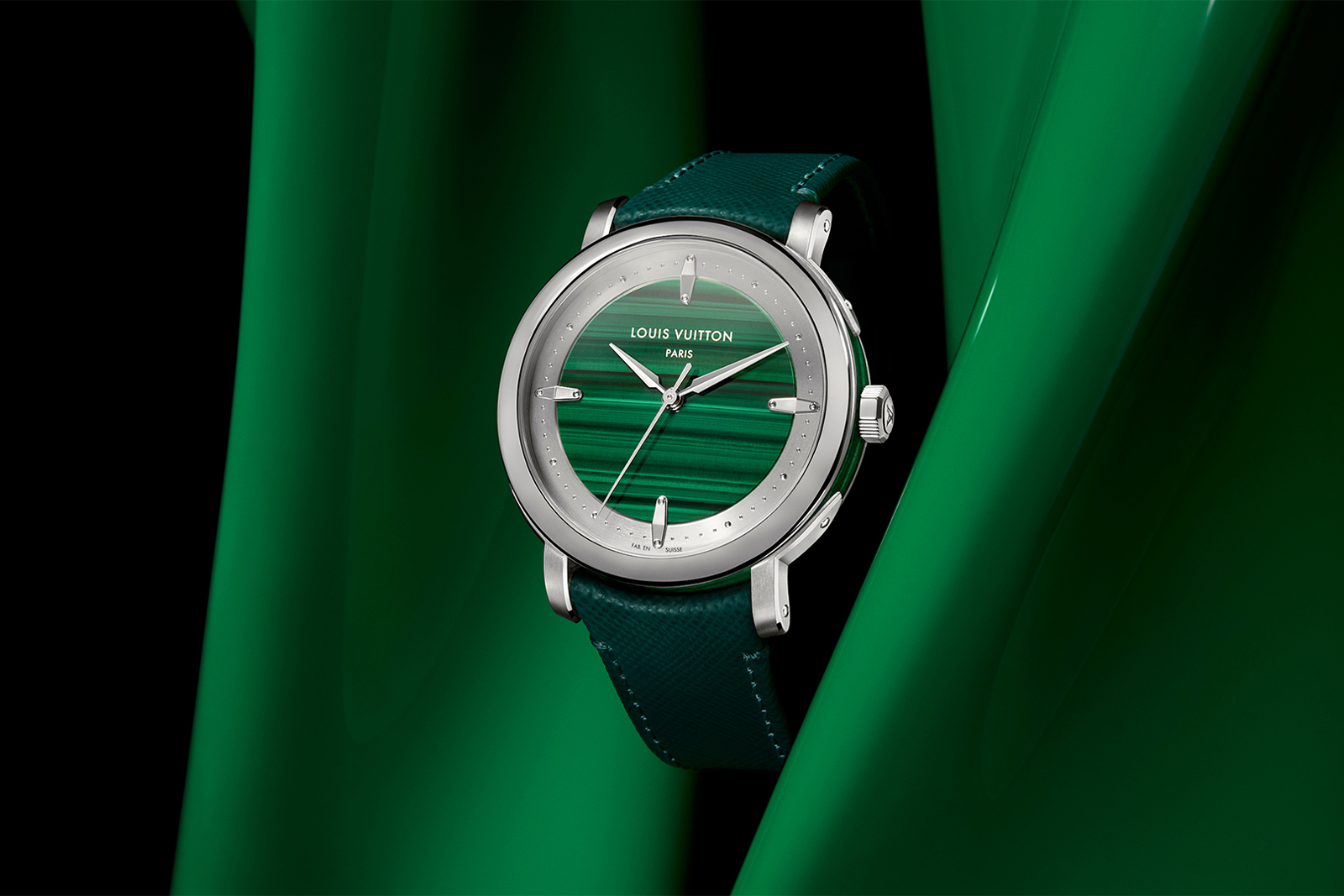
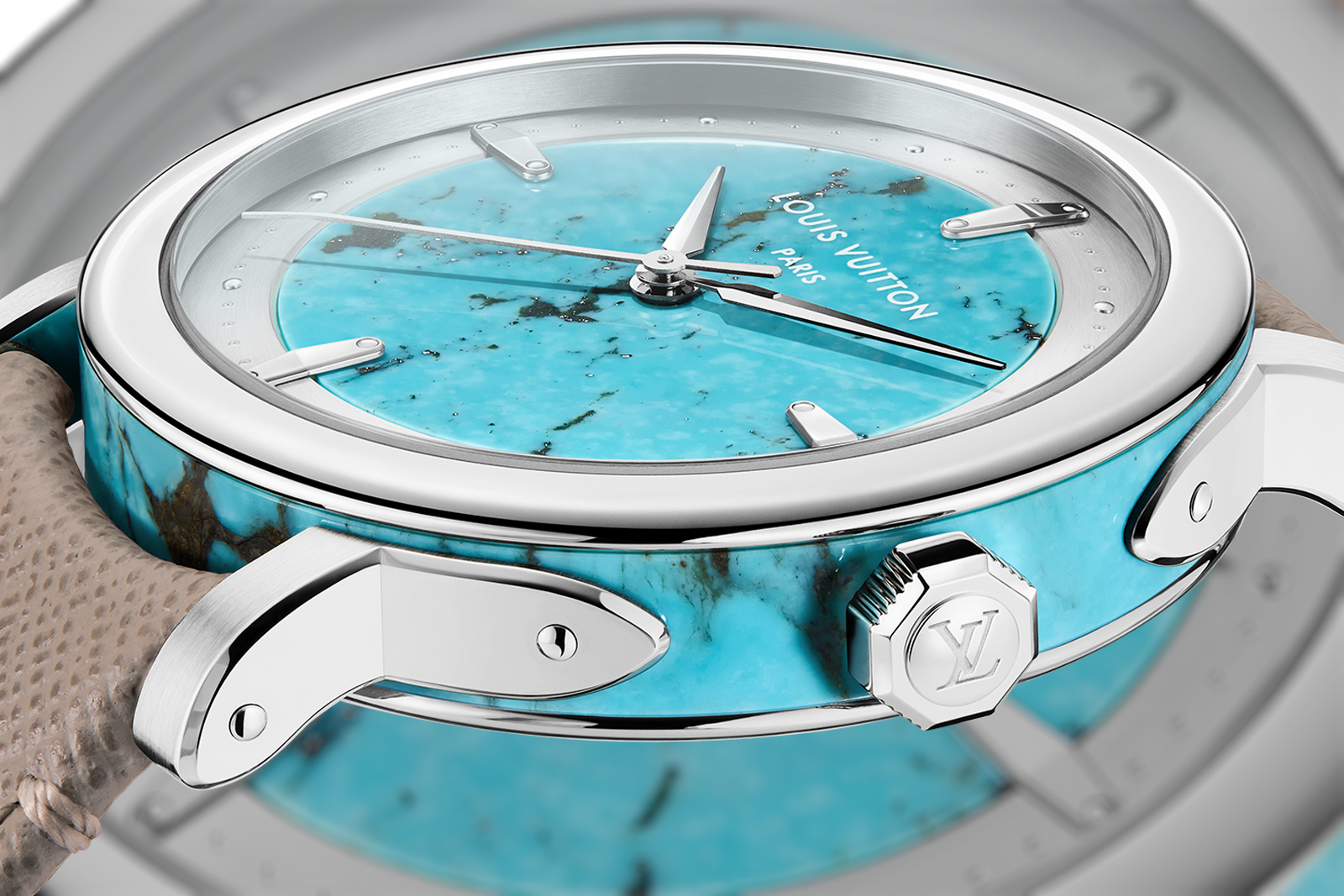
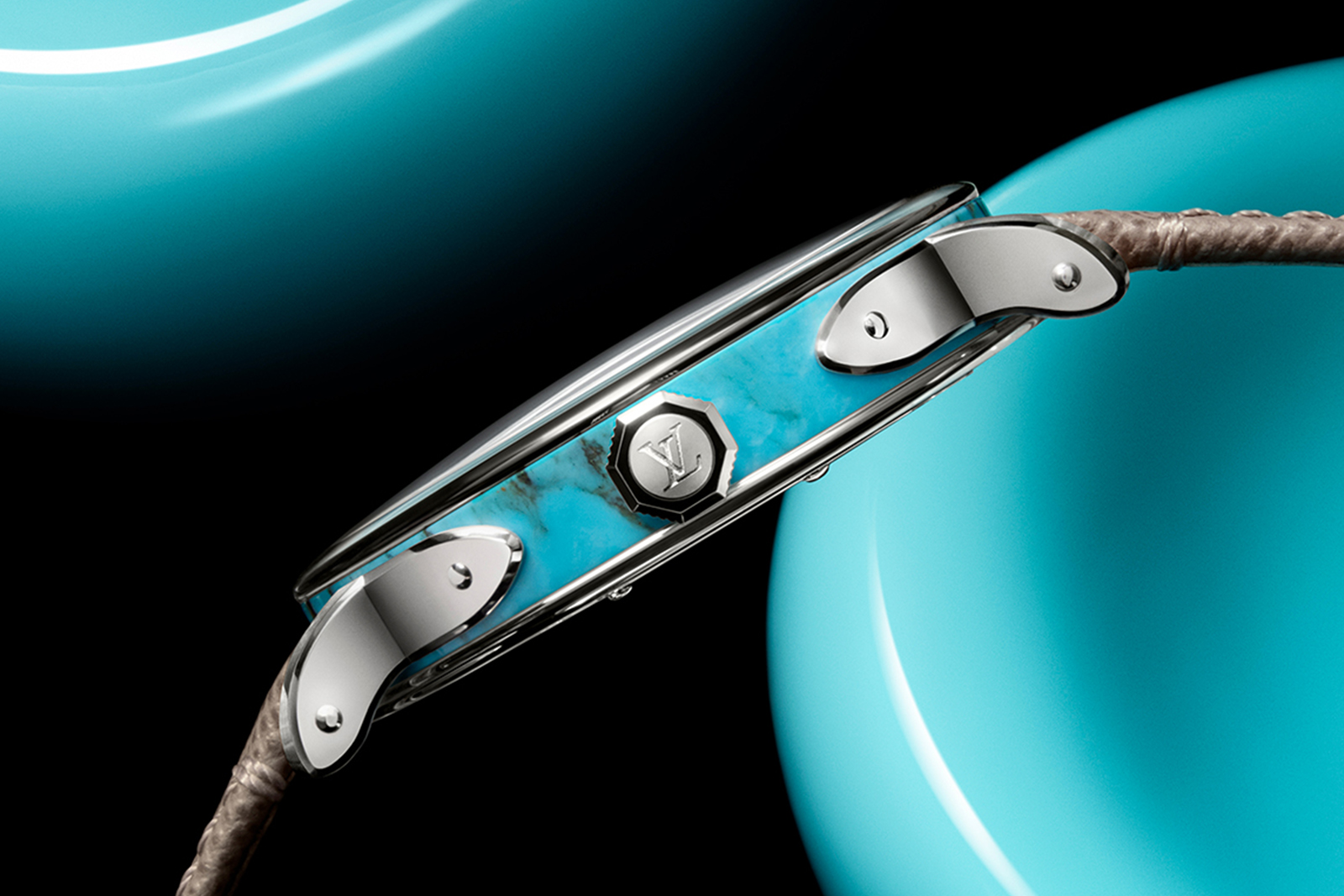
Louis Vuitton expands the Escale line with a pair of limited editions featuring turquoise and malachite stone dials – and unusually, matching stone mid-cases. By integrating the case band in the same material as the dial, the brand elevates the familiar Escale silhouette into something more sculptural, while retaining the signature riveted form inspired by its historic trunks.
The result is one of the more distinctive takes on the current stone-dial trend. The platinum-and-titanium construction allows for a double-walled case with a stone ring on the outside, giving the watch proper water resistance, while the larger 40 mm case creates space for colour and texture to shine. With only 30 pieces in each colourway, the editions reinforce Louis Vuitton’s ambition in high-end watchmaking.
Initial thoughts
This year has been a strong one for Louis Vuitton, an ambitious trunk maker seeking to prove itself as a serious watchmaker. It certainly has the industrial means to accomplish that through its control of Geneva-based La Fabrique du Temps and what is clearly a deep bench of design talent. The latest pair of Escales takes the stone dial trend to its logical next step: stone cases.
Thanks to the upscale construction, it avoids the trap of feeling gimmicky, unlike, say, the Tissot Rockwatch. The quality is outstanding which helps rationalise the steep price tag.
The distinctive construction of the Escale case makes it an almost ideal platform for the stone case band, so it is arguably disappointing that Louis Vuitton chose to limit both colourways to 30 watches each; the exclusivity helps reinforce the value proposition but it would have made an excellent addition to the brand’s regular catalogue.
A ring of stone
Louis Vuitton’s Escale line – French for “stopover” – takes after the Parisian malletier‘s famous trunks, with faux rivets mating the lugs to the case. The Escale case style is ideal for a watch like this, and the faux rivets on the case bands act as bumpers, protecting the stone insert.
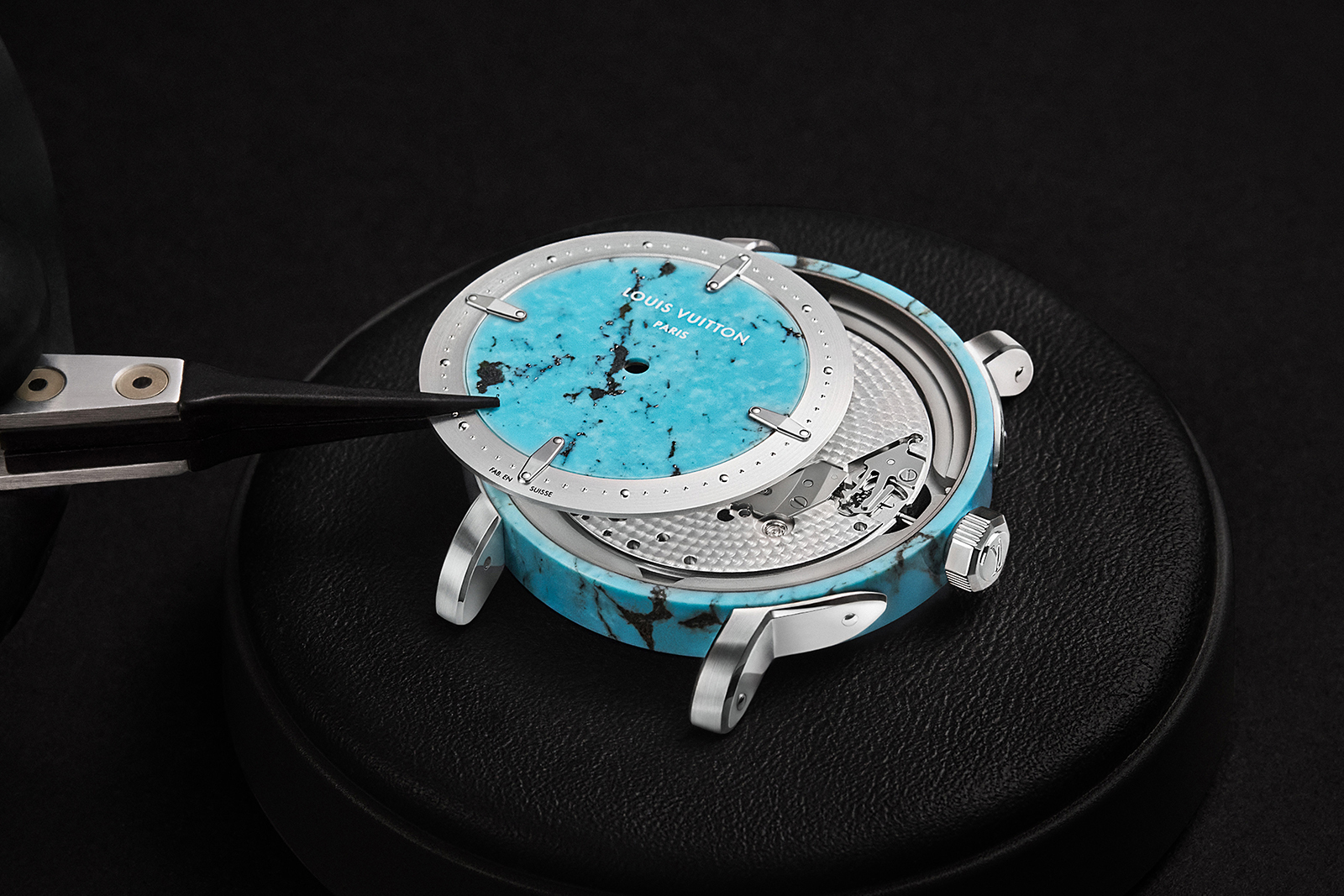
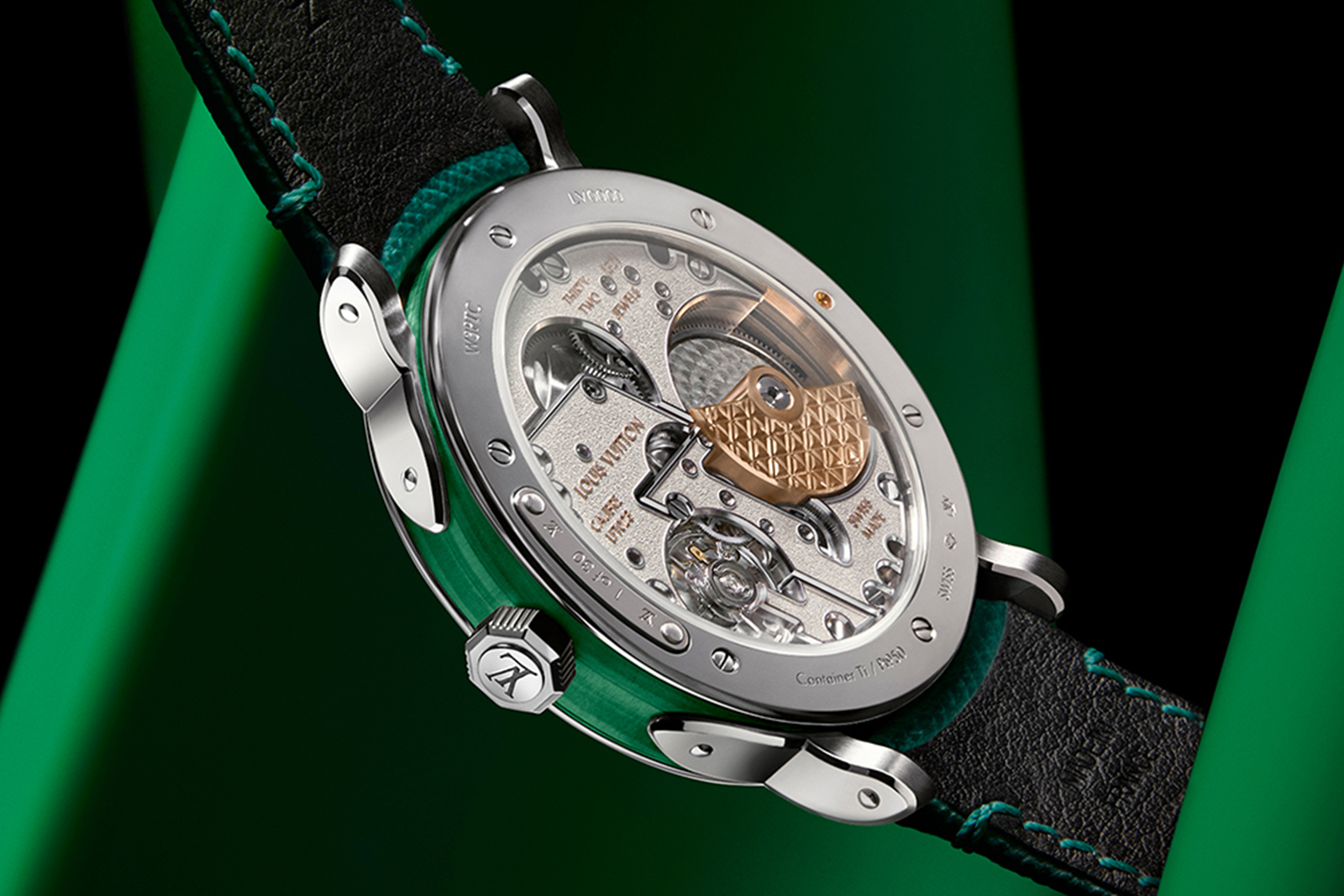
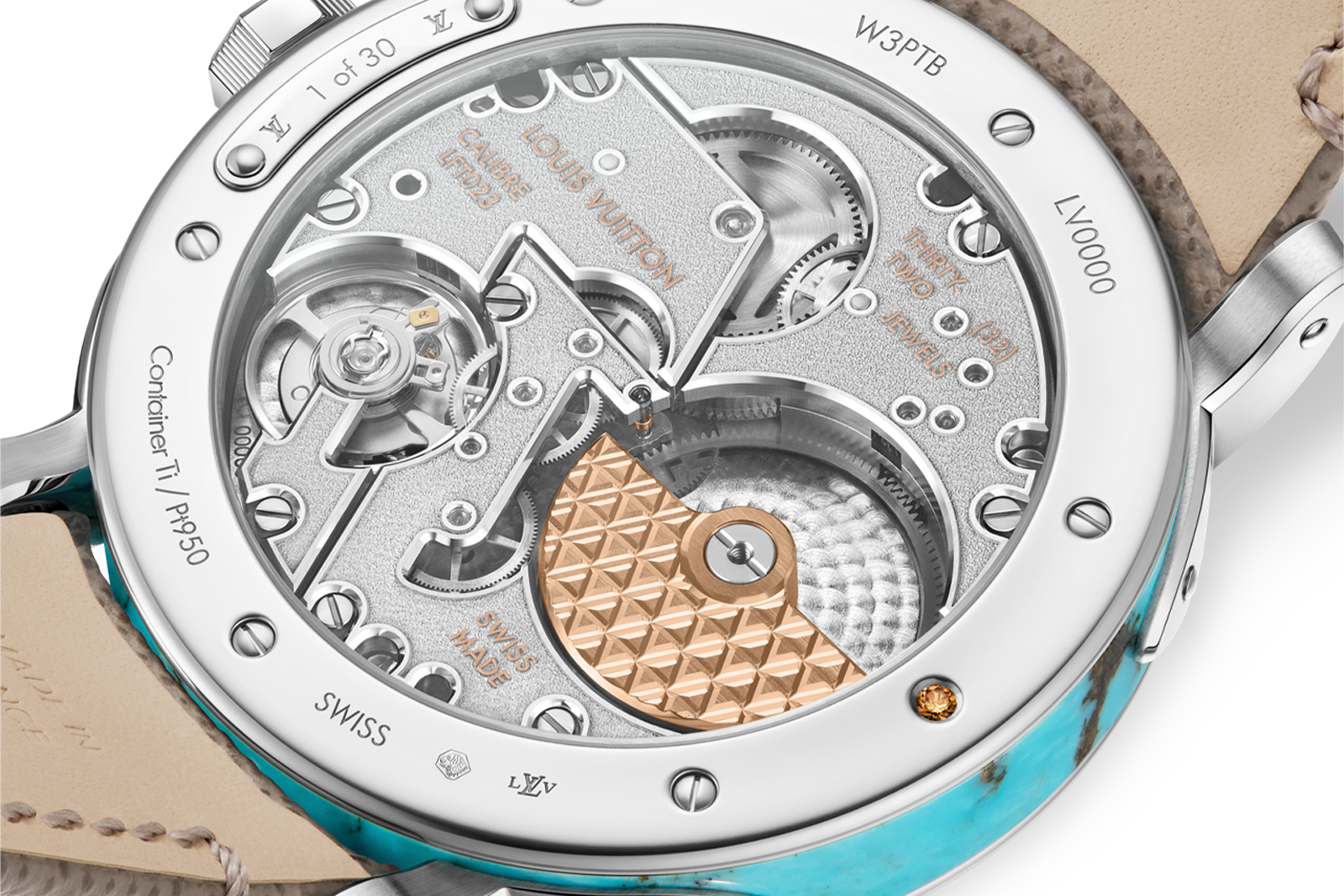
The lugs connect to an inner titanium canister, which houses the movement. The platinum bezel and case back are screwed into the canister. The only hint of this multi-material construction is “Container Ti/PT950” engraving on the case back.
This double-case construction is common for hard and fragile materials, like natural stone. The Tissot Rockwatch also uses a metal inner ring to hold the movement and mount the case back and lugs to take the stress off of the mineral stone.
Due to the double-walled construction, the case is slightly larger at 40 mm than the standard Escale. Not big by any means, the extra size is welcome to show off more of the stone.
Many natural mineral stones are slightly porous, making them difficult to fully seal. This is why some stone-cased watches like the aforementioned Tissot lack water resistance.
But the Escale is constructed in a way that fully seals the movement in a metal container, so it’s water resistant to a proper 30 m. This is less than the 50 m of most Escales, but it’s plenty for a watch like this.
The dial follows the established Escale design language, with the addition of a turquoise or malachite centre. The hour and minute hands are white gold – as is expected at this price point – while the seconds hand is titanium to reduce its mass. Notably, this is not the first stone dial for the Escale; an onyx dial reference was launched last year with a case band paved in baguette diamonds.
Familiar micro-rotor
Inside is the self-winding LFT023, a proprietary movement made by Le Cercle des Horlogers (best known for its repeaters) with 50 hours of power reserve and a chronometer certification – charmingly from the Geneva Chronometric Observatory rather than the more mainstream COSC. The movement is familiar, being a centre-seconds version of the calibre that powers the new Tambour.
While not as high-end as some of the brand’s fully in-house calibres from La Fabrique du Temps, the LFT023 is quite attractive. The use of clear corundum jewels, rather than the usual purplish-red, results in a sleek monochromatic look that makes the 22k gold rotor and relief-engraved text stand out.
There’s also one other small pop of colour on the case back: a saffron-hued Sapphire in Louis Vuitton’s corporate colour. In much the same way that Patek Philippe uses a subtle diamond to denote its platinum cases, Louis Vuitton uses a discreet sapphire to distinguish platinum from white gold at a glance.
This practice originated in an era when platinum was more expensive than 18k white gold and was less commonly used than it is today. While platinum is more widely used than it once was for a variety of reasons (cost being one, but the overall growth and premiumisation of the market being another) the use of a stone to identify the platinum case feels pleasingly nostalgic.
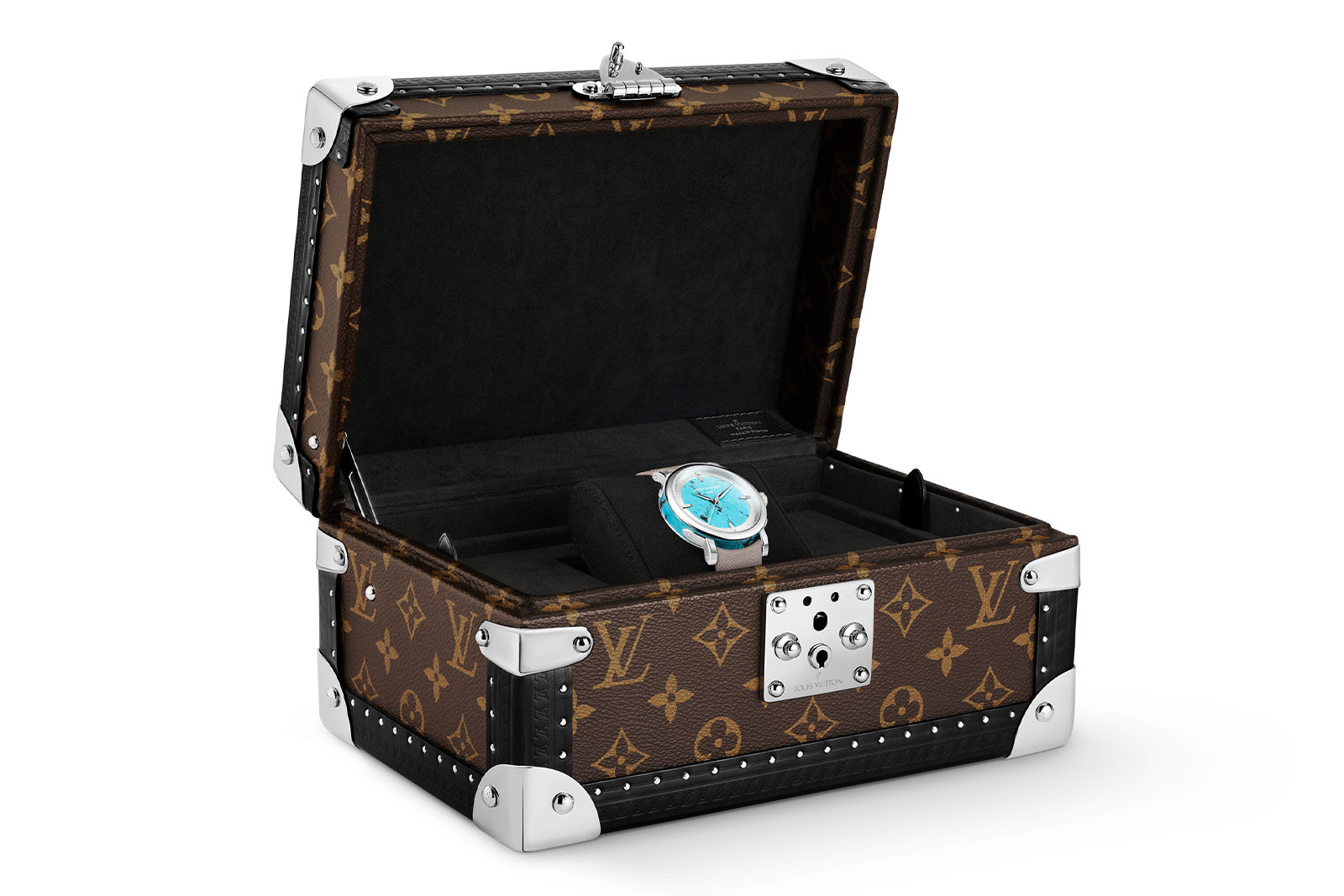
Like the rest of Louis Vuitton’s high-end offerings, this is delivered in a mini trunk. Watch packaging is usually immaterial, but Louis Vuitton trunks have a cult-like following, and some collectors will see it as a substantial value-add. For reference, the Coffret Trésor 24 box (sans watch pillow) has an individual retail price of US$5,400.
Key specs and price
Louis Vuitton Escale Ref. W3PTC1 (malachite)
Ref. W3PTB1 (turquoise)
Diameter: 40 mm Height: 10.34 mm Material: Platinum, titanium, and stone Crystal: Sapphire Water resistance: 30 m
Movement: LFT023 Features: Hours, minutes and seconds. Frequency: 28,800 beats per hour (4 Hz) Winding: Automatic Power reserve: 50 hours
Strap: Saffiano leather with platinum pin buckle
Limited edition: 30 pieces each (60 total)
Availability: At Louis Vuitton boutiques Price: US$64,500 (before taxes)
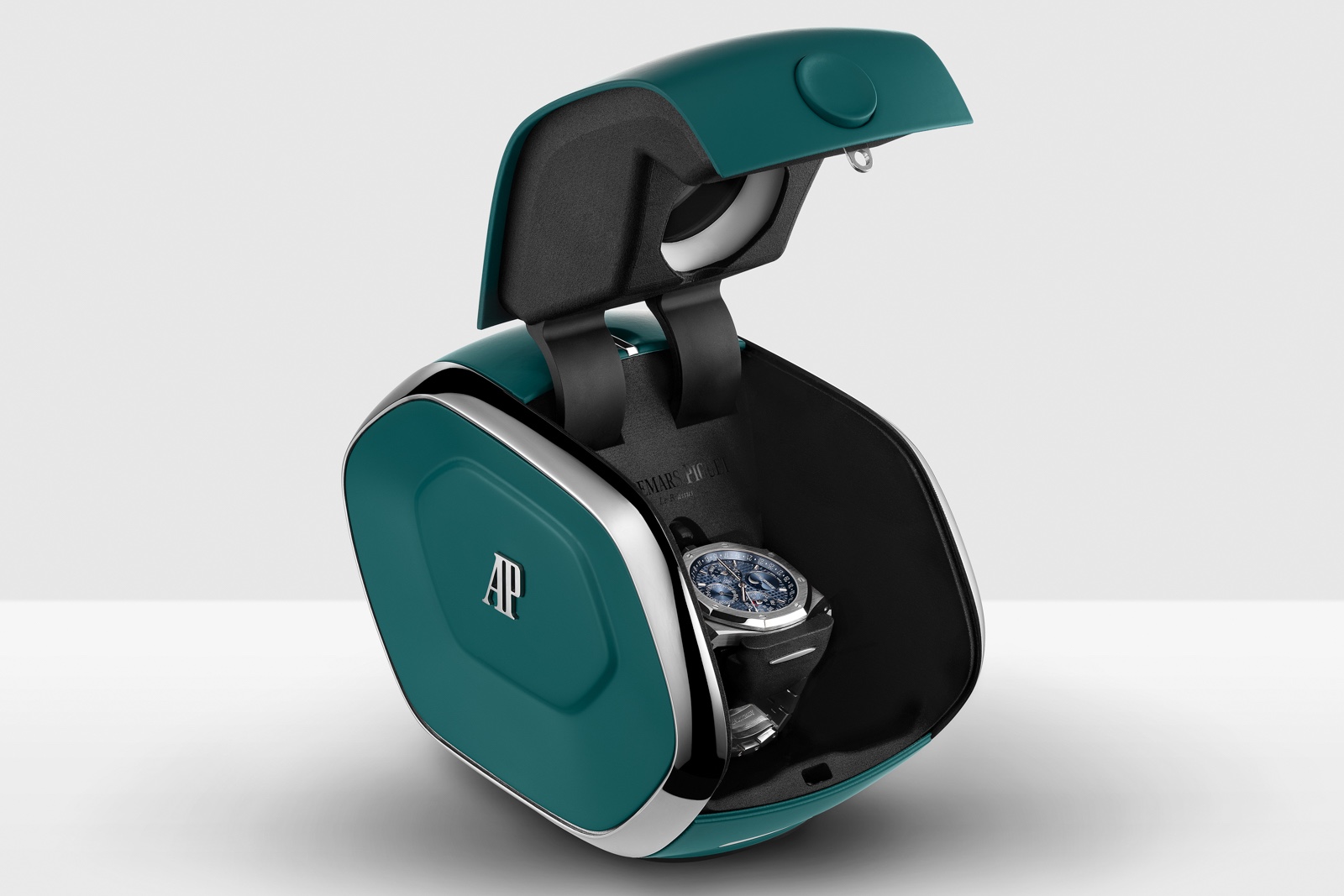
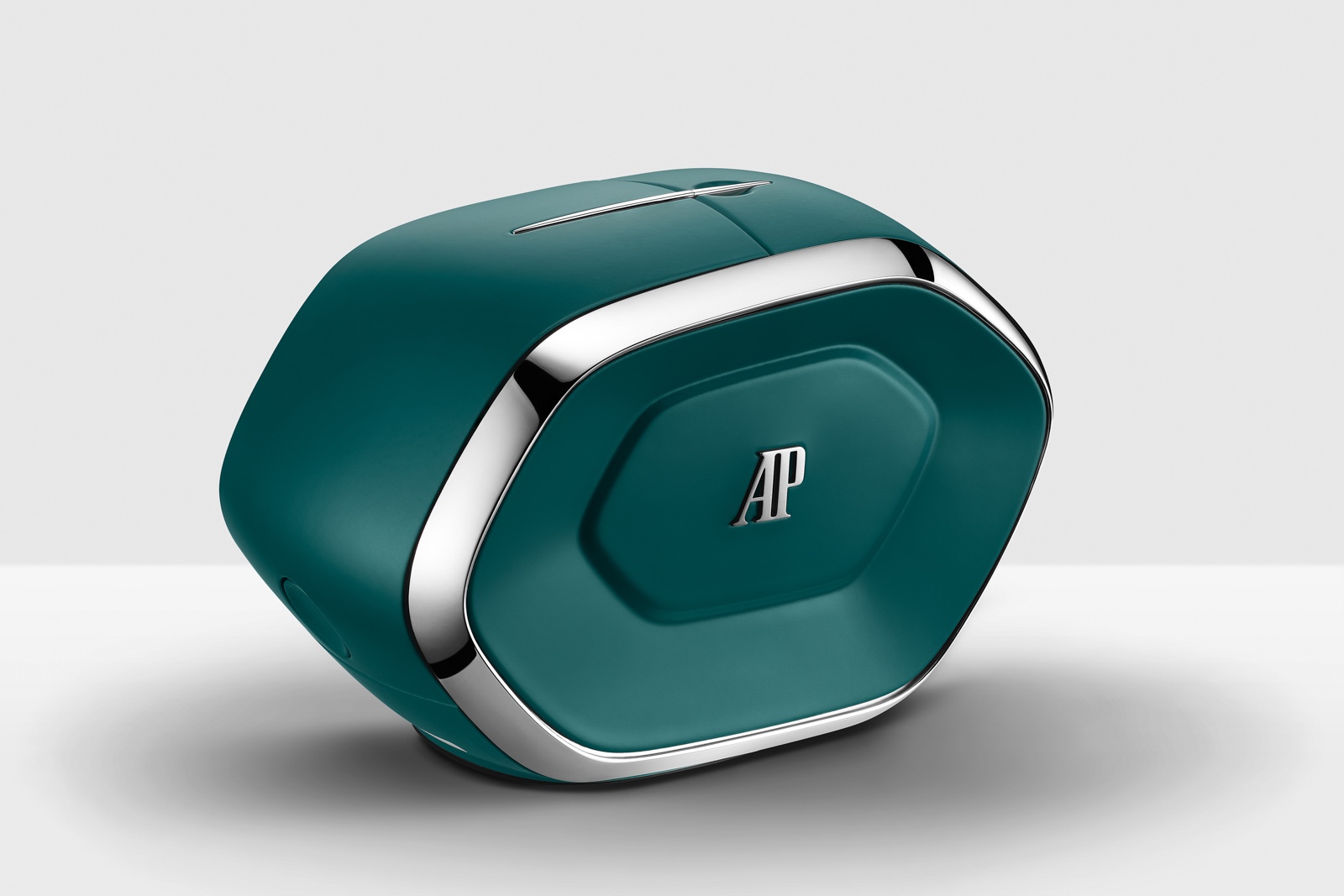
Audemars Piguet unveiled the unexpected at Dubai Watch Week: an intelligent watch winder created in collaboration with Dubai Future Labs. Designed specifically for the brand’s latest perpetual calendar calibre, the device uses computer vision, a motorised arm, and Bluetooth connectivity to wind the watch, read the dial, and set all calendar indications automatically. It’s a curious blend of haute horlogerie and consumer robotics.
Given that Audemars Piguet is among the names that have developed a fool-proof perpetual calendar, the intelligent watch winder seems like a solution in search of a problem. The choice of the launch platform is also puzzling.
On one hand, I understand why Audemars Piguet would develop the winder for its new cal. 7138; it makes sense to promote the new product. But on the other hand, the box would be far more useful if it worked for the brand’s earlier generations of perpetual calendars, which are more liable to break from improper use and need to be adjusted using pushers in the case. There are also many more of them in circulation, and thus represent a larger addressable market.
The intelligent winder is not yet in production, so perhaps when it eventually debuts it will be able to accommodate other movements, but that remains to be seen.
Of course, the functionality is probably beside the point. It’s an interesting gadget, and for someone who’s just gotten the call to pick up their new Royal Oak perpetual calendar, it’s probably an easy upsell that gives the brand another touchpoint with its customers.
A robotic companion
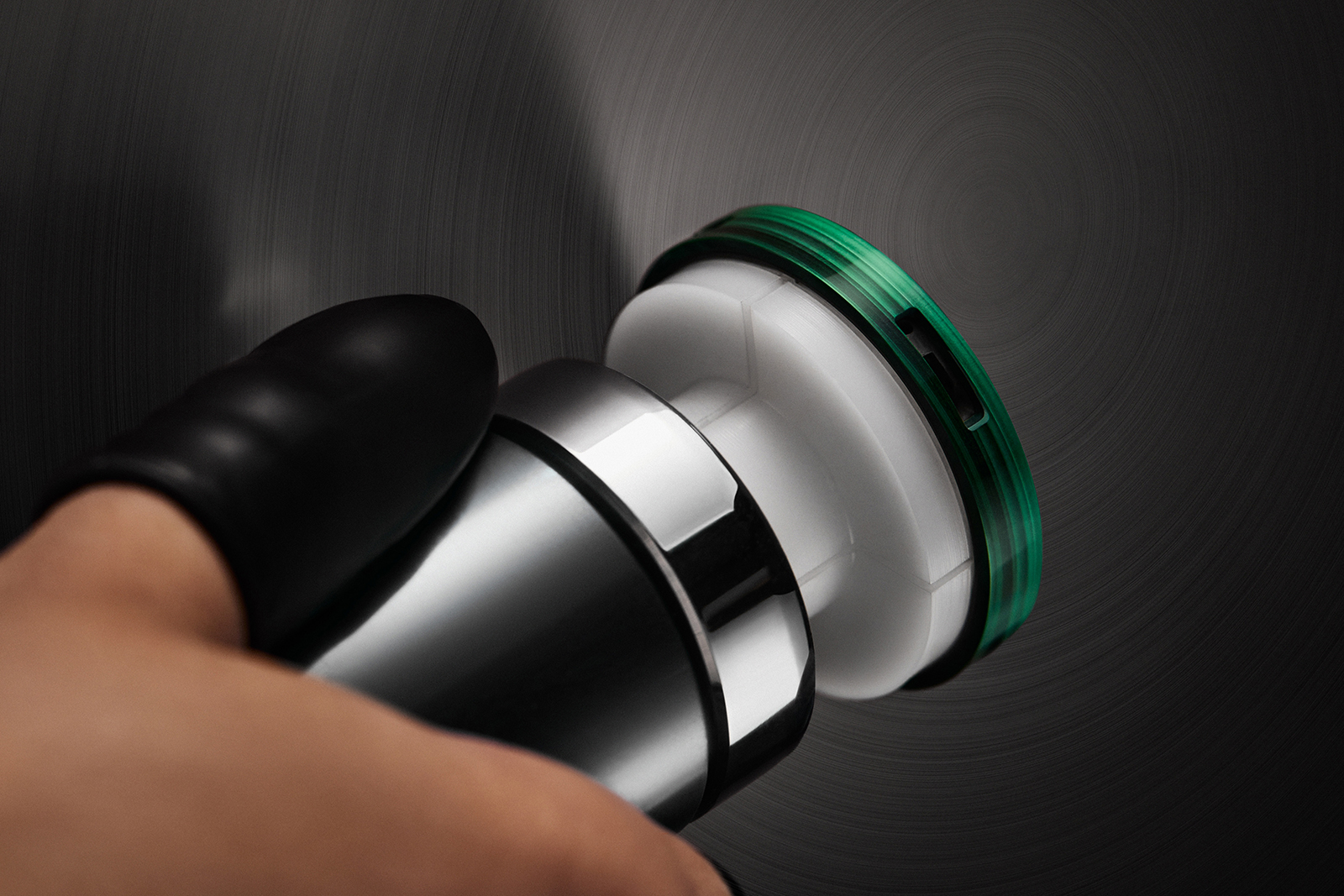
Put simply, the intelligent winder is a Bluetooth-linked connected device with a built-in camera and a motorised arm capable of gripping the watch’s crown. With a little bit of computer vision and a check of the local time and date via Bluetooth, the machine is capable of manually winding the watch via its crown, reading the dial, and making all necessary adjustments in less than five minutes.
The concept is not new — in some ways it’s a contemporary take on the sympathique concept developed by Breguet. The Ressence Type 2 and Urwerk AMC are other examples of how contemporary watchmakers have sought ways of simplifying winding and/or setting certain functions using some kind of external electronic application or apparatus.
But what the intelligent winder has going for it is that it can work with an existing watch, so long as it’s one of the supported references.
The machine was developed in collaboration with Dubai Future Labs, which is the robotics arm of the Dubai Future Foundation (DFF), a state-backed technology incubator that partners with private sector companies. While DFF is primarily focused on future-proofing the local economy, the collaboration with Audemars Piguet indicates it’s willing to look beyond its borders as well.
Key facts and price
Audemars Piguet x Dubai Future Foundation Intelligent Watch Winder
Diameter: 200 x 120 mm Height: 150 mm Material: Soft-touch plastic and metal
Compatible calibres: Cal. 7138 Functions: Winding and setting of select movements
Availability: Not yet confirmed Price: Not yet confirmed
Episode 20 of the SJX Podcast comes to you live from Dubai Watch Week 2025, which has just concluded. The event brought together many leading independent watchmakers, industry executives (including a rare appearance Rolex CEO Jean-Frédéric Dufour), and perhaps most importantly a big audience of collectors from around the world.
The new venue in Burj Park brought a more sophisticated feel to the event, which was by far the largest in its history. SJX and Brandon share their quick reactions on the final day of the fair. Note that given the recording environment, this episode has no video.
Blancpain has just unveiled its most complex modern-day watch, the Grande Double Sonnerie, to mark its 190th anniversary. This CHF1.7 million grand complication signals Blancpain’s return to the highest tier of haute horlogerie.
One of the most technically ambitious chiming wristwatches ever made, the Grande Double Sonnerie incorporates traditional complications: grande and petite sonnerie, minute repeater, flying tourbillon, and retrograde perpetual calendar, but also offers an unexpected twist with two distinct chiming melodies, a Westminster chime plus a a bespoke sequence composed for Blancpain by Eric Singer of rock band Kiss.
Initial thoughts
It has been some time since Blancpain unveiled a truly headline-grabbing complication. The manufacture made its name in this arena with the 1735 of 1991, but in the decades since, its output has leaned toward more conventional high-end offerings — perpetual calendars, tourbillons, carrousels, and chiming watches — while its commercial momentum has come largely from the Fifty Fathoms and Villeret triple calendar.
The unexpected Grande Double Sonnerie is therefore a reminder of what Blancpain can do at the very top level of watchmaking. The Le Brassus-based manufacture tends to be overlooked when speaking of high horology today, but the Grande Double Sonnerie should remind enthusiasts how sure-footed Blancpain is in this regard.
Even before considering the many complexities of the timepiece, the watch impresses from the first sight: a sea of polished levers, gears and hammers fitted with eccentric sub-dials and a wide tourbillon aperture.
It takes a moment to get acquainted with the Grande Double Sonnerie’s dial; there is a set of central time telling hands, a thin date sector paired with a pointer hand, a day of the week indicator and a co-axial leap year cycle and month indicator — hinting at a perpetual calendar complication. Despite this complexity and metallic palette, the dial is surprisingly legible once you get used to it.
But the true centrepiece is the chiming mechanism. Although the name “Double Sonnerie” might suggest the familiar pairing of grande and petite sonnerie, here it refers to the ability to sound the time in two different melodies: the traditional Westminster chime or a bespoke sequence written exclusively for Blancpain.
The composer behind that second melody will surprise many: Eric Singer, best known as the long-time drummer and occasional vocalist for Kiss. Blancpain approached him to create a signature tune for the watch — an unlikely meeting of classic haute horlogerie and hard-rock pedigree, made more unexpected by the fact that Singer was tasked with composing a soft, lyrical melody.
This collaboration might be one of the most unexpected of recent times. Blancpain, an utterly classic manufacture, working with a famous hard rock drummer would seem unlikely — especially since said drummer was tasked with coming up with a soft sonnerie chime.
The result is a chiming watch unlike any before it. Owners can switch freely between the two melodies, in addition to selecting the various striking modes, and they can also activate a minute repeater. These are familiar elements of high-end striking watches, but the ability to alternate between two distinct chiming patterns is genuinely novel.
At 47 mm the watch is large, yet it’s surprisingly slim and comfortable enough on the wrist — an encouraging sign for a complication of this scale. The case is deliberately understated, allowing the mechanics to take centre stage, while the finishing throughout is at Blancpain’s highest level, on par with many independents.
In fact, the finishing of the movement is entirely traditional – almost everything is done by hand, including anglage with entirely manual tools, in a small workshop dedicated to high-end complications. This old-school approach to finishing is uncommon at large brands, and underlines Blancpain’s haute horlogerie capability.
The two precious metal versions side by side.
Two versions are offered, in 18k white or rose gold, with output capped at two pieces per year. Between the two versions, the one in rose gold looks more luxurious, although I personally prefer the more restrained white gold version. The colder, crisper look of white gold and grey hues seems to suit the complicated piece better.
The price of CHF1.7 million (taxes included), reflects the rarity and ambition of the project.
A most modern sonnerie
Watchmakers and collectors alike hold the grande sonnerie in especially high esteem. True clockwatches like this remain rare.
Blancpain brings something new to the small circle of brands that have managed to produce this complication: the ability to choose the specific tune on command, using a simple pusher on the case that, when actuated, switches between the classic Westminster carillon to Blancpain’s own Singer-composed tune.
The Westminster chime (also known in clockmaking as “Cambridge quarters”) refers to a specific chiming sequence, which makes use of four different hammers and four different gongs to sound the time each quarter of an hour. The name comes from the Westminster clock tower, better known as Big Ben.
A grande sonnerie chimes every full hour and then the hour and quarter, every quarter. A petite sonnerie chimes the full hour on the new hour, and then only chimes the quarters on the quarters without repeating the hours. Notably, while most clock watches only chime the hours on the new hour, the Grande Double Sonnerie chimes out all four quarters, like a real grandfather clock.
Having four hammers and four gongs provides the complication with a richer and more nuanced sound, compared to simpler chiming watches with only two or three hammer and gong pairs. With this arrangement, the movement can play four distinct notes. In the Grande Double Sonnerie’s Calibre 15GSQ those notes are E, G, F, and B. This palette naturally raises the question: could another melodic sequence be created from these four pitches? As it turns out — yes.
Eric Singer is a drummer and watch collector, famously part of the Kiss. He’s also collaborated with Black Sabbath, Gary Moore and Brian May throughout his career. Also a friend of Blancpain chief executive Marc Hayek, Mr Singer was a fitting choice for “orchestrating” Blancpain’s alternative chime. The artist accepted the challenge of composing a special melody — which turned out to be a real challenge, since four notes may be a lot for a movement, but apparently quite constraining for a musician.
Blancpain says the watch took more than eight years to develop, resulting in 21 patent applications and 13 patented solutions incorporated into the final construction. The key innovation is the mechanism that allows the user to switch between two musical sequences — a system that required entirely new components and multiple safety devices to prevent damage during operation.
The symmetric rounded pushers are for changing the chime melody and for actuating the minute repeater. A conventional slider for selecting the sonnerie mode: Petite, Grande and silent.
Without diving too deeply into the mechanics of chiming watches, it’s helpful to outline the basic principle behind the melody switching. In simple terms, a watch chimes because a toothed rack, driven by the movement, engages the hammers in sequence. Each tooth lifts a hammer and then releases it onto its gong, producing a note. The melody is determined entirely by the arrangement of teeth on the rack.
This basic explanation shows that the tune depends solely on the rack’s tooth pattern — much like the pinned cylinder of a music box. Change the pattern, and you change the melody. That, in essence, is what Blancpain has achieved, albeit in a highly sophisticated form.
The figure below is extracted from patent EP3136188 and shows a glimpse of the simplified selector mechanism. As we’ve established, two differently-toothed racks make for two different chiming patterns. Blancpain went to implement a double-levered rack, with each level encoded with a specific melody: one with the Westminster chime and the second with Mr Singer’s bespoke composition.
Each of the four hammers has a set of hooks, which can take up different positions. The hooks are arranged on two levels and are independent. The hooks on each level can be either active or inactive — meaning they are either raised and can be engaged by the toothed rack or they sit flush with the hammers.
Two long lever arms engage with the hook pieces. The lower lever controls the lower hooks and the upper lever the upper hook members respectively. The gist of this interaction is that cam-like profiles in the levers synchronously force the hooks in either their active or inactive positions.
The column wheel and two-level racks are visible on the caseback side.
The levers are moved by a column wheel—similar to the control system of a chronograph—which ensures that the two positions (active and inactive) are complementary. In other words, only one set of hooks can be active at any given time; the two sets are never active simultaneously.
As the chiming starts, the double-level rack glides over and engages whichever set of hooks is active. Thus, it is either the Westminster chime that is played or Mr Singer’s. During the chiming sequence, one level of the rack engages the hammers in its preprogrammed sequence, while the other simply glides over the inactive hooks. Clever geometry was also employed to make sure that each toothed sector on the rack engages only the right hammer, so the rack profile has decreasing radii.
An underside view of the double level rack.
Some more patents cover the safety system which assures the user can’t switch up melodies mid-chime, which would probably either break or bind the hook assemblies. Other more “common” safety implements assure the sonnerie works are isolated during chiming, such as blocking time setting or the actuation of the minute repeater. In total, there are five distinct safety mechanisms protecting the Grande Double Sonnerie.
The four circular gongs were designed specifically for this calibre, with a novel construction and geometry (also the subject of a patent) which makes them easier to tune to the desired frequency. In this particular embodiment, two gongs are concentric and stem from the same fixture, with two other arranged underneath, in a more classical fashion. Blancpain engineers tried out multiple alloys for the best acoustic response and seem to have ultimately settled on a rose gold alloy.
Custom construction of one-piece pair of gongs.
Another patented feature is the 5N gold acoustic membrane that connects the main case body with the sapphire glass fixture. Manufactured through electro-forming, the membrane works as a mechanical amplifier of sound.
Interestingly, the sapphire front glass is not set directly into the bezel or case body, but is rather supported directly by the gold membrane through a dedicated fixture. Thus the sapphire glass and its fixture are allowed to vibrate slightly inside the bezel.
The four hammers are fully visible on the dial side along with a glimpse of the gold gong assembly.
A very modern implement inside this movement is the magnetic governor, which regulates the chiming speed. In any sort of chiming watch, spring power is directly discharged into the strikeworks and there is a need for a device to regulate the striking speed.
Early centripetal governors were even used in gramophones, to regulate the speed at which vinyls were played. They work by acting as a sort of mechanical capacitor, braking the fast-rotating gears by harnessing angular kinetic energy.
The magnetic device used here is a silent governor, braking the discharge speed of the barrel by having a rotor slowed down by moving in a magnetic field. As it revolves, the governor rotor generates an electric potential, which encounters resistance from the magnetic field. The assembly looks a little like a stator, which is a sort of electric generator. Such a system was first used by Breguet in La Musicale, reflecting the innovation shared inside the Swatch Group.
Since the sonnerie function draws its power from its own separate barrel, the minute repeater can also be run from the same source, so there is no need for a sprung slider to arm the complication. As such, it can be activated on demand by a simple pusher on the case. The dedicated barrel stores sufficient energy for a full 12 hours in grande sonnerie mode.
Retrograde perpetuity
Integrated within this impressive sonnerie calibre — and visible on the dial side — is a compact retrograde perpetual calendar. Although the Grande Double Sonnerie is built around its chiming mechanism, the perpetual calendar is an achievement in its own right.
At first glance it appears to be a fairly conventional perpetual calendar, albeit with an unconventional layout. A large sector on the left displays the retrograde date, while two smaller sub-dials show the day of the week and a co-axial leap-year and month indicator. Where Blancpain could have employed a traditional perpetual calendar paired with a snail cam and rack system, its watchmakers instead chose to rethink the mechanism altogether.
The compact perpetual calendar mechanism is barely discernible on the dial side.
The subject of a couple of patents, Blancpain’s new retrograde perpetual calendar is built to improve some issues associated with both traditional perpetual calendars and generic retrograde indicators. Blancpain engineers argue that in snail cam and rack indicators, the hand is under no direct tension and especially for small increments (like those on a 31-incremented date sector) it may not index properly and over- (or under) shoot its mark.
Blancpain began by reworking the retrograde mechanism itself, replacing the traditional setup with a ratchet wheel, gear train, and linear spring. The retrograde hand is mounted on one of the intermediate gears, so it is never idle and always kept under tension. A conventional date finger engages the large ratchet wheel, advancing it by one step each day.
Just like with the sonnerie function, Blancpain went for a very complex and refined construction for the perpetual calendar, but the gist is simple enough to make out. The system takes advantage of the retrograde’s indication tendency to always snap back to the “1” indication.
A feeler lever engages with a fairly ordinary month cam, reading the months’ lengths. In the case of 31-day months, it triggers part of the ratchet mobile, causing the spring to intension and snap the retrograde back to “1”. In the case of 30, 28 and the occasional 29-day months, the feeler lever simply engages the ratchet trigger earlier and snaps the retrograde hand.
The action is simple in theory, but took a lot of springs, fingers and gear calculations to get right. The concept is not dissimilar to the MB&F LM Perpetual, but this present version bears more resemblance to the George Daniels’ original design used in the Grand Complication. The concept is basically the same, although Blancpain’s construction is definitely the more refined between the two. Setting of the perpetual calendar is done in classic Blancpain style, with concealed collectors under the lugs, which are integrated directly within the movement.
Shapes and finishes
Blancpain has done an impressive job making Calibre 15GSQ not only a technical achievement but also visually appealing. Chiming complications are inherently classical, and such movements are typically paired with closed dials that conceal most of the striking works.
When watchmakers choose to reveal the sonnerie racks and levers beneath a translucent dial, legibility often suffers and the watch can appear overly technical. Striking the right balance between visual openness and elegance is therefore difficult.
The cal. 15GSQ was clearly constructed with complete openness in mind, never meant to be hidden away under a closed dial; both sides of the complex movement are equally visible and thoughtfully arranged. The dial side is especially appealing, since all the supporting bridges are generously cut-out, revealing the various gears and springs underneath.
The dial is just a ring of 5N gold, with raised numerals and a broad sector showing the month dates. The sector is plenty legible, occupying almost half of the precious ring dial. Smaller dials for the perpetual calendar are coarsely brushed, offering some nice contrast with the rest of the polished components.
The four hammers are on full display, mirror-polished with rounded anglage. The magnetic governor is visible as well, framed by a rounded Blancpain name plate. When any of the chiming functions are running, the user can admire the hammers striking and the dynamic dance of the governor on full display.
The bridges and mainplate are not merely plated, but are instead made out of solid 18K white or pink gold, with most visible surfaces mirror polished. The steel parts are finely brushed, as are the gears. All gears have the sporty and intricate spoke design unique to Blancpain, a subtle nod to the manufacture’s past collaborations with Lamborghini.
All visible edges are sharply beveled and the movement contains no less than 135 interior angles. Using gold instead of other metals gives a certain warmth and gravitas to the movement. The bevelling, along with the rest of the decoration, is done by hand the traditional way in a workshop focused solely on finishing high-end complications. For anglage, that means a file to carefully shape the bevels.
One of my favourite parts of the dial side is the the large aperture showing the flying tourbillon. The delicate complication is the latest embodiment of the original inverted flying tourbillon designed by Vincent Calabrese for Blancpain in the late 1980s. Upon its debut, its eccentric design prompted many to erroneously classify it as a carrousel, but it is in fact a tourbillon, albeit one with an off-centred balance wheel.
The modern design has a broad, mirror polished cage and a large free-sprung balance. The regulator beats at a modern 4 Hz frequency and features a silicon hairspring. While the modern material might seem out of place in such a classic timepiece, the tourbillon sits very close to the magnetic governor, so the need for non-magnetic materials is a true necessity.
Blancpain isn’t the only brand that uses a silicon hairspring for its range-topping products; Patek Philippe does the same for the ref. 6301P. The Grande Double Sonnerie runs for about 96 hours on a full wind, which is frankly impressive, coming from a single barrel.
The back of the movement reveals the intricate, multi-layered rack system, including the mechanism that switches between chimes. The high level of finishing continues here, with Geneva stripes on the barrel bridge, black-polished steel components, and two large sonnerie-style click wheels — a nod to traditional chiming clockwatches.
The back also features two discreet power-reserve indicators: one for the chiming functions and another for the timekeeping train. The two barrels are independent — one drives the tourbillon and perpetual calendar, while the other powers all of the striking mechanisms.
Each Grande Double Sonnerie is assembled by one of two dedicated watchmakers, who leave their personal mark on the piece. A hand-engraved name plate bearing the watchmaker’s signature is affixed to the reverse side of the movement. It’s a poetic way of connecting the owner with the craftsman — a gesture common among independent makers but rare for a large manufacture.
Diameter: 47 mm Height: 14.5 mm Material: 18k white or pink gold Crystal: Sapphire Water resistance: 10 m
Movement: Cal. 15GSQ Functions: Hours, minutes, flying tourbillon seconds, perpetual calendar, grande and petite sonnerie, minute repeater and chime selector Winding: Manual winding Frequency: 28,800 beats per hour (4 Hz) Power reserve: 96 hours
Strap: Crocodile with matching folding clasp
Limited edition: No, but production will be limited to 2 pieces each year Availability: At Blancpain boutiques Price: CHF1.7 million, taxes included
The uniform of high complications almost invariably includes a leather strap; a metal bracelet remains an uncommon pairing with, say, a grande sonnerie. Christie’s upcoming Hong Kong auction, however, brings an unexpected abundance of complicated watches on bracelets for collectors who prefer metal, including notable examples from Patek Philippe and A. Lange & Söhne.
This season’s sale is anchored by two major private collections, most prominently the second part of The Chronicle Collection, the first half of which was dispersed earlier in the spring. The consignor began collecting in the 1990s, a fact reflected in the depth of neo-vintage highlights throughout the catalogue.
The Patek Philippe ref. 3448 was the first self-winding perpetual calendar produced in series. According to movement numbers, it is likely 586 were made in total — this lug-less example was one of the first made.
Beyond its historical interest, the ref. 3448 is underpinned by one of – if not the – most beautiful automatic movements ever made: the cal. 27-460 Q. Looks aside, it was one of the most technically competent automatics of its era, with an overcoil hairspring, free-sprung balance, and bi-directional winding using a cam and pawl system. Atop this worthy base calibre, the ref. 3448 adds the iconic windows perpetual calendar by none other than Victorin Piguet.
The ‘/8’ in ref. 3448/8 suffix denotes the style of bracelet, which Patek Philippe sourced from a jewellers in Pforzheim or Vicenza according to Christie’s. Both cities remain important sources of precious metal bracelets to this day; Patek Philippe’s modern chain-style bracelets are made in Pforzheim by Wellendorff – remember that name. Unfortunately, bracelets of this sort cannot be (non-destructively) resized, though the “ladder” style clasp allows for some adjustment.
While the watch was born with a normal dial, Patek Philippe exchanged it for the present gem-set dial at the owner’s request in 1991. While almost unthinkable now, Patek Philippe reworked a number of ref. 3448s at the behest of important collectors. For example, another ref. 3448 had its yellow gold case exchanged for a platinum one, and a sapphire-index dial installed in 1997.
Today, most collectors profess a strong preference for originality, though that will go right out the window in this case. The estimate is a conservative HK$2.0-4.0 million (~US250,000-500,000). For context this watch sold for HK$1.5 million the last time it appeared in 2008.
At first glance the ref. 5136 appears to just be a bracelet-borne ref. 3940, but it is actually a completely different watch. While the ref. 3940 is famously slim – under 9 mm – the ref. 5136 is over 2 mm taller to accommodate a bracelet, with a much larger crown to match.
The “brick” bracelet is surprisingly substantial, and more in line with sports watch bracelets. The end links include extenders for the pin-pushers in the case band, allowing the perpetual calendar to be set without removing the bracelet.
Also on offer is the same reference in white gold. While the dial takes after the ref. 3940’s dial, the lettering is noticeably heavier, a detail that pairs well with the more robust case. In a way, the ref. 5136 was something of a prelude to Patek Philippe’s first (and only) perpetual calendar sports watch, the ref. 5740.
Inside is Patek Philippe’s slim workhorse cal. 240 Q micro-rotor automatic, which debuted in the ref. 3940 but still powers multiple references in the current catalogue, including the Nautilus perpetual calendar.
A. Lange & Söhne’s first automatic movement, the Sax-O-mat, is arguably its best – “Sax” for the state of Saxony and “mat” meaning automatischer, while the “O” refers its most unusual feature.
When the crown is pulled out to set the time, the seconds hand immediately resets to zero, using a hammer and heart cam. The zero-reset seconds has since become a Lange signature, found in several models, and remains an unusual feature in the wider landscape.
From the back, the movement’s most distinctive feature is the off-centre 3/4 rotor, which is one of the most decadently constructed winding masses in the industry – solid 21k gold with a platinum weight along its perimeter.
Launched in 2001, the Langematik Perpetual was the young brand’s first attempt at a perpetual calendar. It combines the Lange outsized date with a precision moon phase and a quick correction system that painlessly advances all the calendar indications in sync.
But what makes this example even more special is the exquisite platinum bracelet made by Wellendorff of Pforzheim. While Wellendorff continues to manufacture watch bracelets, the relationship with Lange ended over a decade ago, which makes these bracelets even more sought after. And this particular style is the most attractive of all the Wellendorff bracelets – at least to me.
An estimate of HK$480,000 – 950,000 (US$60,000-120,000) is quite reasonable for an example of this outstanding reference, which broke new ground for Lange and for the broader category of perpetual calendar wristwatches.
Lost in its predecessor’s shadow, the ref. 5204 is among the best modern watches from Patek Philippe. Unlike the Lemania-based movement in the ref. 5004, the cal. 29-535 PS Q inside the ref. 5204 was built from the ground up to be a perpetual calendar split-seconds chronograph, making it more polished and reliable than the ref. 5004 – at least according to its maker.
Despite the reverence the rattrapante enjoys today as a high complication, it can be made in a way that is quite simple mechanically and amenable to mass production. However, Patek Philippe’s rattrapante is another matter entirely.In most split-seconds, balance amplitude decreases when the hands are split. Patek Philippe’s, however, uses a sophisticated isolator system, which completely negates this issue.
Unlike the ref. 5004, Patek Philippe offered the ref. 5204 on a bracelet as a regular production model, though only in rose gold, only for a few years, and only for the brand’s preferred clients. The bracelet suits the watch, which takes inspiration from the famed ref. 2499 with a concave bezel and fluted lugs.
The market has yet to fully recognise the substantive quality of the ref. 5204, so the estimate is just HK$1.2 – 2.4 million (US$150,000-300,000), well below any of the (many) ref. 5004s in the catalogue.
Patek Philippe was once in the habit of seeing off aging models with a platinum iteration prior to replacement, the most famous examples being the ref. 5070 and 5170. The ref. 5131 was in production for twelve years, and the platinum swan-song iteration was introduced three years before its discontinuation.
Each cloisonné enamel dial is unique, as hand made things tend to be. The yellow gold iteration, launched in 2008, depicts the world centred on the Atlantic Ocean, depicting the Americas, Europe and Africa. The white gold model pans east, revealing east Asia but losing the Americas, while the rose gold model focuses on the Pacific Ocean.
Finally the platinum model centres on the North Pole. The limited production of cloisonné enamel dials meant the ref. 5131 had a wait list even during the days when you could still negotiate a discount on a new Rolex.
At Baselworld 1994, Audemars Piguet launched the first-ever purpose-built grande sonnerie wristwatch. While grande sonnerie movements small enough to fit inside a 39 mm case have existed since the late 1800s (for use in ladies’ pocket watches) Audemars Piguet was the first brand to commercialise a blank sheet design for a modern wristwatch.
While impressive, the first generation suffered from two limitations: the grande sonnerie had a mere 10-hour power reserve, and it could only chime the time at the quarters. With the next generation, to which this watch belongs, Audemars Piguet managed to add a minute repeater and a third hammer and gong, while simultaneously extending the power reserve to 22 hours in grande sonnerie mode.
And this particular example is better still, as it comes on a rarely seen bracelet reserved for the Grande Sonnerie and Grande Complication. It was likely a one-off for an important client, as it is numbered “1” on the solid case back. It also comes with a resonance box, which is arguably more useful and less gimmicky paired with a self-striking watch than it is with a minute repeater.
Last is a complicated watch isn’t currently on a bracelet, but probably will be soon. As the lot essay points out, the yellow gold ref. 6239 “was always presented on a strap rather than a gold bracelet” – though Rolex also sold gold bracelets with the 6239-specific type 71 end links.
However, bracelets with the more common type 57 end links fit too, and as a result most gold ref. 6239s have found their way onto bracelets. And there isn’t any reason not to do so, since it doesn’t affect the originality of the watch.
The exotic “Paul Newman” dial needs no introduction; these slivers of printed brass have become cult favourites among Rolex collectors. And while many Paul Newman Daytonas have passed through auction houses numerous times, this example is fresh to the auction block. Exotic dial Daytonas are not all that rare, but this configuration certainly is. Gold only accounts for some 2% of the ref. 6239 production, and not all of them featured exotic dials.