

John M. Flaux Presents the Architectural La Villa d’hOro Clock
The ticking city of Venice.
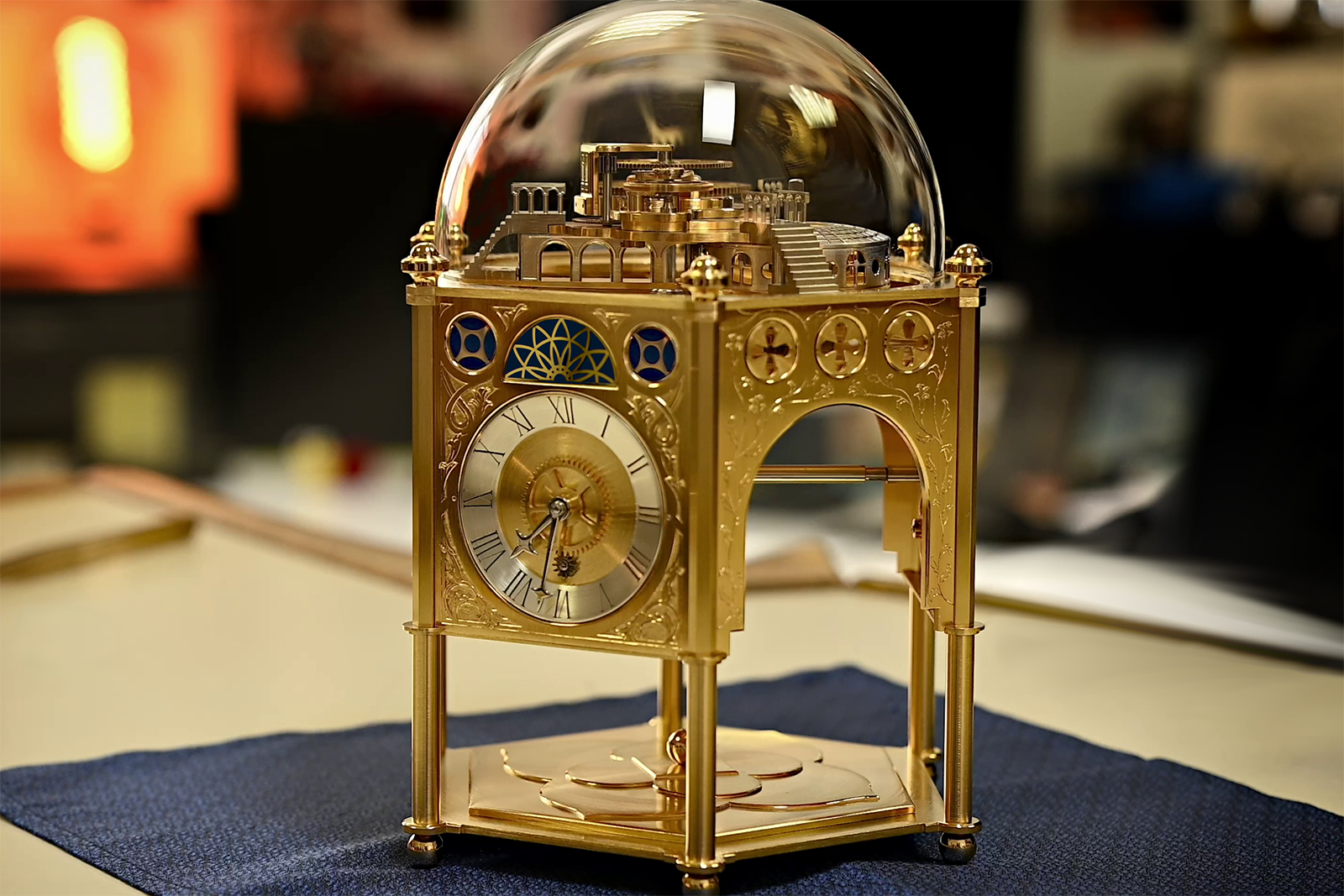
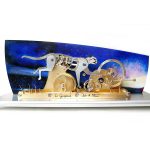
ACHI member and clockmaker John-Mikaël Flaux unveils the first clock in a new series, the Renaissance-inspired La Villa d’hOro. Fashioned as a tribute to the romantic city of Venice, the clock has an exposed movement and three dials, making it a rather practical piece of horological art.
Initial thoughts
Table clocks represent a niche category, even within the already niche realm of mechanical clocks. They lack the both the sobriety of large standing clocks and the convenient portability of watches — whether built for the pocket or the wrist.
That said, this middle ground arguably makes them more attractive to a certain type of collector.
Many modern artisanal clock producers take inspiration from science-fiction, popular culture or the automobile world. John-Mikaël Flaux went for a very different aesthetic with his La Villa d’hOro. Taking from his own experience exploring cities, the artisanal clockmaker decided to launch a small series of city and architecture inspired clocks, the Villa Tempus series.
The first model, the La Villa d’hOro, takes its inspiration from the insular Italian city of Venice. Mr Flaux cites the landmark Doge Palace as the core architectural inspiration. The idea behind the La Villa d’hOro is to be reminiscent of Venice without actually emulating any specific part or building of the floating city.
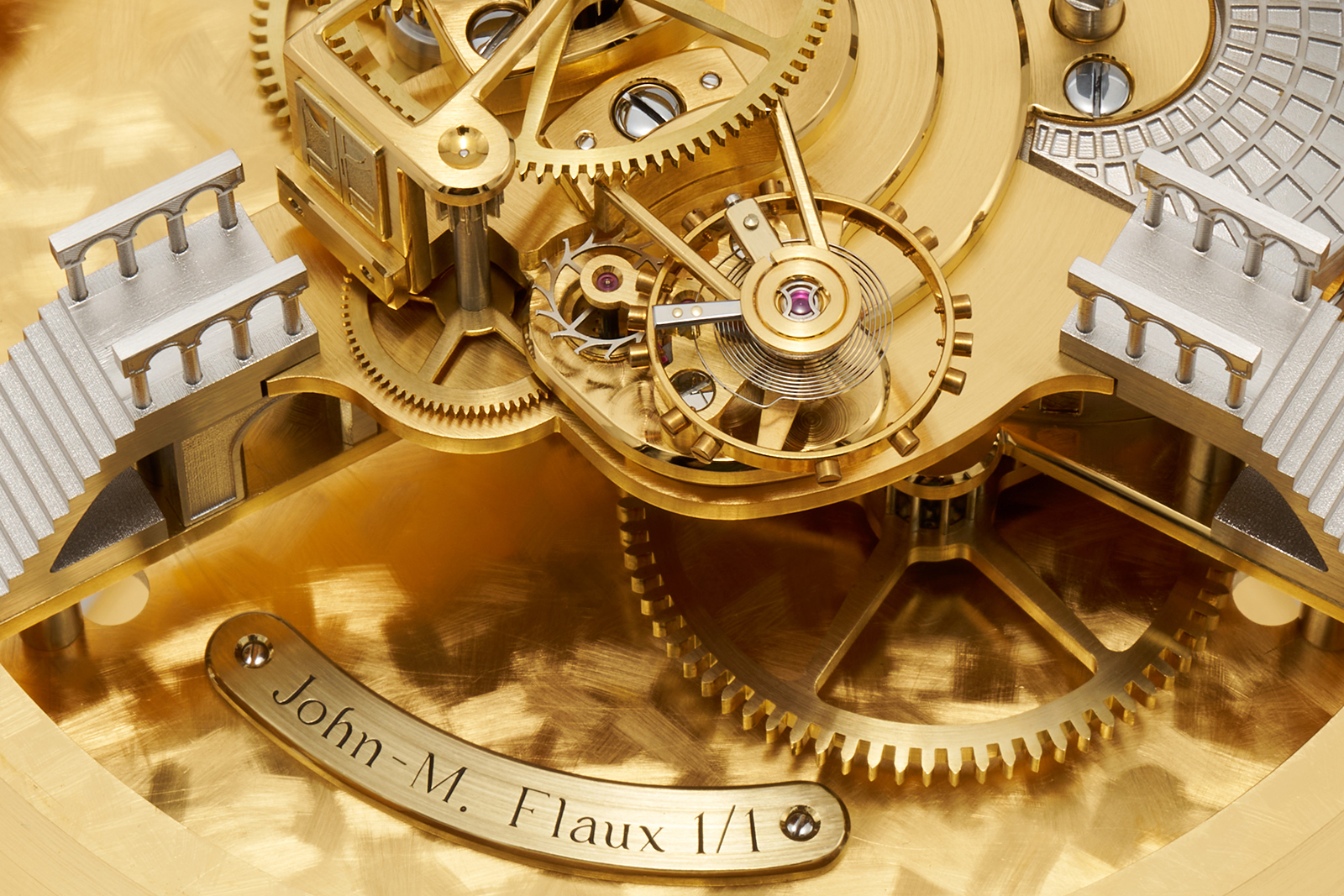
In many ways the La Villa d’hOro manages to capture the old world charm Venice, which has been mostly kept almost intact to this day. Arches and bridges are a big part of Venetian architecture and they appear as a leitmotif in the gilded clock’s construction.
The timekeeper is constructed like a hexagon, with three functional dials separated by three tall arches. The symmetry of the piece is pleasing and functional — should the La Villa d’hOro be placed somewhere centrally, it can be read from basically any part of the room.
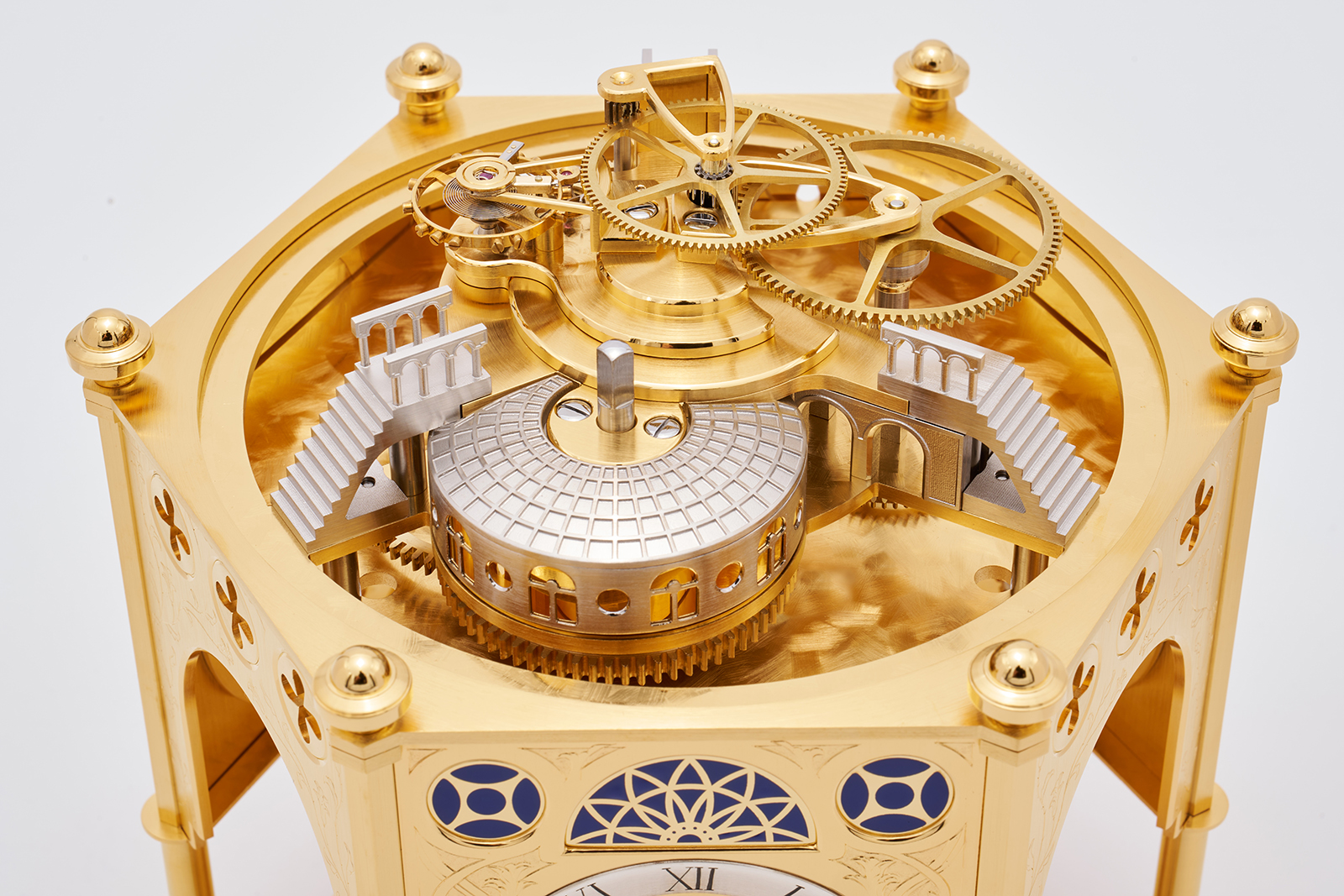
For those who appreciate hand craftsmanship, it is refreshing to see artisans still investing serious time and craft into tabletop clocks. Although the market is not as lucrative as that of wristwatches, makers of automatons and clocks look to be making a comeback of sorts, which can only be a good sign for the health of the broader horological community.
Although the La Villa d’hOro model is a unique piece, Mr Flaux is open to directly collaborating with interested parties for future models in the Villa Tempus series. While the cost of each model is likely to vary, the La Villa d’hOro is priced at €79,000 — a high but reasonably fair price for the level of craftsmanship delivered.

A ticking sculpture
The La Villa d’hOro is, in the strictest watchmaking terms, a very simple construction. The timekeeping portion is laid out at the top, from barrel to oversized balance, and the clock can be considered “time-only”. That said, the time display is split three ways — arguably a complication of sorts.
The clock is animated by the artisanal P30 movement, which shielded only by a glass dome that reveals all its components to the onlooker.
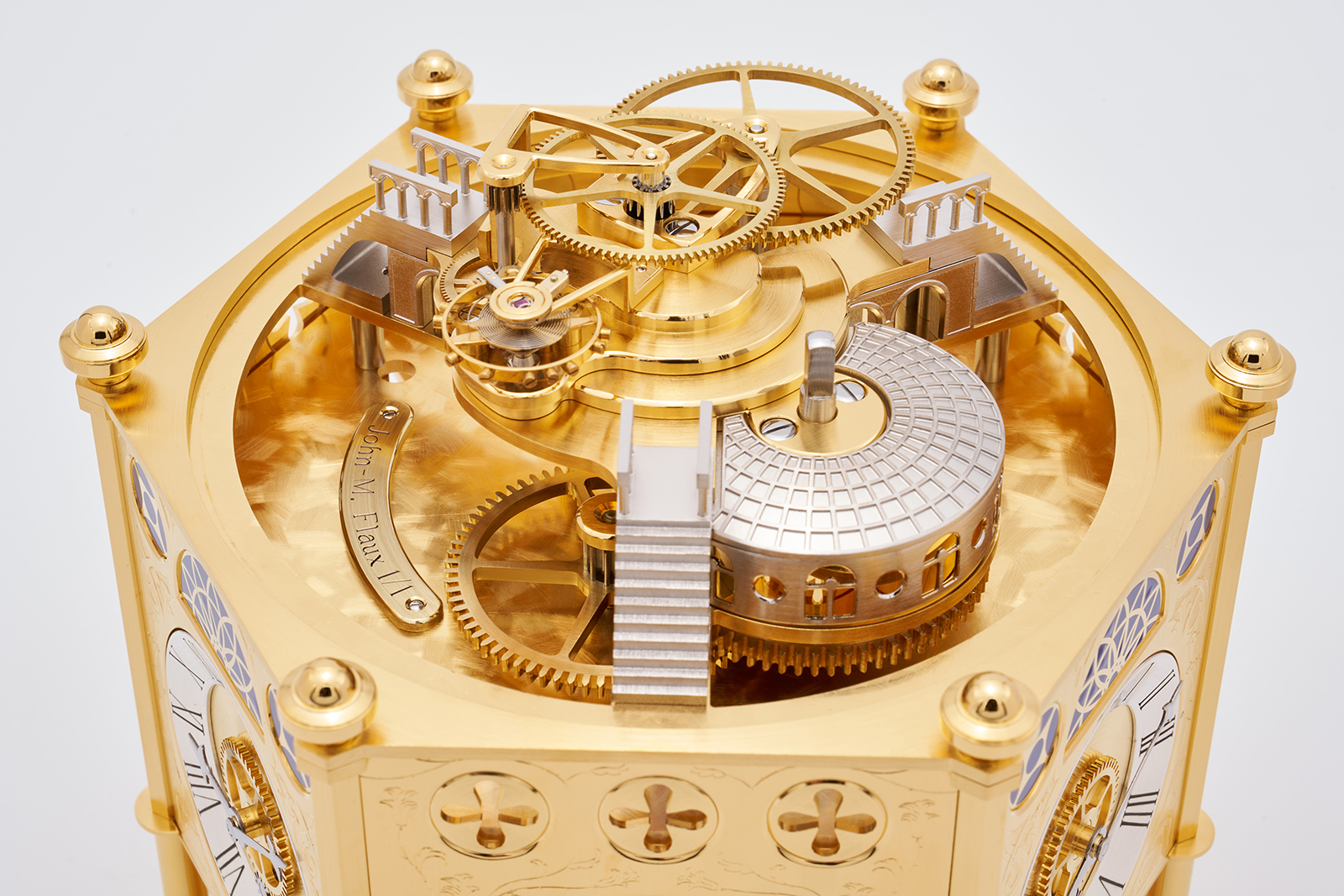
The bulk of the P30’s going train rests on a radius bridge, supported by three silver stair-shaped pillars. Flights of stairs are another Venice trope, as the bridges are raised way above the sidewalk level so visitors are required to climb their fair share of stairs.
The compact movement is shaped a little like an Italian palazzo, with small engraved doors guarding the going train. The silvered barrel cover is sculpted with a window motif, further emphasising on the notion of architecture as clockwork.
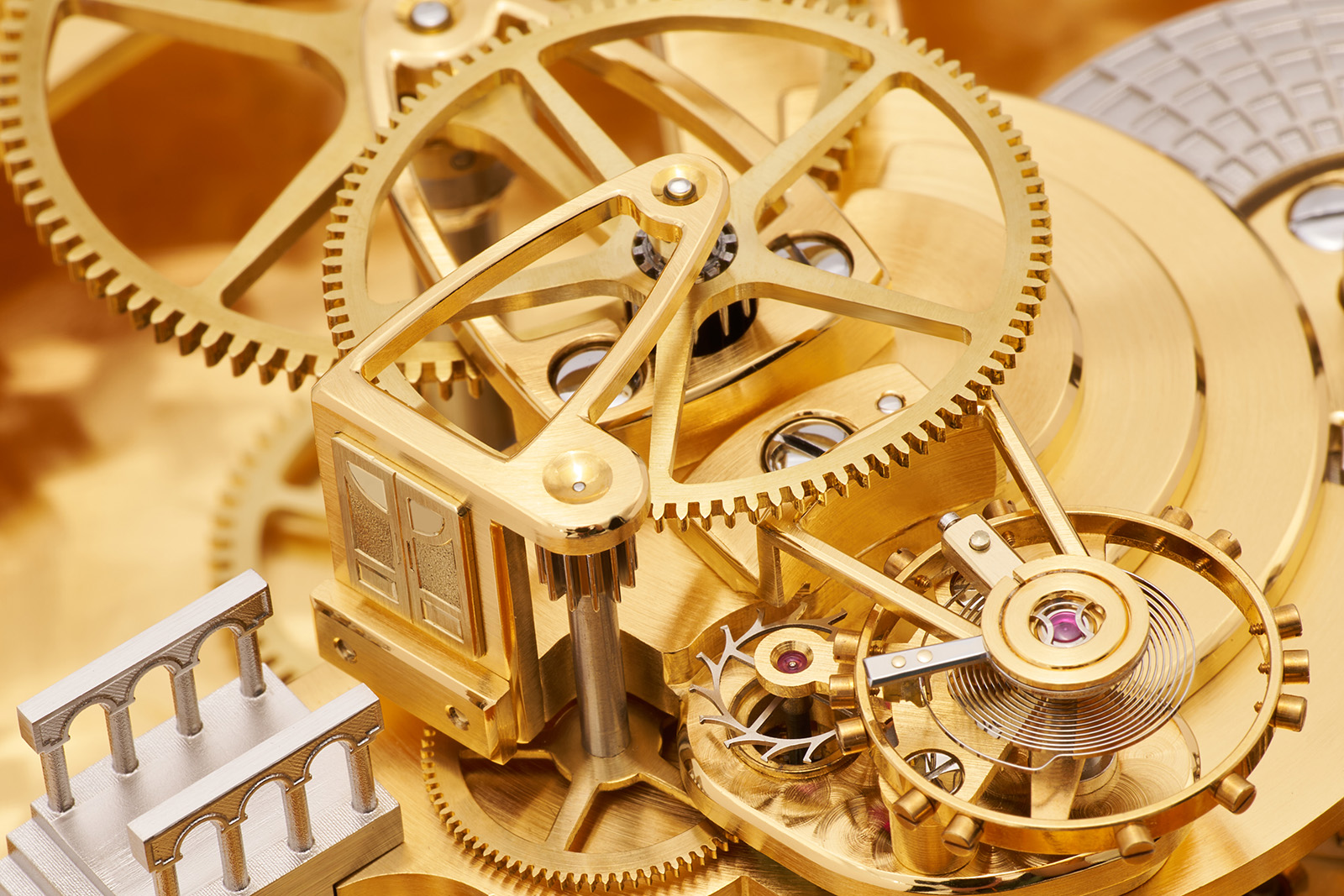
In terms of actual clockwork, the P30 movement is as traditional as they come — which is a good thing. Mr Flaux resorted to a very limited use of ruby jewels, opting for very basic brass bearings for the bulk of the going train. Ruby jewels are employed only for the escapement (escape wheel and anchor) and for the balance wheel.
While it lacks some of the chronometric features that would be expected in a wristwatch at this price point — like a free-sprung balance and overcoil hairspring — clock escapements operate in a much more stable environment, and only need to be adjusted in one position.
That said, the escapement is quite small relative to the design of the clock, suggesting it employs some off-the-shelf components. A larger bespoke escapement would have produced a bigger visual impact.
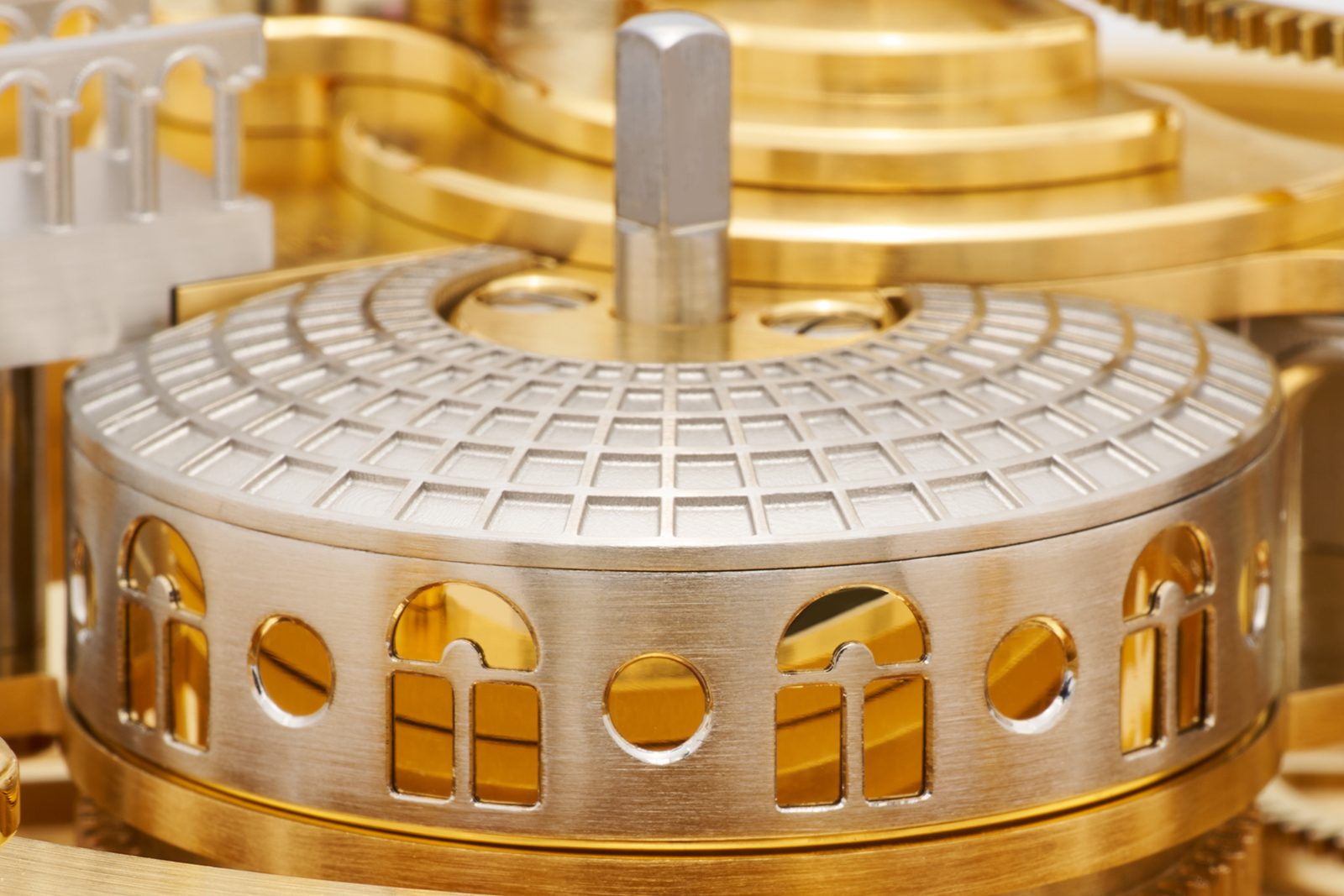
The ornate barrel cover, with a 10-day mainspring inside.
The large wheels of the going train are manufactured in the classic way, with a restored gear-cutting machine from 1925. The teeth are shaped with textbook cycloidal profiles with a flat bottom — very similar to how Breguet and his peers used to shape their gears. While modern watchmaking relies on either simplified cycloids or variants of involute profiles, Mr Flaux chose to go the extra mile and cut his gears the time-honoured way.
The P30 movement can hold a charge of 10 days, which is not surprising given the oversized barrel. Charmingly, the clock is wound using a special key. The system is very straightforward, with the key’s square section docking with the large mainspring arbour.
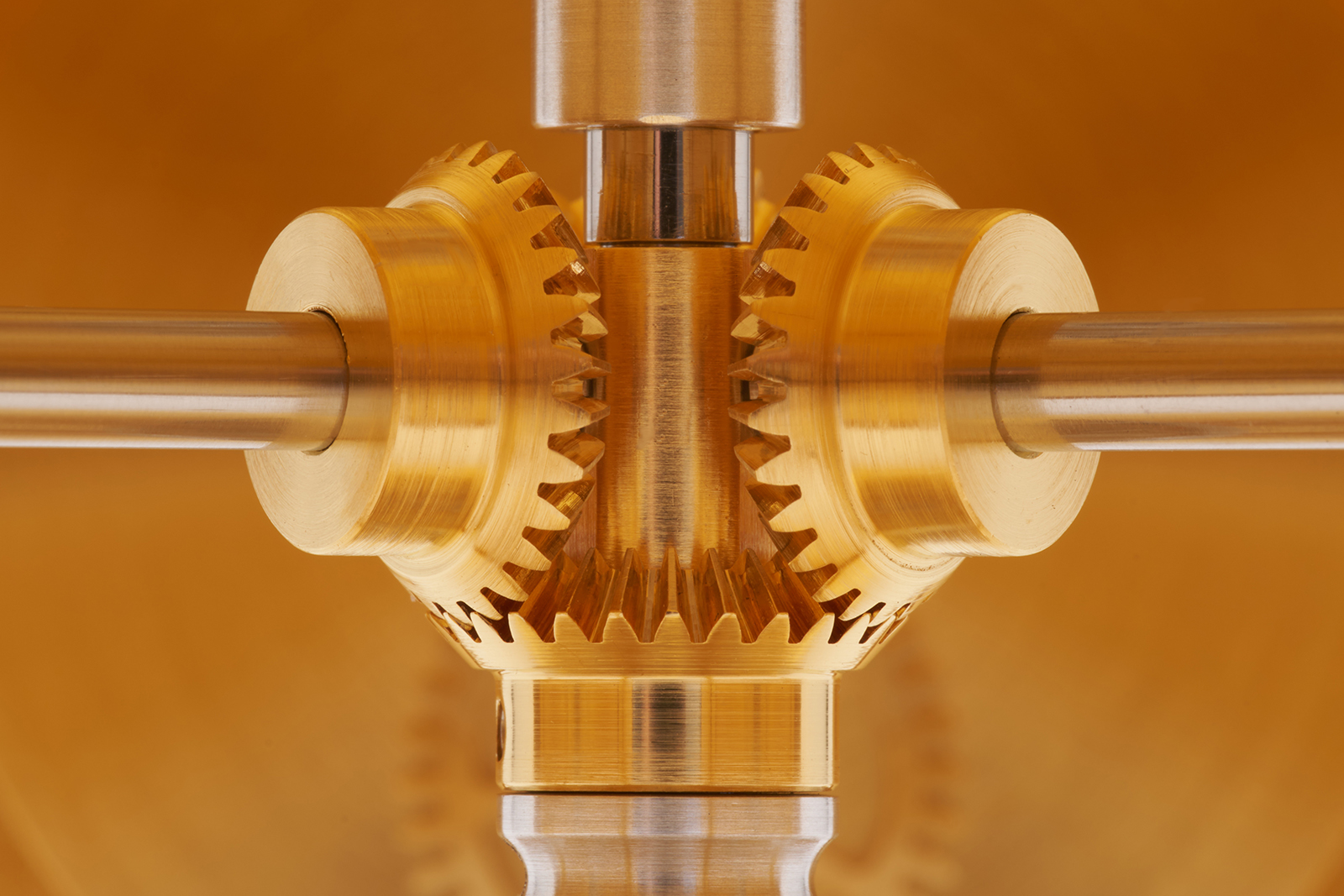
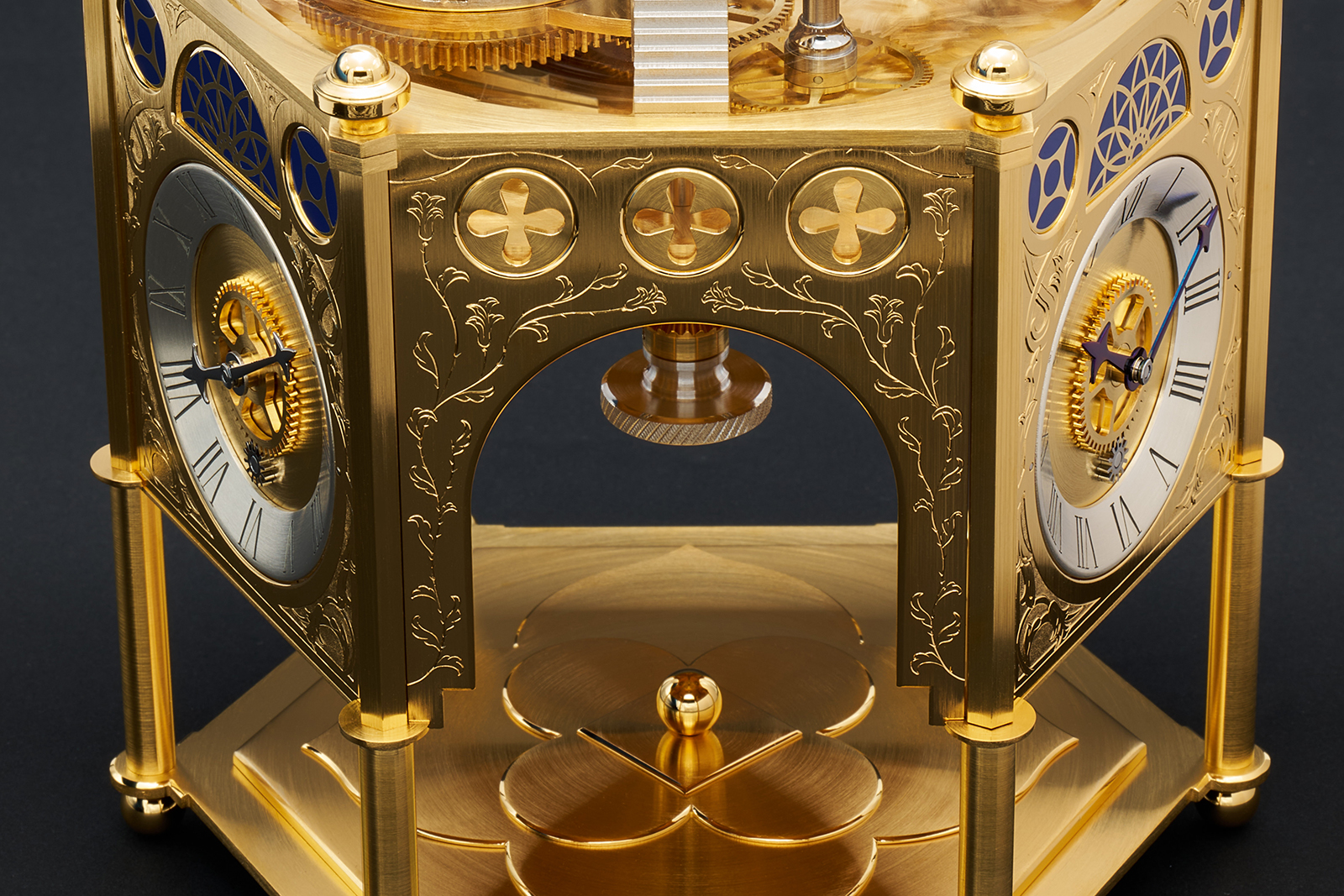
The time display is relayed using a conical gear set, which sends information to the three silvered dials. The “reference” time is indicated by blued hands, and the three dials can be set in sync using a central knurled knob, or individually. The open construction allow the hour and minute gears which carry the hands to be visible on each dial.
The entire clock stands moderately tall at 18 cm and has a diameter of 14 cm at the base. Presumably the “diameter” in question is the distance between two opposing corners of the hexagon.
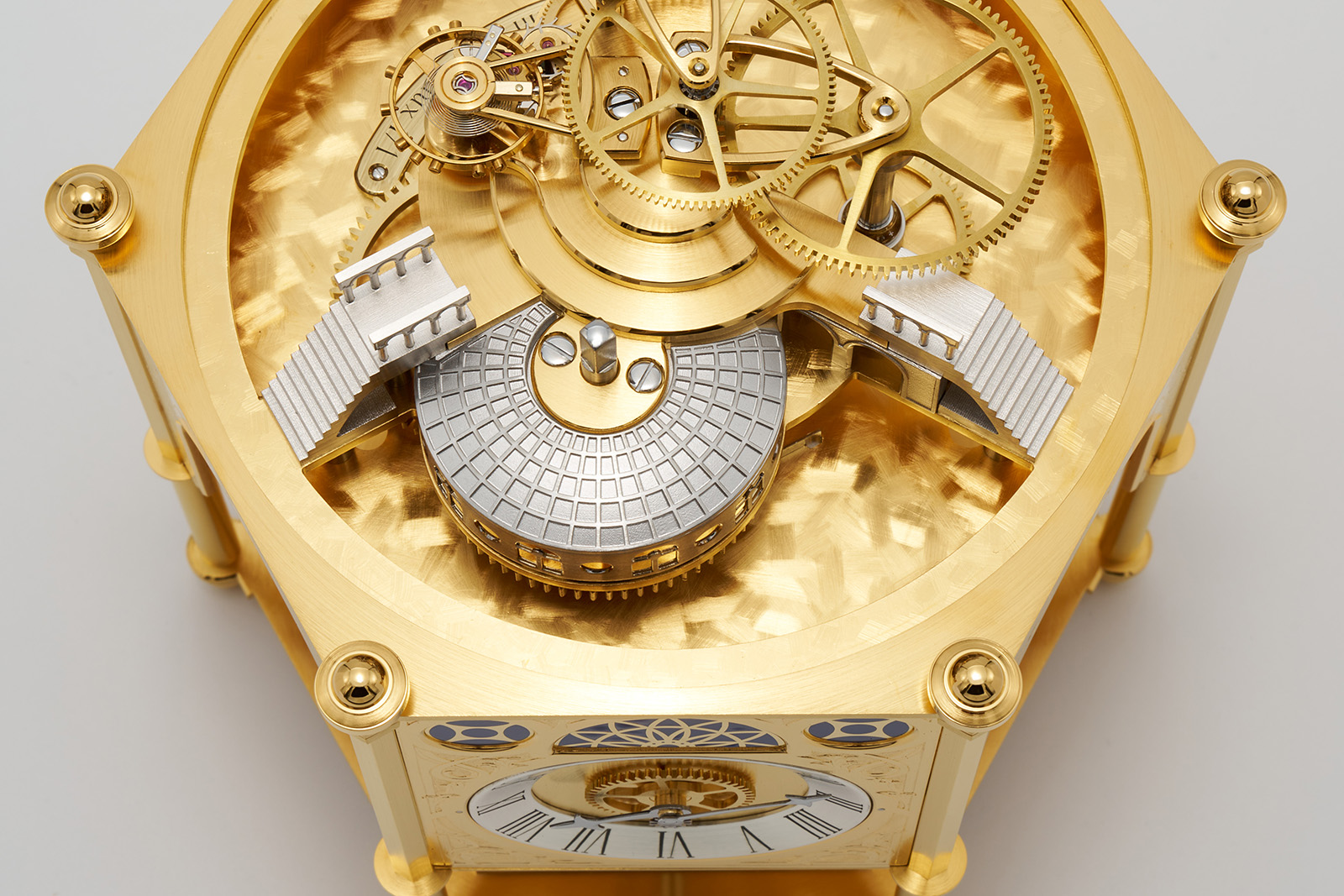
The clock is crafted from brass but the shiny gilded finish is given by 3N gold plating. The three silvered dials are hand-engraved by Remi Bultor, a young and talented French engraver.
Although the clock’s body structure is pretty straightforward, it encapsulates many details reminiscent of Venice and its distinctive buildings.
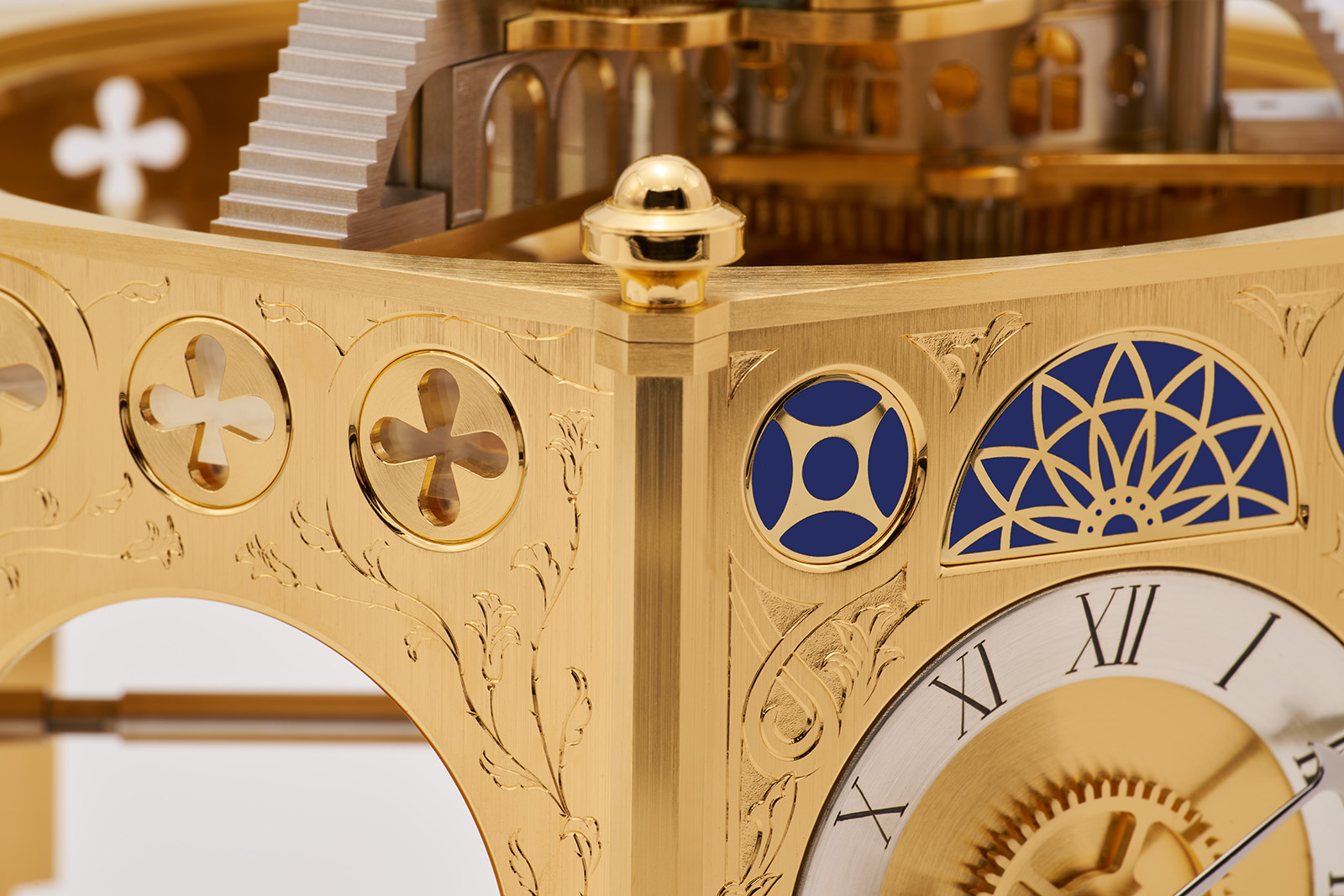
The rounded cross cutouts are a direct inspiration from Doge’s Palace ornate cross-loops and masonry. The engraved Venetian lace motifs strongly remind of the city’s famed masked balls and finally the blue patterns above the dials are a clear nod to Venetian windows.
Key facts and price
John-Mikaël Flaux La Villa d’hOro Clock
Dimensions: 18 cm by 14 cm
Material: Brass plated with 3N yellow gold, silvered dials, glass dome.
Movement: In-house p30 movement
Functions: Hours and minutes, multiple timezones
Winding: Manual-winding
Power reserve: 10 days
Limited edition: Piece unique
Availability: Directly from John-Mikaël Flaux
Price: €79,000 excluding taxes
For more, visit Johnmikaelflaux.com.
Back to top.