

Ferdinand Berthoud, Inverted: the Chronomètre FB 2TV.1
The debut of the Mesure du Temps 1787 collection.
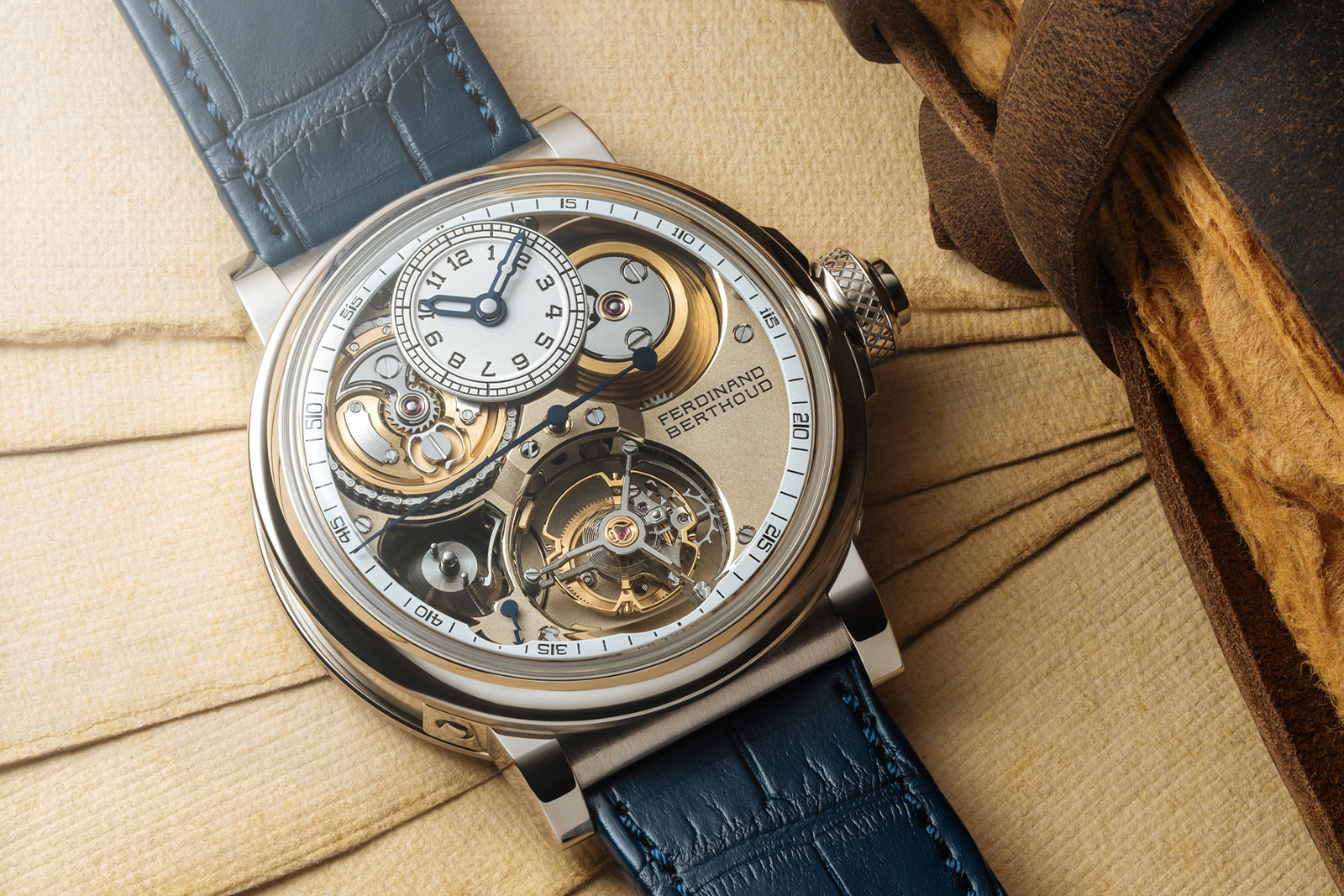
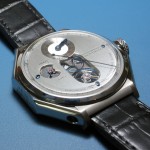
Ferdinand Berthoud (FB), Chopard’s haut de gamme sub-brand, introduces its first flying tourbillon just weeks before Watches & Wonders. The Mesure du Temps 1787 Chronomètre FB 2TV.1 is exceptional in both quality and price, presenting almost everything of interest on the dial side — chain and fusee included — along with hacking and zero-reset seconds. The dial-side spectacle will be the calling card of the new Mesure du Temps 1787 collection.
Initial thoughts
The revival of long-dead masters’ names to sell unrelated watches is a practice that invites scepticism — and often deserves it. The Ferdinand Berthoud brand, however, is a different matter. There is nothing cynical about it, and one suspects the man himself wouldn’t mind being associated with some of the finest mechanical watches being made today — in his home town, no less.
A different name on the dial, Scheufele perhaps, might still feel more authentic, but that’s a minor quibble with what is otherwise an overwhelmingly high quality watch.
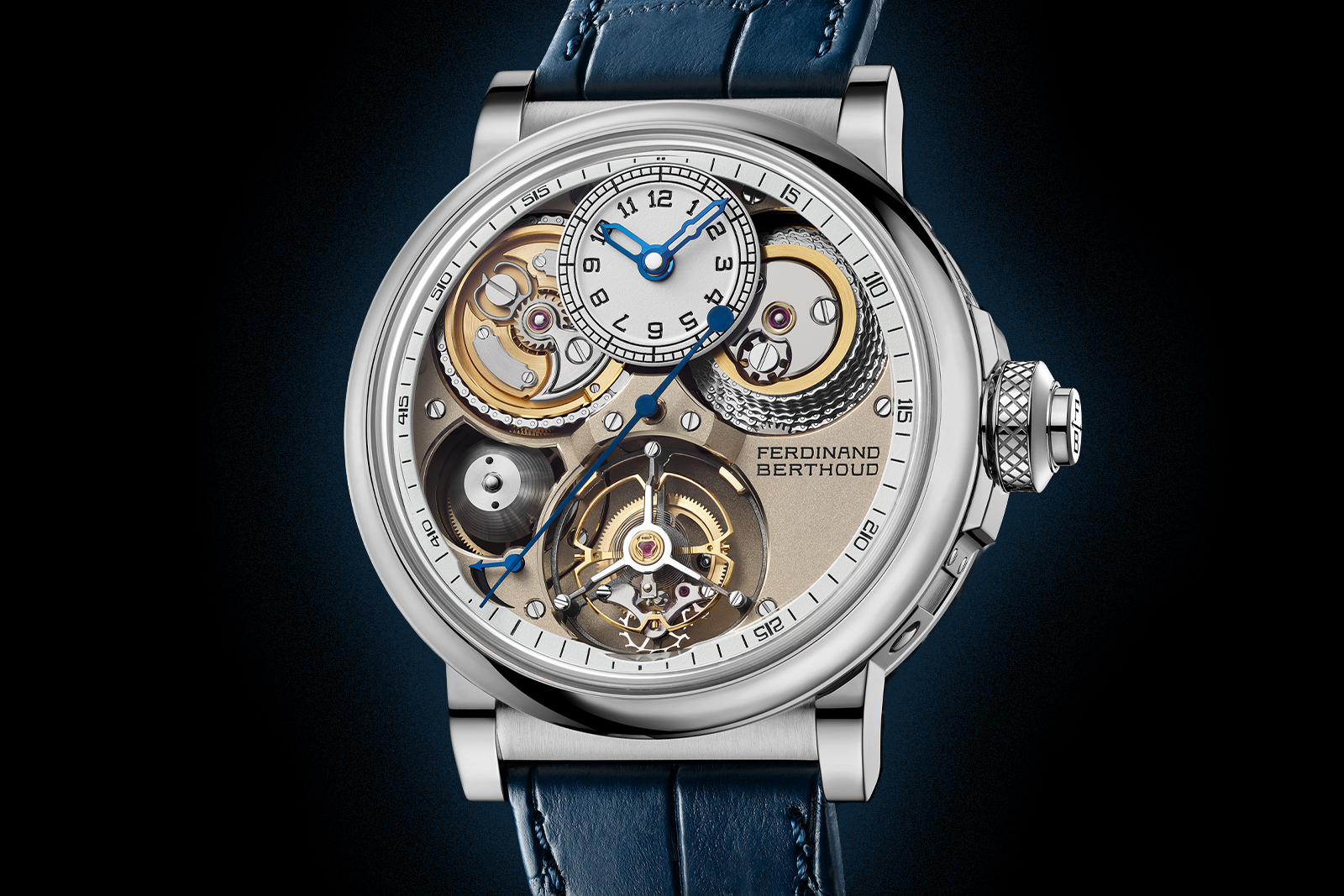
The latest take on the brand’s chronometer-inspired formula adds one of my favourite features: a zero-reset seconds hand. Though I prefer the designs of the brand’s past projects, the FB 2TV.1 suggests the team at FB understands what the market wants, and the movement-as-a-dial aesthetic is hot right now.
The flying tourbillon is new for the brand, in both technique and aesthetics. Until now the brand’s massive revolving regulators were secreted away on the case back; dial side tourbillons may be a cliché, but if there ever was a justification for one, this is it.
Simplified case
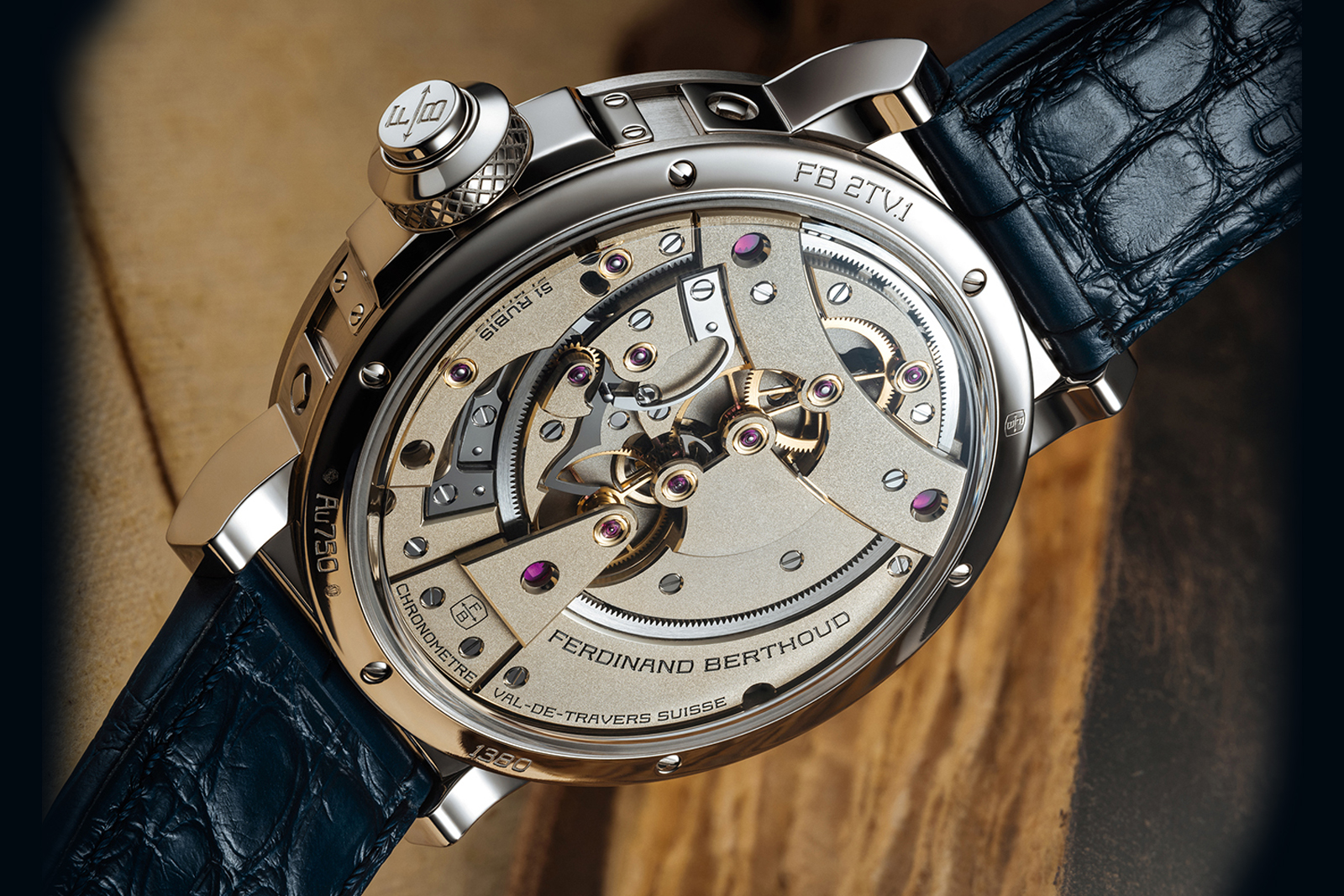
The lavishly detailed case derives from the work of Berthoud himself, but has been toned down compared to some of the modern brand’s earlier outings. It also loses the sapphire crystal display ports in the side, which previously allowed close observation of the side of the fusee. Now that so much of the movement is revealed on the dial, the case band windows are no longer needed.
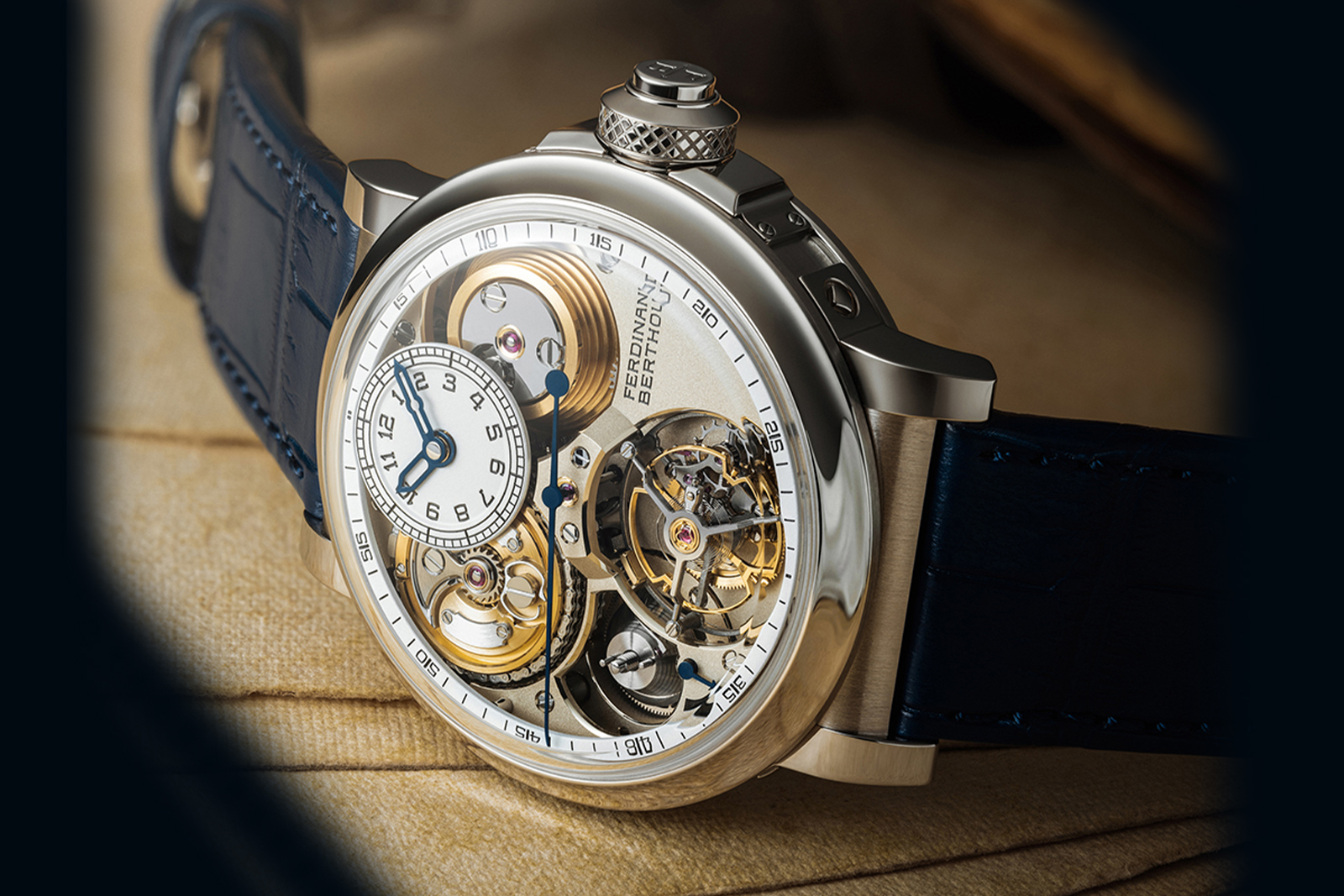
The 44 mm ethically sourced white gold case is wide and tall to fit the massive calibre, which is 35.6 mm in diameter, putting it well into what was once considered pocket watch territory, which is needed to contain the movement’s decadent decoration and advanced feature set.
Terraced tourbillon
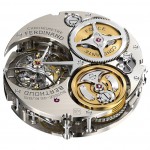
With the upper bridge eliminated and the movement flipped, the calibre FB-TV.FC’s massive tourbillon is on full display. The beryllium copper balance wheel is oversized at 11.2 mm, despite being contained in a tourbillon cage. For the sake of comparison, the balance wheel of an ETA 2824 measures only 8 mm. The large balance wheel if free-sprung on an overcoil hairspring, and runs at 3 Hz as is typical for traditionally minded high-end watches.
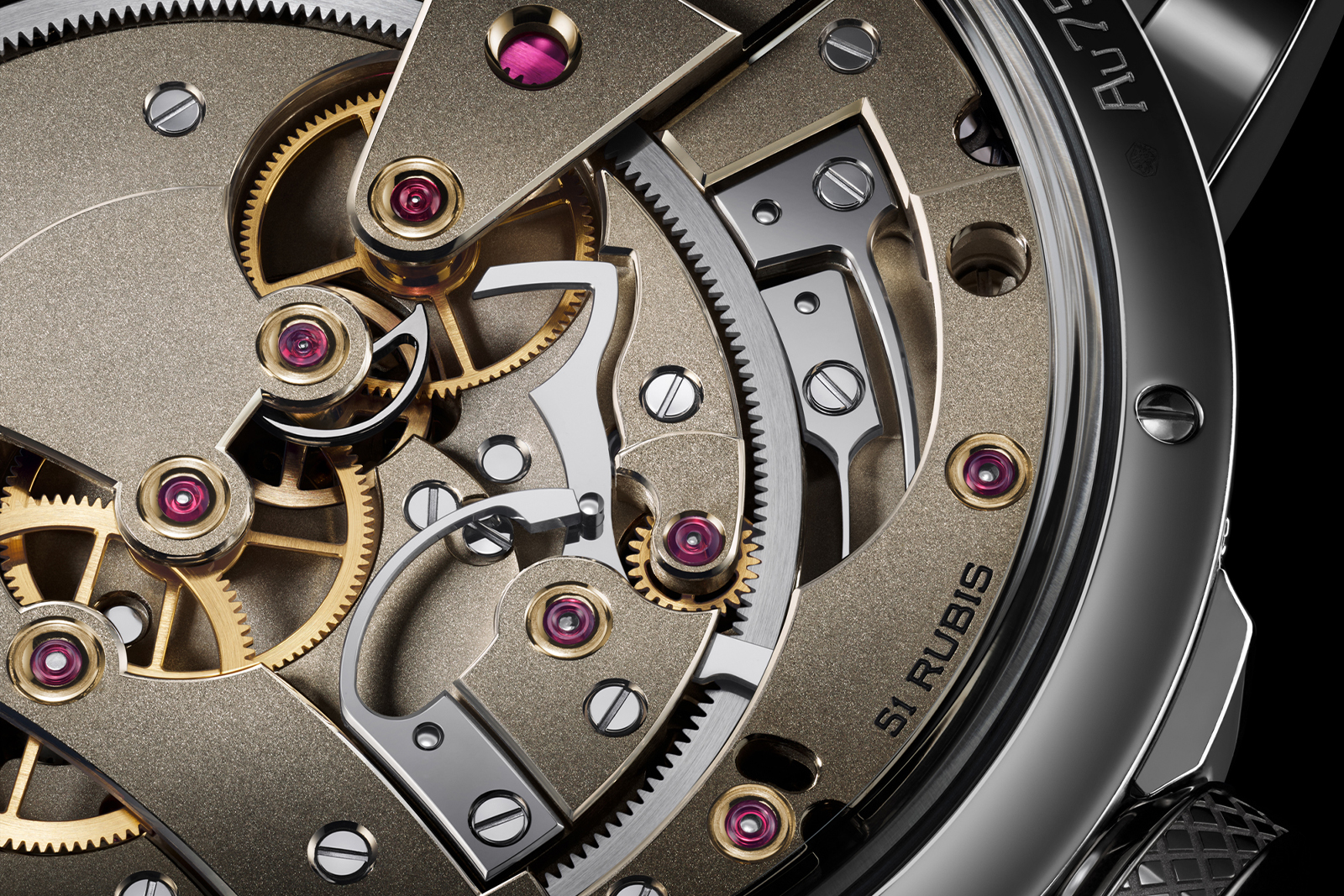
The movement is comprehensively hand-finished to exacting standards — 300 hours are required for the decoration alone, according to the brand. Traditional movement decoration exists in a curious tension with the present, as modern manufacturing makes it easy to replicate the former calling cards of handwork, something many collectors are not fully aware of.
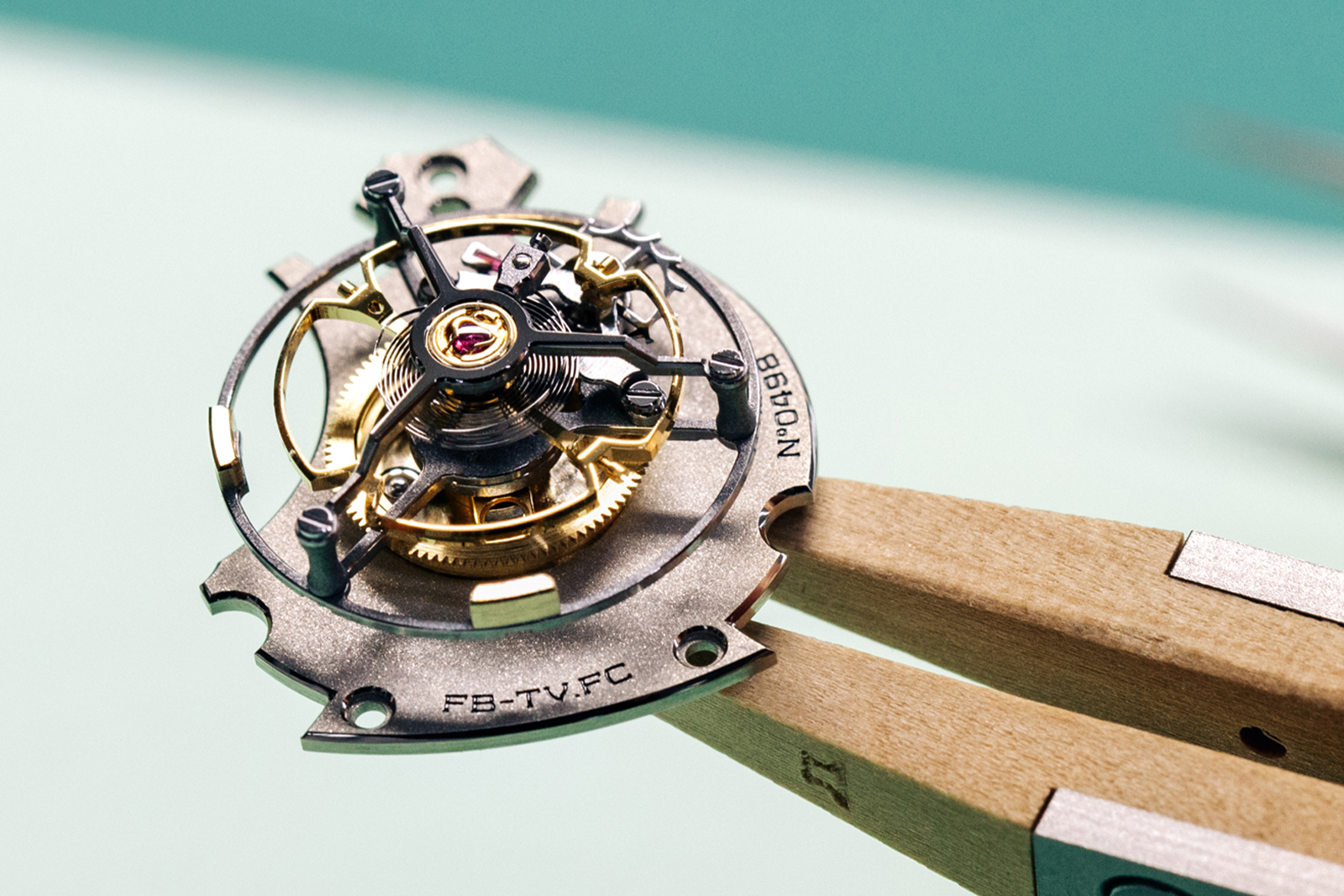
These interior angles, for example, are done the old-fashioned way, with metal files, then pegwood and abrasives. In contrast, brands offer watches with over 100 interior angles, but with less handwork.
One of the reasons that the FB brand manages to be convincing is due to the historical continuity expressed in the details. The top-quality oscillator, for example, and the terraced design of the cage, designed to accommodate the overcoil hairspring, are key traits of the great English tourbillons made during the late pocket watch era. It was even submitted to the contemporary equivalent of observatory testing, earning a chronometer certification from COSC.
Revised chain and fusee
The chain and fusee system is incredibility similar to the gear-changing mechanism on a bicycle in both appearance and function, though, surprisingly, it predates the bicycle by centuries. In modern parlance, the mechanism shifts gears as the mainspring winds down, delivering relatively even torque to the train over the entire power reserve.
The chain is comprised of 465 stamped links, and one hook, held together by 311 pins. Be warned: these chains are infamously fragile when shrunk to wristwatch sizes, and can be easily snapped by vigorous winding.
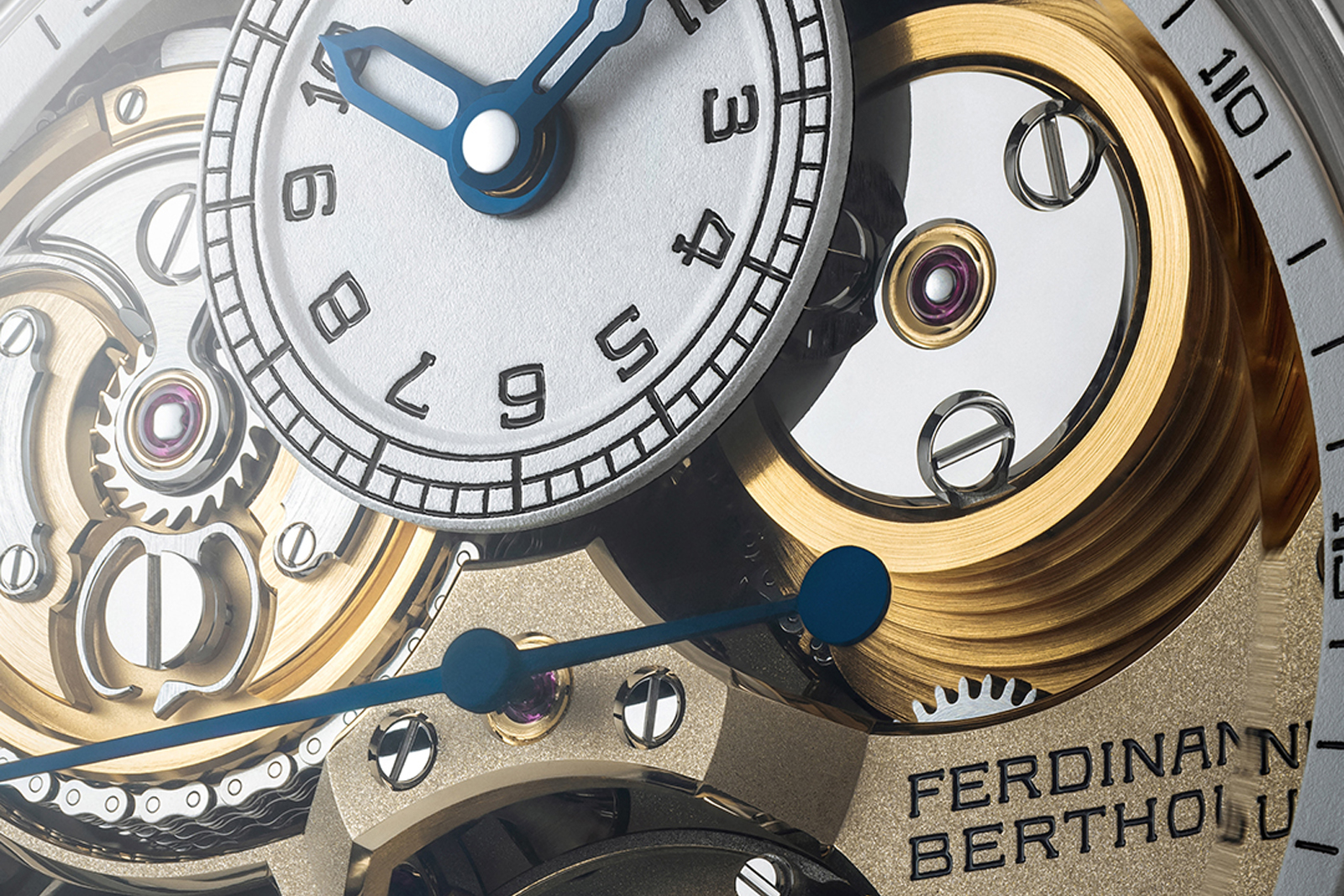
Compared to its earlier tourbillon calibres, FB has significantly reworked the movement, un-inverting the inverted fusee cone of previous calibres, adding a double-Maltese cross stop-work, and updating the maintaining work.
These, among other changes, add up to a more efficient and performant movement that will run for a full 60 hours (up from 53), has a flatter torque curve, and takes about 10 fewer turns of the crown to wind to full from a dead stop.

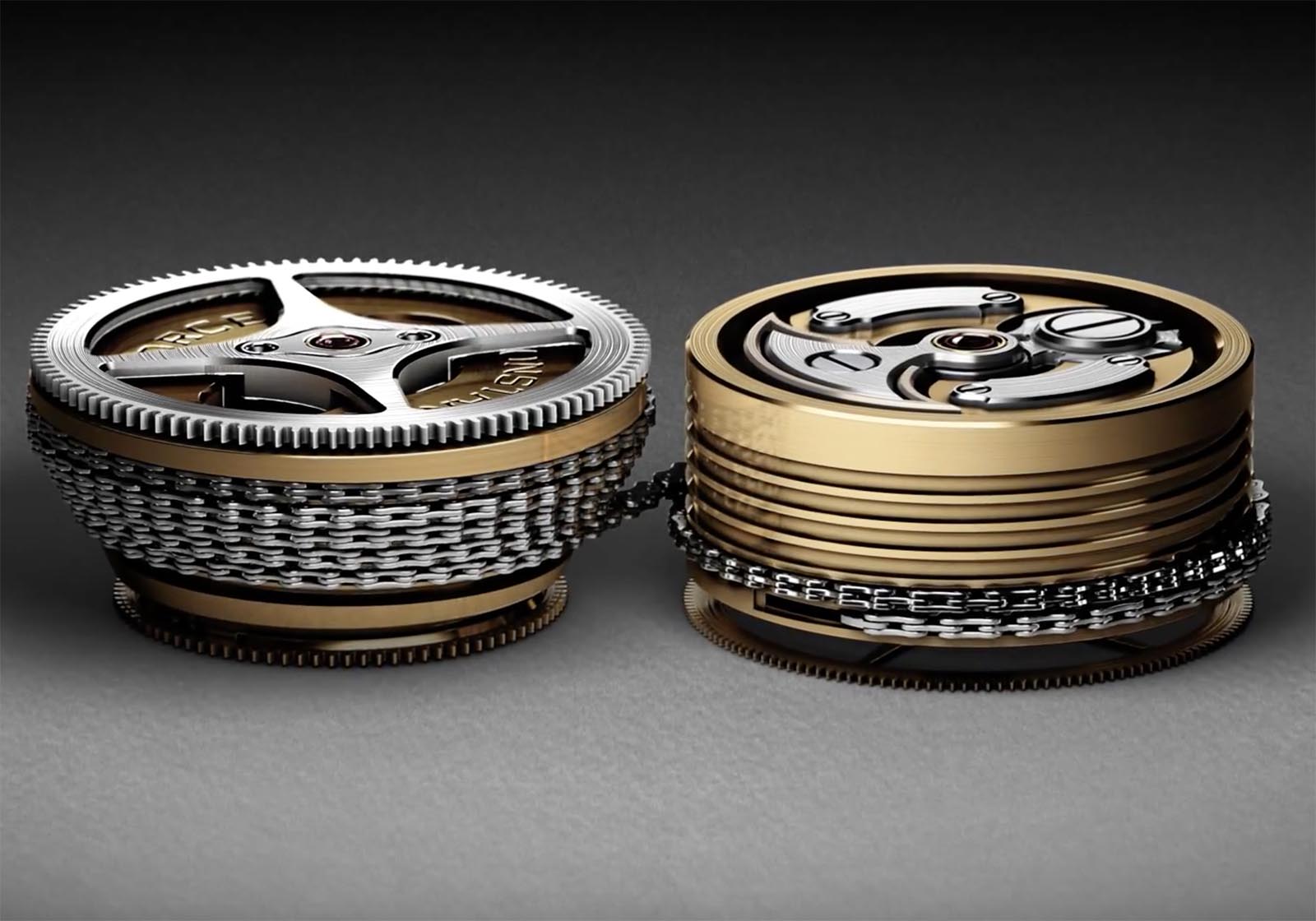
The first iteration of the brand’s chain and fusee.
The mainspring of a normal watch is wound from one end while the other drives the movement, but with a chain and fusee, both winding and driving must be resolved from the same end — winding reverses the chain onto the fusee cone. This requires some means of maintaining power to the train during the process; here, FB uses a differential system.
Zero-reset
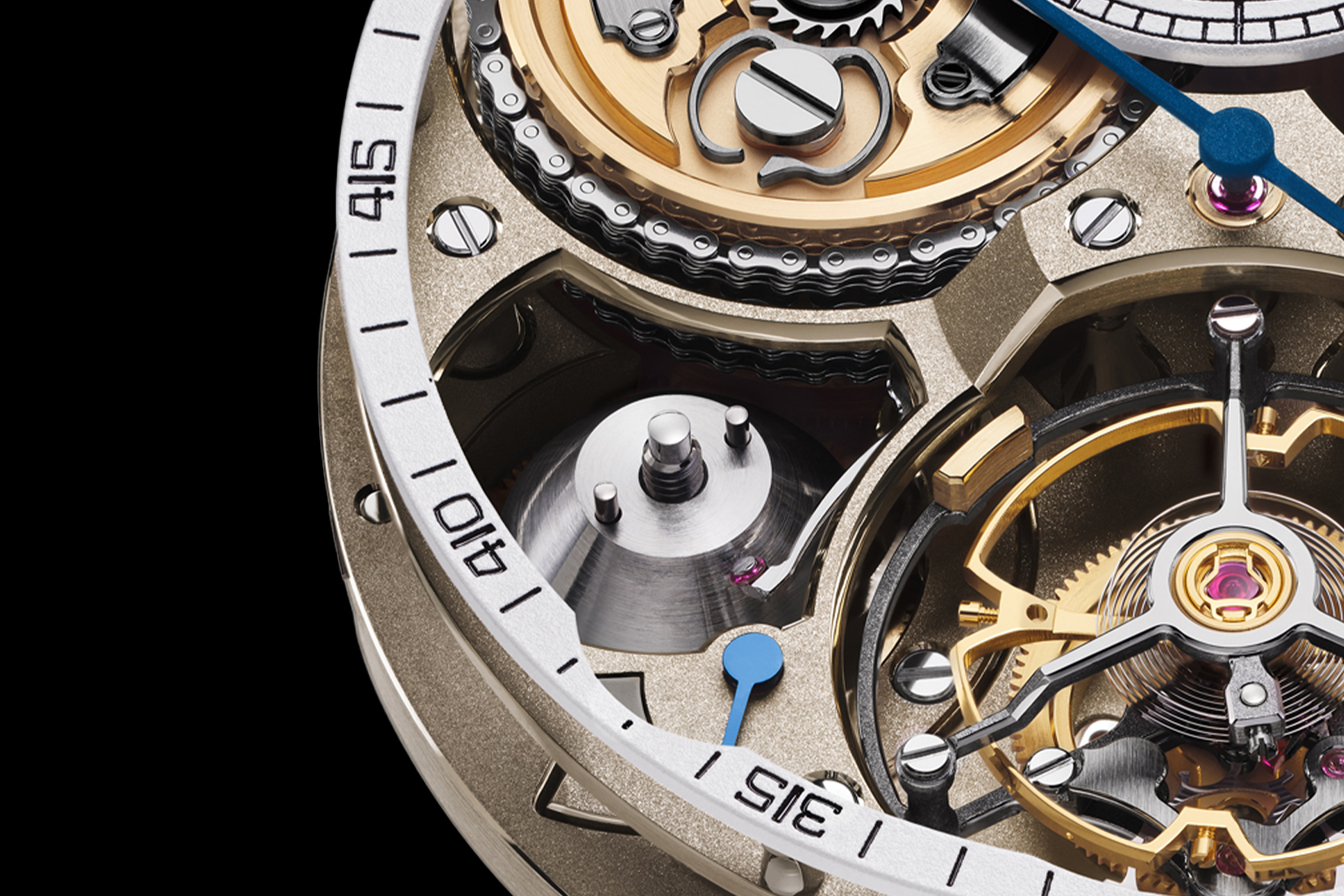
The flying tourbillon and elaborate chain and fusee are not the only special features of the FB 2TV.1 — the power reserve also commands attention. Rather than a modern planetary or ball-bearing differential, the FB 2TV.1 uses the more visually striking cone and feeler system.
Winding the watch raises the cone, displacing the ruby-tipped feeler that controls the power reserve indicator. As the mainspring runs down, the cone descends, driving the indicator arc accordingly.
Pulling the crown out to set the time halts the seconds hand — standard practice for fixed-escapement watches, though notably rare among tourbillons — but the FB 2TV.1 adds another, less common feature. Depressing the crown sends the seconds hand flying back to zero, restarting once the crown is released.

This allows the watch to be synchronised to a time reference with the seconds zeroed — or pressed into service as a rudimentary chronograph, much as with the Rolex Zerograph.
The zero reset works.
Key Facts and Price
Ferdinand Berthoud Mesure du Temps 1787 Chronometre FB 2TV
Ref. FB 2TV.1
Diameter: 44 mm
Thickness: 15.46 mm
Material: 18k white gold
Crystal: Sapphire
Water resistance: 30 m
Movement: FB-TV.FC
Functions: Hours, minutes, seconds, power reserve indicator, chain and fusee, flying one minute tourbillon, zero-reset seconds.
Winding: Hand-wind
Frequency: 21,600 beats per hour (3 Hz)
Power reserve: 60 hours
Strap: Alligator with matching white gold folding buckle
Limited edition: No
Availability: At boutiques and retailers
Price: EUR382,000 (~US$442,000) excluding taxes
For more, visit Ferdinandberthoud.ch.
Back to top.