

Omega Reinvents the Constellation
The dressy and capable Observatory.
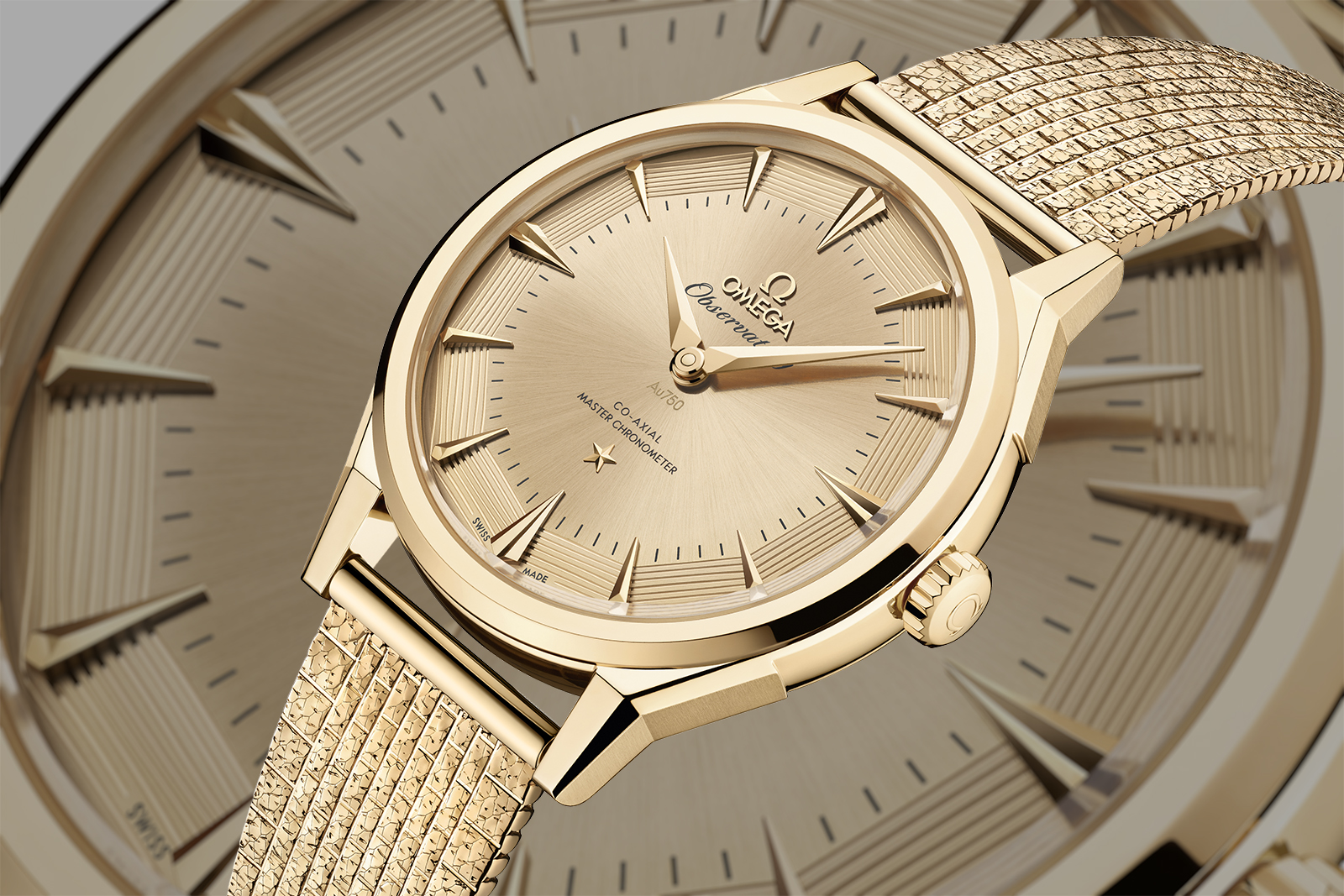
Omega expands its dress line with the elegant Constellation Observatory. Meant to pay tribute to the manufacture’s illustrious past, the collection revives the long-awaited pie-pan dial that devotees have championed for years, representing a strong bid from the Bienne-based manufacture to reassert itself in the dress watch market.
Initial thoughts
While Rolex has made a decisive entry into the dress watch market with the 1908 collection, Omega’s efforts in the category have been less cohesive and less successful. The contemporary Constellation’s integrated bracelet design differs from what most expect from a dress watch, while the De Ville line suffers similarly — handsome enough, but lacking the distinctiveness that serious dress watch collectors expect.

The new Omega Constellation Observatory collection.
Then there is the Globemaster, which incorporates classic elements like the Pie-Pan dial and fluted bezel. While handsome, the awkwardly thin fluted bezel makes the Globemaster a forgettable collection within Omega’s broader line-up.
In this context, the Constellation Observatory is a serious effort that captures much of the magic of one of Omega’s most beloved historical designs, namely the Constellations of the 1950s and 1960s. The look is not too dissimilar from last year’s successful limited edition Seamaster 37 mm Milano Cortina.
With the Observatory, the pie-pan dial has made a welcome return — refined but faithful — paired with a vintage-inspired case whose angular lugs break away sharply from the thin band. When I first saw the Observatory, my mind went to the limited-edition De Ville of 1999: the watch that introduced the cal. 2500, the first serially-produced co-axial movement.
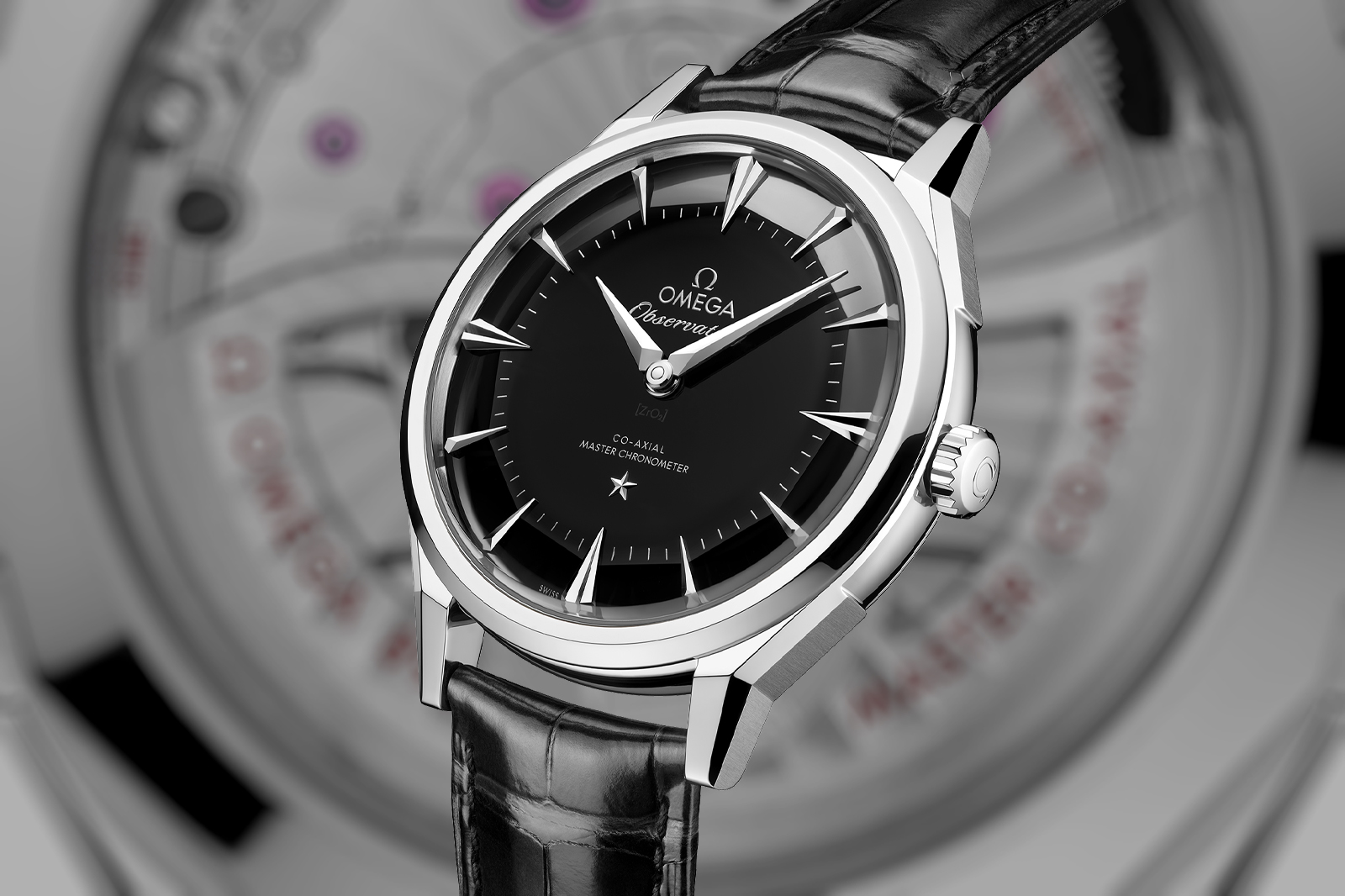

The connection to the 1999 De Ville runs deeper than shared design cues. The Observatory is also a statement of technical and chronometric ambition — precisely the qualities that defined Omega’s first co-axial watch a quarter-century ago.
Curiously, the Observatory carries no seconds hand — a strange omission on a watch that is Master Chronometer certified and wears the word “Observatory” on its dial. Seconds hands are synonymous with precision, or at least the appearance thereof, which makes Omega’s decision to omit one all the more intriguing.
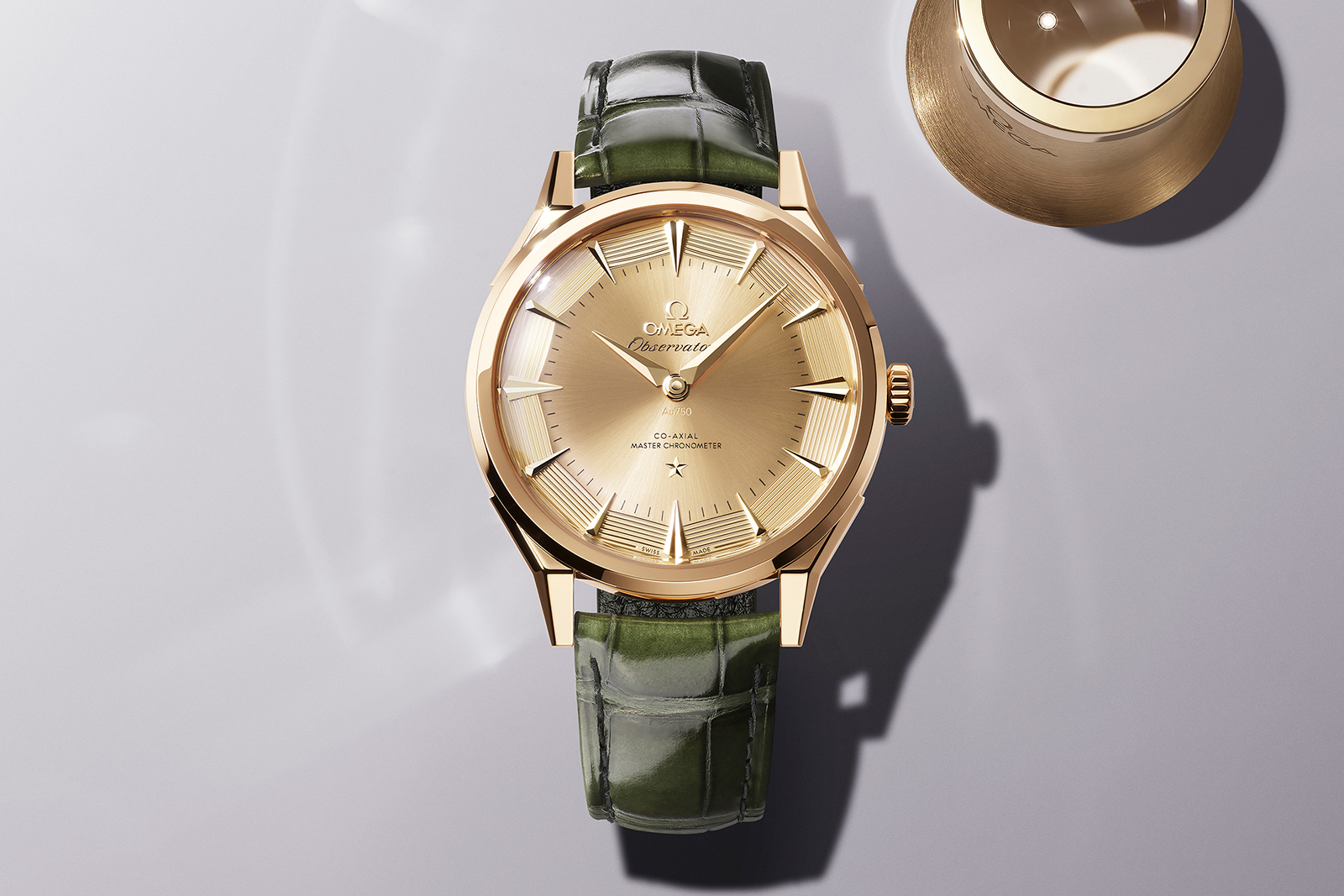
The new line launches in four of Omega’s proprietary alloys: 18k Moonshine yellow gold, 18k Sedna pink gold, 18k Canopus white gold, and the newly introduced O-megasteel — the manufacture’s own take on stainless steel. The breadth of bespoke materials demonstrates the industrial prowess of Omega and the broader Swatch Group behind it.
For better or worse, Omega offers an extensive array of dial and strap variations — a breadth only made possible by the industrial muscle of the group. Whether it amounts to generosity or a paradox of choice is a reasonable question.
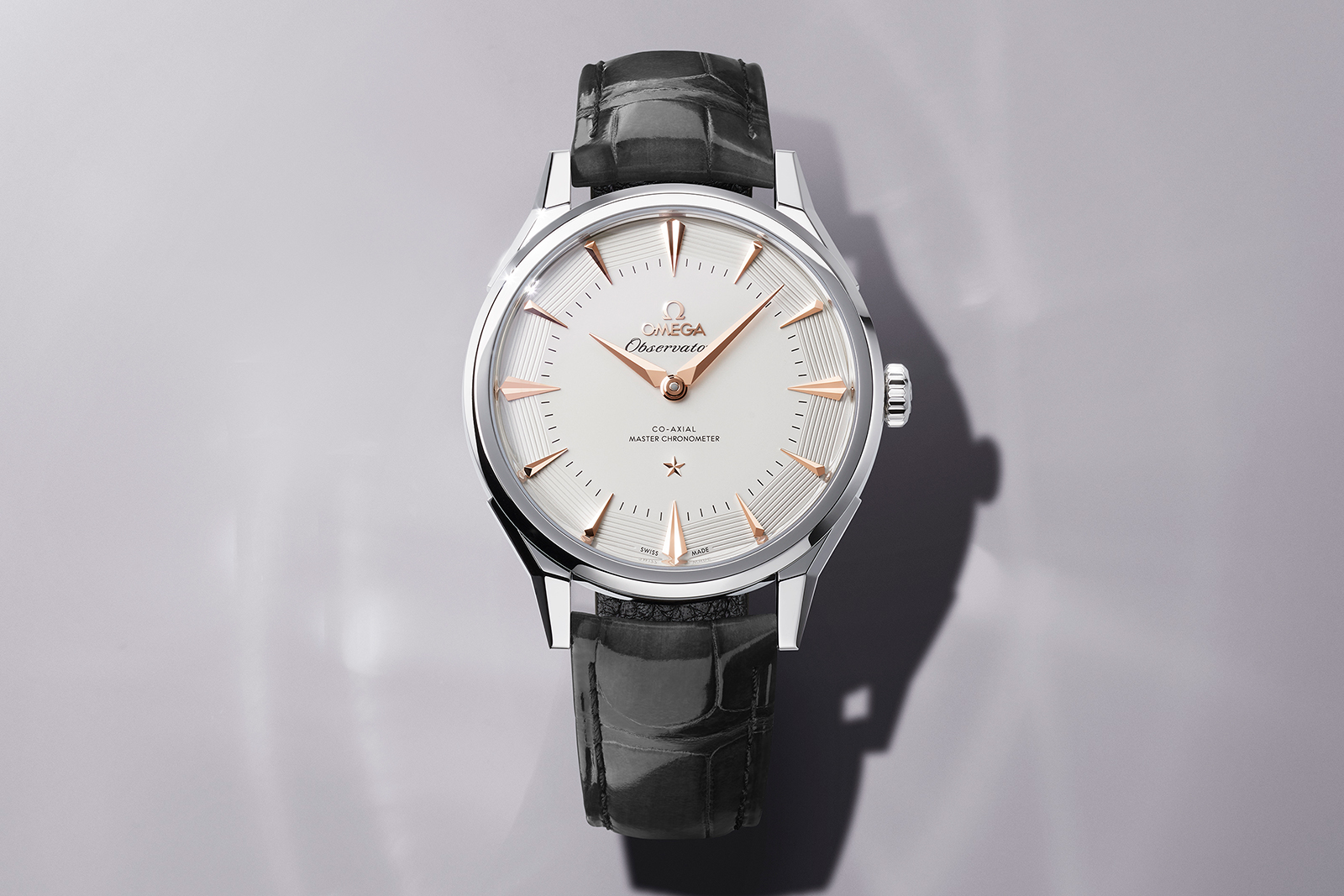
The Constellation Observatory borrows just enough from Omega’s vintage references while carving out a genuine identity of its own. For a brand whose modern reputation rests almost entirely on the Speedmaster and Seamaster, the Observatory is an encouraging sign that Omega’s creative ambitions extend beyond its blockbuster lines.
Old lines, new touches
The 1950s inspiration behind the Constellation Observatory is tangible, but certain details make all the difference. The 39.4 mm case is flanked by two pairs of sharply angular ‘dog-leg’ lugs that echo the classic Constellation profile of the 1950s, though with considerably more restraint. The lugs taper towards the strap attachment points and the case band is notably thin, lending the watch a lean, elegant profile.
The case is entirely polished across all metal variants, and the slim bezel draws the eye directly to the dial. In every configuration, the dial features the pie-pan design: a raised central sector ringed by angled trapezoidal sections that descend toward the indices, creating a pleasing sense of depth.
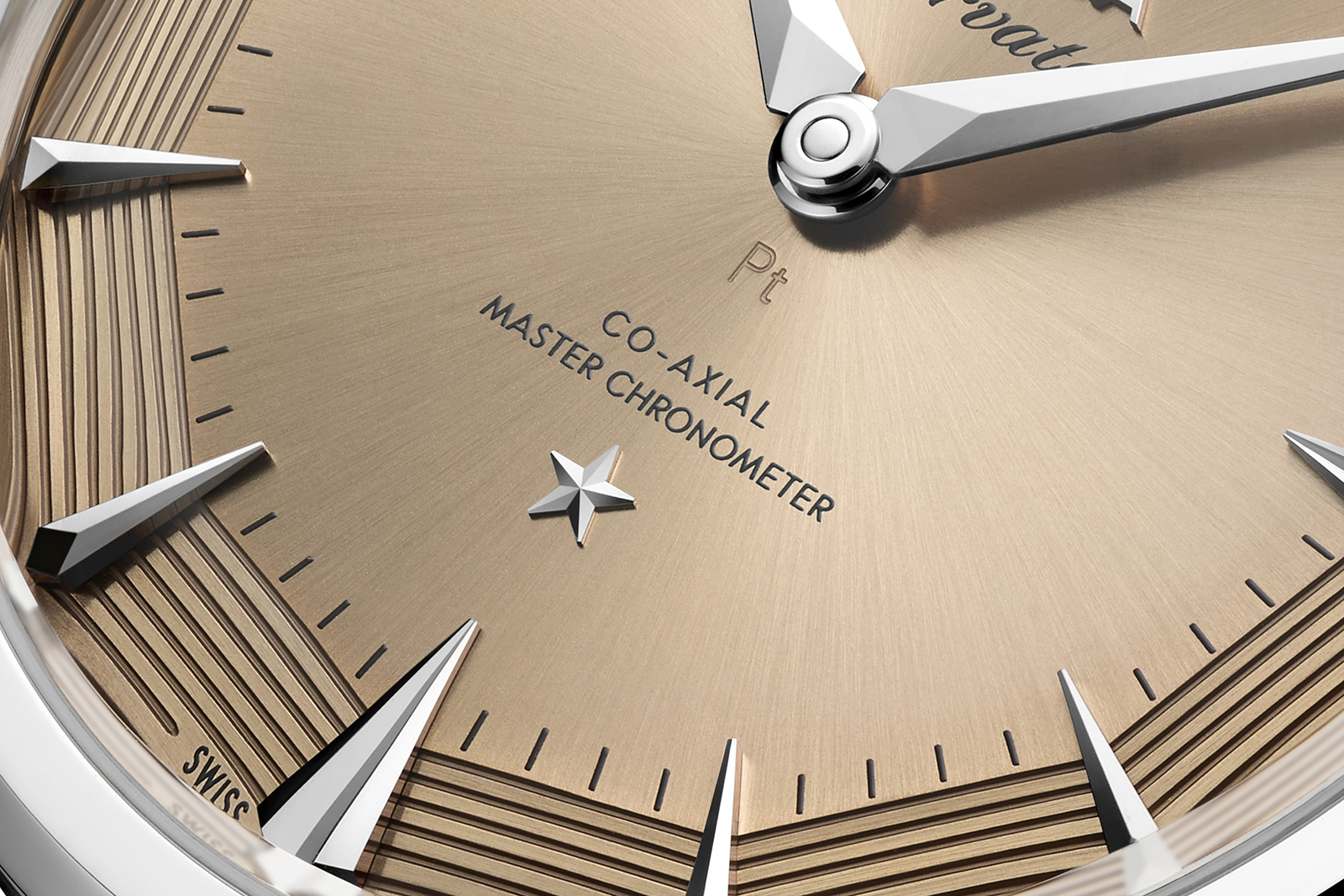
Close-up of the Pie-Pan dial, with the elegant engine cut pattern.
The modern reinterpretation adds an engine-turned pattern to the trapezoidal sections, lending the dial texture and depth. The eight lines of this smart pattern signify the eight star logo of the Geneva Observatory medallion used in the past by Omega. All configurations except the ceramic black dial feature this guilloché-style treatment. The pattern is applied with a traditional rose engine machine for the gold models and stamped for the steel-cased configurations.
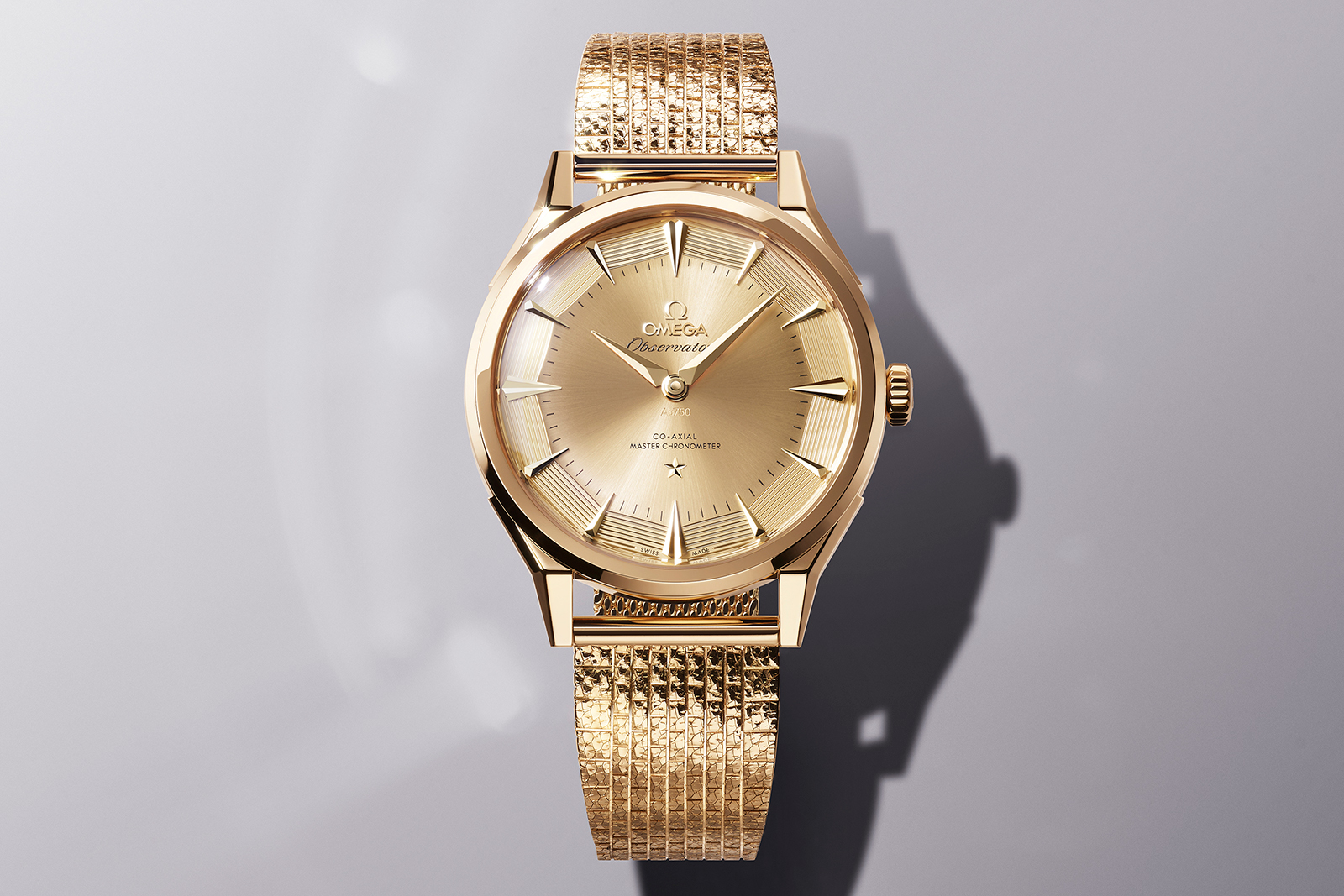
Among the strap options, the standout is a revival of the small brick-link bracelet from the original Constellation era. The execution is thoroughly modern — a solid gold mesh bracelet pressed with a nine-link motif that nods to the vintage original.
Familiar caliber, new testing
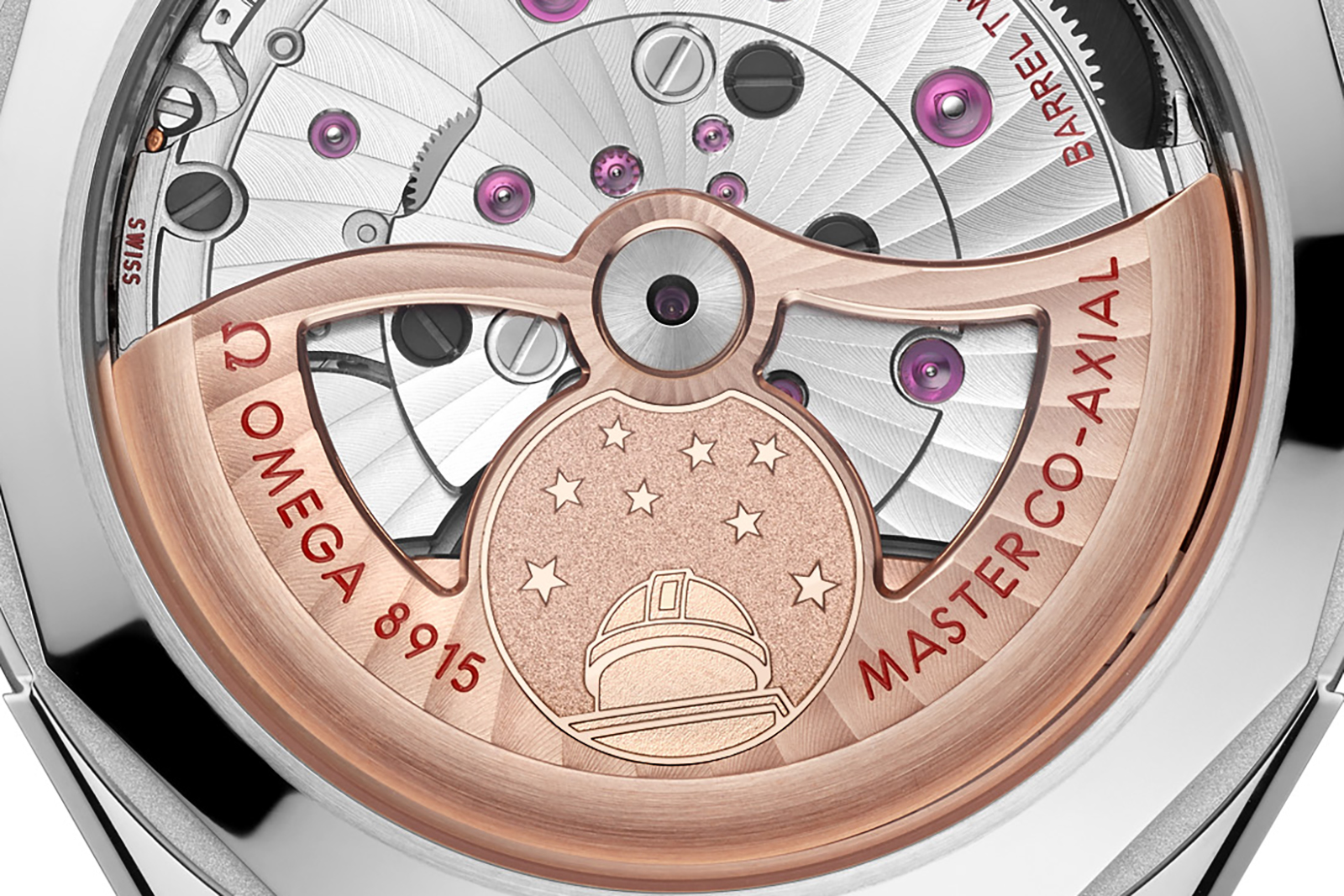
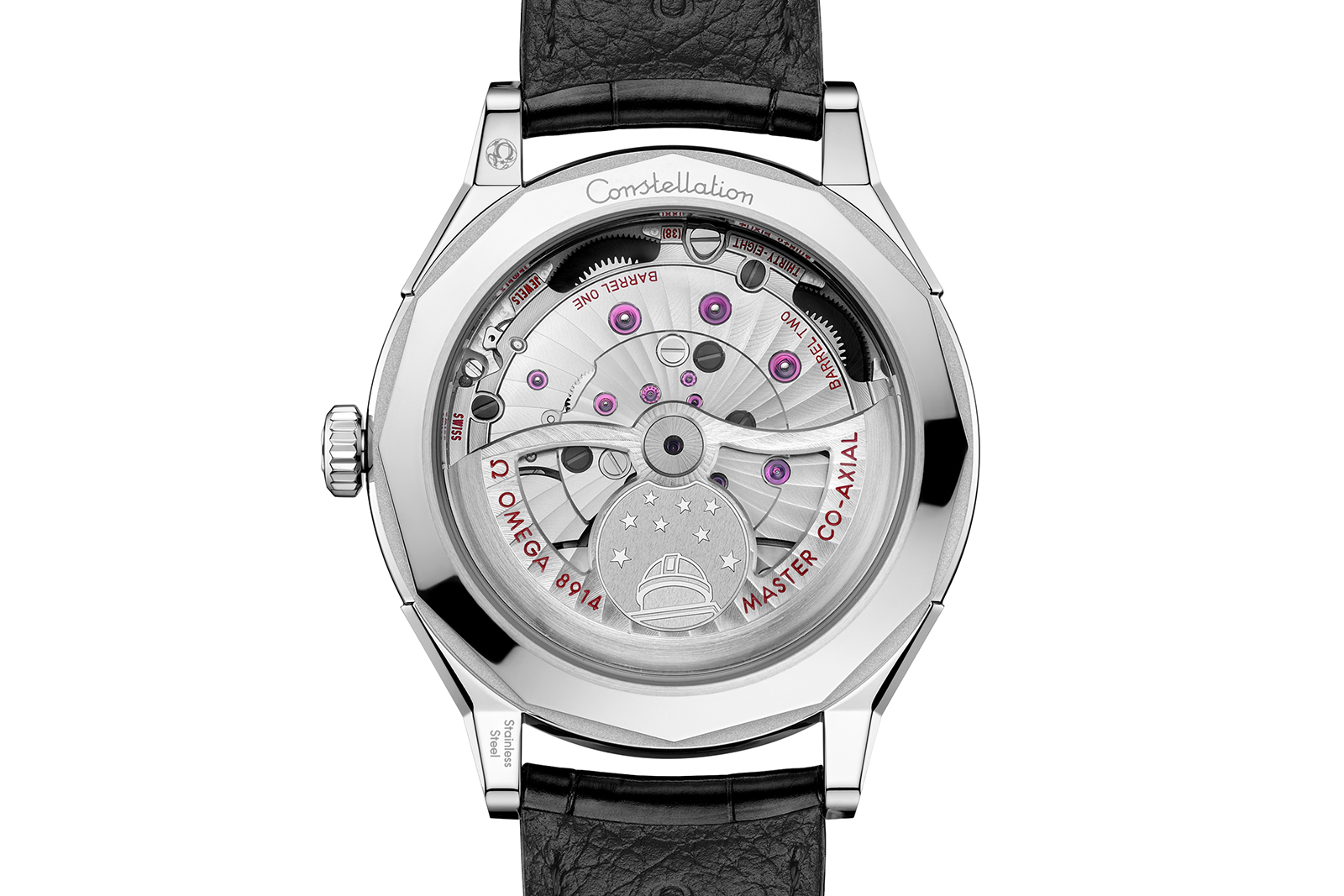
The new cal. 8914 and cal. 8915 power the collection, and are functionally identical. The distinction is cosmetic: the cal. 8915, fitted to the precious metal cases in “Grand Luxe” and “Luxe” configurations, features a solid Sedna gold rotor, while the cal. 8914, reserved for the O-megasteel “Standard” configuration, does not. Omega took special care and matched the precious rotor and balance bridge to the case material for the Moonshine and Sedna gold models.
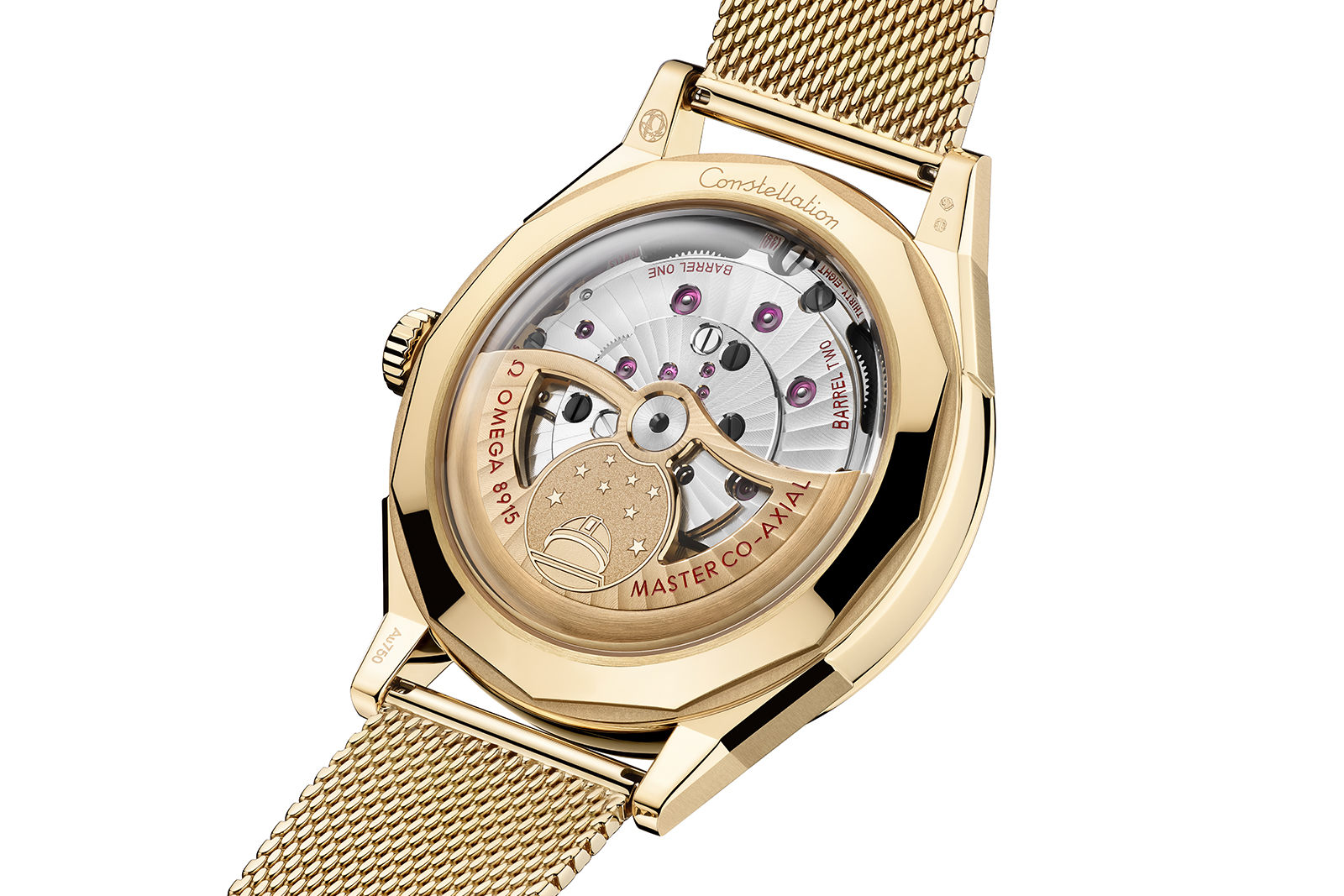
The movements are not entirely new, being derivatives of the cal. 8900 series — Omega’s double-barreled answer to the ubiquitous Rolex cal. 31xx and 32xx families, which plays a similarly outsize role in the catalogue.
The movement pairs Omega’s latest co-axial escapement — a more refined iteration of Daniels’s original — with a silicon hairspring and free-sprung balance. Bearing the Observatory name, the Spirate regulation system would have been a natural fit, but Omega has yet to deploy it beyond a single reference, and has exhibited little urgency to expand its use more widely.
Without a seconds hand, the Spirate system would arguably have been superfluous in any case — the wearer has no means of tracking accuracy to the second. Its absence also complicated the Master Chronometer testing process, which typically relies on image processing: visually tracking the seconds hand and comparing its position against a standard timebase, with any deviation translated into an average daily rate.
Of course, the resolution of the minutes hand is too coarse for the kind of to-the-second tracking required for Master Chronometer certification, so Omega resorted to acoustic timing — a well-established practice in which timing machines record the escapement’s ticking sound and translate the acoustic signature into real-time deviation, beat error, and balance amplitude statistics. The sound signature of the Swiss lever escapement is well-documented, and the algorithms that convert it into precision readings are mature and reliable.
In contrast, when the co-axial escapement first hit the market, these machines proved unreliable: the specific action of this novel escapement, along with its reduced lift angle, made for an unique sound and generated erroneous readings. Once the co-axial escapement slowly became industrialised, the premier maker of these machines, Witschi, was among the first to adapt and make their products to be co-axial-compatible.
Omega formalises this with the Dual Metric testing method, developed by its Laboratoire de Précision — an official, Swiss-accredited metrology body that serves as the group’s authority on precision measurement standards.
In practice, the Dual Metric test differs from standard Master Chronometer testing in methodology rather than rigour — all measurements are taken acoustically, with the movement subjected to the same systematic variations in temperature, magnetism, and air pressure that define the METAS protocol.
Each Constellation Observatory undergoes 25 days of testing — and the case can be made that the Dual Metric results are more granular than those of standard Master Chronometer certification. Acoustic timing yields continuous running data across changing conditions, whereas the visual method captures only periodic snapshots, producing an average. The Constellation Observatory is tested as rigorously as any other Omega, but with considerably greater resolution since the data set is continuous as opposed to discrete.

Whether Omega extends the Dual Metric method to other references remains to be seen. The continuous data stream could prove valuable to engineers and watchmakers seeking to understand what drives deviation within their calibres — and would make a compelling case for the return of acoustic timing as the new universal standard.
Key facts and price
Omega Constellation Observatory
Ref. 140.13.39.21.01.001 (black)
Ref. 140.13.39.21.02.001 (silver and gold)
Ref. 140.13.39.21.10.001 (green)
Ref. 140.13.39.21.03.001 (blue)
Ref. 140.50.39.21.99.001 (Moonshine gold with bracelet)
Ref. 140.53.39.21.99.001 (Moonshine gold)
Ref. 140.53.39.21.99.002 (Sedna gold)
Ref. 140.53.39.21.99.004 (silver)
Ref. 140.93.39.21.99.001 (champagne)
Diameter: 39.4 mm
Height: Unknown
Material: 18k Moonshine gold, 18k Sedna gold, O-megasteel
Crystal: Sapphire
Water resistance: 100 m
Movement: Cal. 8914/5
Functions: Hours and minutes
Frequency: 25,200 beats per hour (3.5 Hz)
Winding: Automatic
Power reserve: 60 hours
Strap: Leather strap or gold brick-style bracelet
Limited edition: No
Availability: Now at Omega boutiques and retailers
Price:
CHF9,500 (steel with black ceramic dial)
CHF8,500 (steel)
CHF46,000 (Moonshine gold with bracelet)
CHF29,500 (Moonshine or Sedna gold on leather strap)
CHF34,300 (silver)
CHF45,000 (champagne)
All prices excluding taxes.
For more, visit omegawatches.com
Back to top.