

Hats-Off to Hugo Rittener’s Le Majordome
A polite automaton made by hand.
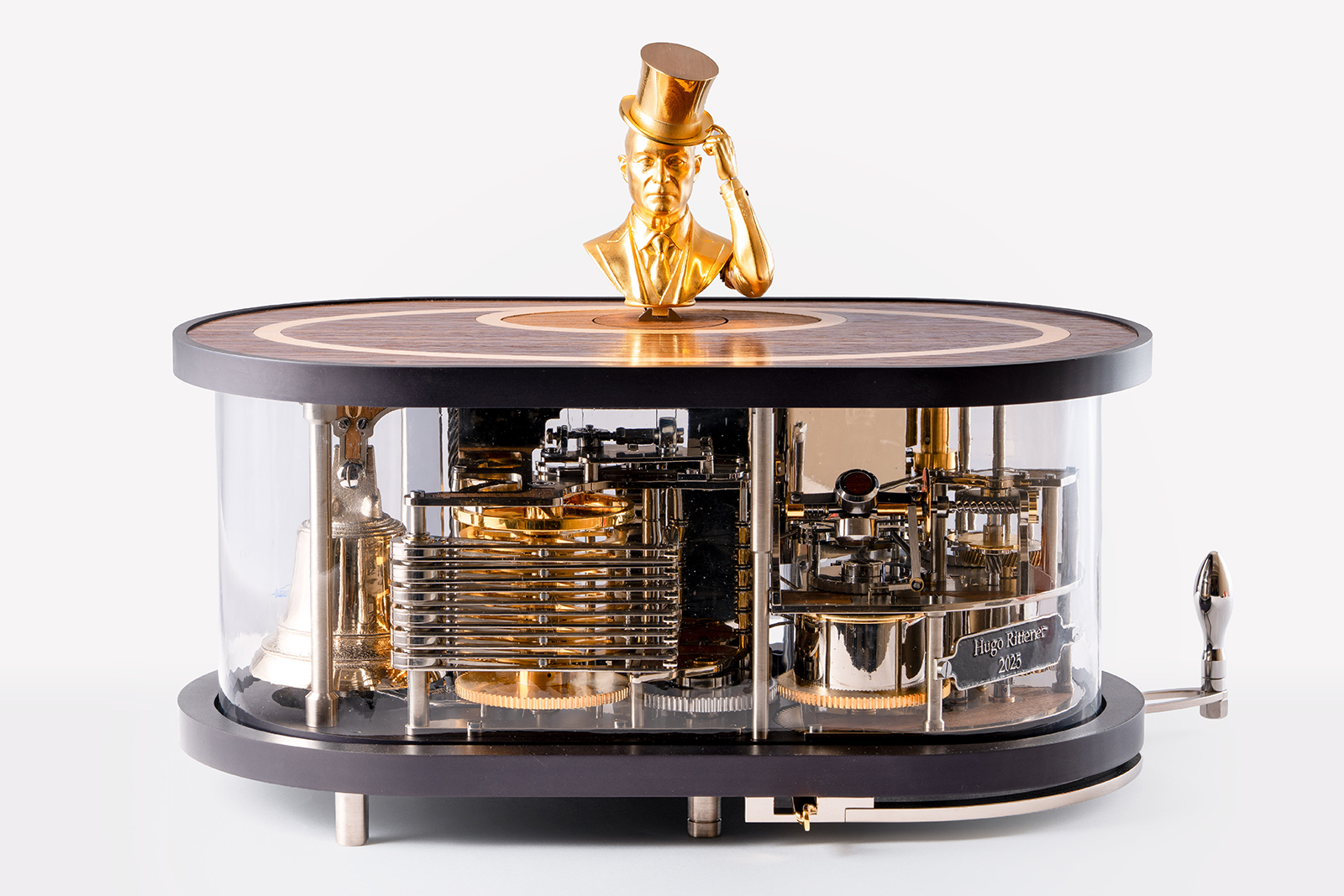
The niche market for modern automatons just a little less tiny with Hugo Rittener’s Le Majordome, a mechanical butler that pop ups and greet the onlooker on demand. In the tradition of historical automatons, Le Majordome is entirely mechanical and driven by complex clockwork, and made entirely by hand.
Initial thoughts
Hugo Rittener is a young automaton maker from the Vaud region of Switzerland. Having cut his teeth working with François Junod, one of the most celebrated talents in the field, Mr Rittener has now gone into business for himself. Against this backdrop, Le Majordome (“the butler” in English) represents a foundational release.
Compared to the timepieces we sometimes call mechanical art, this tabletop automaton serves no actual utility; there’s no time-telling and no complication other than the bronze figure itself. In terms of pure mechanical art, this is as artful as it gets.
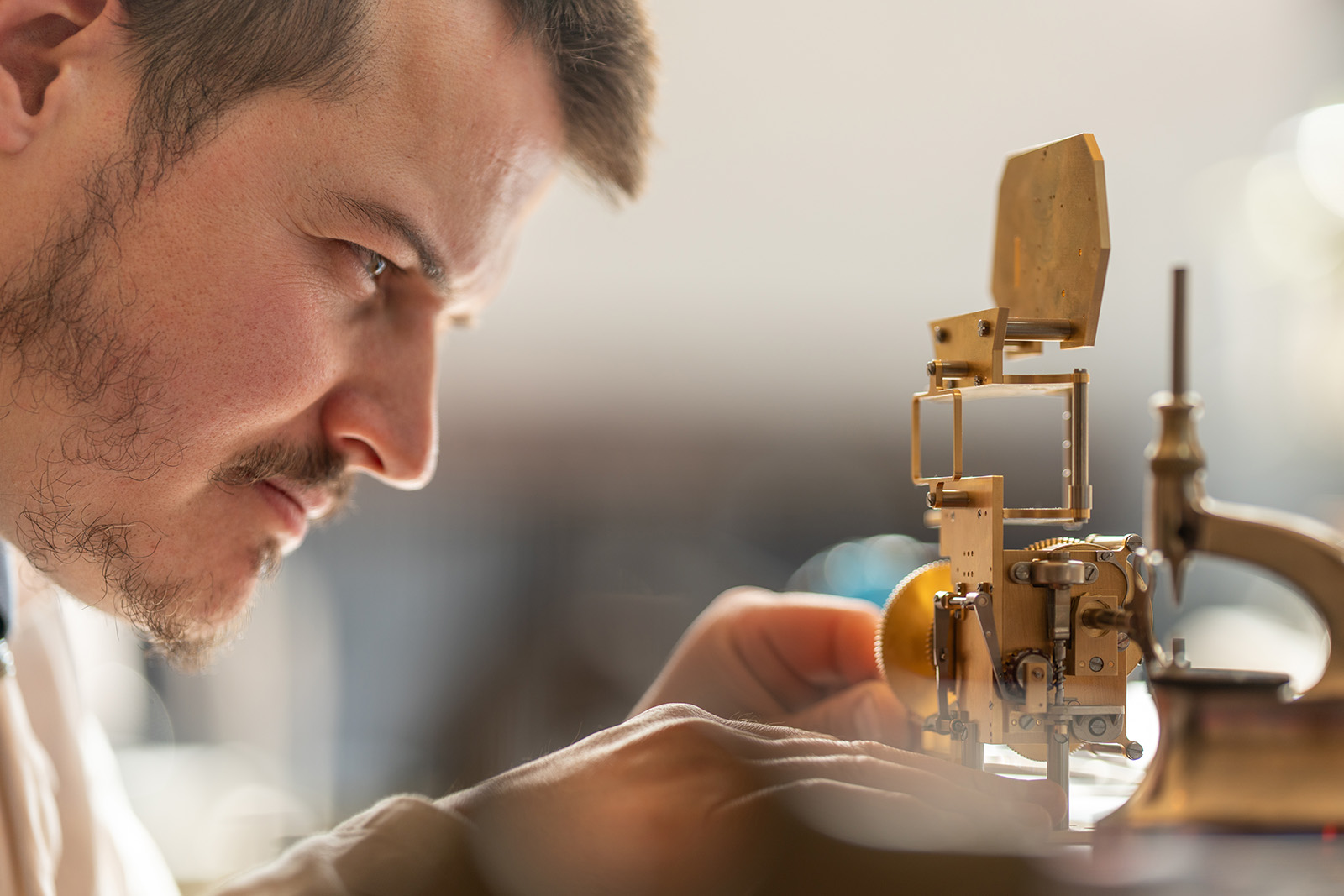
Having taken over 1,000 hours of work, from design to finishing, the (Le) Majordome is a mechanical animation of a bronze-sculpted and gold-plated butler figure, which raises his top hat towards those who actuate the mechanism.
Mr Rittener poetically describes the Majordome as an automate d’accueil — meaning “welcoming automaton”. The mechanical butler does in fact greet its audience, so it could be used as an extravagant welcoming party trick.

Hugo Rittener will make 10 pieces of the Majordome in total, over the course of some years. Given the highly artisanal process, he says that every piece will be unique since he cannot guarantee perfect repeatability.
This likely means that each figurine will be sculpted slightly differently, its motion will have its own quirks and there’s probably a degree of customisation possible.
While the market for automatons is undoubtedly niche, the clever and well-made Majordome series should have no problem finding “masters”.
A mechanical show
The Majordome is purposefully constructed to show off the complex mechanics that animate the butler. All components are finished to very high standards, which was to be expected.
When a switch is engaged, the figure raises through the top, through an aperture and turns in both directions, tipping his hat, before returning to his cradle. The complexity of this entire movement is not to be understated, since the motion of the aperture is part of the animation itself, as the cover unseals and seals gracefully.

Like the Astronomer that sits atop Vacheron Constantin’s La Quête Du Temps, itself the work of Mr Junod, the polite butler looks rather small in comparison with the multitude of cams and gears that allow it to move. As a result, the hefty base has a broad footprint of 32 by 18 cm and stands 16 cm tall.
All the mechanics are fully on show through a rounded glass panels, which ensures no part of the mechanism is concealed. Historically, the mechanical brains of automatons were usually hidden in order to preserve a sense of magic, but today it makes much more sense for such a piece to be fully revealed.
The entire mechanism is artful without being ostentatious. The springs and levers don’t have ornate shapes, and the pillars are very minimalist. In short, everything feels truly functional. There is even a blued Circlip visible securing one of the joints, which really speaks of the nature of this piece. Clearly the Majordome’s overall theme is classical, but the execution adds a touch of modernity.
Natural motion
In order to make the butler’s greeting feel natural, the entire animation (which lasts for 54 seconds) is composed of 7 separate motions. This suggests that the profiles of each of the 10 different cams must be very complicated and carefully formed.
What looks like to be a stack of cams is visible on the left-hand side of the case, along with their respected feelers. As the cams turn, the feelers each get their own motion, which they further transmit through a series of articulations to the figure above.
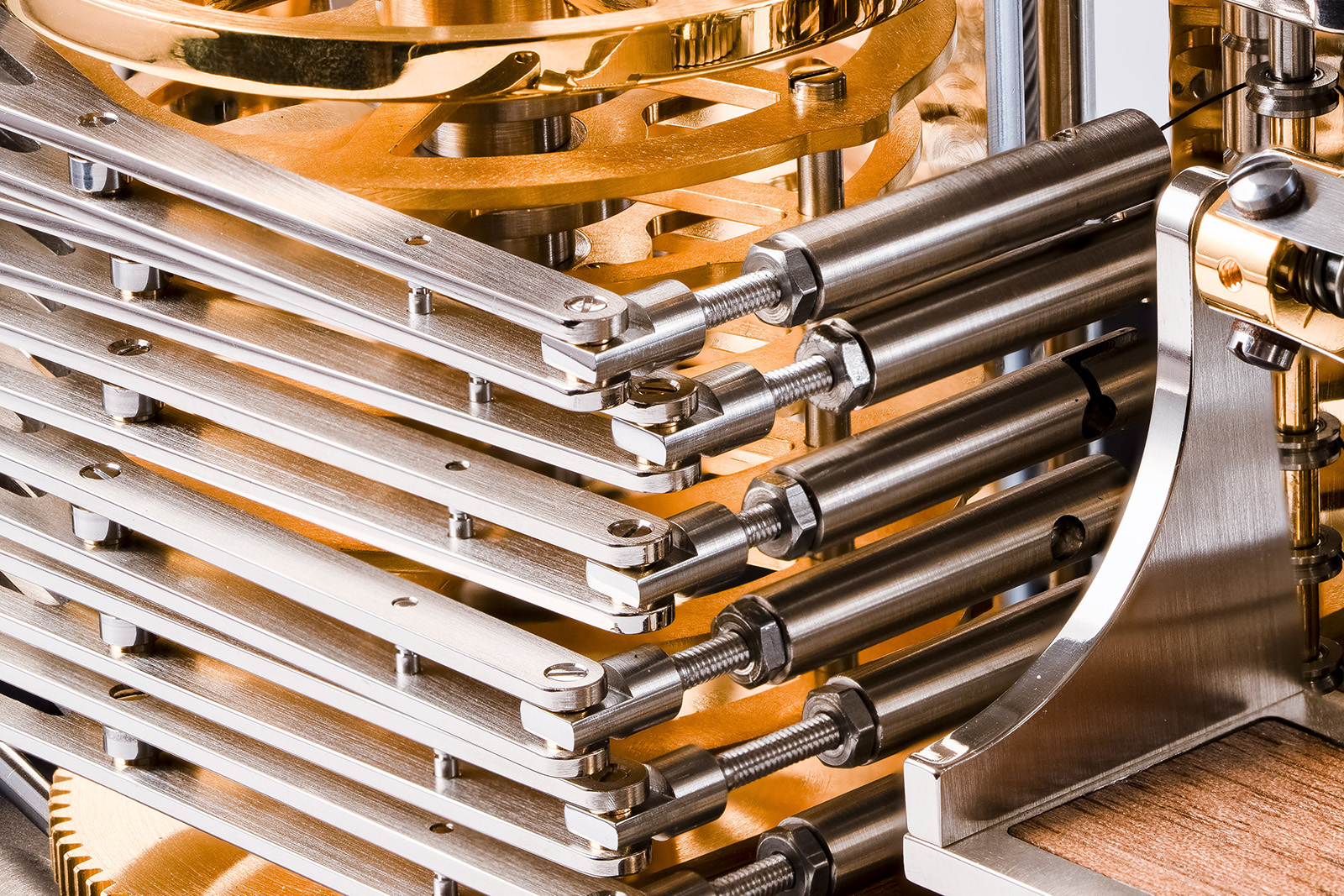
Stacked cams, feelers and transmission joints.
Using cams to transmit non-linear motion is the traditional method of mechanical programming for something like this, but visualising how the individual profiles will manipulate the figure is a challenging mental exercise for the developer.
There are two barrels powering this machine, which are wound via a lever at the base of the case. The user charges up the Majordome by cranking the delicate lever a few times, which should offer a very pleasant tactile feel, which can be discerned from the video above.
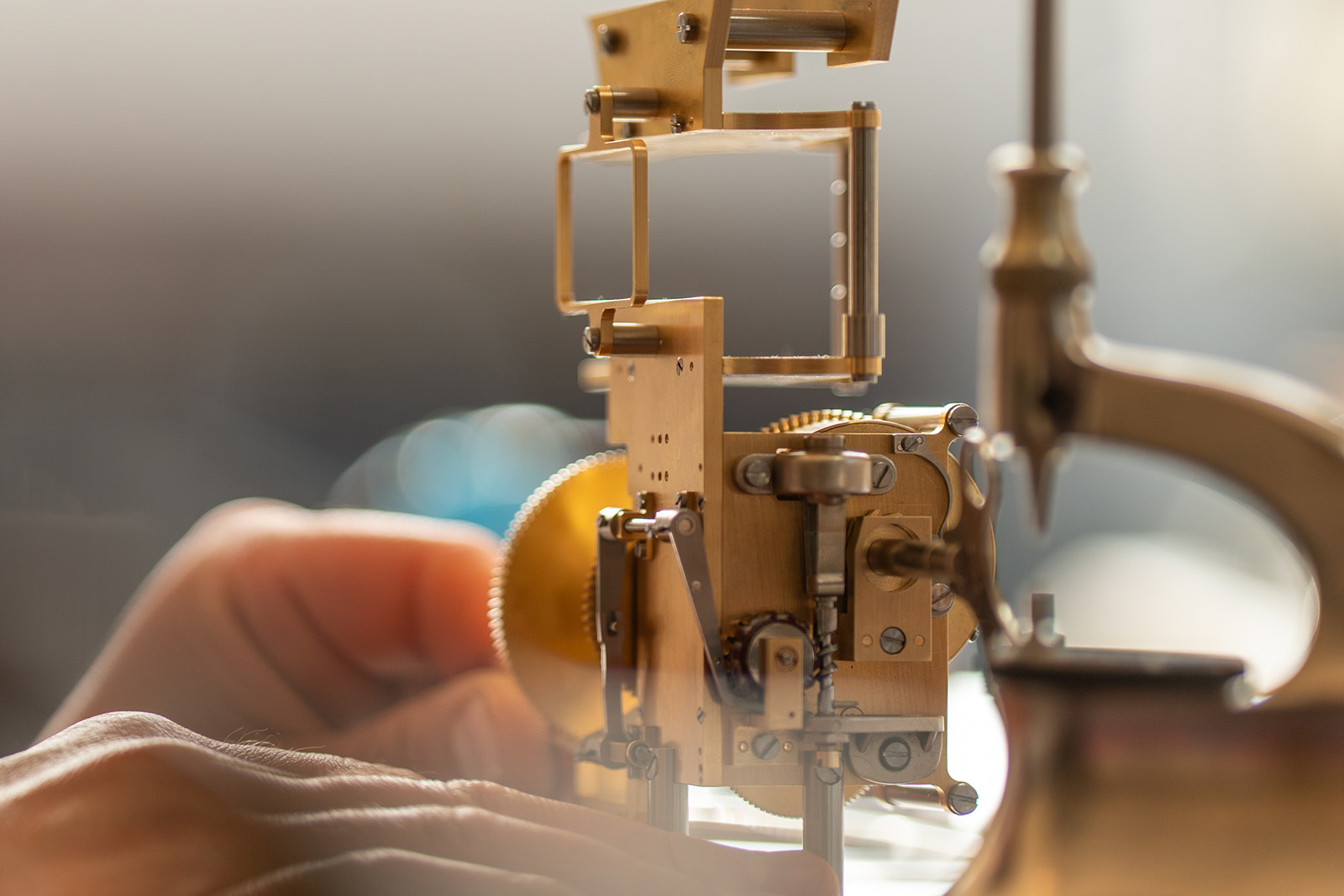
The animation is engaged on demand by a switch next to the lever. It is unclear how many animation sequences can be run before the power reserve runs out, but expect at least a few.
All sorts of interesting mechanical principles are on show inside the Majorome. There is of course, the intricate system of cams and feelers, and all sorts of gears with interesting teeth profiles (including a helical pair) and a governor to regulate the speed of the choreography.
Delicate choreography
The inertial (or Pickering) governor was introduced for the earliest gramophones to regulate the speed rate of the turntable. This principle is best known to watch enthusiasts due to its use in chiming watches to regulate the the timing of the chiming sequence.
Here the governor is used to pace down the discharge speed from the two mainspring barrels, ensuring the power train discharges at a set speed. These types of inertial governors work by introducing friction inside the going train, effectively braking it. If the speed goes down, then the governor eases the braking, until the desired speed is obtained. If it goes too fast, then the braking increases.
The speed regulated through such a device does not have a perfectly predictable value, but varies as the power from the barrels fluctuates. This is why these kinds of systems are not used for timekeeping, but are more than adequate for ensuring a stable chiming sequence.
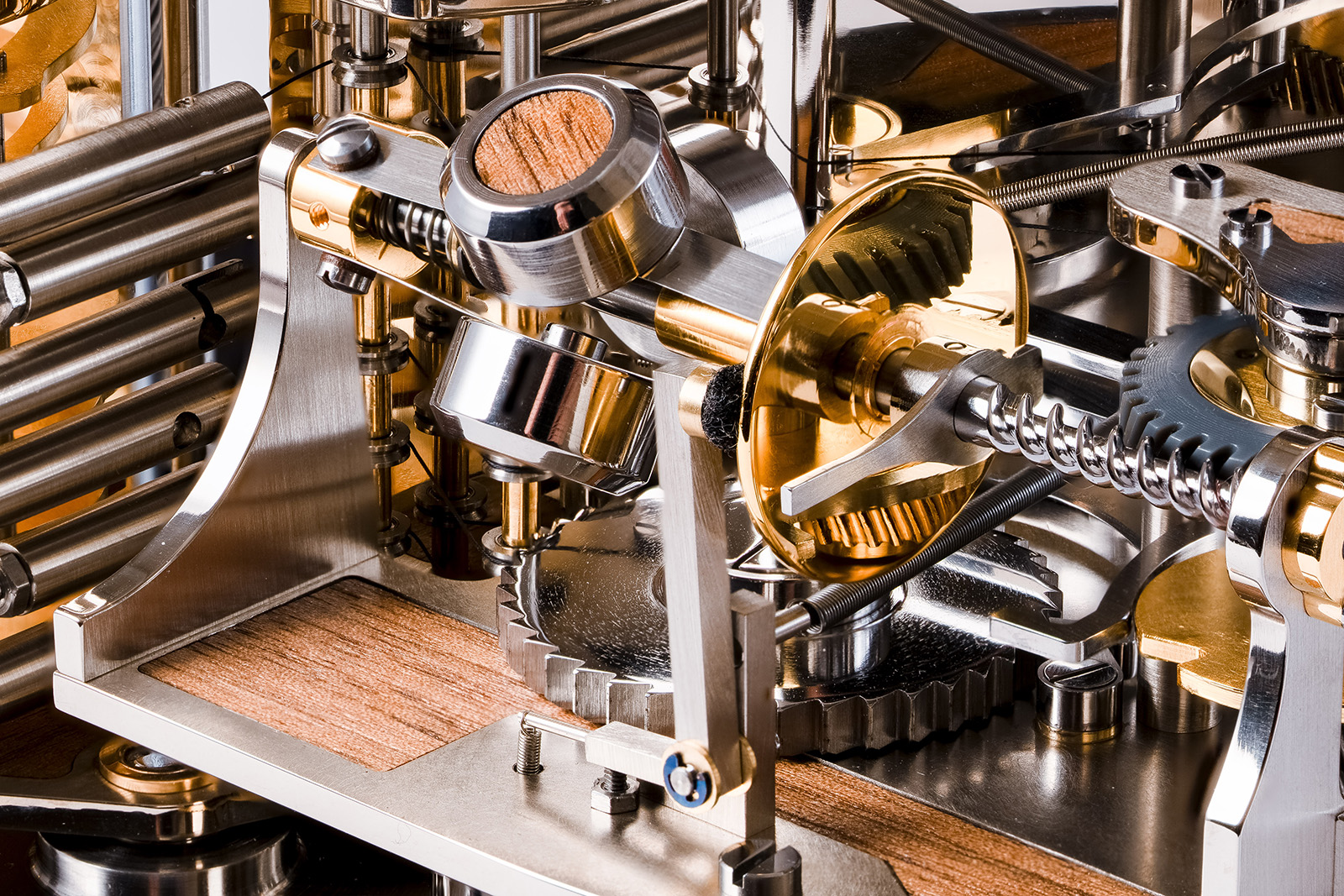
The governor, featuring wood-capped weights.
The Majordome chimes as well, offering three different tunes over the course of the performance. Since the core motion works was already there, the inclusion of some chiming works seemed like a reasonable thing to do, although it further complicates the mechanics.
There even is a large bell hiding in the background which produces the chiming. The bronze cast bell is among the very few components that aren’t crafted by Mr Rittener himself in his workshop. The fact that approximately 90% of the components are designed and made by a single craftsman in his own workshop is most impressive.
A blend of materials
Wood is really a subtle leitmotif of this piece, with tiny wooden pieces intertwined within the plates and components. The governor weights, for example, contain cylinders made of wood. These are meant to evoke Mr Rittener’s connection to the forest — a connection that is taken very seriously in Switzerland.
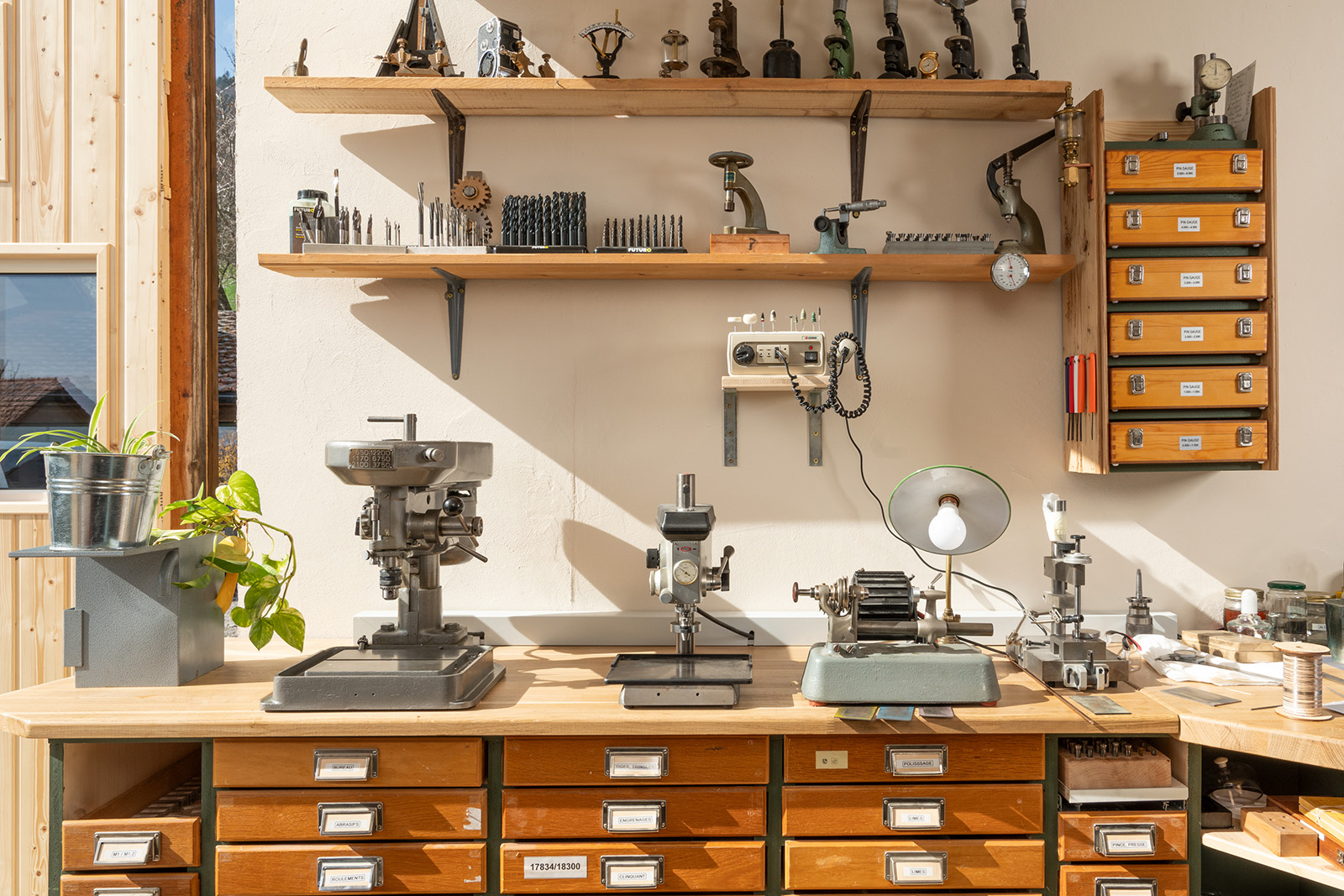
Hugo Rittener’s nature-surrounded workshop in St-Croix.
The metal parts are all steel or brass, the core materials of the watchmaking industry. Mr Rittener gave appropriate consideration to all the visible parts, with plates having sharp bevels running along their edges and a striking high-polished finish. The cast bell is the only rough-looking part inside the mechanism, but that adds a strong and welcome contrast.
Key facts and price
Hugo Rittener Le Majordome
Dimensions: 32 cm by 18 cm by 16 cm
Material: Steel, brass, bronze, wood and glass.
Movement: Developed and handcrafted by Hugo Rittener
Functions: Animated butler, chiming
Winding: Manual-winding
Power reserve: Unspecified
Limited edition: 10 pieces in total, to be produced over several years
Availability: From Hugo Rittener
Price: Upon request
For more, visit Hugorittener.com.
Back to top.