

Baltic’s Affordable Heures du Monde Worldtimer
A trio of stone dials.
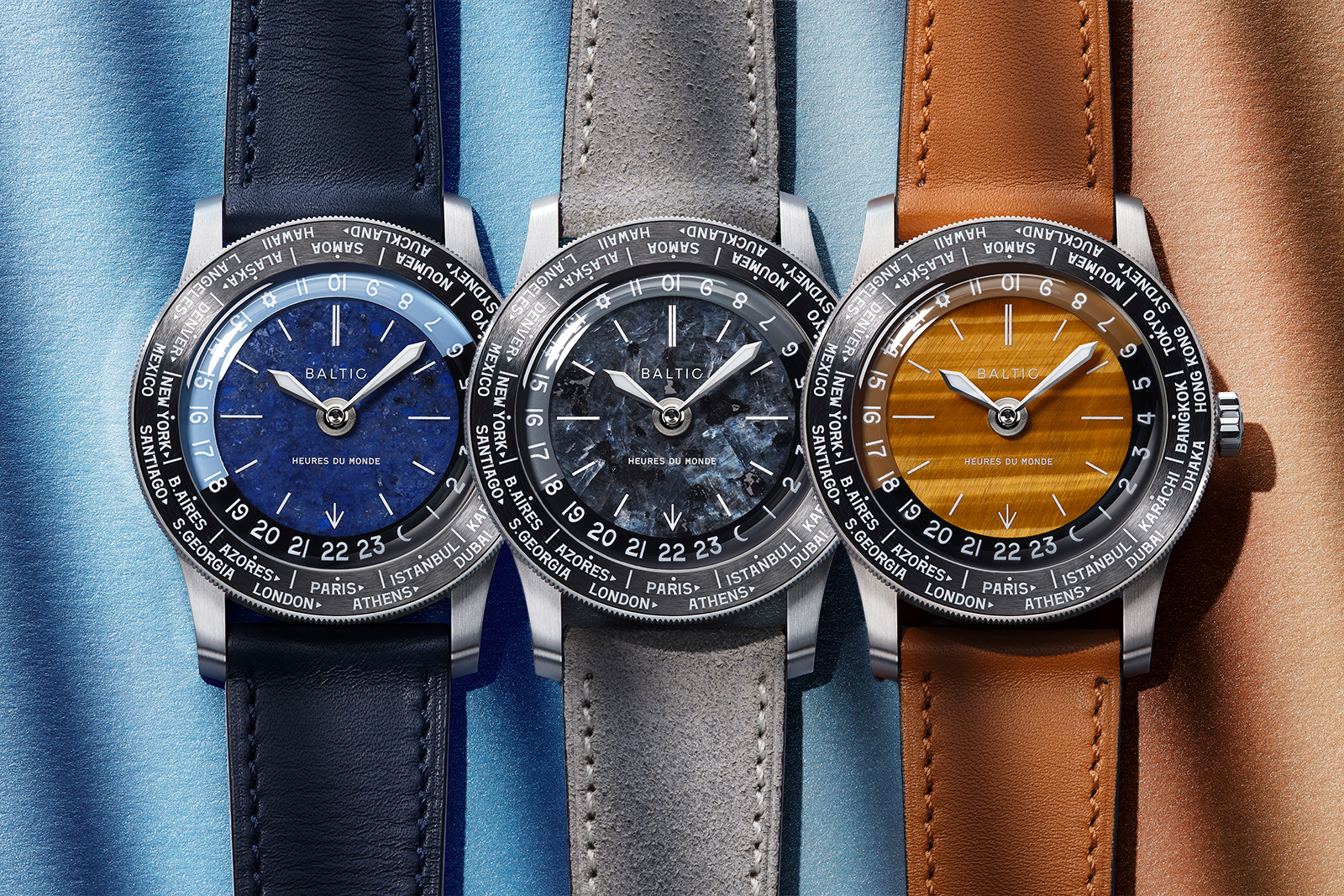
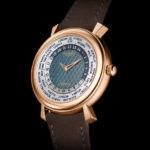
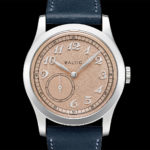
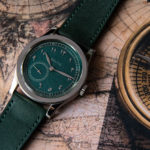
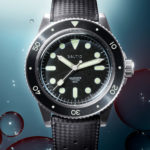
The value-forward, design-savvy French micro-brand Baltic debuts its first worldtimer, the Heures du Monde with a trio of stone dials – sodalite, tiger’s eye and labradorite, each limited to 200 pieces as a lead up to a future regular production version. It’s a fully functional and sharp-looking vintage-styled worldtimer, with a modern set of features that includes a brushed ceramic bezel, plenty of lume, and a surprising 100m depth rating, for a reasonable price.
Initial thoughts
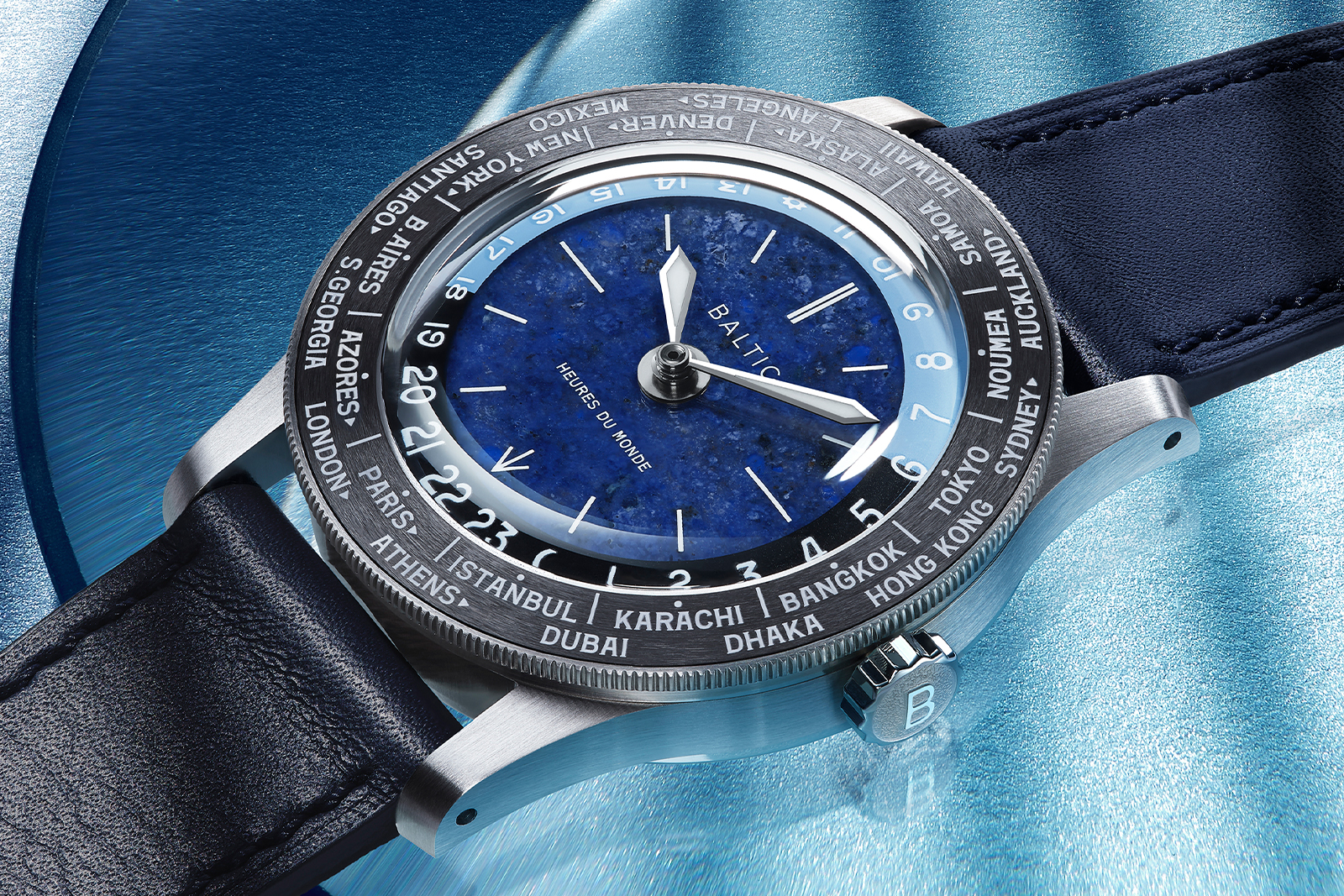
Stone dials and worldtimers are each in vogue, and it is only natural to combine the two – especially as worldtimers as a genre are predisposed to vibrant dials, such as enameling, engine turning, or miniature painting. It doesn’t hurt that the Heueres du Monde is a competent watch and fair value proposition over all. Baltic pitches the model as an homage to the work of Louis Cottier, who invented the format. It specifically takes after his earliest worldtimers, which comprised a simple 24-hour disk geared to the hands, and a rotating bezel with the names of cites arrayed around its perimeter.
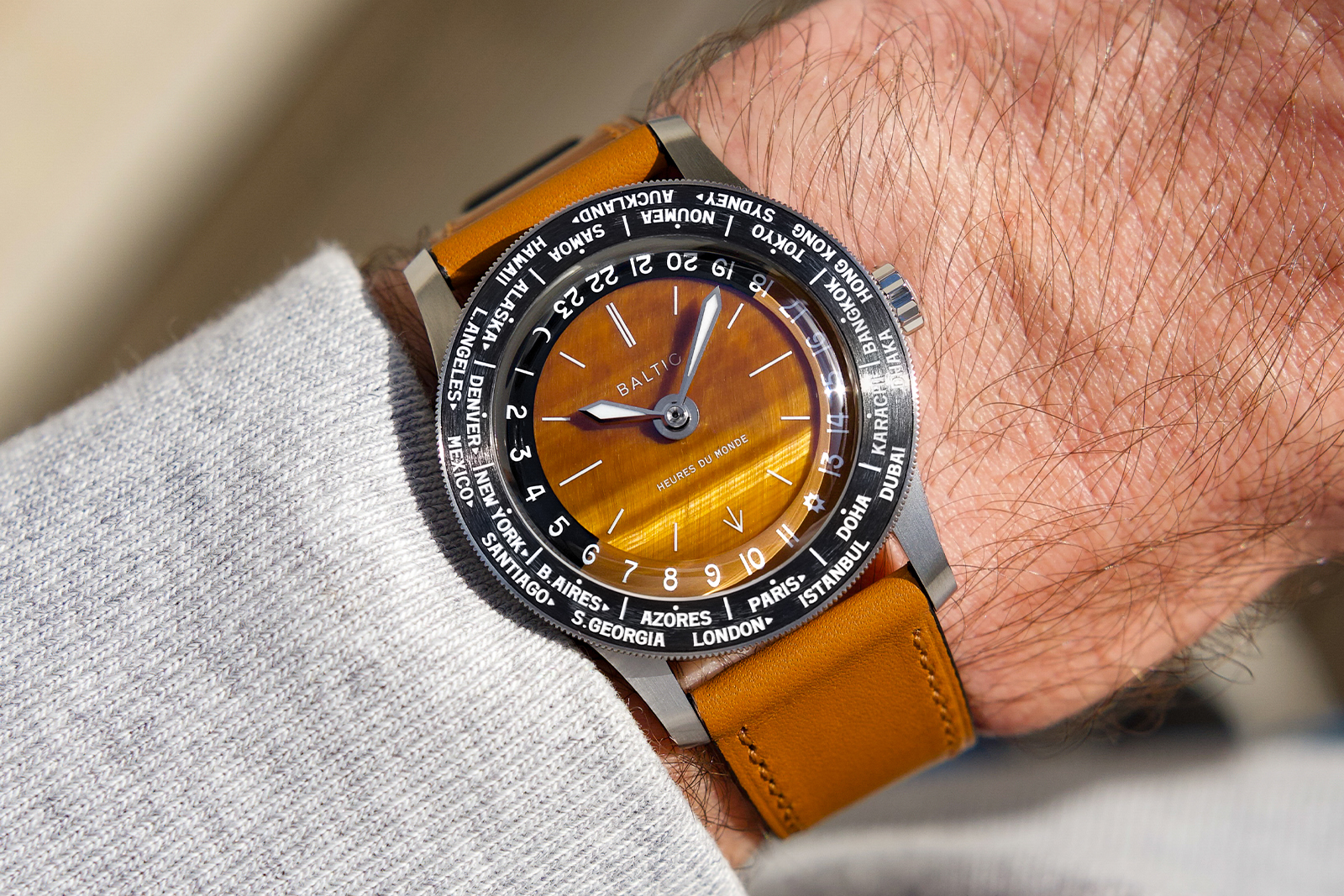
The sodalite, tiger’s Eye and labradorite dials are tasteful, fit the overall watch, and will no doubt age better than many other stone dial offerings from micro-brands today. That said, it was the probably the right decision on Baltic’s part to make these colourways limited, as it doesn’t fit with what I suspect is a more vintage, rather than neo-vintage, vision for the model. Given the brand’s extensive use of cost-effective Chinese suppliers, a hypothetical Heures du Monde with an affordable champleve enamel dial, for example, would check all the boxes.
Elegant in size, surprisingly robust
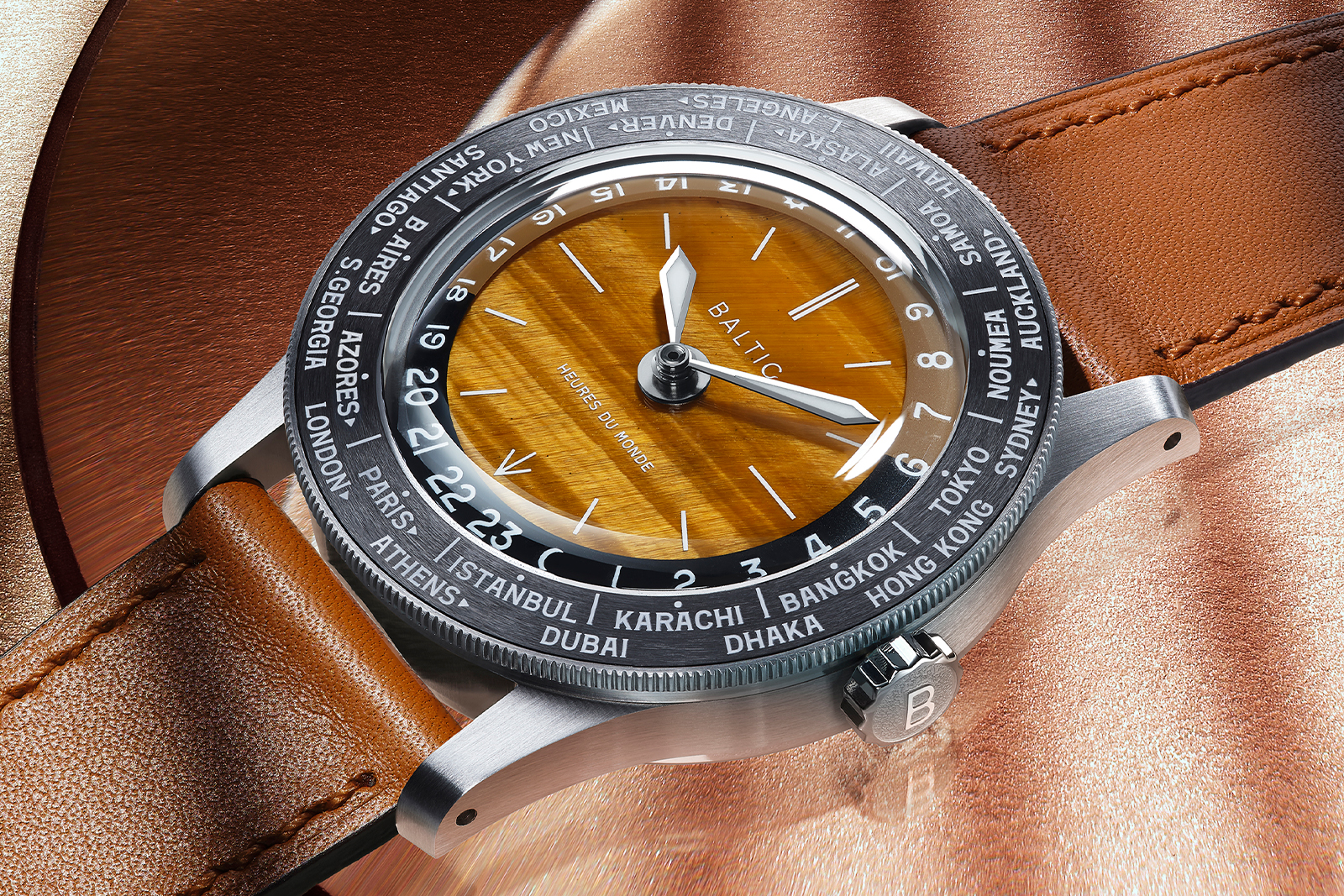
The Heures du Monde is moderately sized at 37 mm, unsurprising given Baltic’s target market of watch enthusiasts. On paper, the cases are reasonably thick at around 11.3 mm tall, however that number is somewhat misleading as nearly 20% of that is the crystal alone, making it appear just 9.3 mm thick. Still, it remains water resistant to 100 m, though without the added confidence of a screw-down crown or case back – the latter being solid and fixed in place by screws.
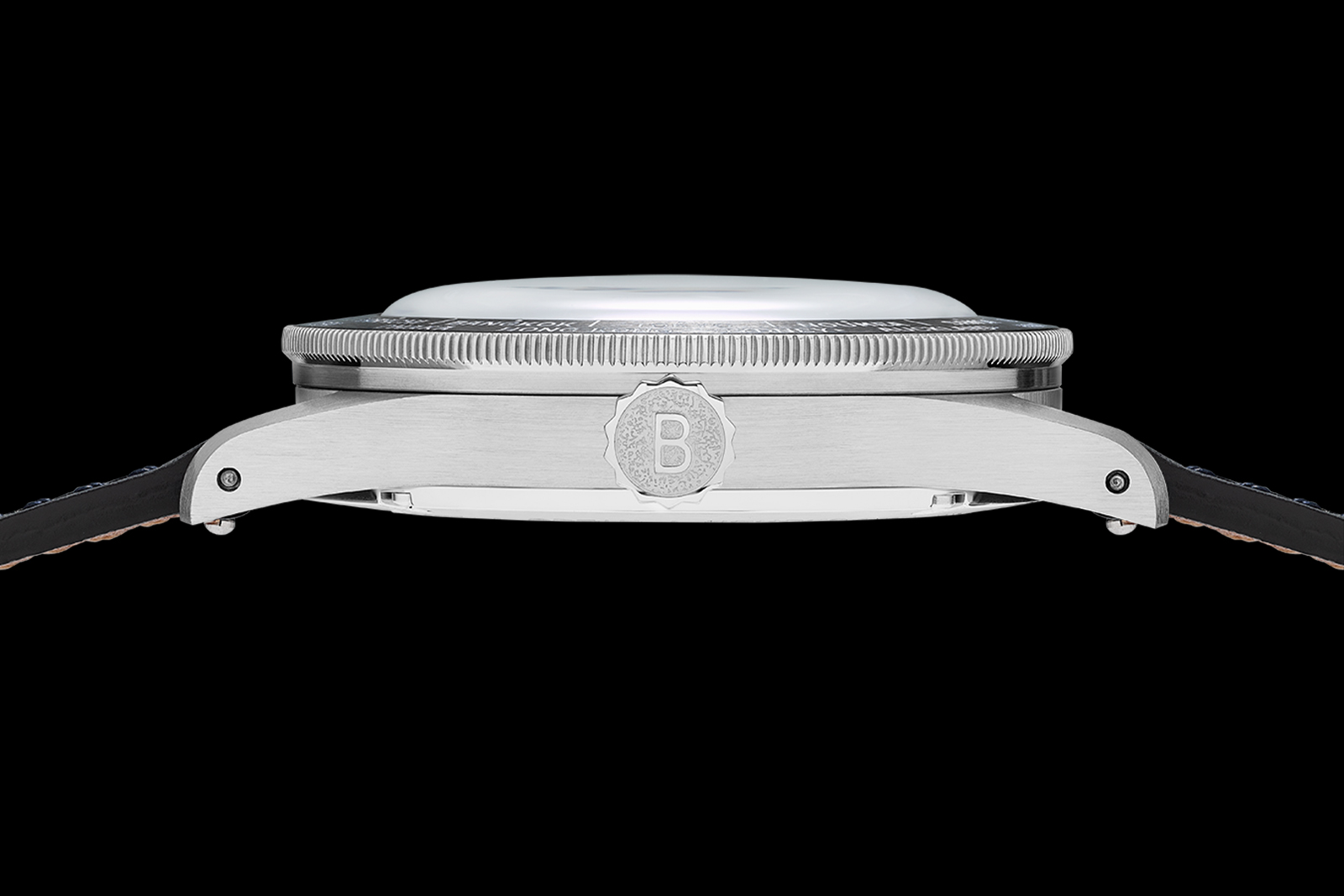
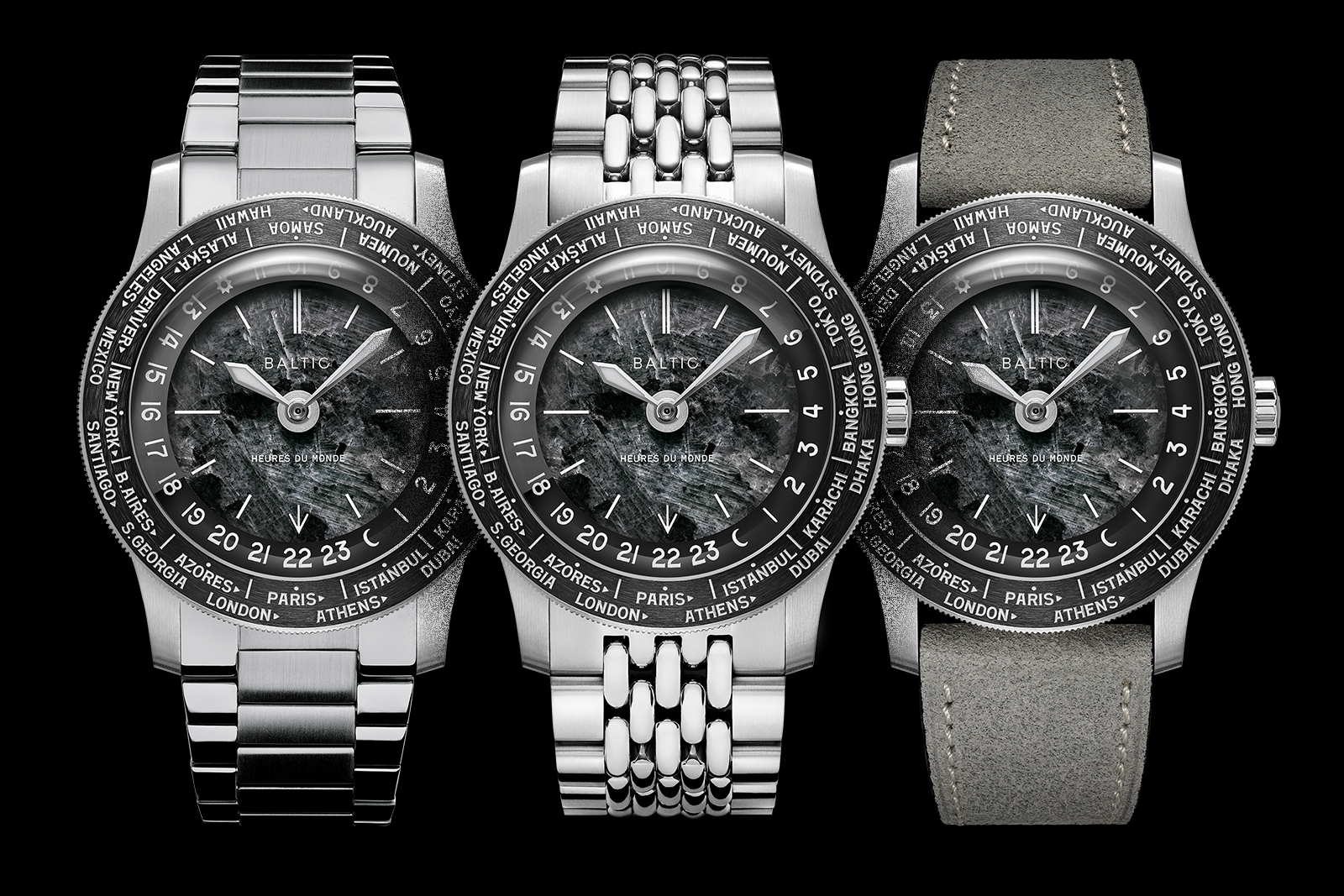
The slim mid-case, tall bezel, and drilled lugs complete the vintage feel. Each colourway comes on a calf leather strap, colour-matched to the dial. It can also be had on a choice of two bracelets, one being a “beads of rice” style which is disproportionately popular among micro-brands. Both bracelets can be had for a nominal up-charge of €60.
Monde of stone
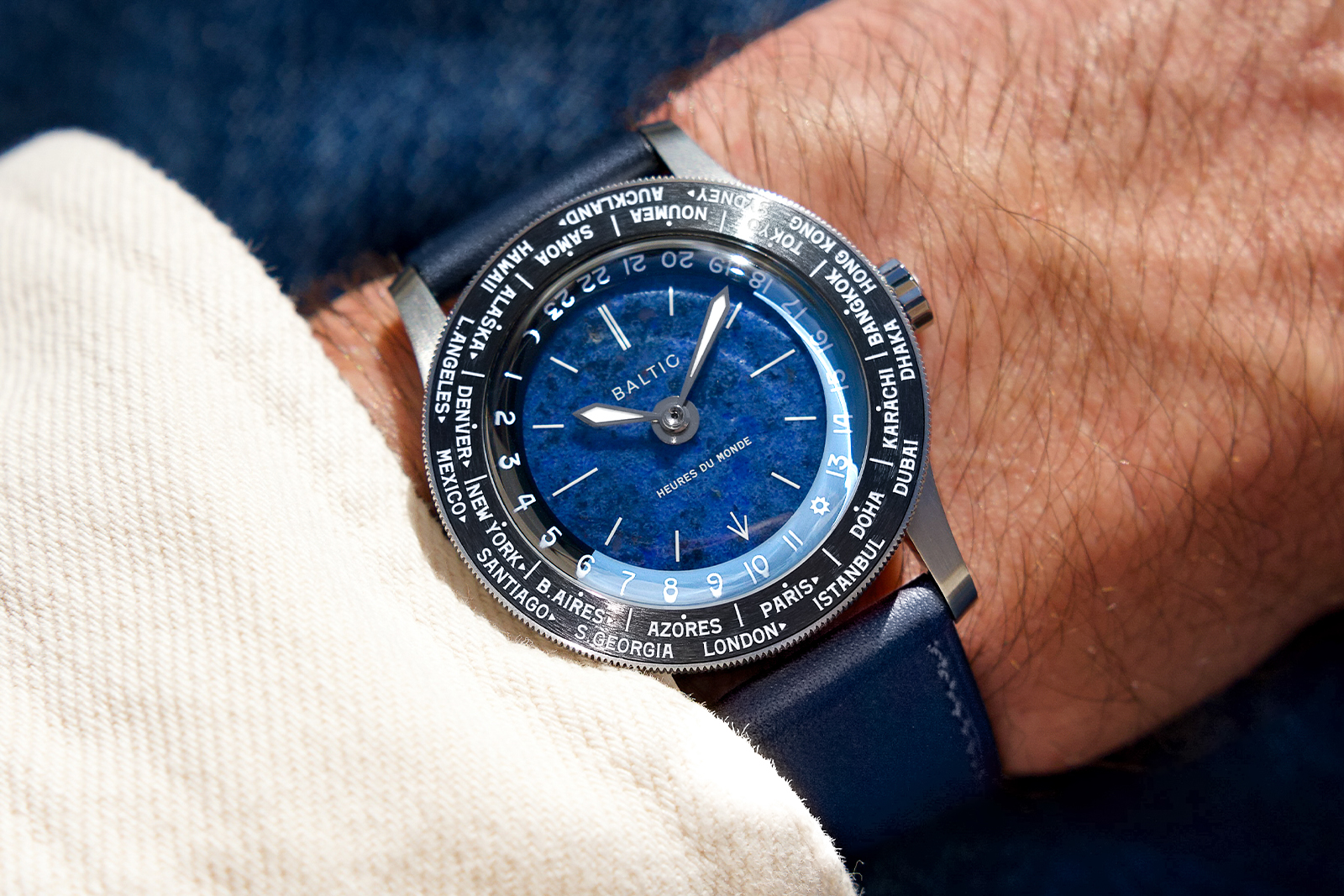
Sodalite is a tectosilicate, the most abundant mineral group on earth which also includes quartz. It is found in many colours but best known for its royal blue hue, different from the ultramarine of Lapis Lazuli. Tiger’s eye is (mostly) quartz, and so-named for its resemblance to a tiger’s eye. The technical term for this cat’s eye effect is chatoyancy, though this means about the same thing, just in French.
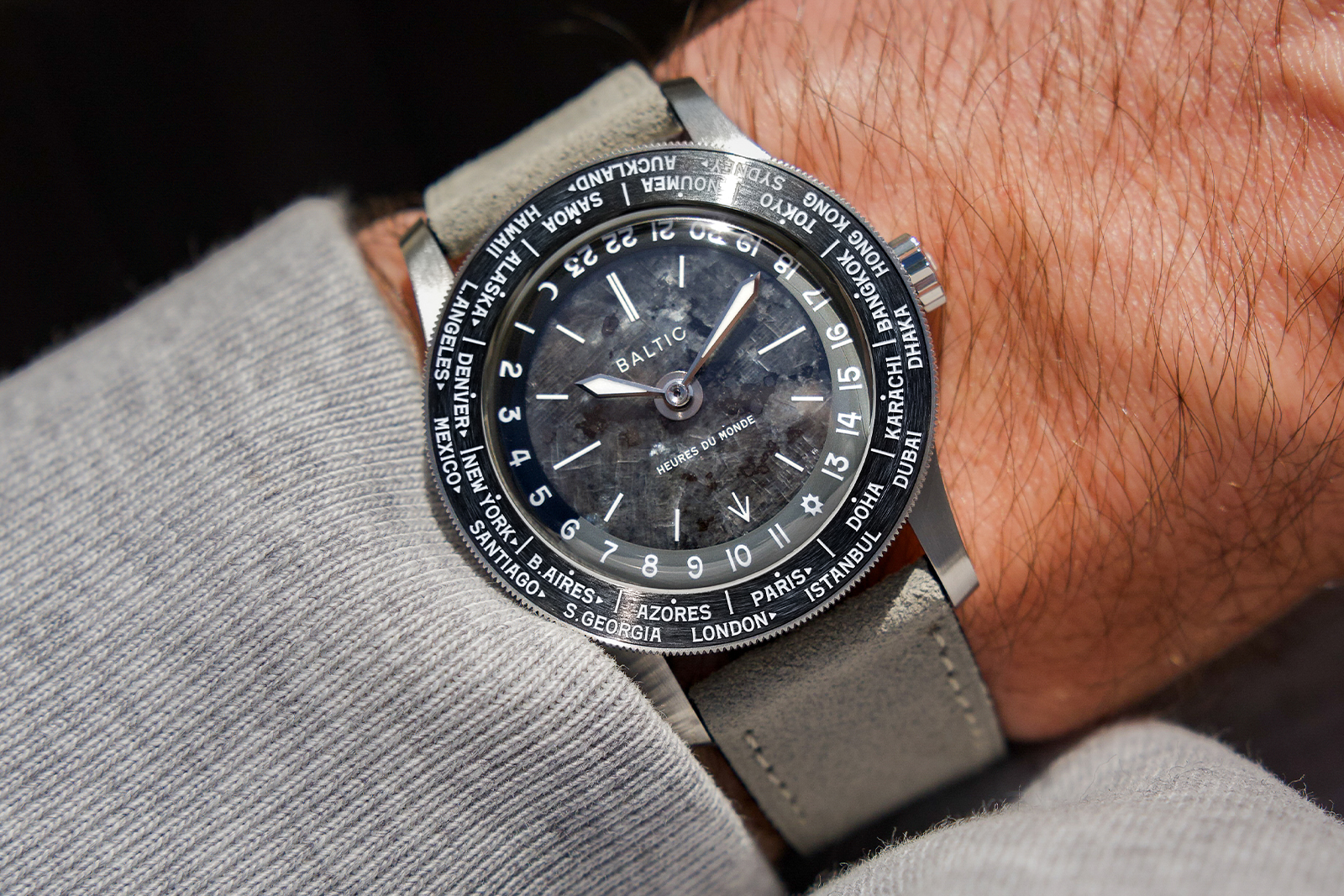
Perhaps the most interesting is the grey labradorite, an uncommon choice for a watch dial. Named for Labrador, Canada, this feldspar exhibits an unusual iridescence dubbed labradorisation, though the strength of this effect varies between and within deposits.
Hours of the world
The worldtime functionality comes from circular-brushed ceramic bezel, adorned with 24 cities representing the 24 geographic timezones. All of the bezel markings are filled with blue Super-LumiNova (BGW9), as are the hands, indices, and 24-hour ring. Additionally, sodalite often fluoresces under ultraviolet light, which is something else to look out for when blasting the lume with your UV torch.
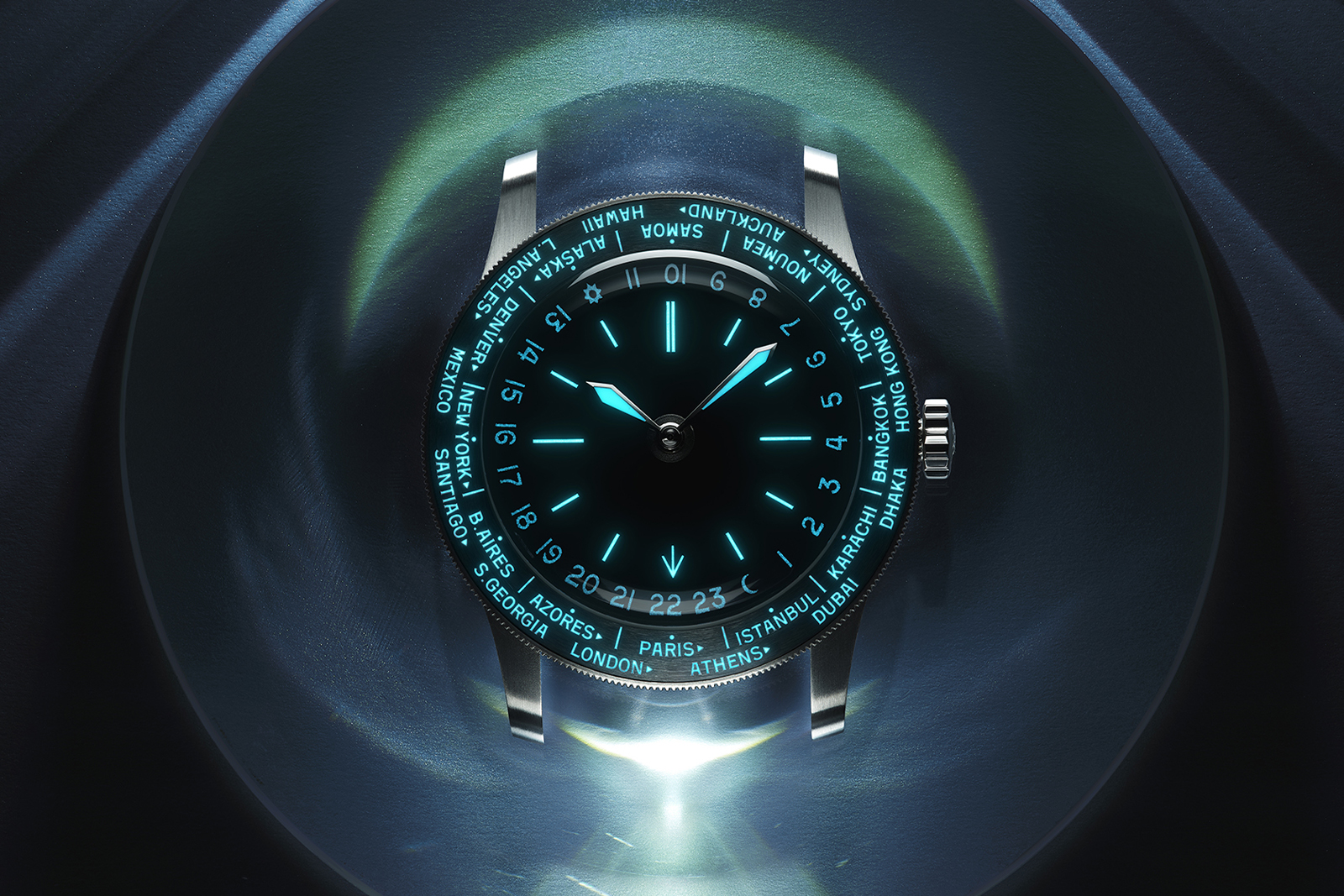
Functionally, the bezel is a normal 120-click uni-directional dive bezel, which is not ideal for this application, though bezels with only 24 stable positions remain surprisingly uncommon at all price points.
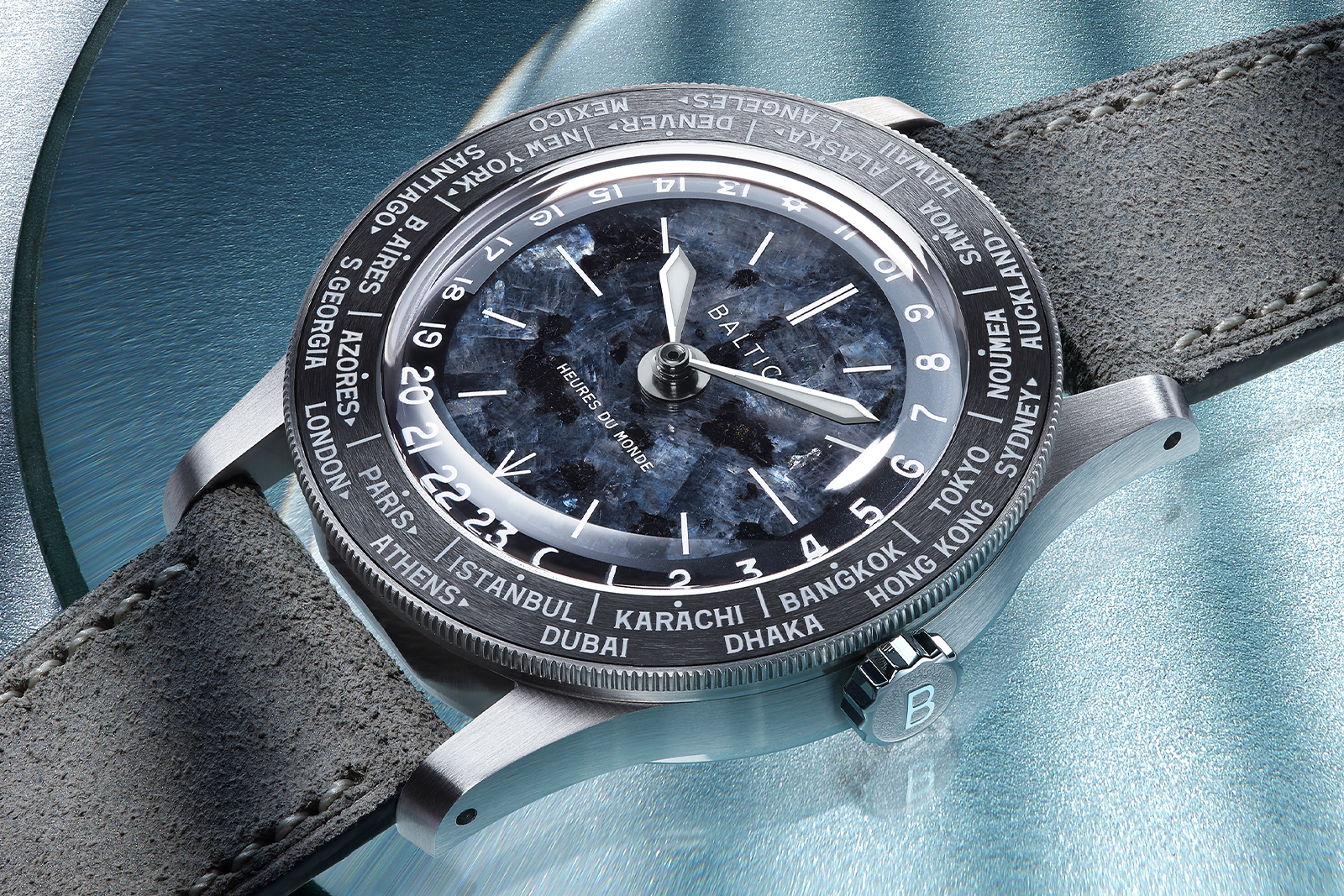
Small triangles denote the cities that observe daylight saving time (DST), prompting the user to advance the bezel by another hour during the summer months, which can be hard to keep straight. Case in point, some of the images provided feature watches with a DST notation next to Buenos Aires, which does no observe daylight savings time, while omitting if for the Azores, which do. Fortunately, Baltic seems to have already fixed this, judging by the later renders.
Workhorse
Inside is the Soprod C125, which is a drop-in replacement for the ETA 2893-2 and Sellita SW330-2 with similar specifications. Putting the crown out one click and turning clockwise advances the 24-hour ring in one hour increments. Normally, turning the crown counterclockwise would change the date. However, Baltic had the calendar removed from these movements, along with the sweep seconds hand, to maintain the vintage impression.
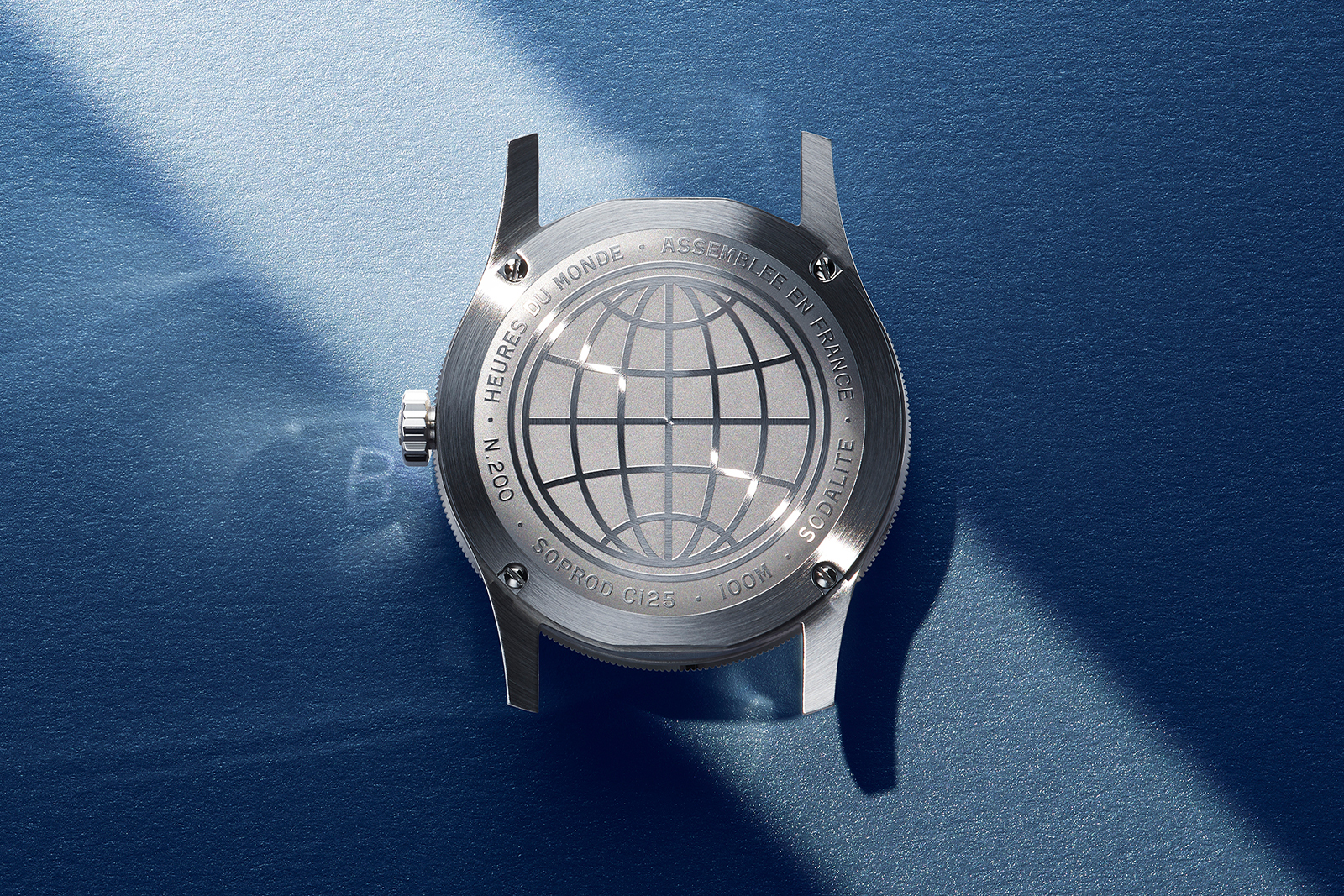
The movement is not a particularly high-end, but is quite good for the price being thin, self-winding in both directions, and capable of good timekeeping. The Soprod variants also offer noticeable upgrade in crown feel when winding and setting the time when compared to ETA 2824-based movements.
Key facts and price
Baltic Heures du Monde
Diameter: 37 mm
Height: 11.3 mm
Material: Stainless steel
Crystal: Sapphire
Water resistance: 100 m
Movement: Soprod C125
Functions: Hour, minutes, independently adjustable 24-hour disk.
Winding: Automatic
Frequency: 28,800 beats per hours (4 Hz)
Power reserve: 42 hours
Strap: Calfskin leather strap with pin buckle or matching bracelet (with the option of beads-of-rice or straight-link configurations)
Limited edition: Yes, 200 of each
Availability: At Baltic’s online shop and authorised retailers
Price: EUR1,300 (~US$1,500) on leather strap, EUR1,350 (~US$1,550) on metal bracelet.
For more, visit Baltic-watches.com.
Back to top.