

Hands On: Omega Constellation Observatory
An impressive two-handed chronometer.
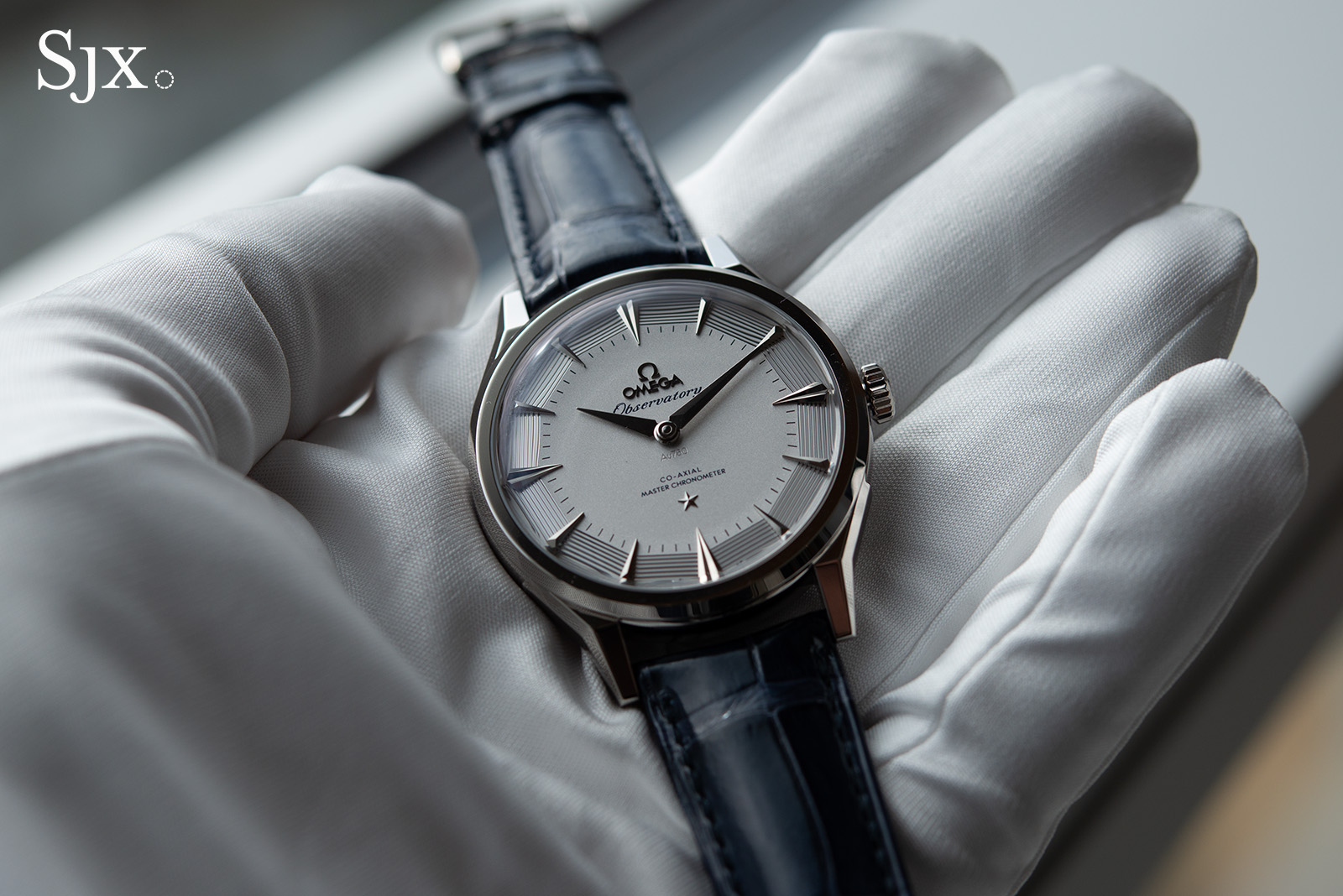
At long last, Omega has unveiled the spiritual successor to the beloved ‘Pie Pan’ Constellation, complete with its signature domed dial, observatory medallion, and ‘dog leg’ lugs, the Constellation Observatory. First teased on the wrist of actor Delroy Lindo at the Academy Awards, the Observatory debuts in an expansive range of case materials and dial treatments.
The collection also marks the commercial debut of Swatch Group’s Laboratoire de Précision, which has developed a new chronometer testing process capable of certifying two-handed watches. As a result, the Observatory carries the unexpected distinction of being the first Master Chronometer that displays only the hours and minutes.

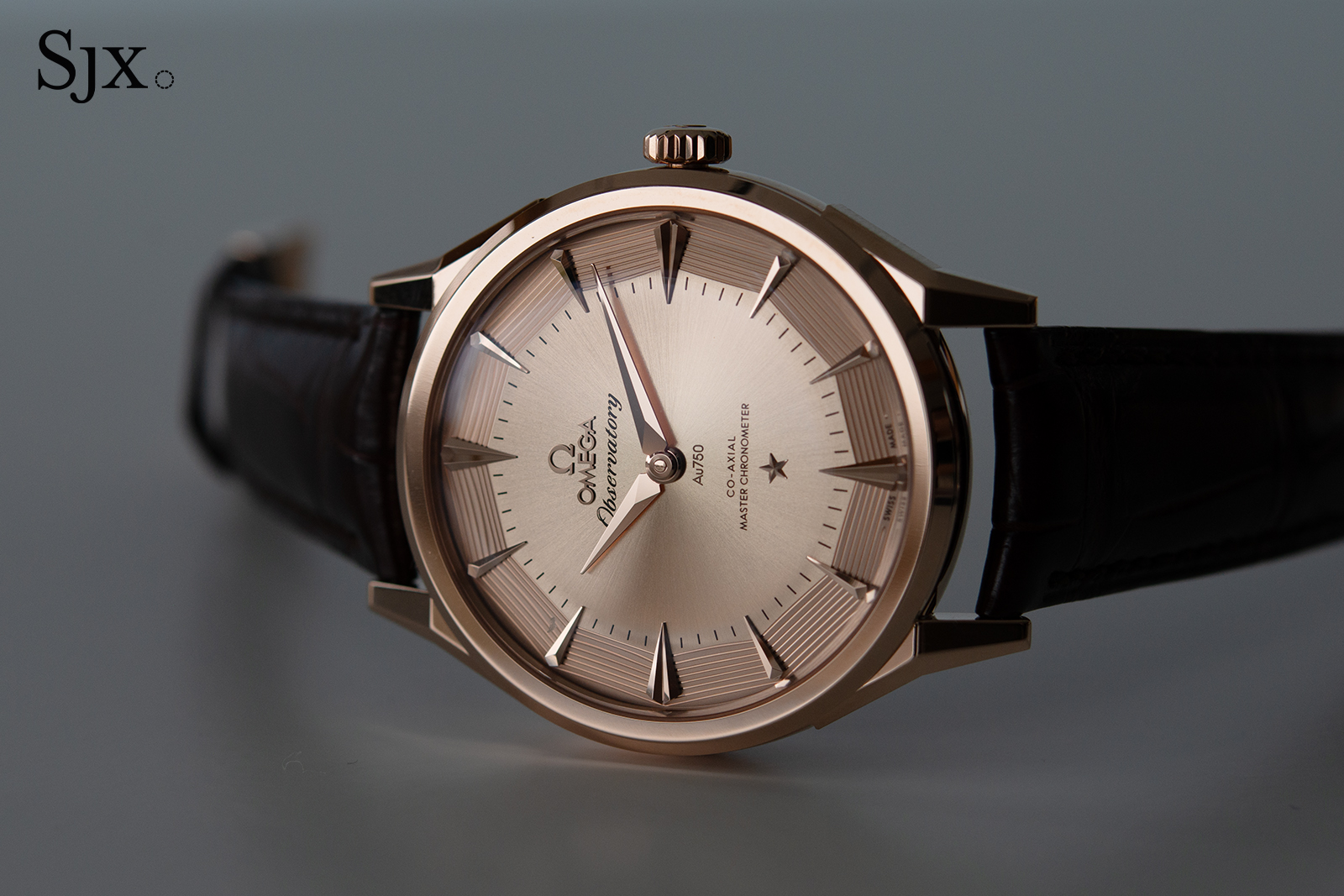
The Observatory in 18k Sedna gold, the brand’s trade name for its proprietary rose gold alloy.
Initial thoughts
The Observatory embodies Omega’s strengths, capitalising on the brand’s historical pedigree and proprietary materials and technologies, including its own durable alloys and the co-axial escapement.
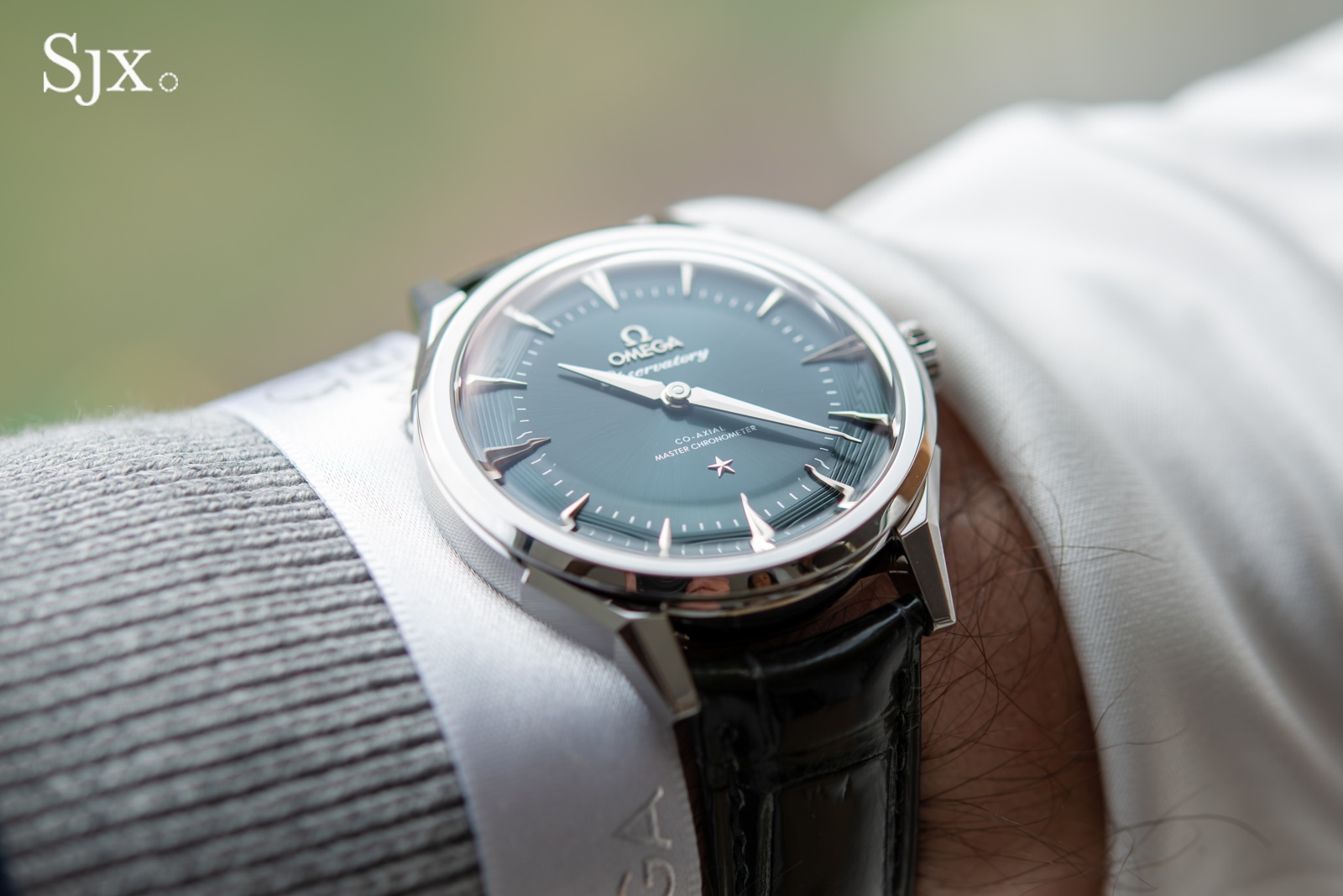
The Observatory in steel.
On the other hand, the Observatory suffers somewhat on account of its thickness, relying on a movement platform developed at a time when the trend toward large watches appeared to have no end in sight. That said, the case design does a decent job of reducing the perceived thickness, and it looks and feels thinner than many other watches that share its dimensions on paper.
It also demonstrates the immense capabilities of the broader Swatch Group, which now includes the SAS-accredited Laboratoire de Précision, and its ongoing commitment to chronometric excellence and continuous improvement.
Look Ma, two hands!
The Observatory is notable for its two-hand format, which would have historically excluded it from formal chronometer testing. This is because traditional chronometer testing looks at the position of the seconds hand to confirm the rate, and the industrial processes used for testing are built around this methodology.
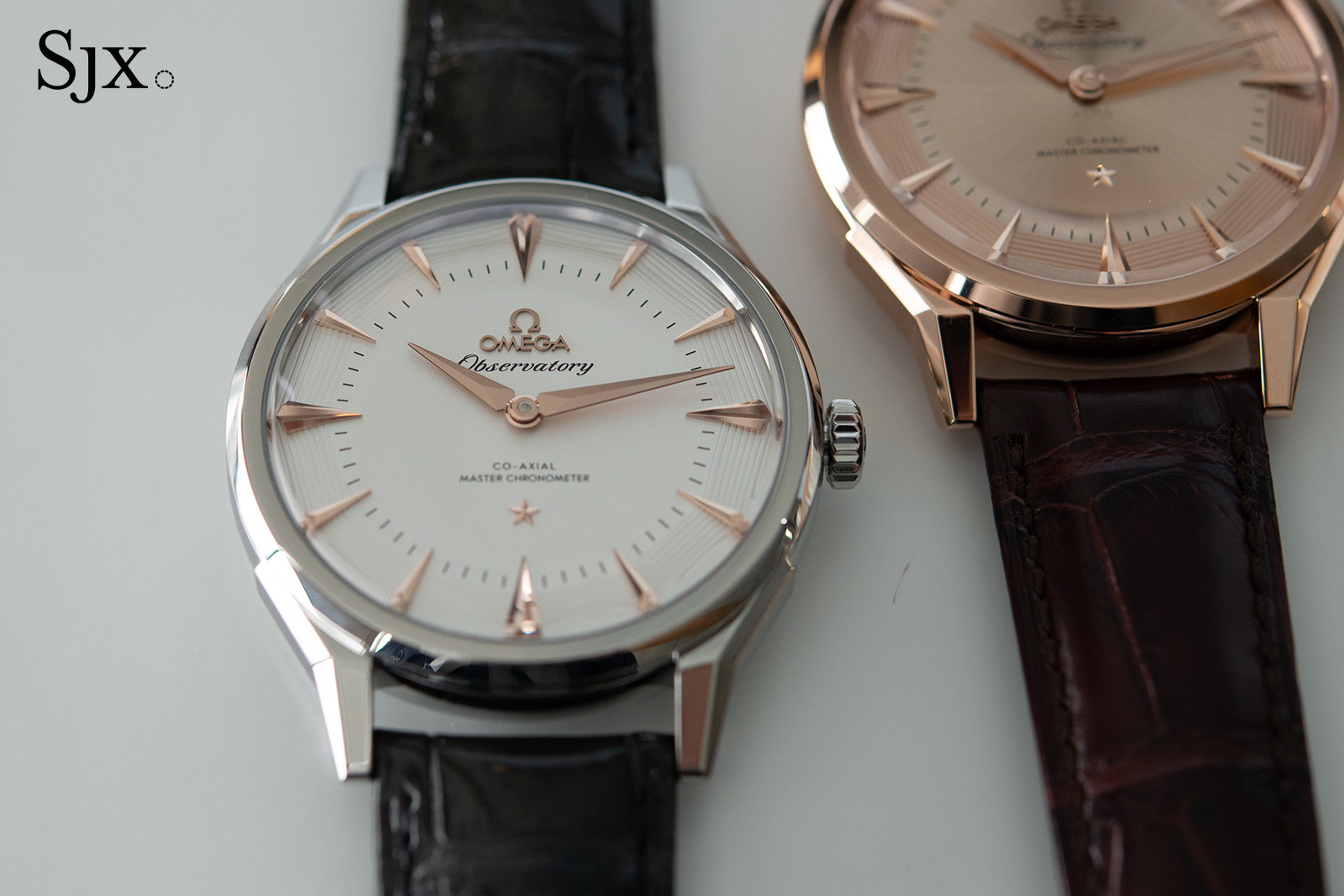
The Observatory in steel with Sedna gold markers (left) and 18k Sedna gold (right).
As a result, collectors have come to expect a running seconds hand on performance-oriented watches. Without question, a running seconds hand makes it possible to set the time with to-the-second precision and monitor performance day to day. Some collectors delight in keeping a close eye on the timekeeping of their watches, but there’s an undeniable degree of elegance that comes with the stately two-hand format.
There’s ample room for both perspectives and I have no problem with Omega stretching its wings on the design front and challenging accepted norms for what features a chronometer should have. After all, more variants are all but guaranteed.
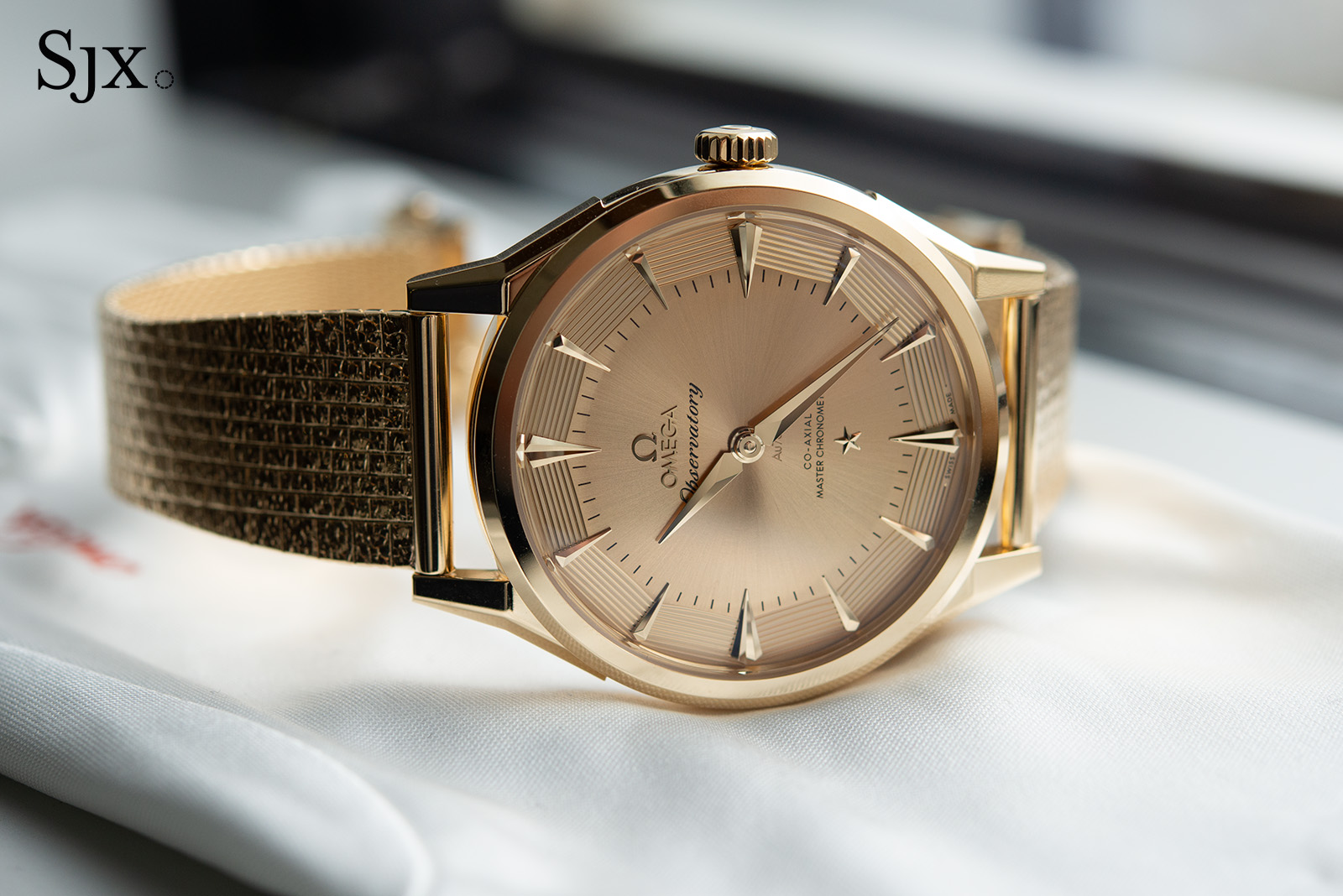
The Observatory in 18k Moonshine gold, the brand’s trade name for its proprietary yellow gold alloy, installed on its matching bracelet.
Acoustic chronometer certification
The chronometer certification is achieved with a new acoustic testing process developed by Swatch Group’s Laboratoire de Précision, a new entrant in the field of chronometry testing. The Laboratoire de Précision was announced in 2024, and the Observatory is the first officially certified chronometer to emerge from this new independent testing laboratory.
Acoustic testing is not new — almost every watchmaker uses a Witschi machine to take point-in-time measurements during regulation and adjustment — but surprisingly this approach has not been developed into an ISO-certified testing process until now.
The Laboratoire de Précision will be the focus of its own story in the future, but the key thing to understand is how this new body, fully accredited by the Swiss Accreditation Service (SAS), fits into the broader context as it relates to the Master Chronometer certification, which is a separate distinction with a complementary set of criteria.
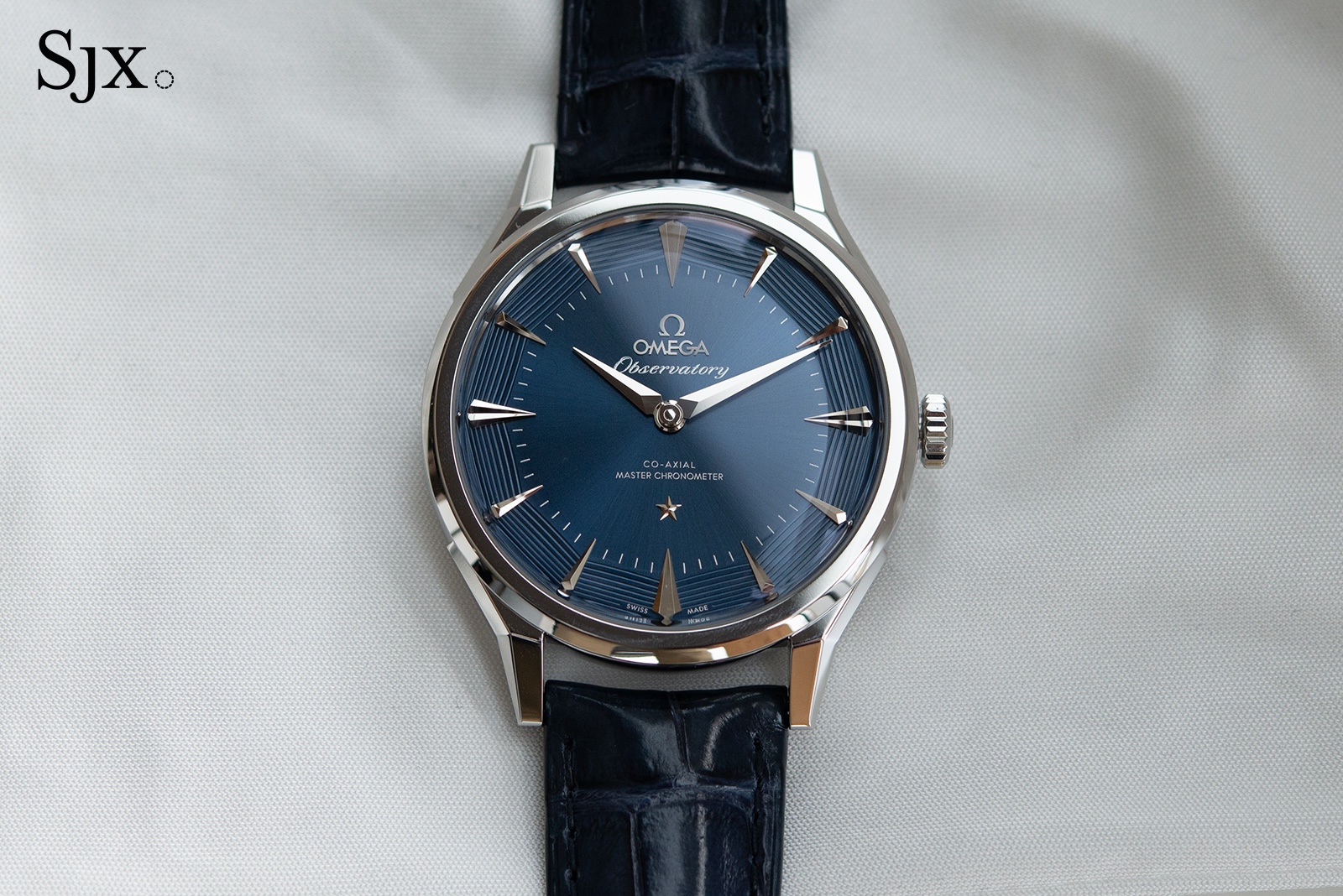
The Observatory in steel.
Since launching the Master Chronometer designation in 2015, all qualifying movements have been sent to COSC for traditional certification according to the international standard for chronometer testing, ISO 3159, which tests movements only.
Once certified, the movements are cased up at the Omega manufacture in Bienne, where they undergo eight additional tests in a designated room operated by METAS, which can be thought of as a sovereign embassy or consulate within the manufacture operated by independent staff.
For the Observatory, this second step remains unchanged. But instead of first being certified by COSC, the movements are certified by the Laboratoire de Précision. Like the Master Chronometer standard, which is also used by Tudor, the Laboratoire de Précision is open to third-party brands. This is actually a condition of the SAS accreditation.
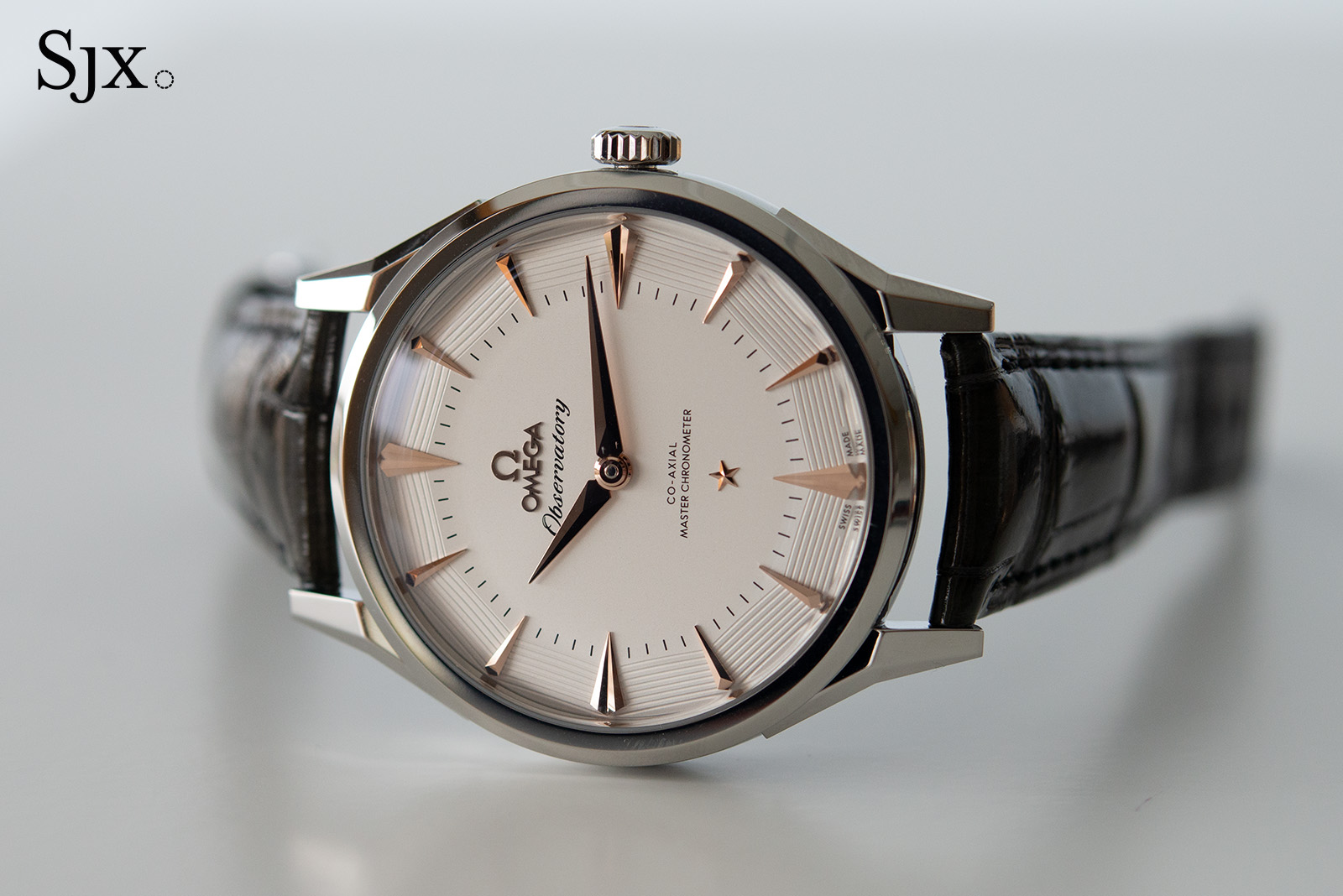
The Observatory in steel with 18k Sedna gold dial markers.
To date, the Observatory is the first watch to be chronometer-certified by the Laboratoire de Précision, rather than COSC. All other Omega Master Chronometer movements are still sent to COSC for certification before being cased up to complete the METAS process. Over time, it’s reasonable to expect that to change as the Laboratoire de Précision scales up its capacity.
Nine references
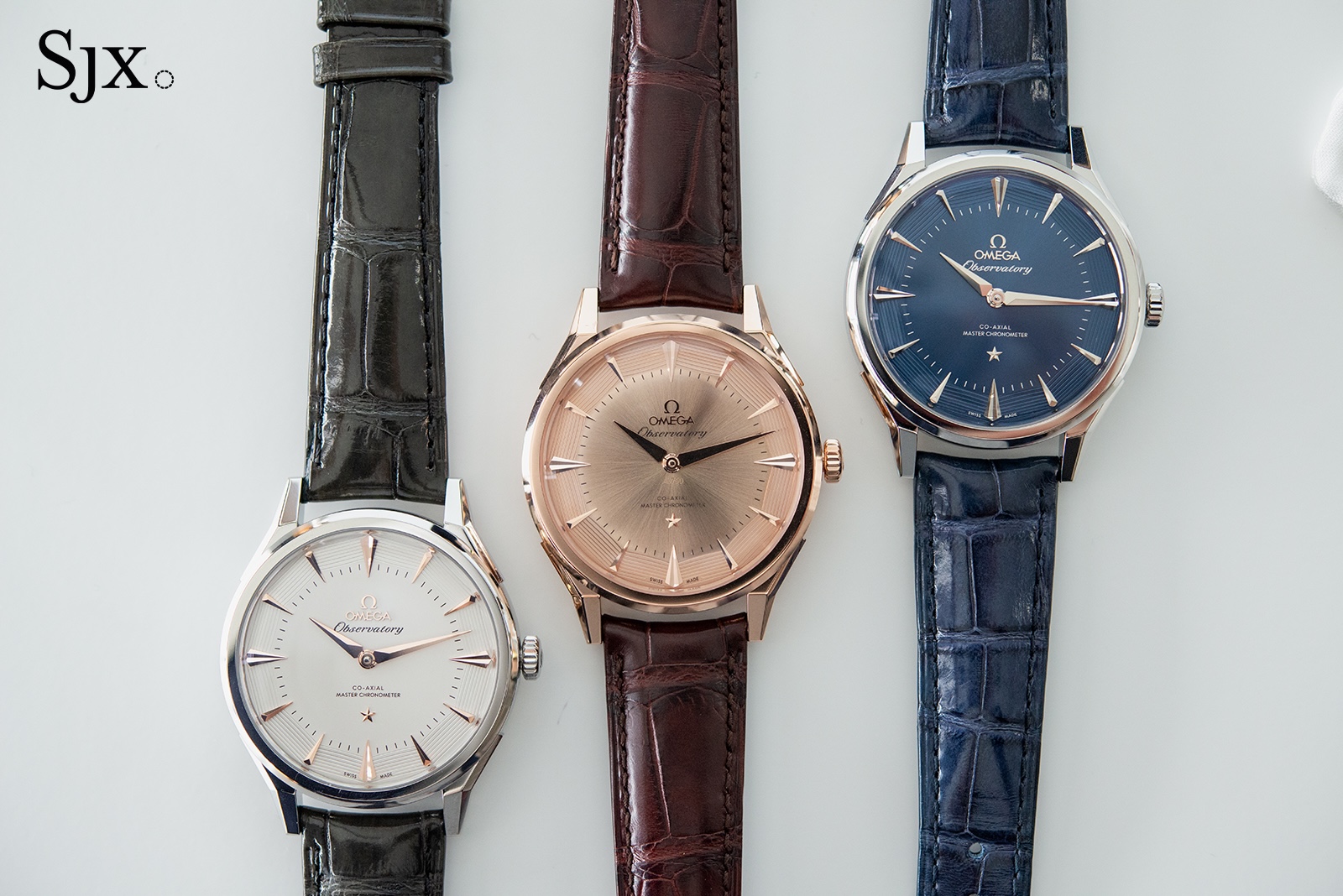
At launch, the Observatory is available in nine different configurations — four in the brand’s proprietary steel alloy, which is claimed to be up to 50% more scratch-resistant than the industry standard, and five in precious metal. Omega’s proprietary gold alloys, Moonshine, Sedna, and Canopus, are the brands trade names for its special formulations of yellow, rose, and white gold, respectively.
Lastly, there is a platinum model distinguished by its winding rotor, which features a grand feu enamel Constellation medallion. The precious metal references are especially hefty of account of their dials, which are made of solid 18k gold or 950 platinum, depending on the case material. For context, the steel models weigh 71 g, the gold models weigh about 99 g, and the platinum model, which is paired with a salmon-tone dial similar to that of the first co-axial De Ville models, is the heaviest of the bunch at 121 g.
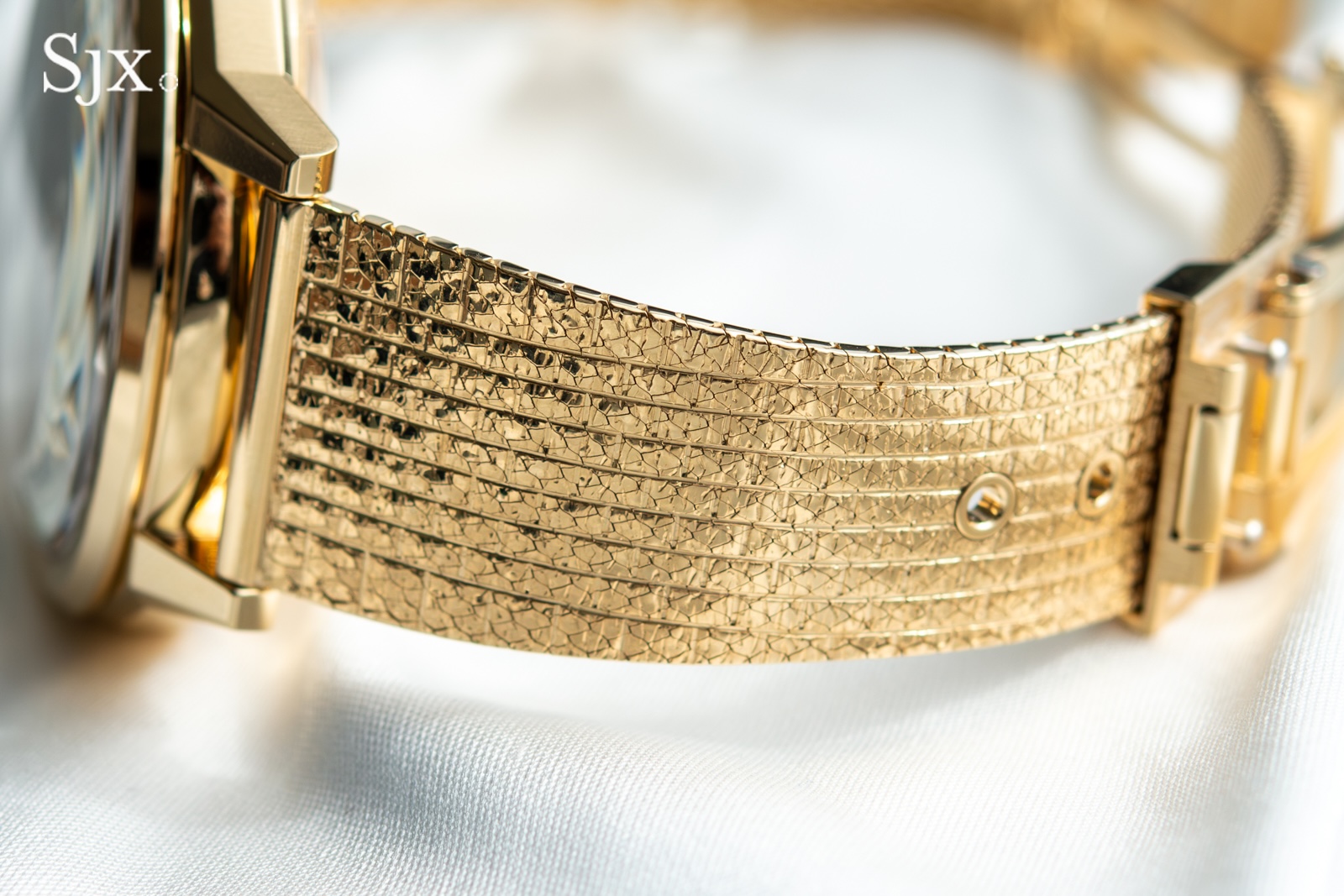
For a significant up-charge, the Moonshine gold model can be paired with a vintage-inspired — but wholly modern — brick-style gold bracelet. The bracelet is similar in its construction to the titanium bracelet seen on the Seamaster Diver 300M 007 Edition, with straight spring bars and an adjustable strap-style construction that closes with a deployant clasp.
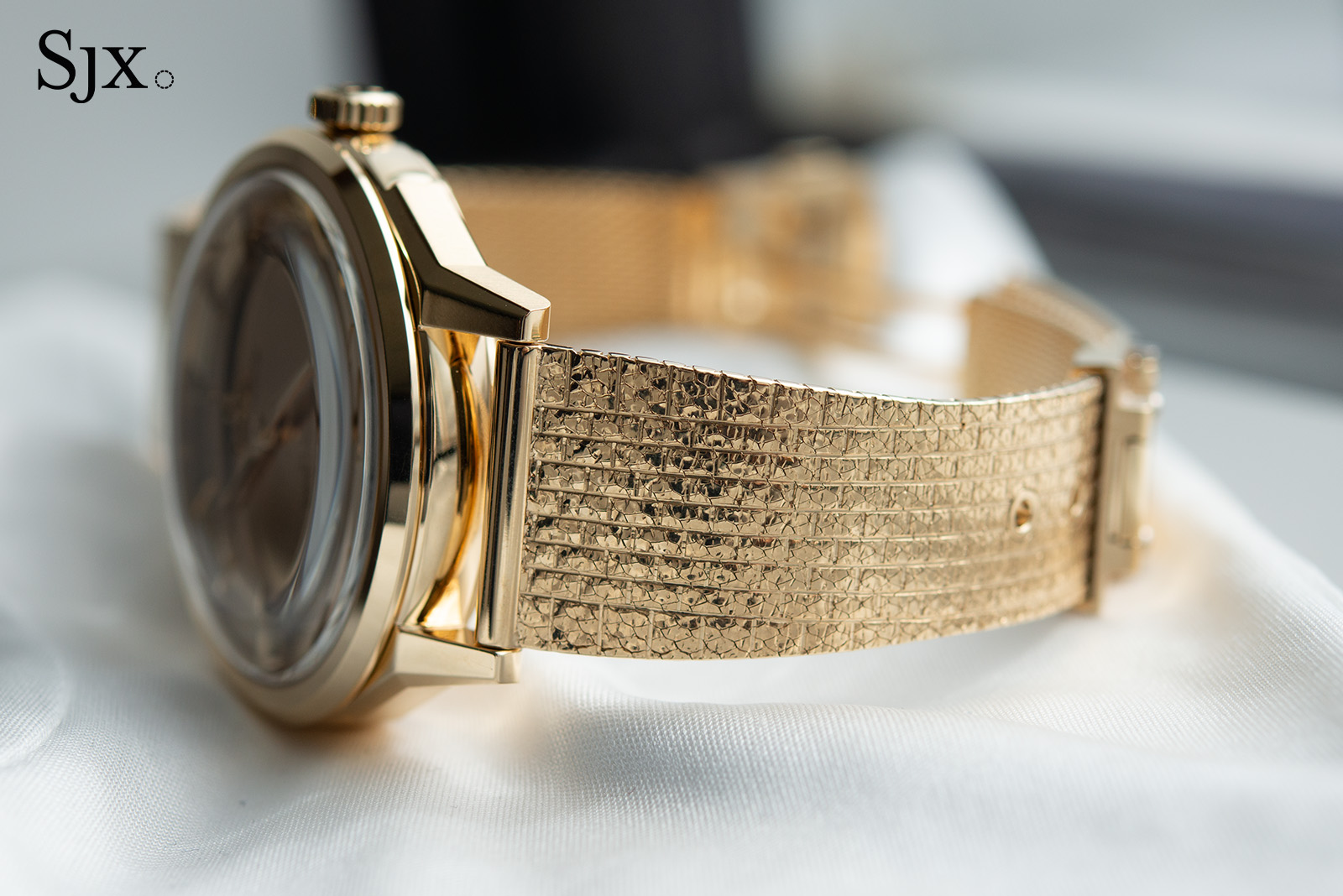
Up close, the bracelet is remarkable for its foil-like texture, which reminds me of the crinkled gold foil used to insulate the Apollo lander. The bracelet feels sturdy despite is slim construction, and adds about 60 g to the total weight.
In steel, the four dial options include dark blue, dark green, silver (with Sedna gold dial furniture) and black. The latter is the odd one out, being the only one made of ceramic. The glossy piano-black finish is difficult to photograph but highly attractive, managing to capture much of the magic of mid-century black-dialled Pie-Pan Constellations, with the ethereal perfection offered by modern ceramics.
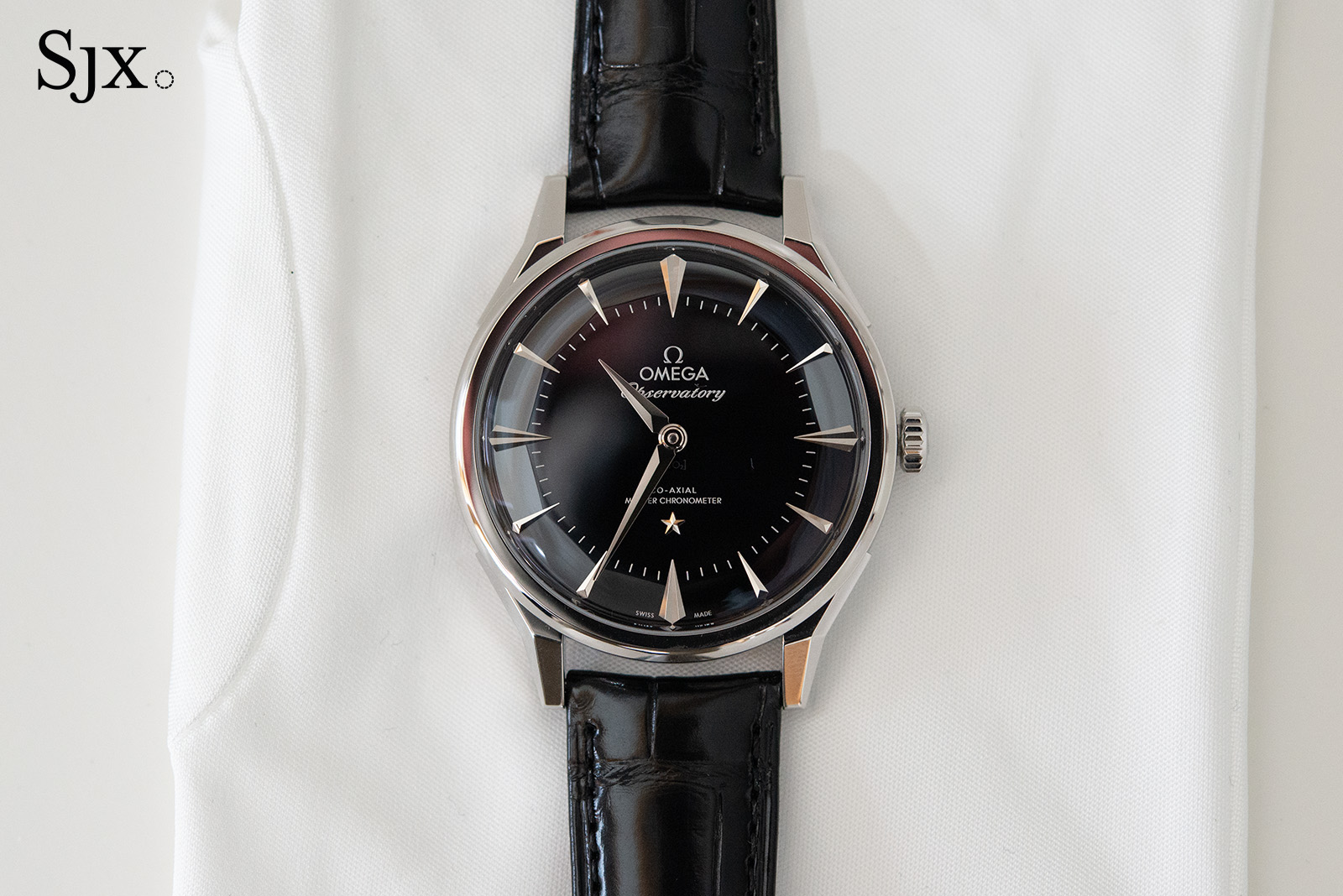
The Observatory in steel with a black ceramic dial.
The black ceramic-dialled model differs from the rest in two ways, beyond the obvious. The first is the logo and Omega wordmark, which are pad-printed rather than applied — a smart choice that improves readability by reducing the number of highly reflective surfaces.
The second difference can be observed at the periphery of the dial. All other models feature a guilloche-style treatment — stamped on the steel models and hand-engraved on the precious metal equivalents — while the black ceramic model features a continuous glossy surface from edge to edge.
The elephant in the room
There’s no getting around the fact that the Observatory is more than 12 mm thick, which makes it quite chunky by dress watch standards — especially with the field of two-handers that require less clearance between the dial and crystal. The platinum model is thicker still in order to accommodate a thicker 18k Sedna gold winding mass, which needs extra depth for the champlevé grand feu enamel treatment around the observatory medallion.
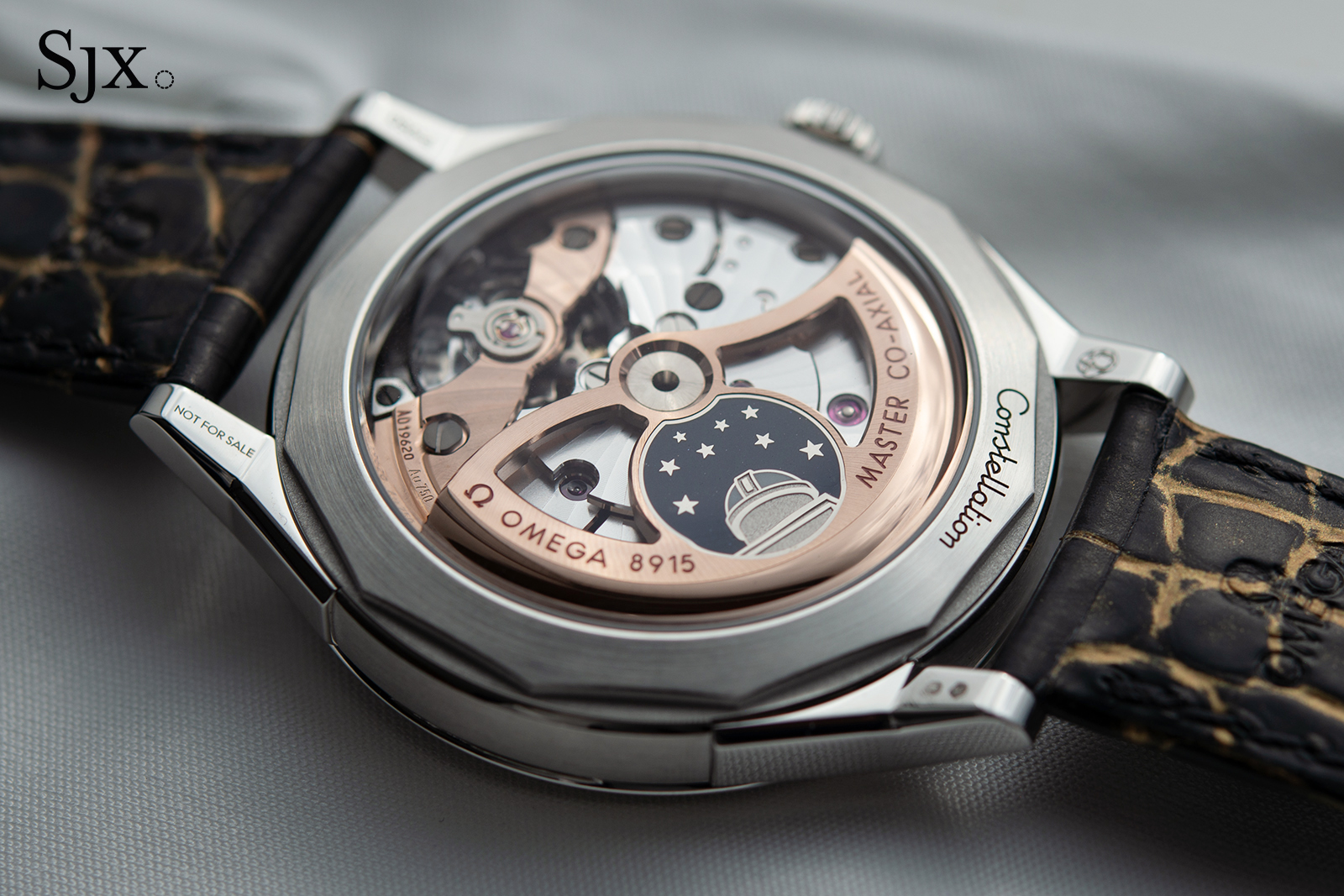
The rotor in the platinum Observatory differs from others with its grand feu enamel medallion.
The reason for the thickness is quite straightforward: the Observatory’s movement is derived from the cal. 8900, itself derived from the cal. 8500, which was developed at a time when large, thick watches were the flavour of the day. Hindsight is 20/20, and perhaps Omega should have realised that trends come and go, but at the time it was seen as a smart play to make use of what would have otherwise been empty space inside the oversized cases that were popular at the time.
On a technical level, Omega did its job, developing a robust and technically impressive movement with twin mainspring barrels, a full balance bridge, a revised and improved co-axial escapement, a nearly silent rotor, and native flyer GMT compatibility with an independently adjustable hour hand, which can be adjusted forward or backward in discrete one-hour steps, even in non-GMT configurations.
Unfortunately, the cal. 8500 and its derivatives are both wider and about 33% thicker than the ETA 2892-derived cal. 2500 that came before them. While this thickness isn’t outrageous in absolute terms, being under 6 mm, it makes for a thick case once internal clearances and external profiles are taken into account.
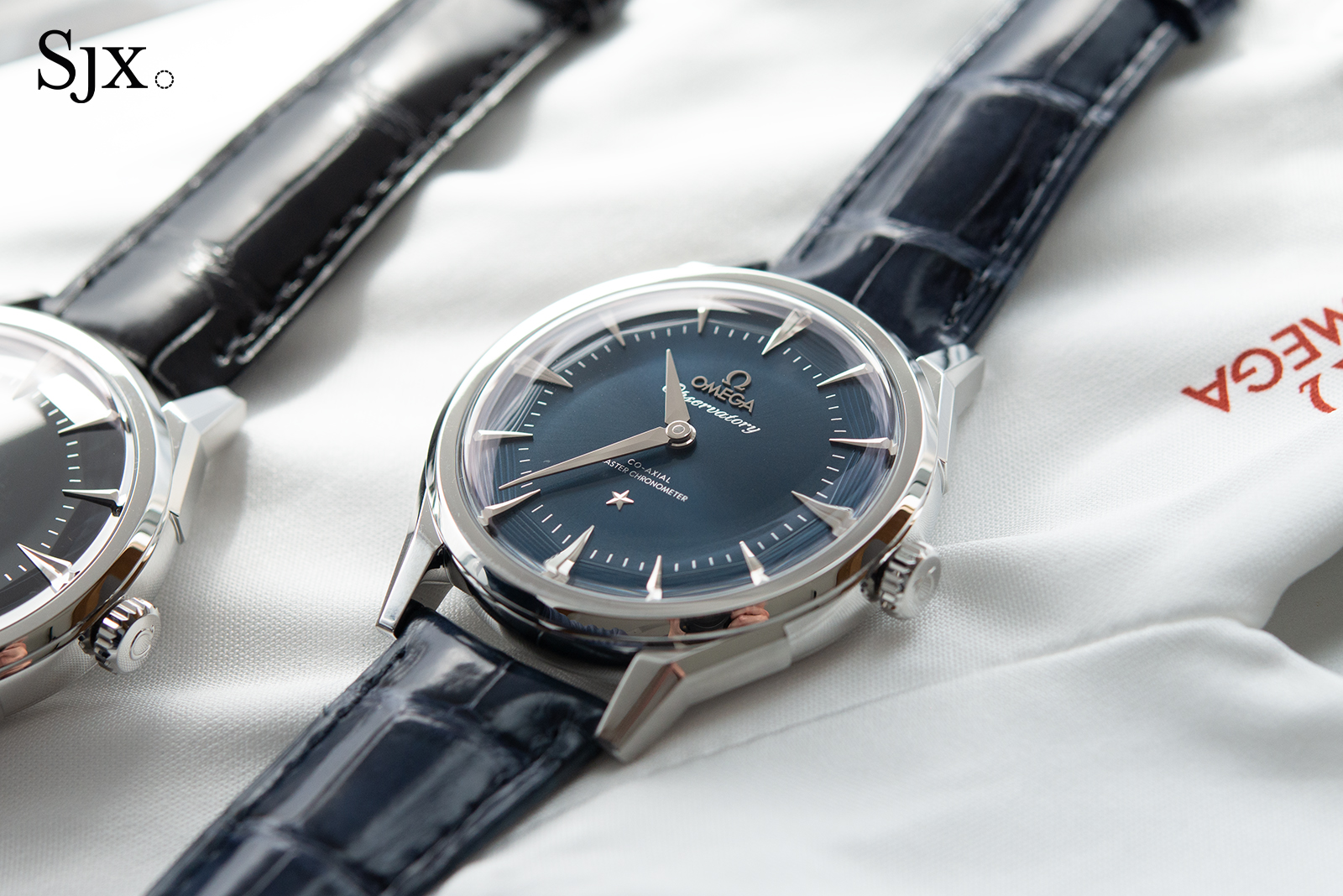
The Observatory in steel.
The cal. 8500 architecture was years ahead of its time when it debuted in 2007, and thanks to its mid-life antimagnetic upgrade in 2015, remains near the top of its class 19 years later. While a slimmer movement would have been welcome, the new cal. 891x pulls off the rare feat of being both tried-and-true and technically advanced.
Fortunately, the Observatory doesn’t look (or wear) as thick as it would seem thanks to generously domed crystal front and back, which sandwich a slim-looking case band. That’s all well and good until faced with a tight sleeve, but in most circumstances the thickness is not overwhelming.
A note on Spirate
Curiously, the Observatory lacks the brand’s Spirate adjustment system, currently available only in the Speedmaster Super Racing. The Spirate system allows for in-boutique adjustment to within 2 seconds per day, and represents a chronometric differentiator that would have suited the performance-oriented Observatory.
Omega management explained that the development of the Observatory pre-dated the beginning of Spirate development, but I would speculate it came down to wanting to reduce the number variables for commercialising a new model and a new acoustic testing process simultaneously. Omega chief executive Raynald Aeschlimann didn’t rule out the use of Spirate in the Observatory collection in the future.
Guilloche dials
Unfortunately, the optical distortion resulting from the domed sapphire crystal limits the visual effect of the stamped guilloche pattern. This primarily affects the darker variants, namely the green and blue colourways. In contrast, the lighter-dialled steel variant, which is paired with warm Sedna gold dial furniture, is less affected by this issue.
Similarly, the precious metal models are even less impacted, because these dials benefit from true hand-turned guilloche done the old fashioned way, which results in crisper, brighter edges.
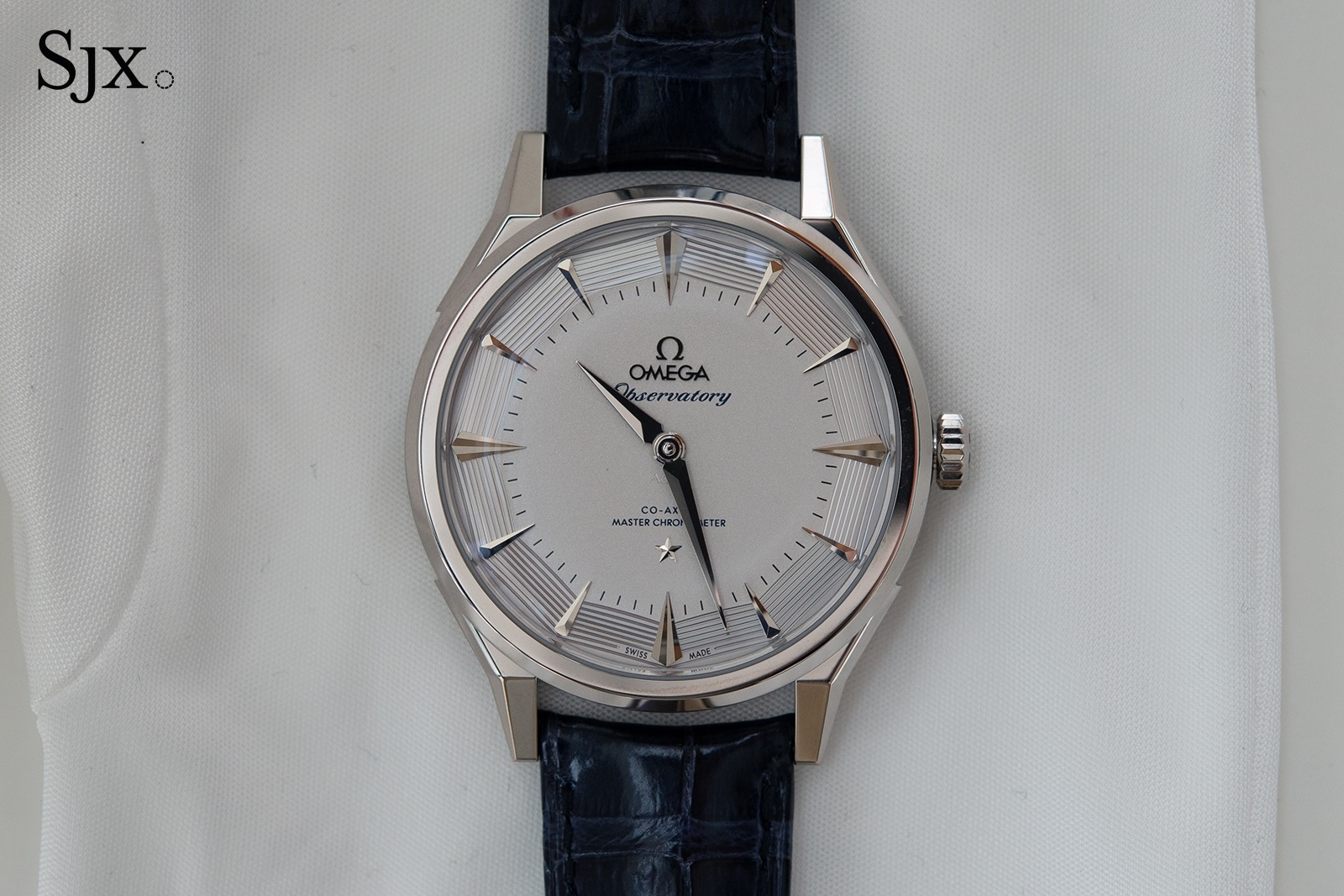
The Observatory in 18k Canopus gold, the brand’s trade name for its proprietary white gold alloy.
Either way, the eight lines correspond to the eight stars in the sky featured on the famous observatory medallion that graced the case backs of historical Constellations. The number eight is a direct reference to Omega’s numerous performance records set in the era of observatory competitions.
In more ways than one, the design itself discreetly honours the brand’s pioneering role in the development of precision timekeeping.
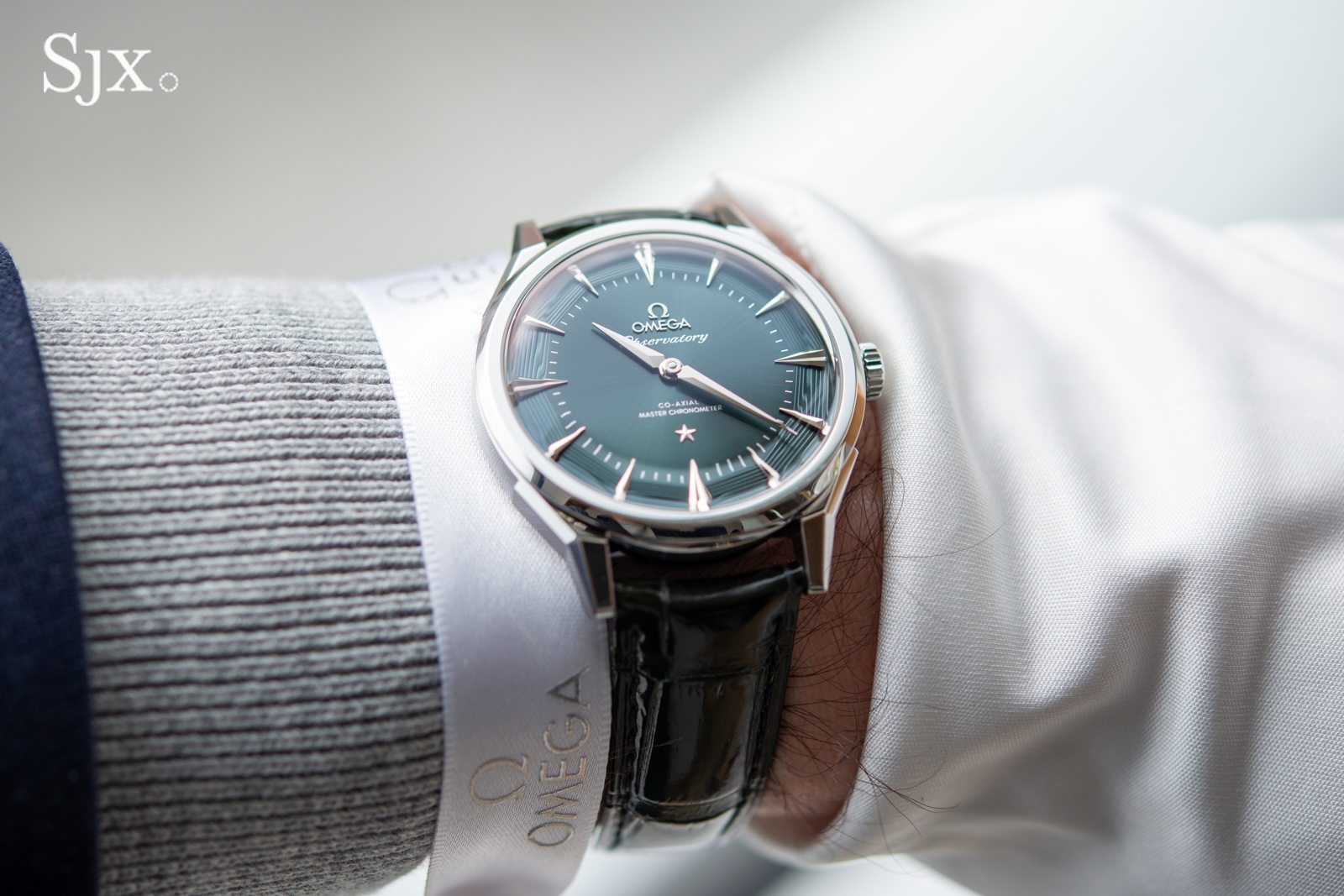
The Observatory in steel. The case looks and feels thinner than its stated dimensions.
Finishing
Setting aside conflicting perspectives about whether a chronometer should have a seconds hand, most will appreciate the luxurious finishing of the hour and minute hands, which feature a thick triple-faceted profile that makes for excellent legibility.

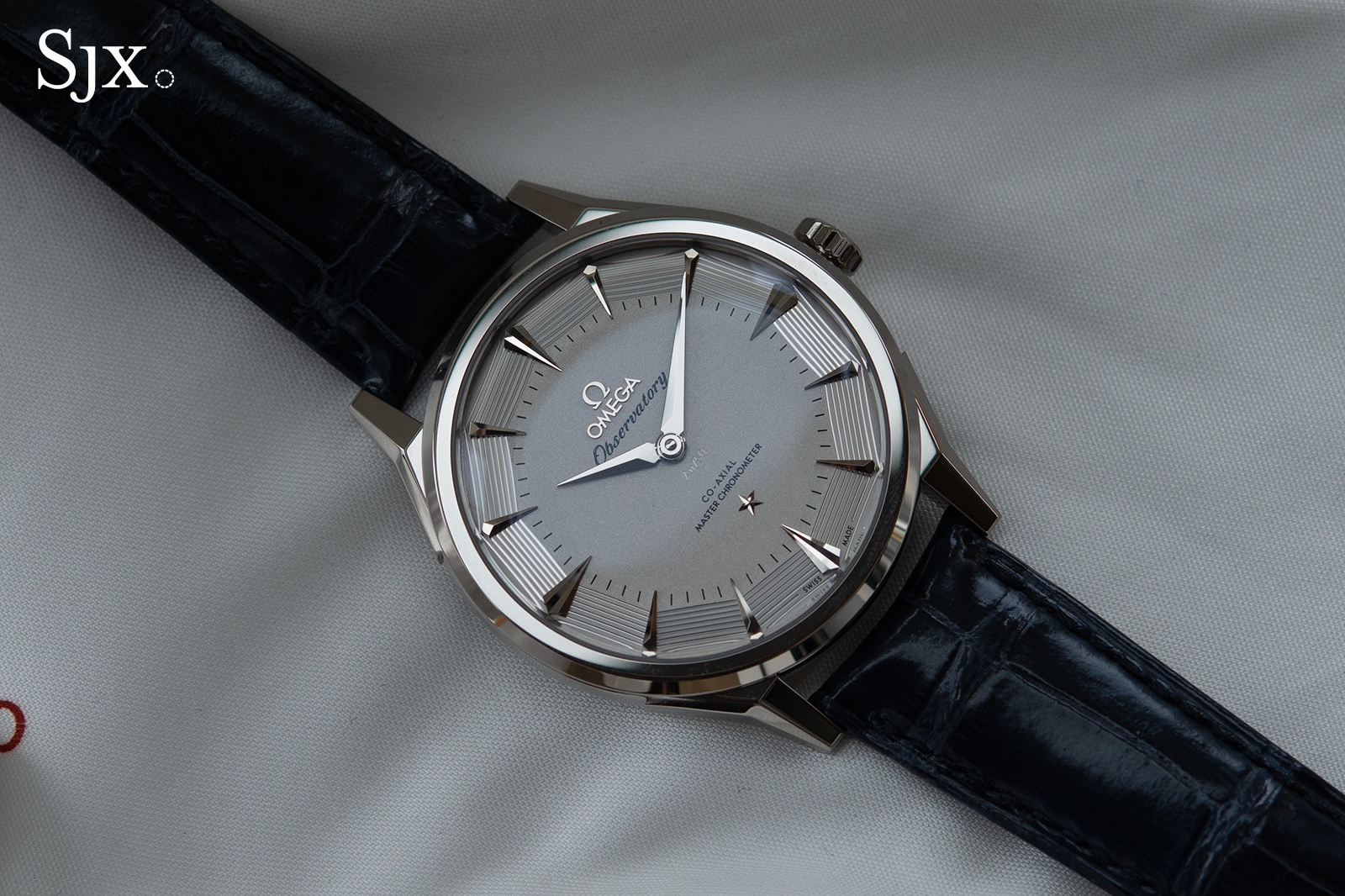
The Observatory in 18k Canopus gold, the brand’s trade name for its proprietary white gold alloy.
The rest of the dial-side finishing is exemplary, which crisply faceted and polished kite-shaped hour markers that offer a contemporary twist on a mid-century Constellation motif. Even the vertical flanks of the hour markers are mirror-polished, giving the dial a glamorous, expensive look.
Inside, the movement is finished in the typical Omega house style that has emerged since 2007, with arabesque striping and blackened screws. As a consequence of the brand’s industrial approach to watchmaking, the decorative treatments are machine-applied, but the overall look is distinctive and appealing.
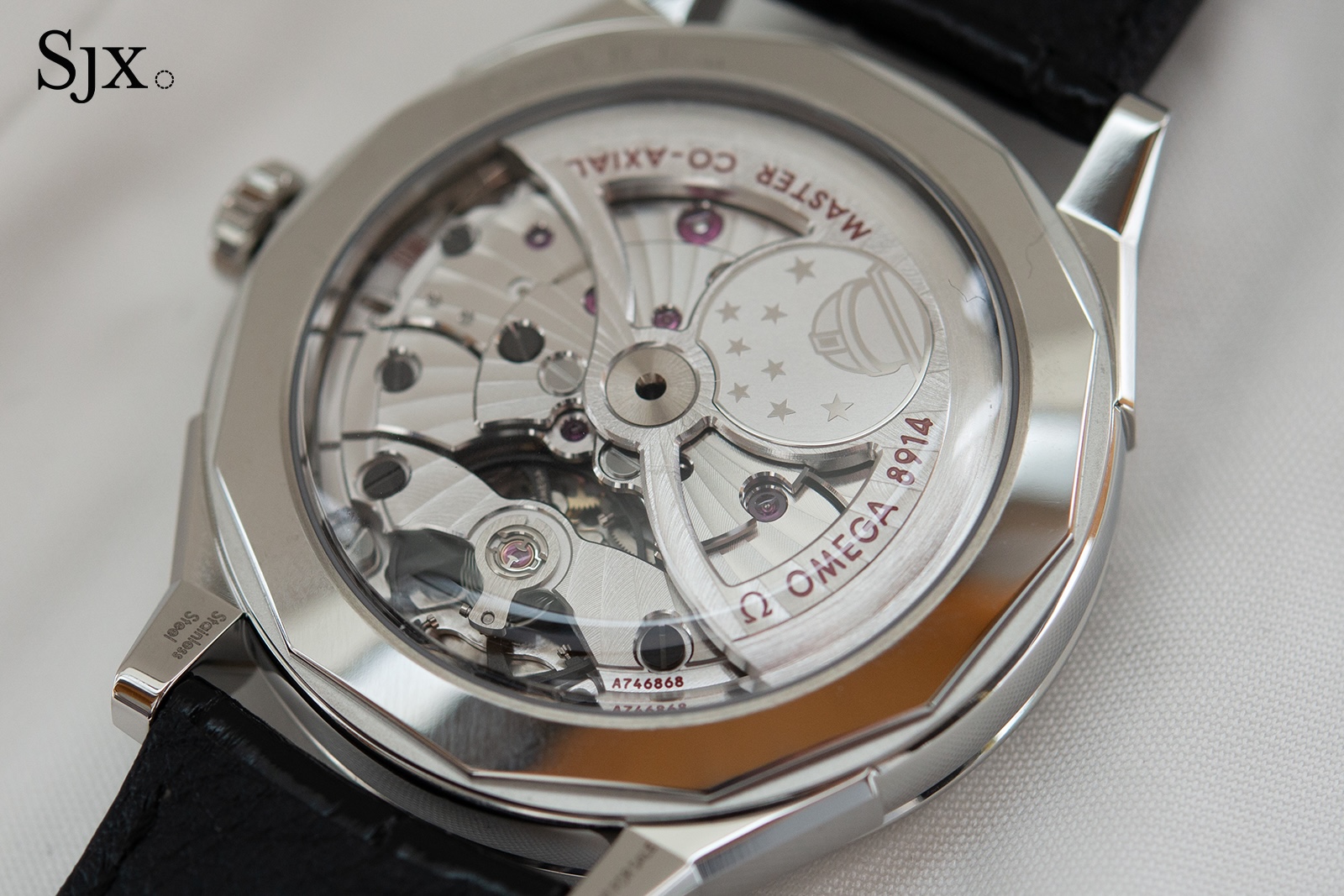
The steel models are powered by the cal. 8914.
Like most other movements in its class, the cal. 891x is decorated selectively. The perlage on the main plate, for example, is applied only to the surfaces that are visible through the case back, and not to the unseen surfaces between the plates and bridges.
Generally speaking this is an acceptable concession to economy and is to be expected from an industrial powerhouse like Omega, but the pricing of the precious metal models puts them head-to-head with more thoroughly finished entry level watches from haute horlogerie brands.
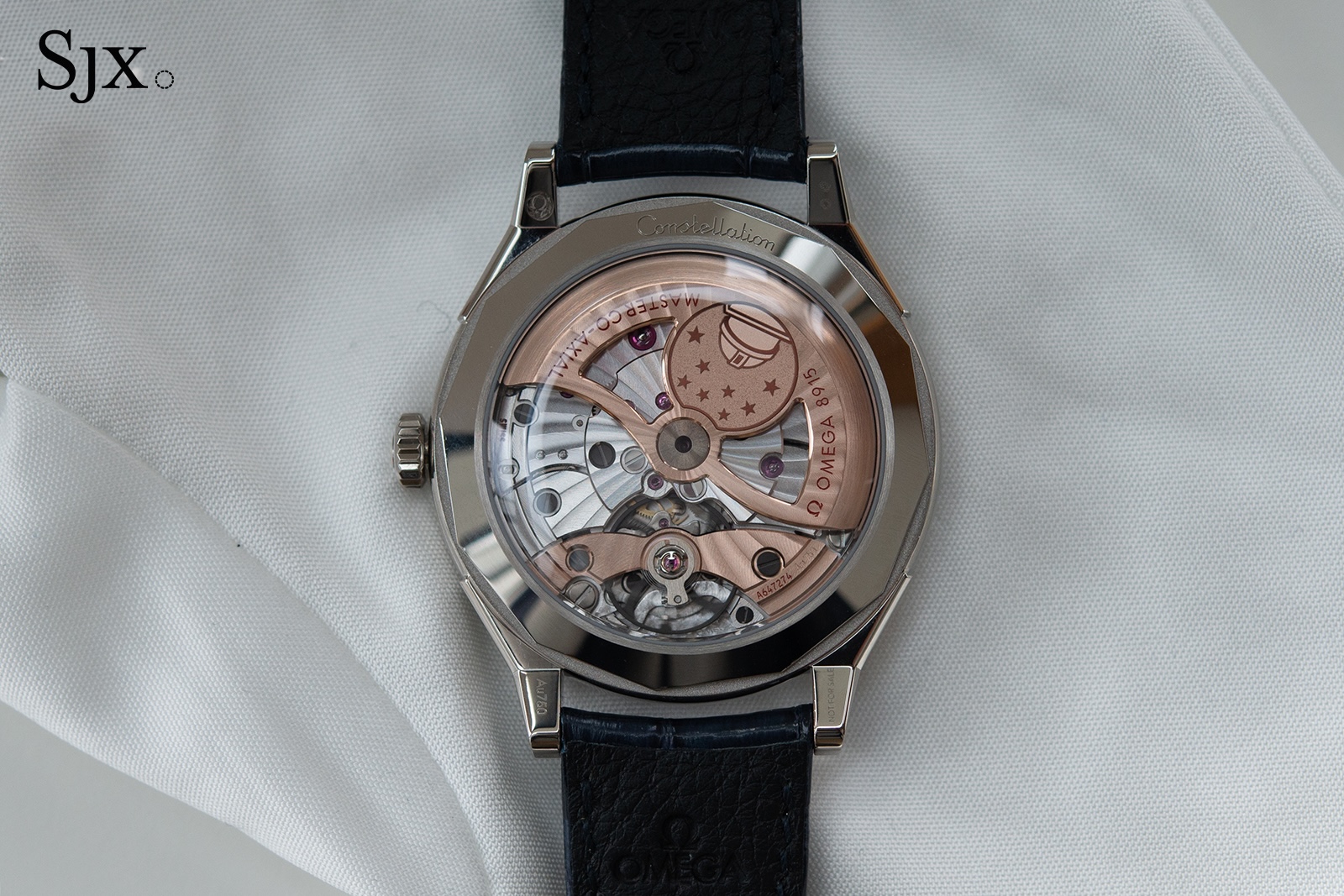
The precious metal models are powered by the cal. 8915, which features in the winding mass and balance bridge in solid 18k gold.
A highlight of the finishing is the decadent palette of materials, which includes a solid 18k Sedna gold balance bridge and winding mass for the platinum, white, and rose gold models. The yellow gold models feature these same components in case-matched Moonshine gold, a thoughtful touch seen for the first time in an Omega.
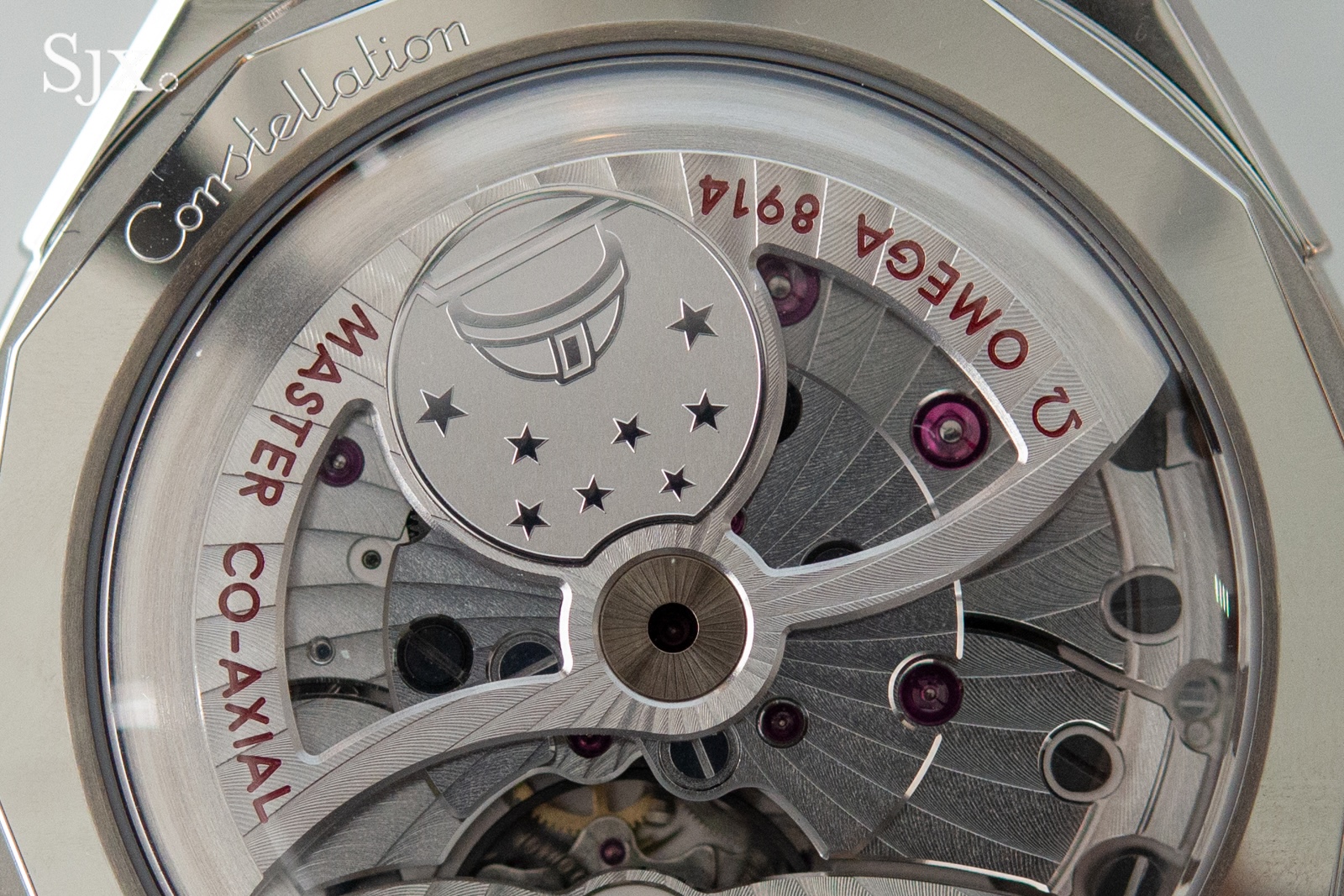
The integration of the medallion into the rotor allows for an open case back without an unsightly decal or engraving on the crystal.
Price and value
Much of the discourse surrounding the launch of the Observatory focussed on the pricing, which was seen by many as too high. While that’s a reasonable criticism of the precious metal models, the same can be said for equivalents from rival brands like Grand Seiko and Zenith.
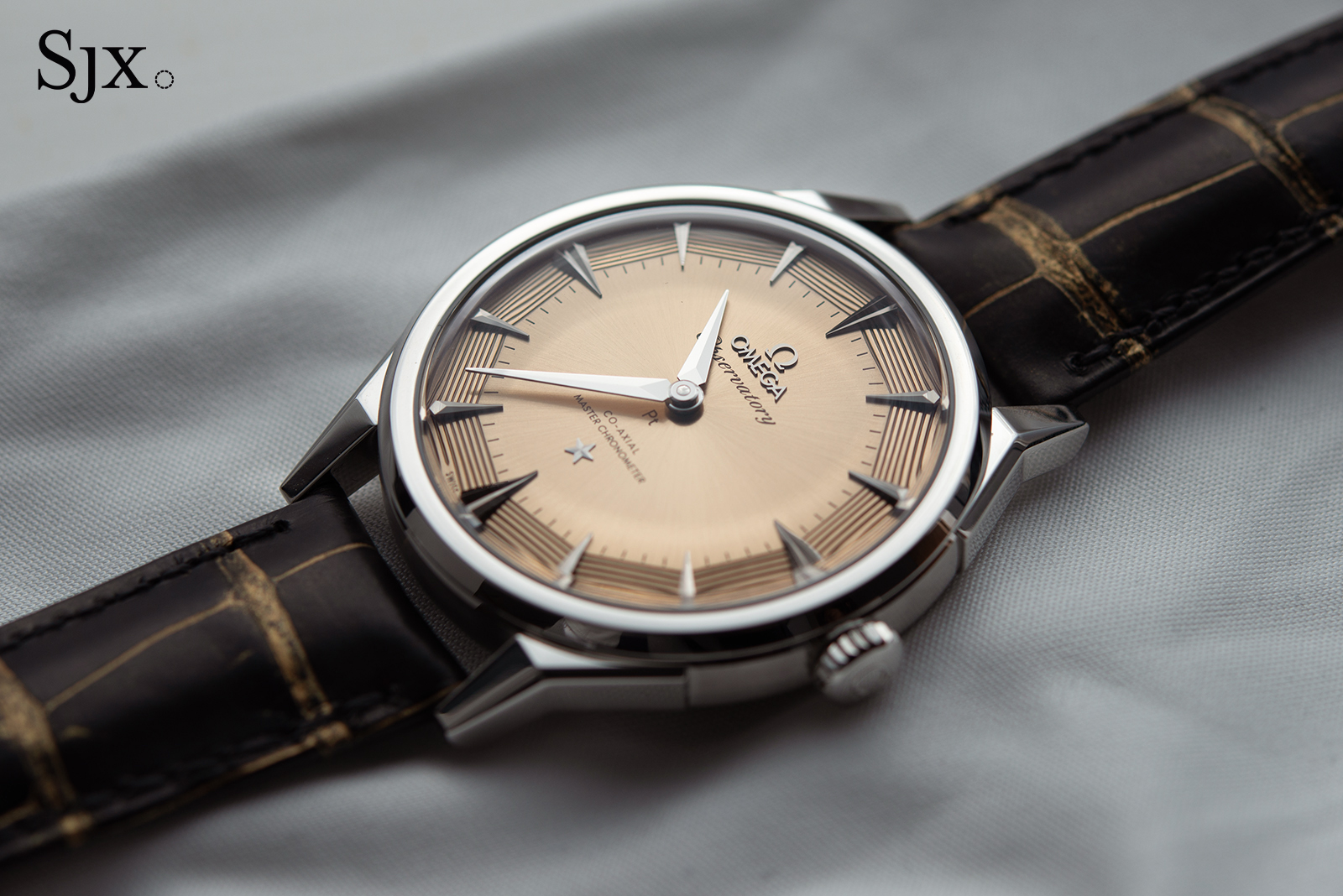
The Observatory in platinum.
Case in point, Grand Seiko’s recreation of the 45GS is a very similar watch in both concept and execution, with a high-spec movement housed in a crowd-pleasing vintage-inspired 45GS case that’s synonymous with the brand’s chronometric exploits in the late 1960s.
In steel, the SLGW005 retails for CHF10,400 — nearly CHF2,000 more than the equivalent Observatory. That said, the 18k Moonshine gold Observatory comes in higher than Grand Seiko’s yellow gold SLGW004, by about the same margin.
Another meaningful comparison would be the Zenith G.F.J. that debuted last year. So far available only in platinum, the G.F.J. features a recreation of Zenith’s observatory-winning cal. 135 and a somewhat similar dial featuring high-end materials and a guilloche perimeter. If that weren’t enough, it even has its own star on the dial. The G.F.J. was priced just under CHF50,000, within about CHF300 of the platinum Observatory.
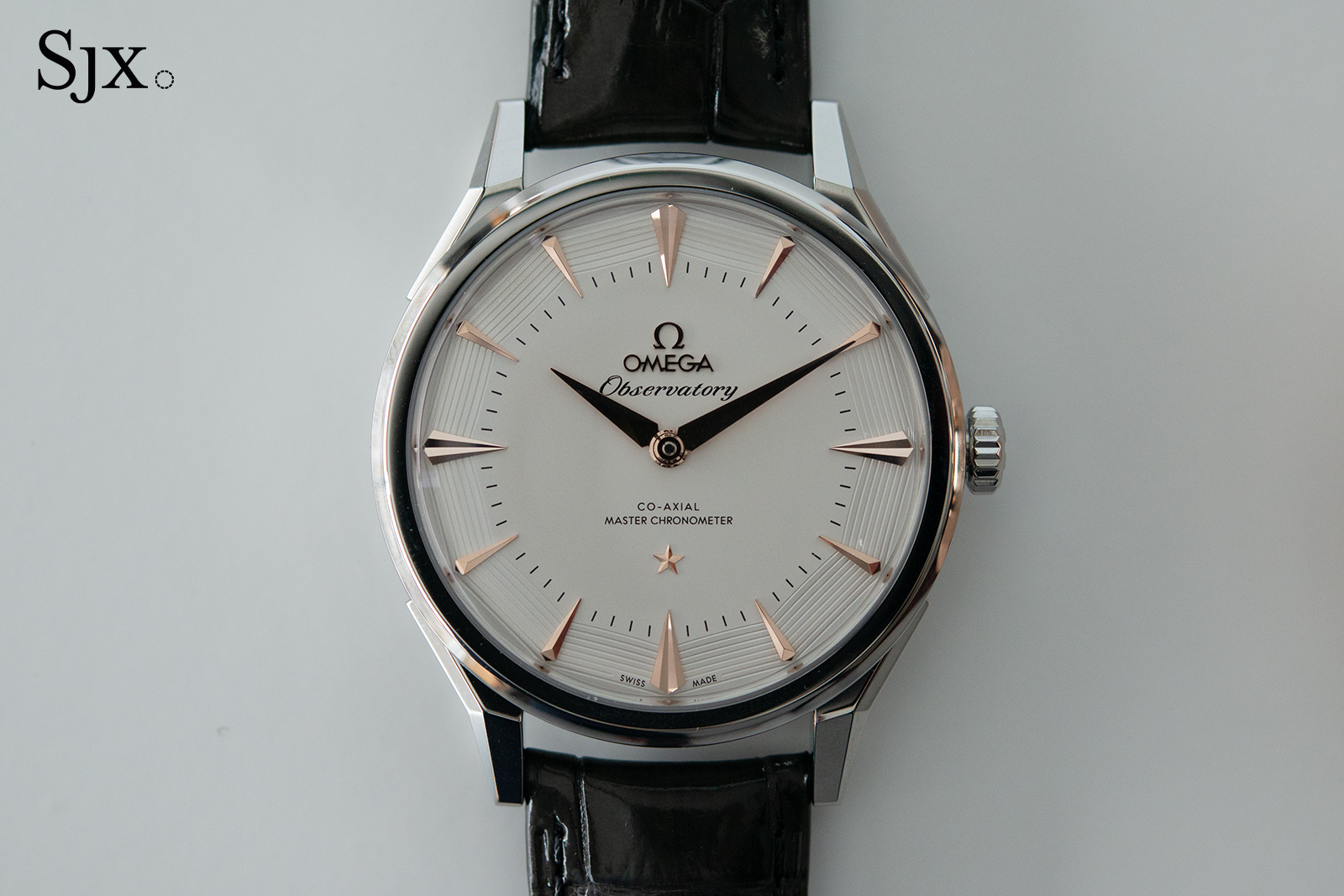
The Observatory in steel.
Of course, one could argue that all of these collections are overpriced, with some justification, but the point is that the Observatory is not that far off from established norms, and supports the asking price with unique technical features that are arguably worth the splurge.
The extent to which the value proposition is convincing depends on perspective. For Landesian enthusiasts and collectors who believe that “the quality of a watch [is] a function of its precision”, the Observatory offers reasonable value, especially in its more accessible O-megasteel configurations.
Key facts and price
Omega Constellation Observatory
Ref. 140.13.39.21.01.001 (steel/black)
Ref. 140.13.39.21.02.001 (steel/silver and gold)
Ref. 140.13.39.21.10.001 (steel/green)
Ref. 140.13.39.21.03.001 (steel/blue)
Ref. 140.50.39.21.99.001 (18k yellow gold with bracelet)
Ref. 140.53.39.21.99.001 (18k yellow gold)
Ref. 140.53.39.21.99.002 (18k rose gold)
Ref. 140.53.39.21.99.004 (18k white gold)
Ref. 140.93.39.21.99.001 (950 platinum)
Diameter: 39.4 mm
Height: 12.23 mm or 12.32 mm (platinum)
Material: 18k Moonshine gold, 18k Sedna gold, platinum, or O-megasteel
Crystal: Sapphire
Water resistance: 30 m
Movement: Cal. 8914/5
Functions: Hours and minutes
Frequency: 25,200 beats per hour (3.5 Hz)
Winding: Automatic
Power reserve: 60 hours
Strap: Leather strap or gold brick-style bracelet
Limited edition: No
Availability: Now at Omega boutiques and retailers
Price:
CHF8,500 (steel)
CHF9,500 (steel with black ceramic dial)
CHF29,500 (Moonshine or Sedna gold on leather strap)
CHF34,300 (Canopus gold)
CHF45,000 (platinum/champagne)
CHF46,000 (Moonshine gold with bracelet)
All prices exclude taxes.
For more, visit omegawatches.com
Back to top.