

Felipe Pikullik Goes Fully In-House
Breaking new ground with the FPA1 caliber.
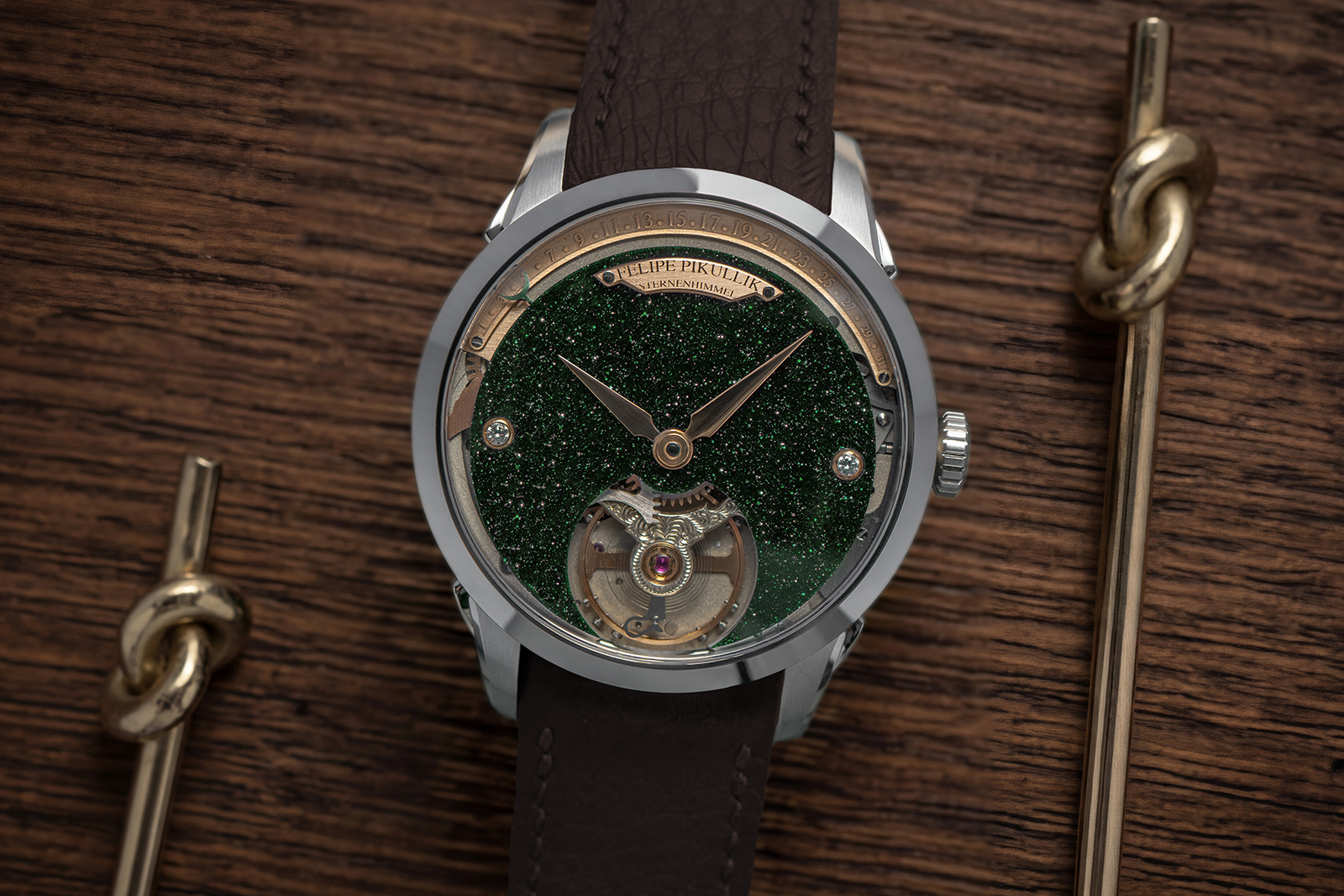
Berlin-based Felipe Pikullik presents his second in-house caliber inside the Sternenhimmel FPA1. The independent’s attempt at a refined workhorse-like movement comes in the form of the newly-developed caliber FPA1, designed to power a range of future creations.
Initial thoughts
Mr Pikullik’s emergence into the crowded independent watchmaking scene was based on heavily skeletonised off-the-shelf movements. As he gained a reputation for deft finishing and began to consolidate his workshop, he slowly but surely transitioned toward in-house engineering.
Starting with his own complication modules, the German watchmaker’s first truly in-house effort came with last year’s Moonphase II collection, which saw the launch of the calibre FPMP2.
The openworked construction featured a moon phase and 24-hour indicator but, while undoubtedly well-crafted, it arguably lacked a cohesive design language. Its distinctive architecture also made it unsuitable as the foundation for a wider range of pieces.
In contrast, the updated Sternenhimmel (German for “starry sky”) features what the independent watchmaker describes as a cornerstone movement for future models. The FPA1 is consequently far more grounded and classical in construction, yet manages to avoid the trap of looking too much like any other artisanal time-only calibre.
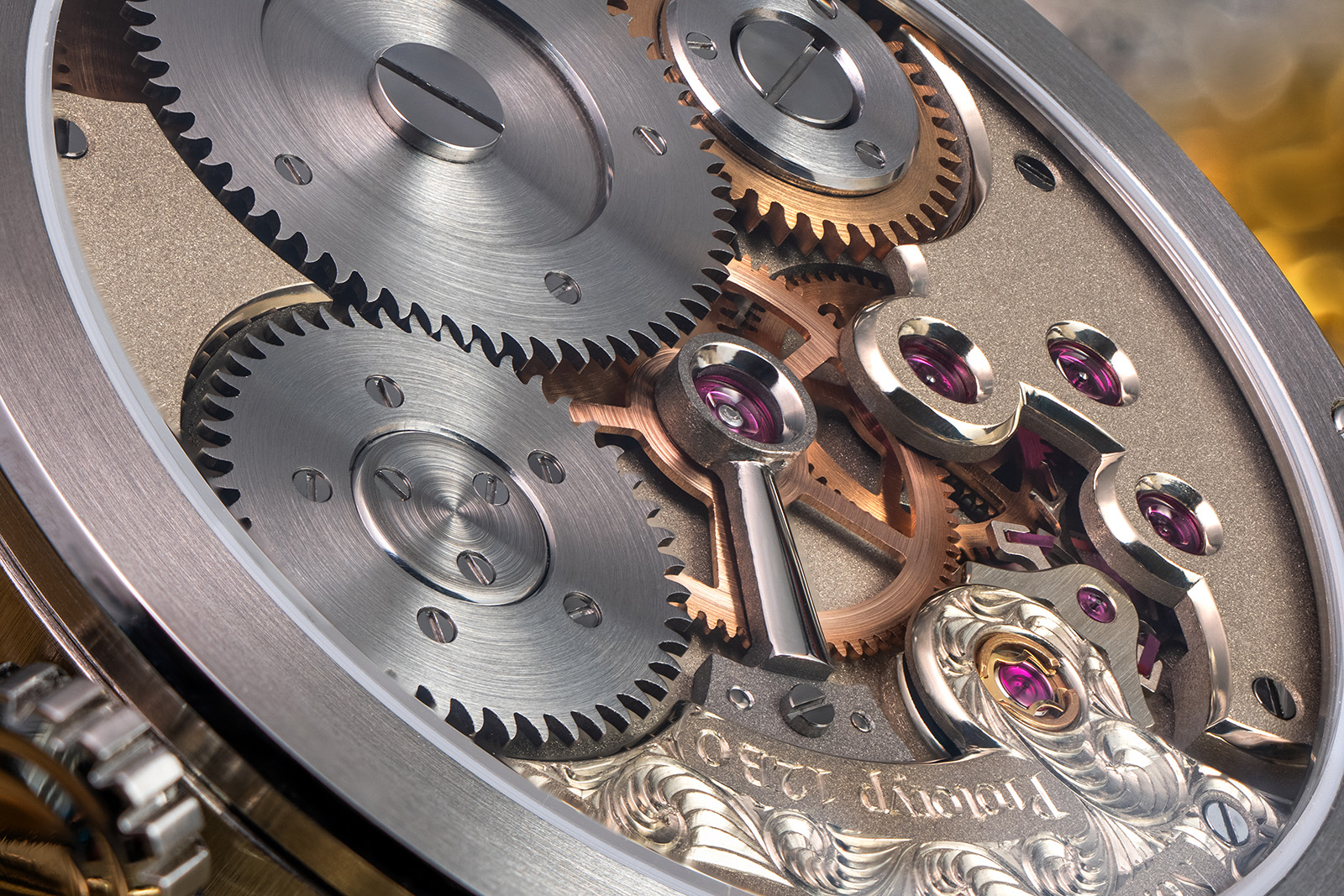
The ornate backside of the FPA1 caliber.
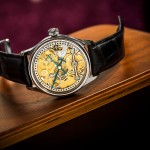
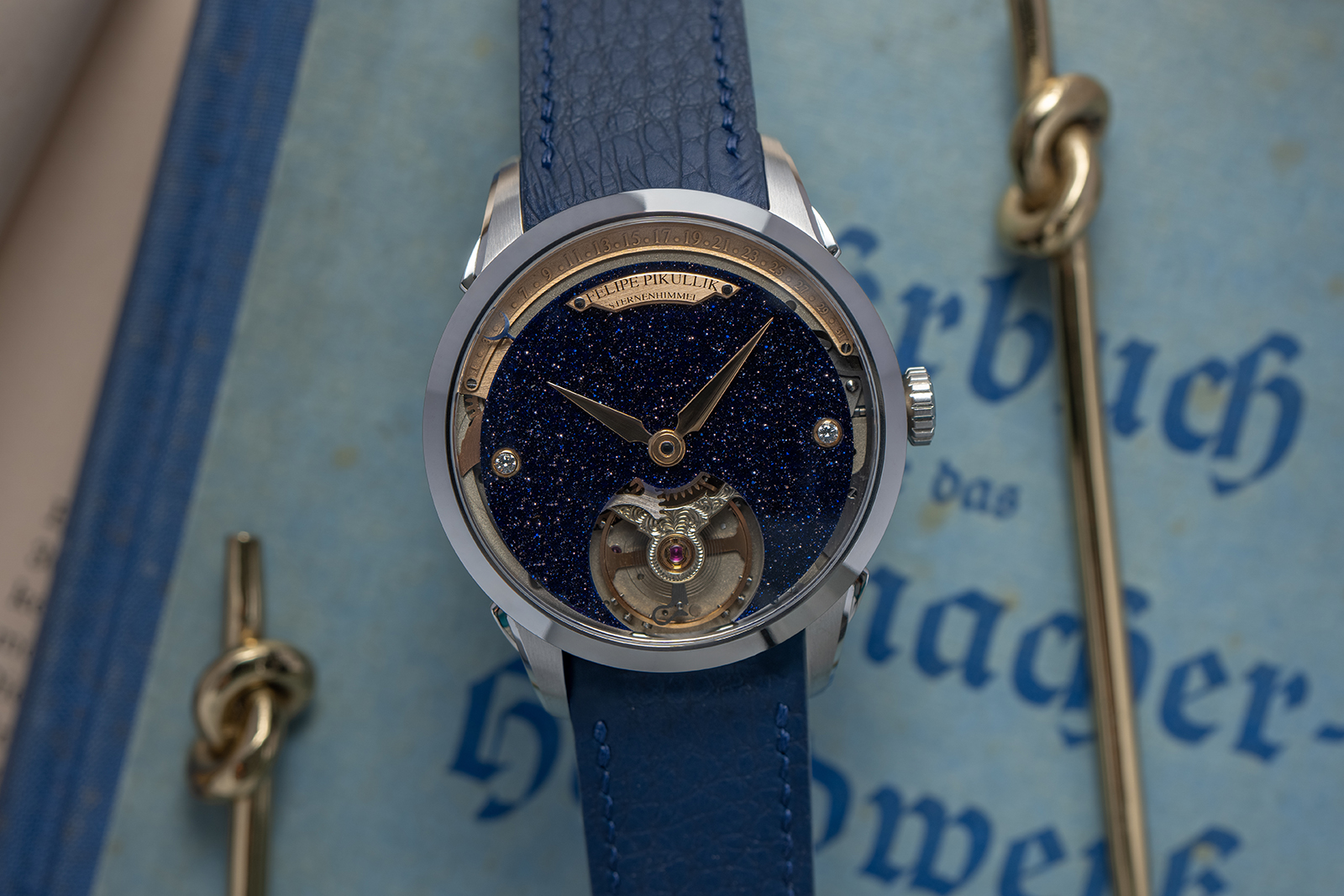
This specific iteration of the Sternenhimmel design is decidedly more modern and technically-oriented, with a floating dial that reveals glimpses of movement visible around the edges. The aventurine dial evoking a starry night sky has long been a Felipe Pikullik leitmotif.
The Sternenhimmel is housed in a stainless steel case and comes with a choice of two aventurine dial colours — blue or green. Both work well, though I’m partial to the green version, being the less expected of the two. Priced at €17,500, the Sternenhimmel FPA1 sits towards the more affordable spectrum of artisanal independent watchmaking — while also offering its fair share of truly interesting and unique details.
Exposed around the edges
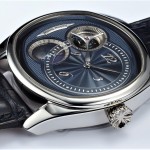
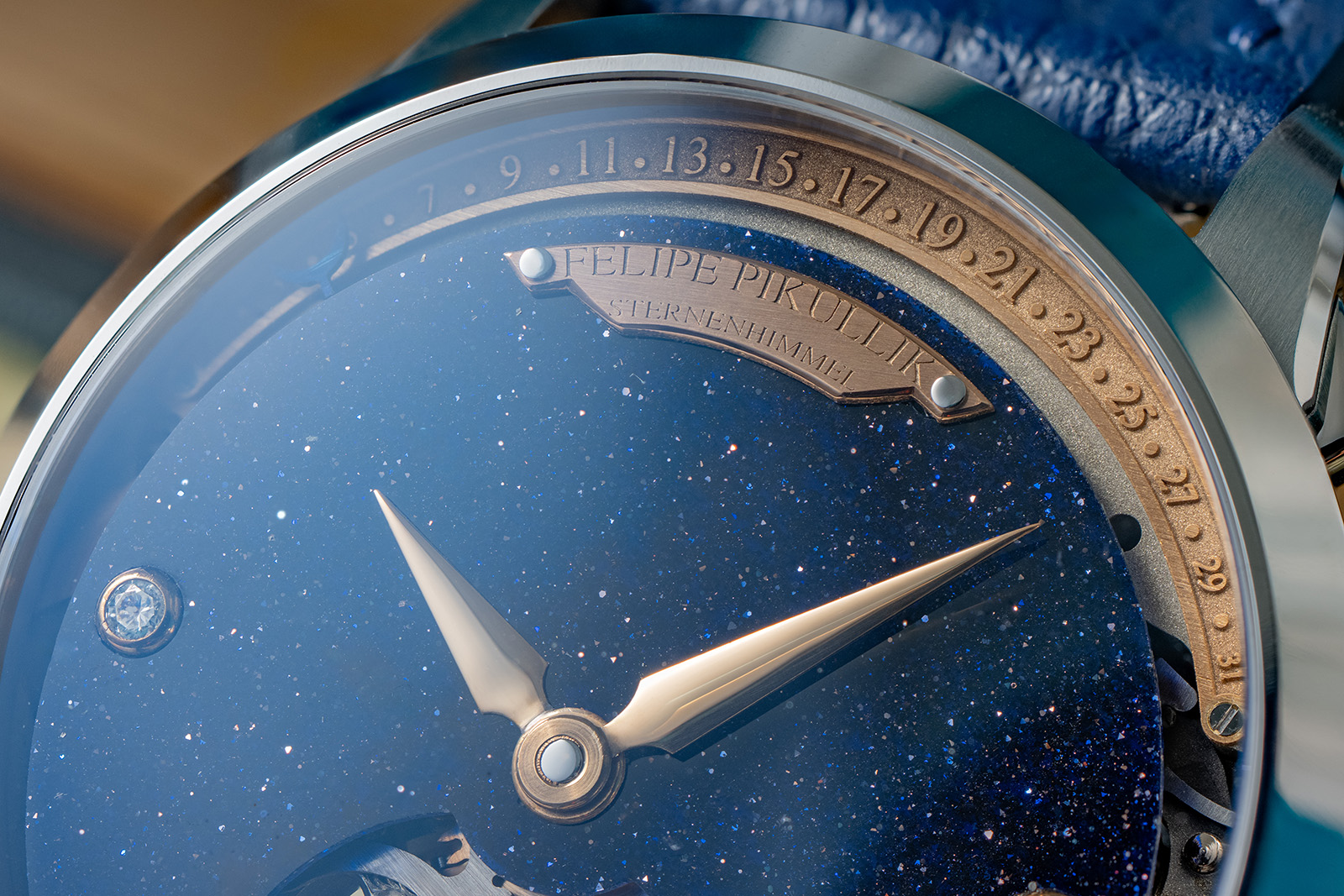
The Sternenhimmel is, from any angle, a quintessentially classical timepiece: the case measures a proper 39 mm, features Pikullik’s angular lugs, and carries a sparkling aventurine glass dial complemented by two jewel-like settings for the three and nine o’clock markers.
The glass dial plate is deliberately undersized and gently off-centred. Cutouts at six o’clock for a dial-side balance wheel or tourbillon are familiar enough, but glimpsing the movement’s edges beneath the dial is less common, similar in this respect to the Ming 19.01.
The gold engraved scale for the retrograde date is mounted to the movement itself, taking advantage of the space made available by off-centering the aventurine glass dial. Much like F.P. Journe’s dial screws, this design choice reveals the underlying craft. Interestingly, several active components can be seen working under the dial, imbuing a sense of serious technicality to the watch. Parts of the keyless works are visible, along with the stepped cam and follower rack for the retrograde date indicator.
A workhorse from Berlin
Although he is now the only independent watchmaker based in Berlin, Mr Pikullik clearly spent time working in the Glashütte region — that influence shows in the core architecture of the FPA1 movement.
Starting from the dial side, the main attraction is the large free-sprung balance wheel positioned at six o’clock. A bit like MB&F’s Split Escapement design, the flat hairspring and balance sit on one side of the movement, while the impulse jewel and roller are at the opposite end of an extra-long balance staff and engage the escapement of the other side of the movement. This leaves the visual impression of a magic, freely beating balance.
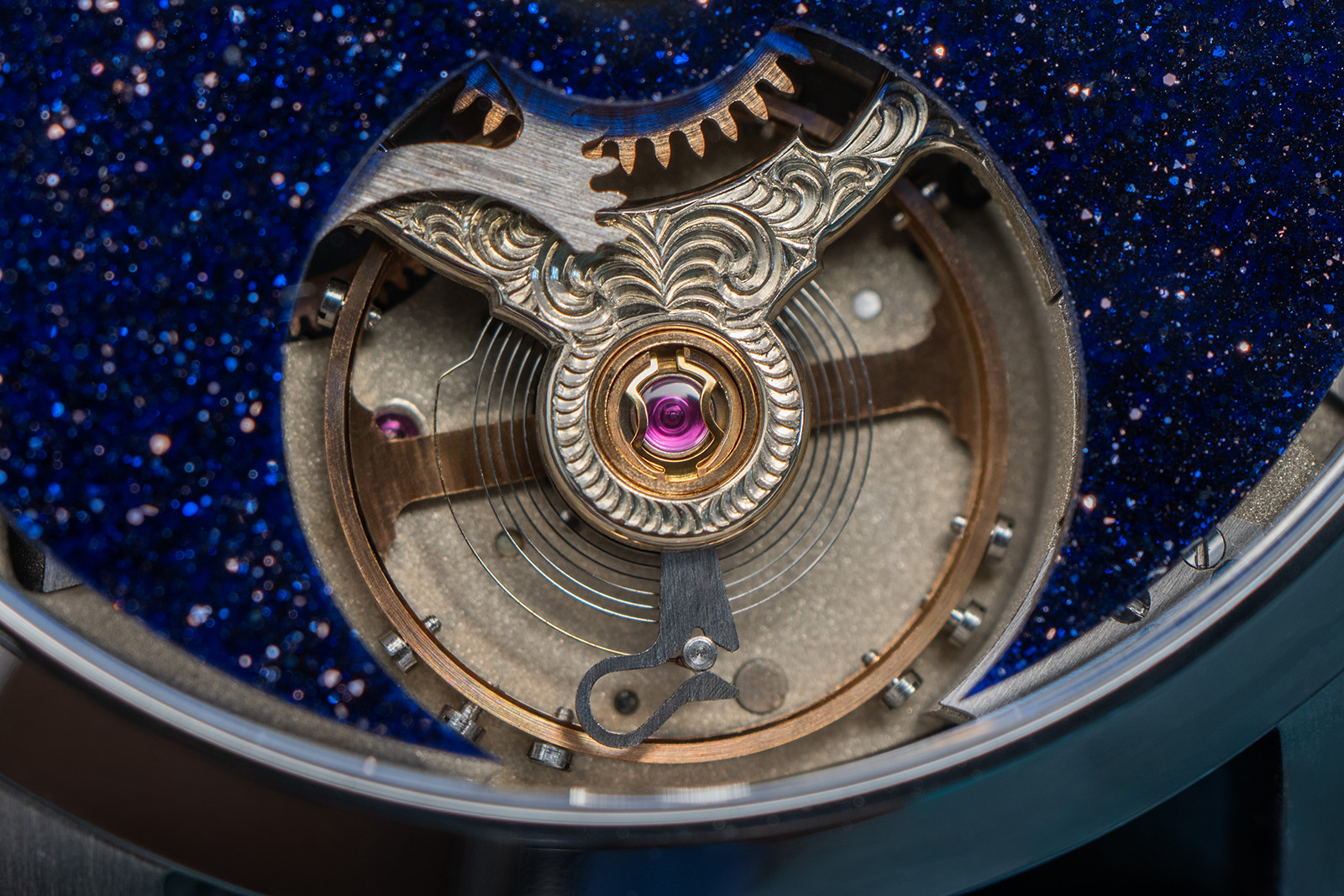
Notably, the balance assembly is handmade in-house (hairspring not included) which adds a degree of artisanal complexity to the construction. While it went unspecified, judging from Mr Pikullik’s past work with Unitas calibers, an educated guess would suggest that the FPA1 beats at 3 Hz and runs for over 40 hours on a full wind.
Glimpses of the movement also show the retrograde date system, with a stepped snail cam visible near the nine o’clock position, and a toothed rack overlapping the balance wheel.
One of the most technically mature details of the FPA1 is the date corrector, which is hidden inside the lower right lug. The corrector requires no tools, and, and seamlessly blends into the design. This is an elegant solution that also appeals to those who prefer to engage with the mechanics of the movement beyond just operating the crown.
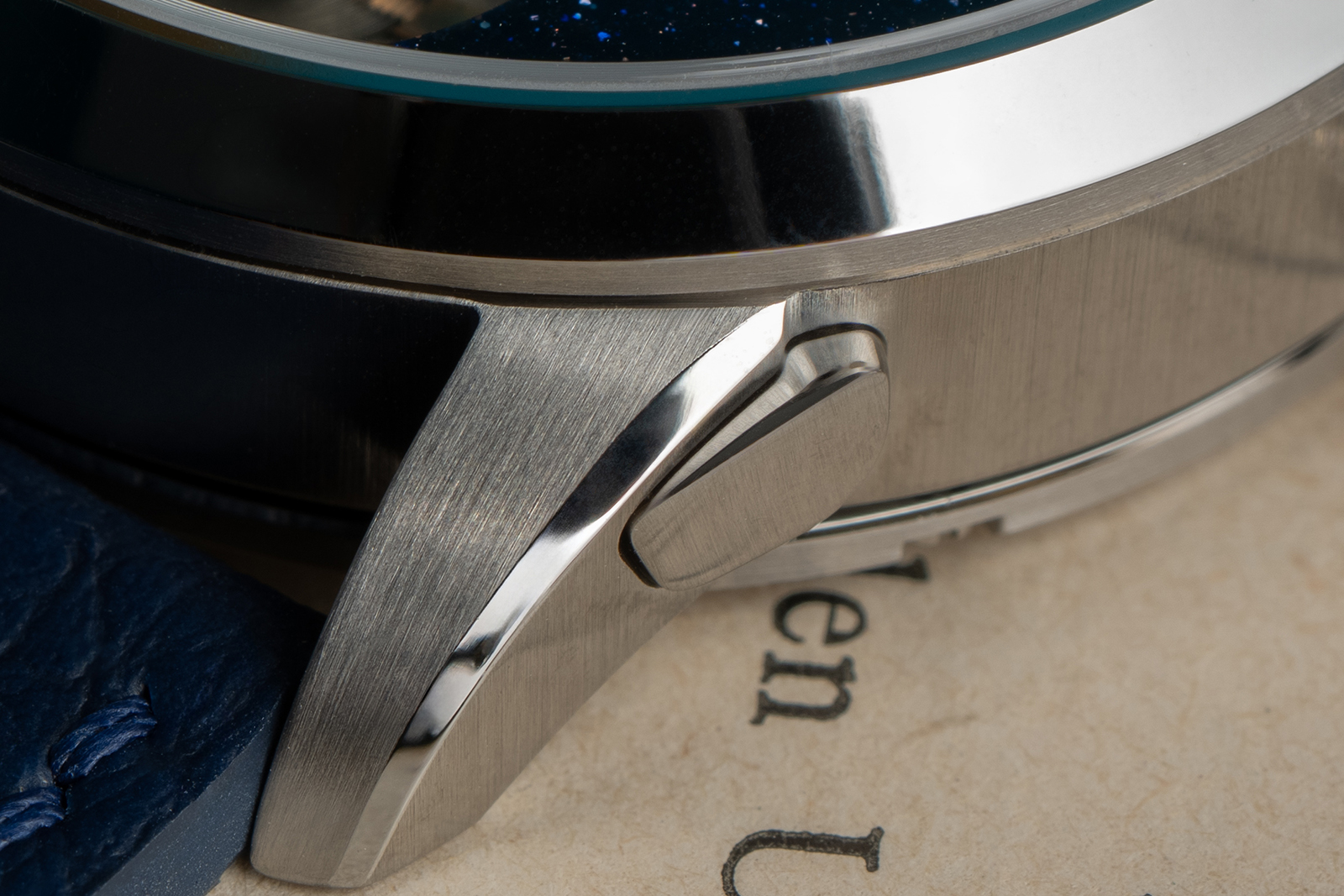
Pusher for setting the retrograde date.
Since the lugs’ profiles are symmetric, there is potential for each of the four lugs to house a pusher, hinting and the versatility of the FPA1 and its ability to carry future complications.
A design that clicks
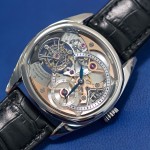
Around back, the FPA1’s architecture is on full display. The most distinctive element is the winding works for the single barrel — what at first appears to be an ordinary set of wolf’s tooth gears reveals itself as something more unusual: there is no click keeping them in place. Once wound, the barrel simply locks, almost by magic.
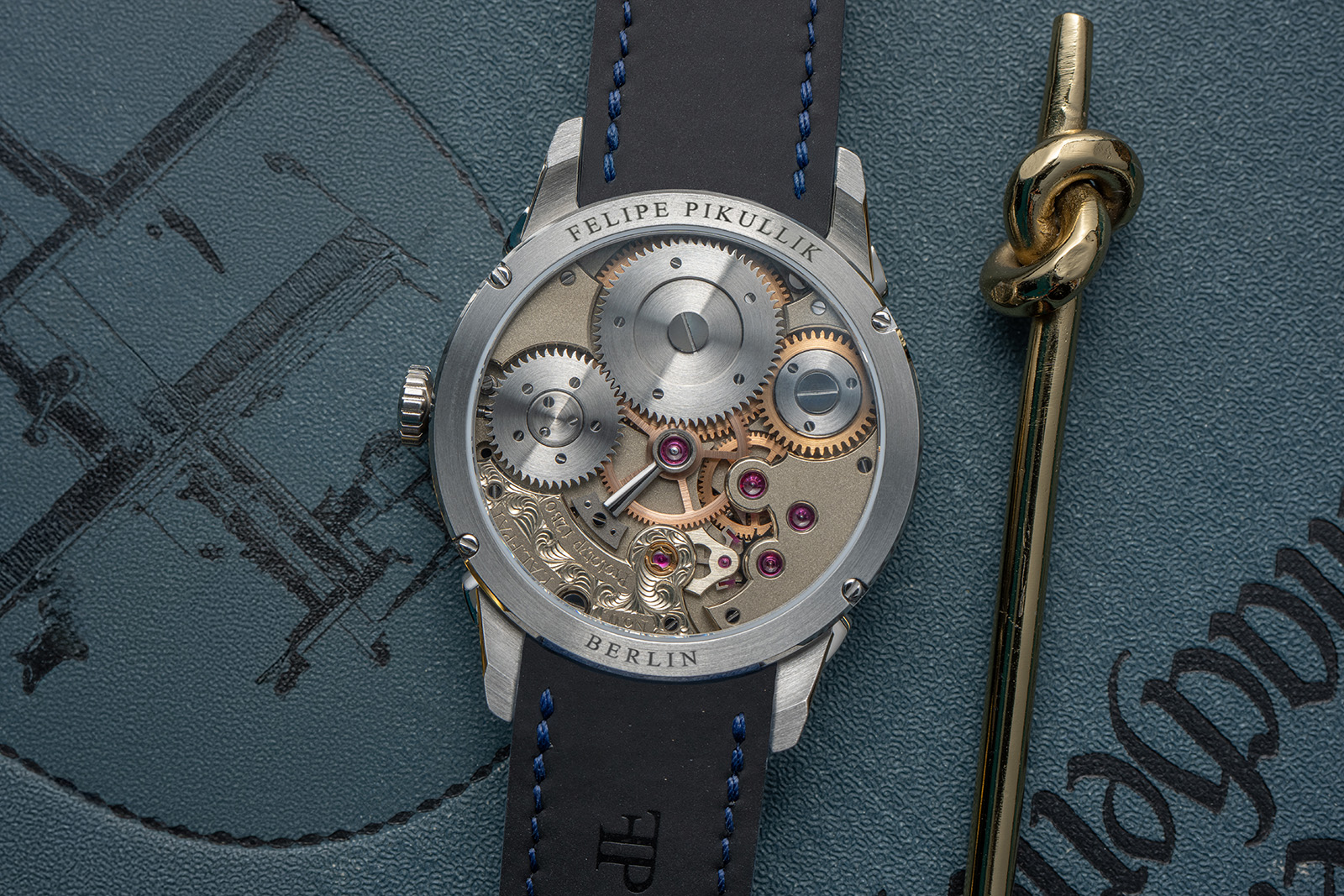
The choice of wolf’s teeth makes sense for crown and barrel click wheels, as it’s sharply cut ogive profile only allows power transfer in one direction. Basically the normal tooth profile is halved, such that engagement between two sets of teeth only happen in one direction.
Theoretically this reduces friction, and thus grinding, but limits the power transfer to a one-way flow. Since the tooth’s profile isn’t bound to be symmetrical, the roots under the pitch diameter can be made thicker, thus stronger.
So while wolf’s teeth gears have been used before (they were introduced by Jean-Antoine Lépine as early as the 1770s), Mr Pikullik’s approach to the click system is rather novel. The watchmaker argues that the hard sliding of the click piece over the click wheel’s wolf’s teeth causes a degree of metal grinding, which over time creates debris inside the movement.
In order to mitigate this very specific issue, Mr Pikullik created a self-enclosed click system, which keeps any eventual metal micro-filings inside a capsule, preventing debris migration. From the movement images it appears that this click module is placed under steel-capped wheel next to the barrel, which engages with some unseen gear on the barrel arbour.
This construction is quite novel and, whatever one makes of its utility, the winding works sitting still under seemingly no constraint makes for a pleasant visual trick.
Traditional German finishing
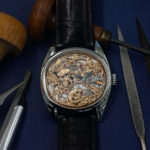
Beyond technical execution, the FPA1 is a handsomely decorated calibre. Built on a base of raw German silver — similar to A. Lange & Söhne movements — the primary finishing technique is hand-applied frosting, which gives the surfaces a fine, crystalline texture, complemented by softly rounded bevels and countersinks.
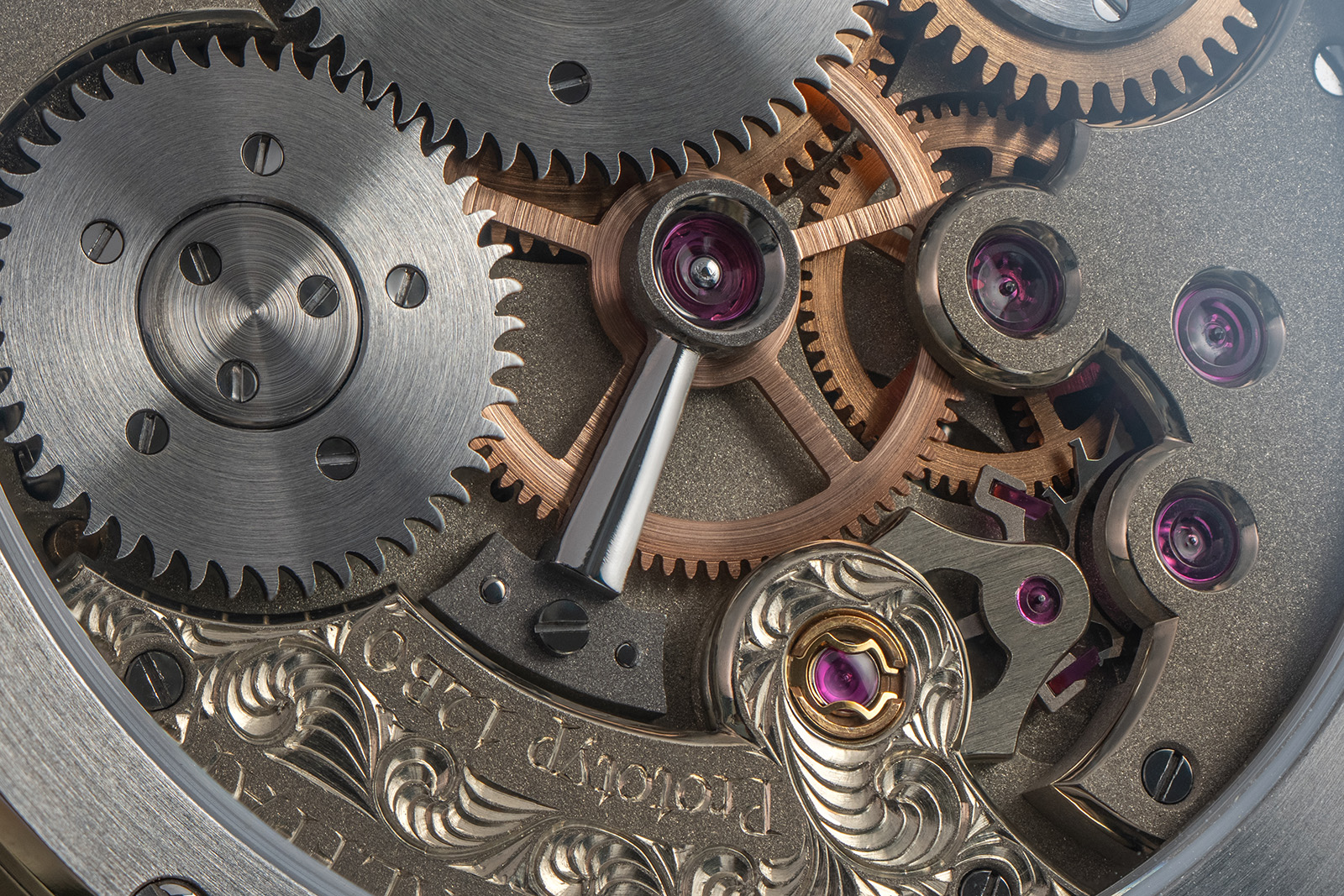
Both the dial-side and back-side balance wheel bridges are free-hand engraved, in keeping with Glashütte tradition. The steelwork is extensive: the crown and click wheels are circularly brushed, as is the steel cap for the click system. Screws are arranged radially on the large barrel wheel, presumably securing it to the gear beneath. A polished steel finger bridge keeps the centre wheel in place. All screw heads are polished but not blued — a contemporary reading of the classic Glashütte aesthetic.
Key Facts and Price
Felipe Pikullik Sternenhimmel FPA1
Diameter: 39 mm
Height: 10.5 mm
Material: Stainless steel
Crystal: Sapphire
Water resistance: 50 m
Movement: FPA1
Features: Hours, minutes and retrograde date
Frequency: 21,600 beats per hour (3 Hz)
Winding: Hand-wound
Power reserve: Over 40 hours
Strap: Rubberised leather strap and rubber strap
Limited edition: No
Availability: Directly from Felipe Pikullik
Price: €17,500 before taxes
For more, visit felipe-pikullik.de.
Back to top.