

COSC Upgrades Standards to Certify More Than Timekeeping
Testing for excellence.
Interesting news just out of Contrôle Officiel Suisse des Chronomètres (COSC), the venerable Swiss chronometer testing body, which has just announced a major revamp to its testing to honour the COSC’s standard’s 50th anniversary. Excellence Chronometer, COSC’s new and improved certification program, goes beyond the ISO 3159 norm that has defined its tests for decades. Instead of just testing movements, Excellence Chronometer will require completed, cased watches to run within -2/+4 seconds a day, as well as pass wear simulation and magnetism tests.
Initial thoughts
While COSC remains the primary chronometer testing body in Switzerland, thanks largely to Rolex, its protocols have been due for an update for some time now. With the rise of alternative and in-house precision testing programs, the standard chronometer certification can sometimes feel left behind.
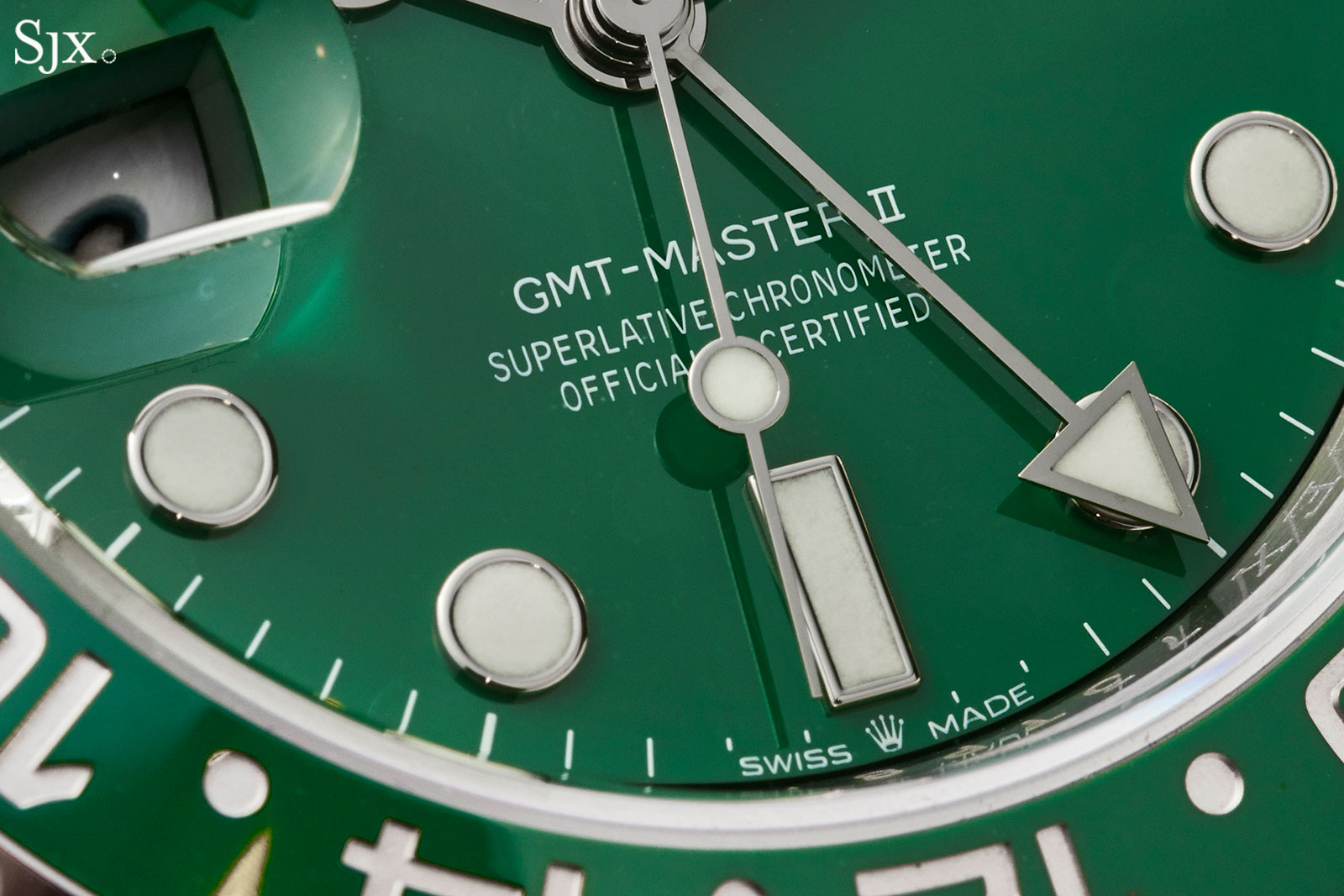
Rolex’s own Superlative Chronometer certification first requires a COSC certificate, but then makes sure the watches run at -2/+2 seconds per day after further in-house testing. The METAS Chronometer program also requires the standard COSC certificate, but guarantees a regulation of 0/+5 seconds per day and a great resistance to magnetic fields.

Seeing that COSC slowly updates and imposes more stringent criteria is a good sign, but it may still not be good enough. With the rise of advanced internal certification programs, it looks like some brands submit their models to COSC testing just to make sure they can lawfully and in good conscience print “chronometer” on the dial. Instead of settling for a 10 seconds per day window of error, these brands strive for doing at least twice better. Magnetism resistance testing is also paramount today but lacking from the standard chronometer testing, which only focuses on temperature-related deviations.
This being said, this Excellence Chronometer certification may cater to brands that don’t have the means of creating their own testing program but try to do better than just the standard chronometer testing. Breitling is one of COSC’s steadiest clients, but unlike Rolex or Omega it has settled for just meeting the ISO 3159 requirements. Perhaps we will see Breitling and others moving towards “Excellence” testing, while the largest brands will probably stick to their in-house protocols.
Standardised chronometry since 1973
COSC has long been the principal Swiss institution that tests and certifies chronometers according to the ISO 3159 norm. COSC awarded about 200,000 chronometer certifications according to the ISO 3159 standard in 1976. Today the figure is much larger, with well over 2 million watches, both quartz and mechanical, being tested and awarded the coveted certificate yearly.
Prior to the institution’s creation, testing laboratories operated around Switzerland, each with its own standards and processes, with no centralised chronometer certification process. Today COSC is headquartered in La Chaux-de-Fonds, and it operates identical testing facilities spread out across other regions of Switzerland, in Saint-Imier, Le Locle, and Bienne.
ISO 3159 is the well-known standard for awarding the chronometer designation. The tests take place over a period of 15 days, with a focus on temperature and positional related variations in uncased movements’ running. A standard chronometer-certified movement is guaranteed to have a mean daily variation of less than -4/+6 seconds per day – a 10-second window of variance that has long been eclipsed by manufacturers’ own standards, including Rolex’s Superlative Chronometer.
Getting excellent
The Excellence Chronometer program is meant to run alongside the basic chronometer testing. As a result, not all watches certified as chronometers from 2026 on will be Excellence Chronometers, but only those specifically submitted to additional testing by the participating brand.
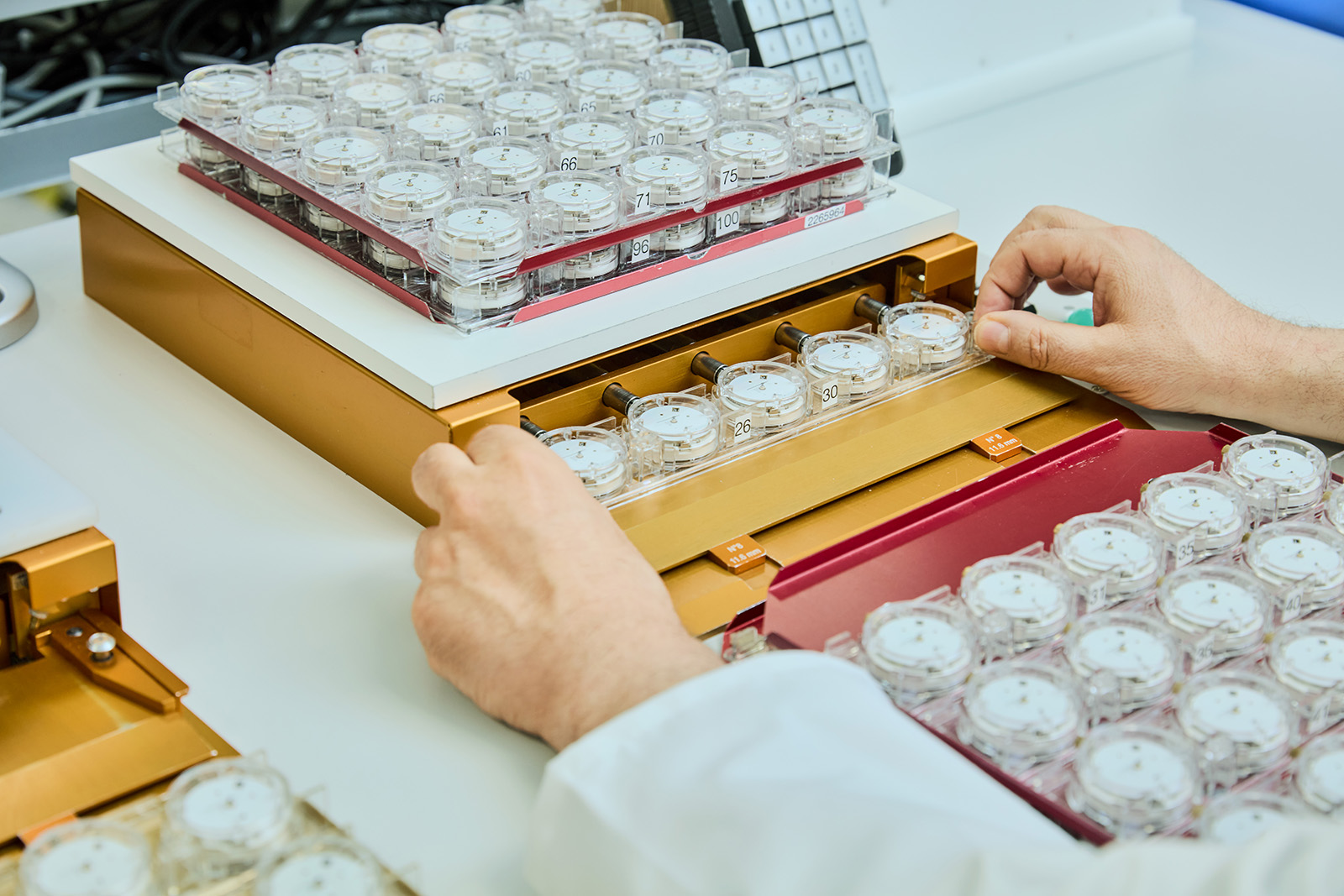
In order to qualify as an Excellence Chronometer, after being certified as a standard chronometer, the movements are returned to the manufacturer to be cased, then return to COSC as complete watches to also undergo through another five days of testing. This contrasts with standard chronometer testing, where batches of movements fitted only with test dials and hands are evaluated.
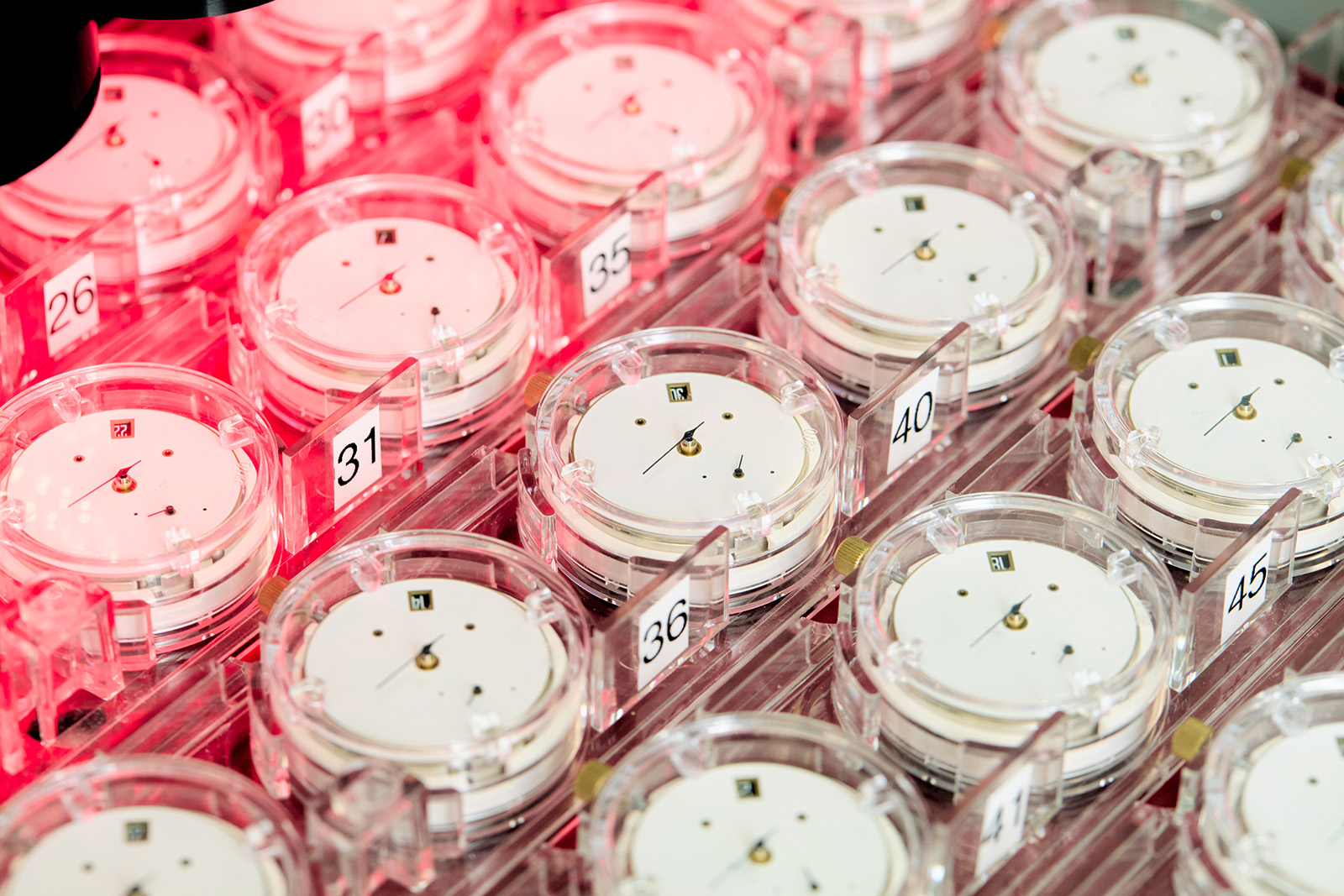
Batch of uncased movements going through standard chronometer testing. Note the dials and hand for testing
As the watches will be tested fully cased, COSC explains they will go through dynamic tests mimicking real-life use, including daily-wear simulations of normal hand movements, which are more useful than the static five-positions used by standard COSC certification. The fully cased watches will be required to run within a tighter -2/+4 seconds per day window of error, and magnetic resistance at 200 Gauss.
Apart from just the six-second per day admissible variance, the watches will also be checked for power reserve. This means that the models will also need to work for the full duration of the marketed power reserve. This is interesting, since this can prove to be a more subtle mark of quality and to see if brands’ claims live up to the reality.
The Excellence Chronometer certification will go through a pilot phase in March, with more details to be revealed during Watches & Wonders in April. The certification will be fully deployed and available for brands starting October.
For more information on COSC and the Excellence Chronometer program, visit cosc.swiss.
Back to top.