

An Openworked Wonder by Molnar Fabry
Sophisticated Slovakian skeletonisation.
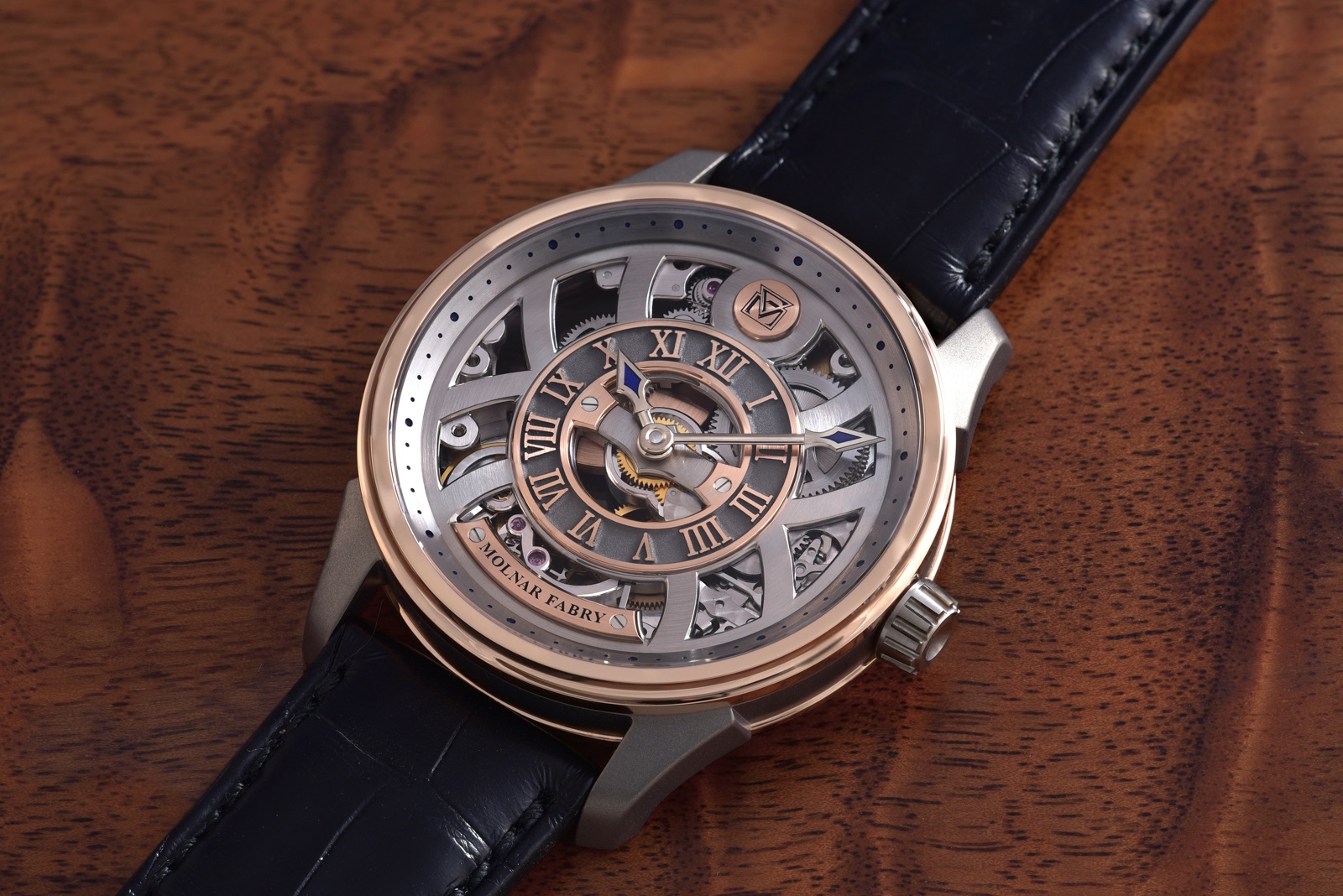
The Classic Tech Art is the latest, bespoke time-only piece from independent watchmaking duo Molnar Fabry, and a fine example of the pair’s modus operandi. Starting off from a Vaucher cal. 5401 ébauche, the watchmakers applied extensive finishing to both seen and unseen surfaces within the movement. While this exact configuration is unique, similar designs can be commissioned from the Slovakia-based creators.
Initial thoughts
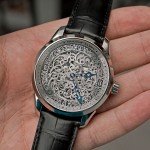
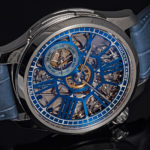
Molnar Fabry’s calling card is open-worked movements and the Class Tech Art doesn’t disappoint in that respect. While the case back side of the movement is richly engraved but structurally unaltered, the tastefully open-worked dial reveals the usually hidden assemblies that make the Vaucher calibre tick.

The duo behind Molnar Fabry operates outside the influence of many Swiss watchmaking traditions. As a result, the brand’s house style of finishing is somewhat unorthodox. Mixes of metals are on show, along with a rich blend of textures and shapes.
The style might not be to everyone’s tastes, but Molnar Fabry’s work feels refreshingly original in today’s market. The two watchmakers shift the focus from proprietary movements and high-tech specs to true hand finishing.
That said, the Classic Tech Art exemplifies a more streamlined vision of the brand’s design language, opting away from the excessively ornate cases the brand has produced in the past. This may point towards them going more mainstream — at least to the extent that a bespoke piece unique can ever be described as mainstream.
Given the extent of the engraving and hand finishing, the Classic Tech Art is not inexpensive. But in terms of craft, the sub-€50,000 price point still undercuts Swiss rivals offering similarly bespoke products. This is largely due to Molnar Fabry leaning into its own strengths, including mastery of small-scale production.
Hand finishing all over
Molnar Fabry is a small outfit formed by Michal Molnar and Igor Fabry, both originally trained as jewellers. As they became more and more interested in the world of high horology, their work has shifted from plain jewellery towards bespoke watches featuring thoughtful details and extensive skeletonisation.
In the past, Molnar Fabry has built many large, ostentatious watches. That’s not a criticism, since many (if not all) have been designed for specific clients.
Against this backdrop, the Classic Tech Art is notable for its more contemporary almost minimalist case. In a bi-metal 38 mm construction, the case is fully made in-house by Molnar Fabry, from metal blank to hand-applied finishes. The well-sized case of the Classic Tech Art looks like a modern interpretation of the cornes de vache design, with angular lugs that protrude slightly from the case.
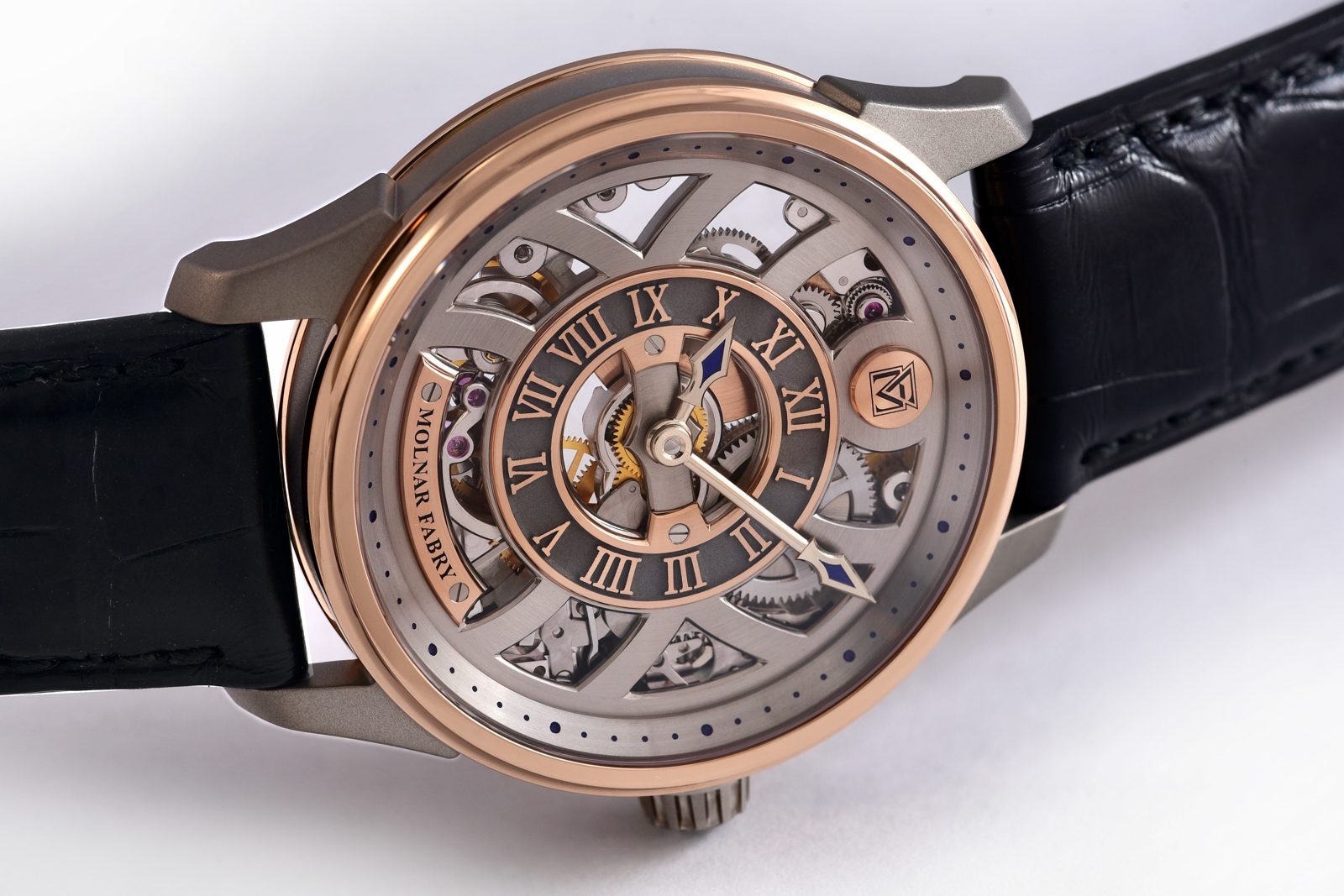
The case band is crafted from a texture-rich grade 5 titanium alloy, which gives the case a modern matte look. The bezel and case back are made from highly polished 18k pink gold, which creates appealing contrast with the dark grainy hues of the titanium mid-case.
Due to the material’s unusual properties, titanium cases have long been the domain of industrial case makers. Molnar Fabry’s ability to work with grade 5 titanium in-house really speaks to their metalworking skills and strong background in jewellery. The gold work is equally well done, but mastery of gold is table stakes at this level .
A mechanical jewel
Inside the Classic Tech Art, the Vaucher ébauche has been transformed into a jewel itself. The two jewellers-turned-watchmakers are known to take existing movements (from new old-stock repeaters to Christophe Claret tourbillon ébauches) and tweak the aesthetics to the core. While they remain mostly finishing-oriented for now, the two watchmakers wish to eventually develop their own movement and be accepted as full-time Académie Horlogère des Créateurs Indépendants (AHCI) members.
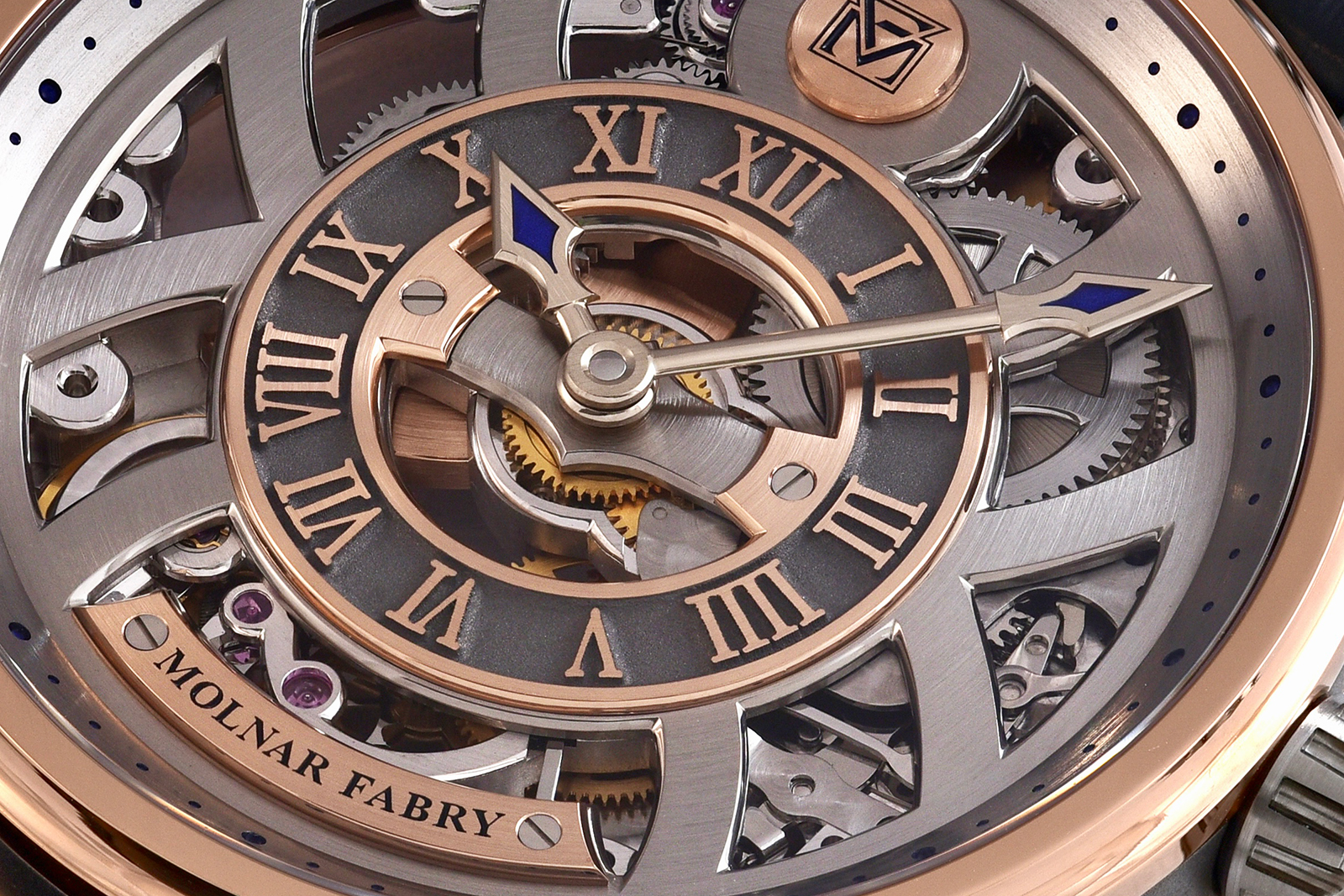
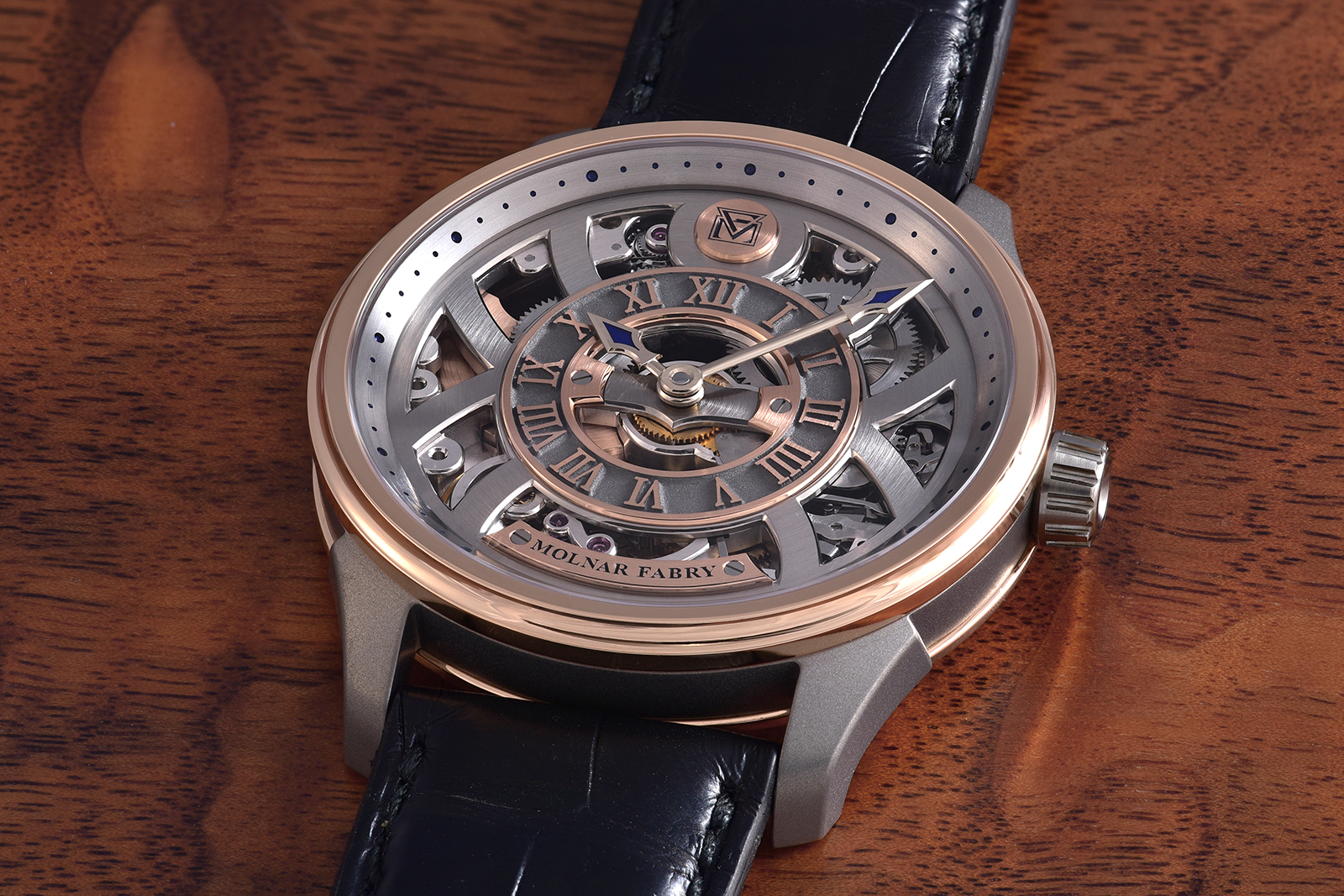
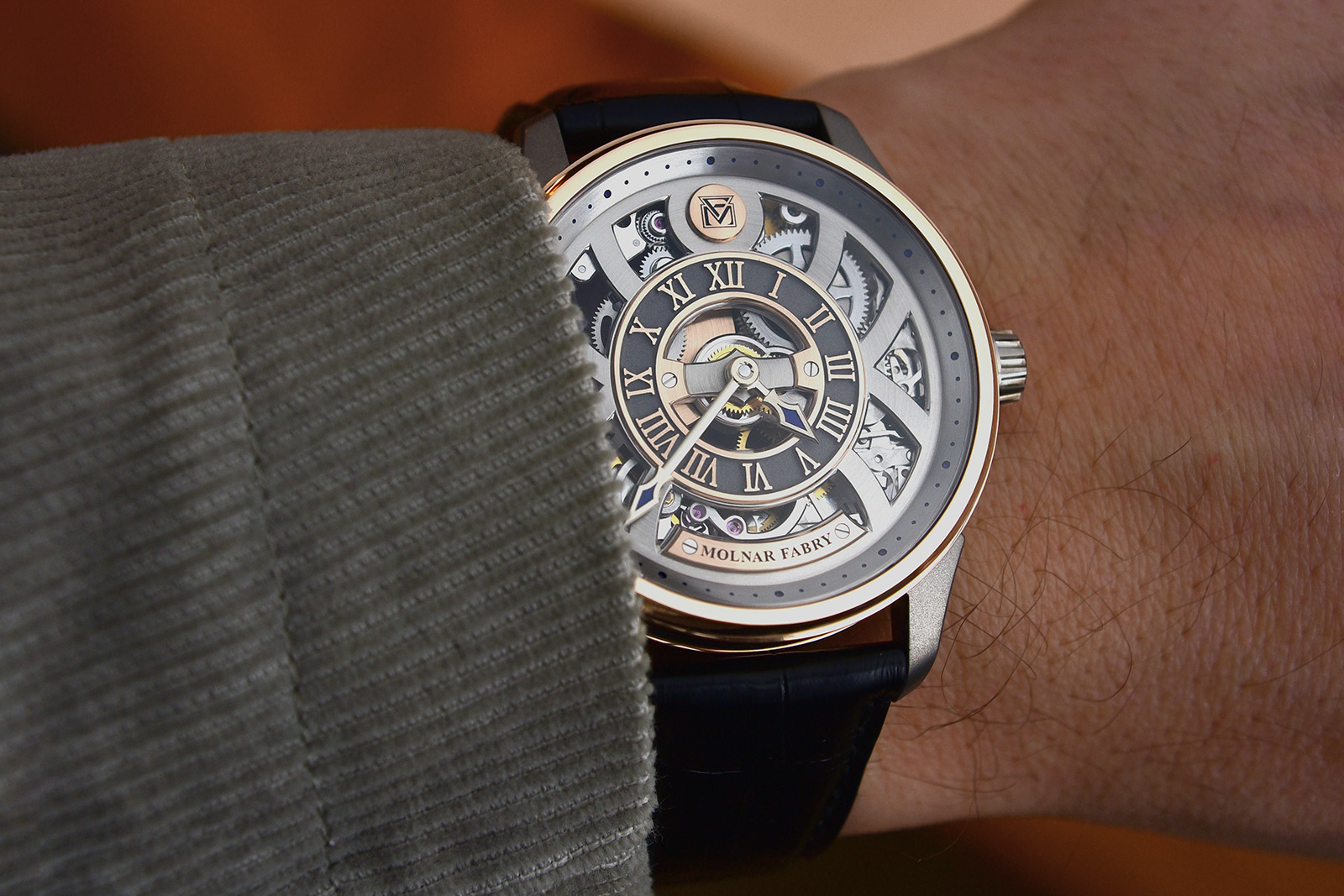
The first view of the movement can be seen through the open-worked dial. A small rose gold central dial features deeply relief-engraved roman numerals for the hour markers, while a sloped dotted ring on the margin provides resolution for the minutes. The warm tones of the dial and nameplates provide contrast with the cooler tones of the open-worked dial plate, echoing the contemporary design of the case.
The rest of the watch face shows glimpses of the movement components through generous layered apertures. The titanium dial plate is cut in intertwined circular patterns, with the motif vaguely resembling a spider. The pattern can be symmetrical because it’s actually a separate piece that sits atop the open-worked mainplate of the movement.
The contemporary combination of colours and coarse circular brushing probably explain the ‘tech’ moniker, but the rounded bevels are eminently traditional. There are dozens of interior angles as well, and although some look less sharp than one might expect, this could be due to in part to the fact that many large brands are now using advanced techniques including Electrical Discharge Machining (EDM) to cut inward angles prior to polishing.
The openings also reveal consistent bevelling and polishing of the functional components inside the watch. For example, the winding works are visible at the top of the dial, opposite the underside of the escapement near seven o’clock. At three o’clock, the operation of the keyless works can be observed.
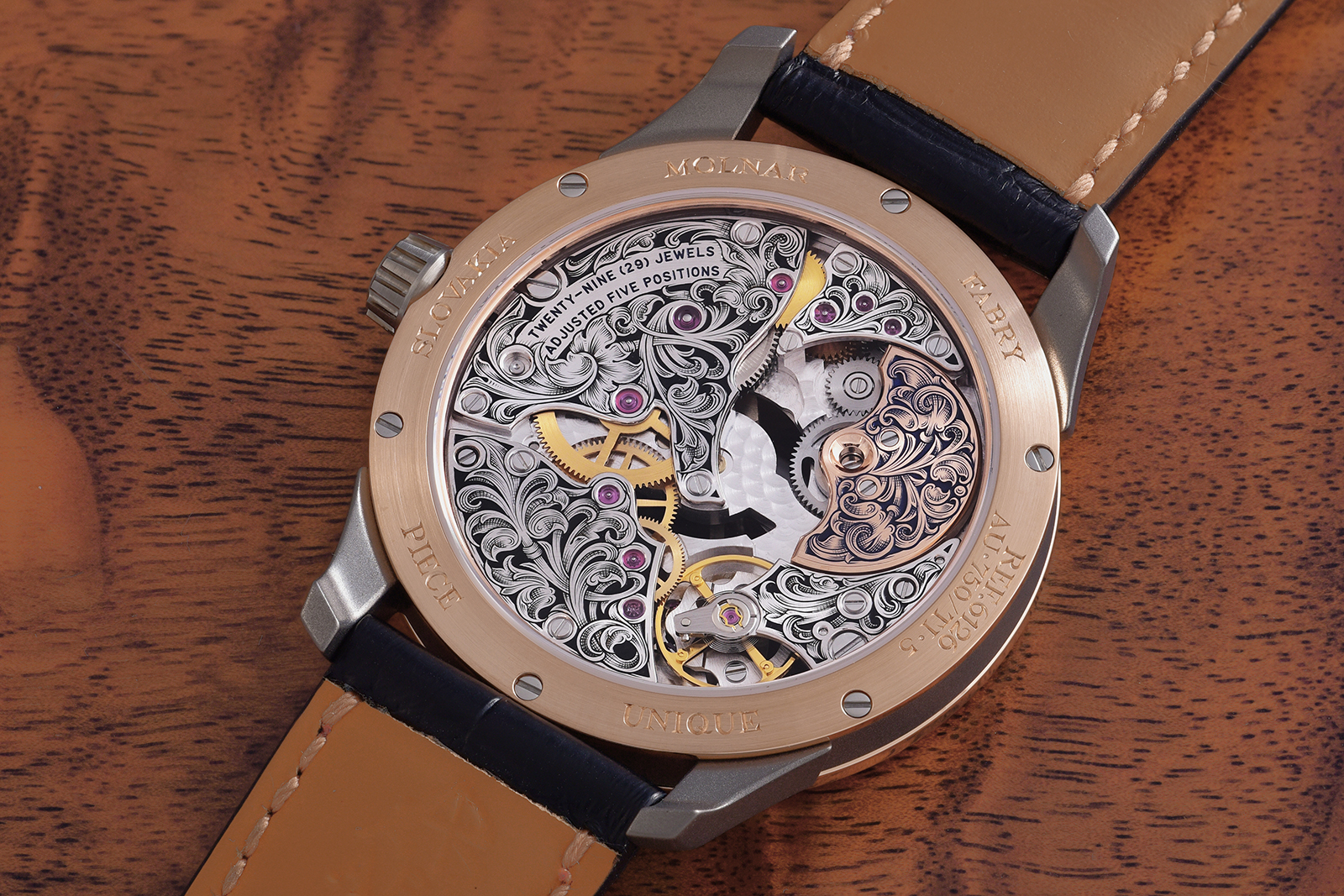
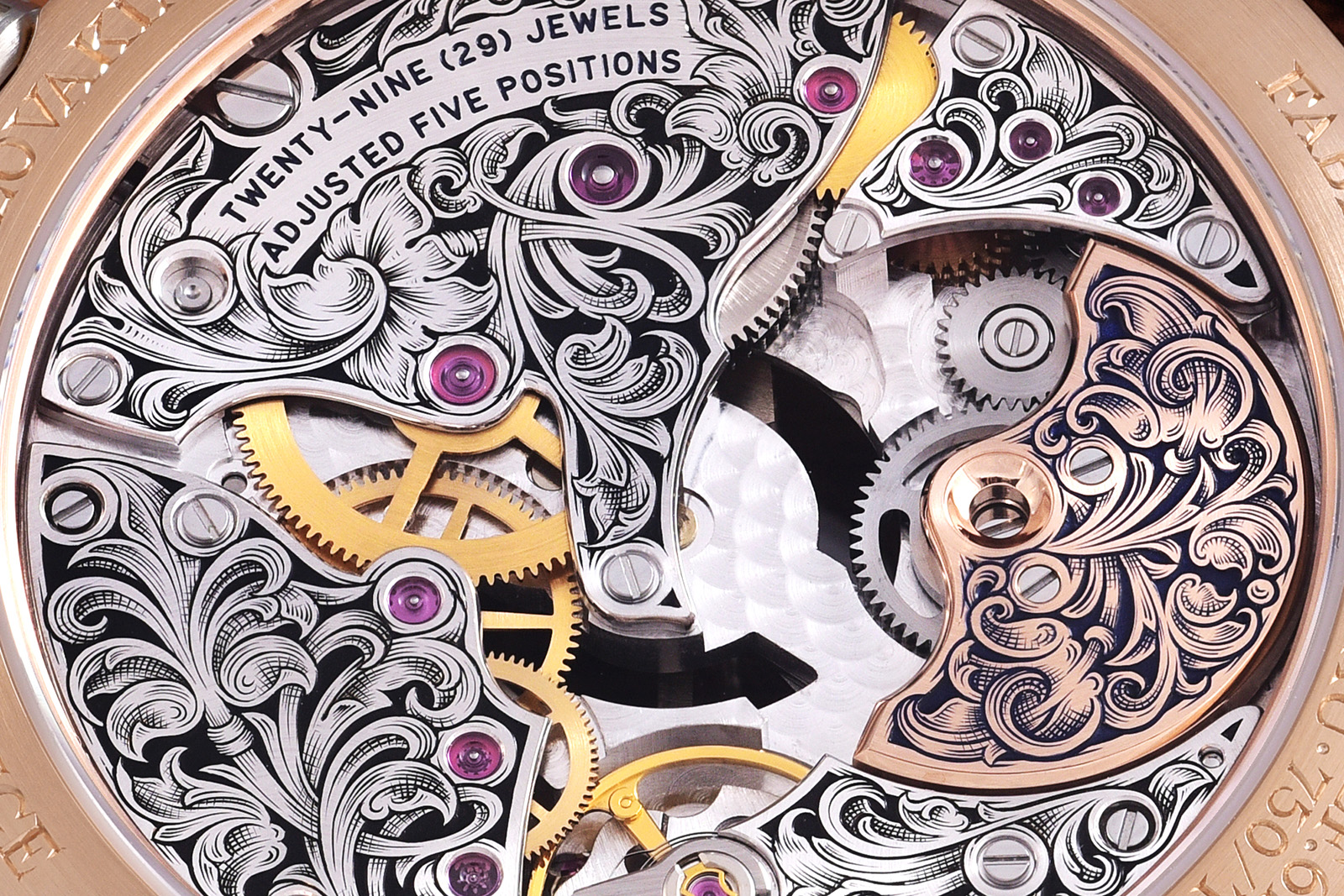
Interestingly, the case back side of the movement is not open-worked. Instead, the two watchmakers opted for hand engraving of the plates and bridges. The engraved motifs bear some resemblance to leitmotifs found in Eastern and Central European folklore, which favour vines and flowery sloping patterns, and also resemble the ornamental engravings found on top-quality sporting firearms.
The depth and skill of the engraving work is commendable, along with the attention to detail and the general feel of authenticity. Since the majority of watchmaking is rooted in the Swiss, French and German cultures, it is refreshing to see original finishes inspired by a different cultural background.
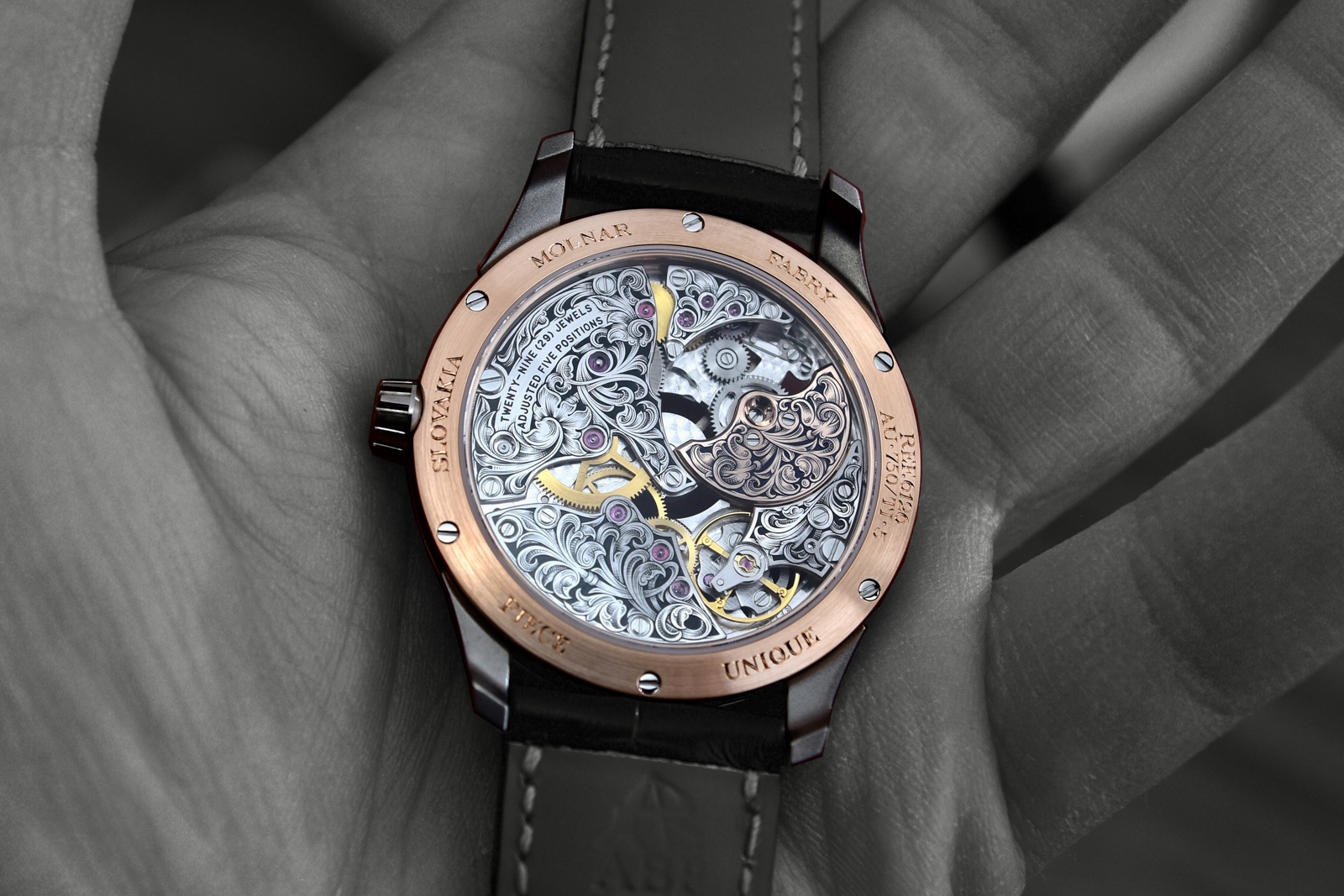
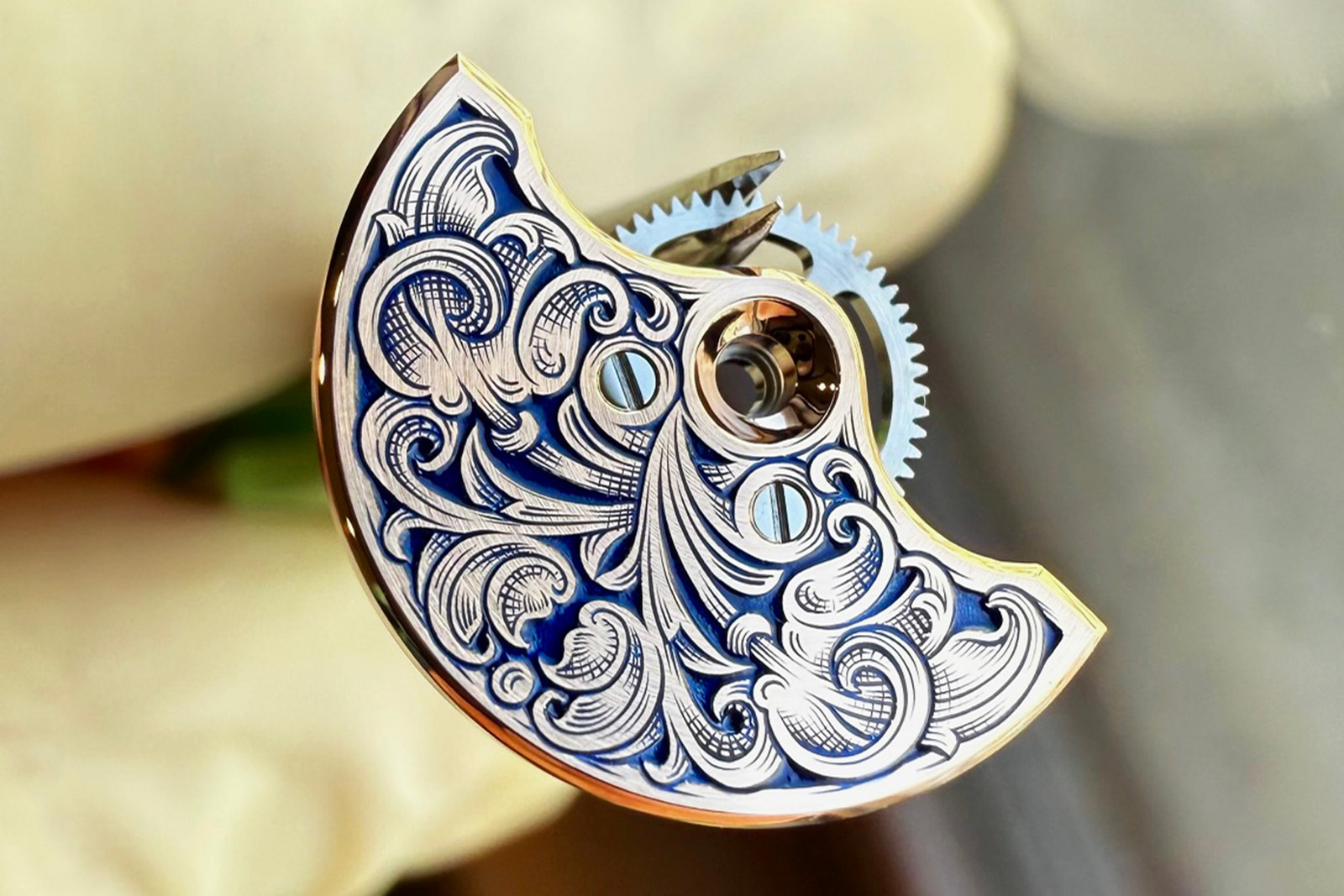
While most of the movement components come directly from Vaucher, Molnar Fabry casts the pink gold micro rotor in-house, which speaks to the duo’s capabilities and commitment to their craft. The rotor also bears the fairytale-like vine pattern, and winds the small-ish barrel up to its stated 48-hour power reserve. The core technical specifications of the Vaucher base remain unchanged, and the movement features a free-sprung balance that oscillates at 3 Hz.
Key facts and price
Molnar Fabry Classic Tech Art
Diameter: 38 mm
Height: 9.5 mm
Material: 18k pink gold and grade 5 titanium
Crystal: Sapphire
Water resistance: Unknown
Movement: Customised Vaucher Seed VMF 5401
Functions: Hours, minutes
Winding: Automatic
Frequency: 21,600 beats per hour (3 Hz)
Power reserve: 48 hours
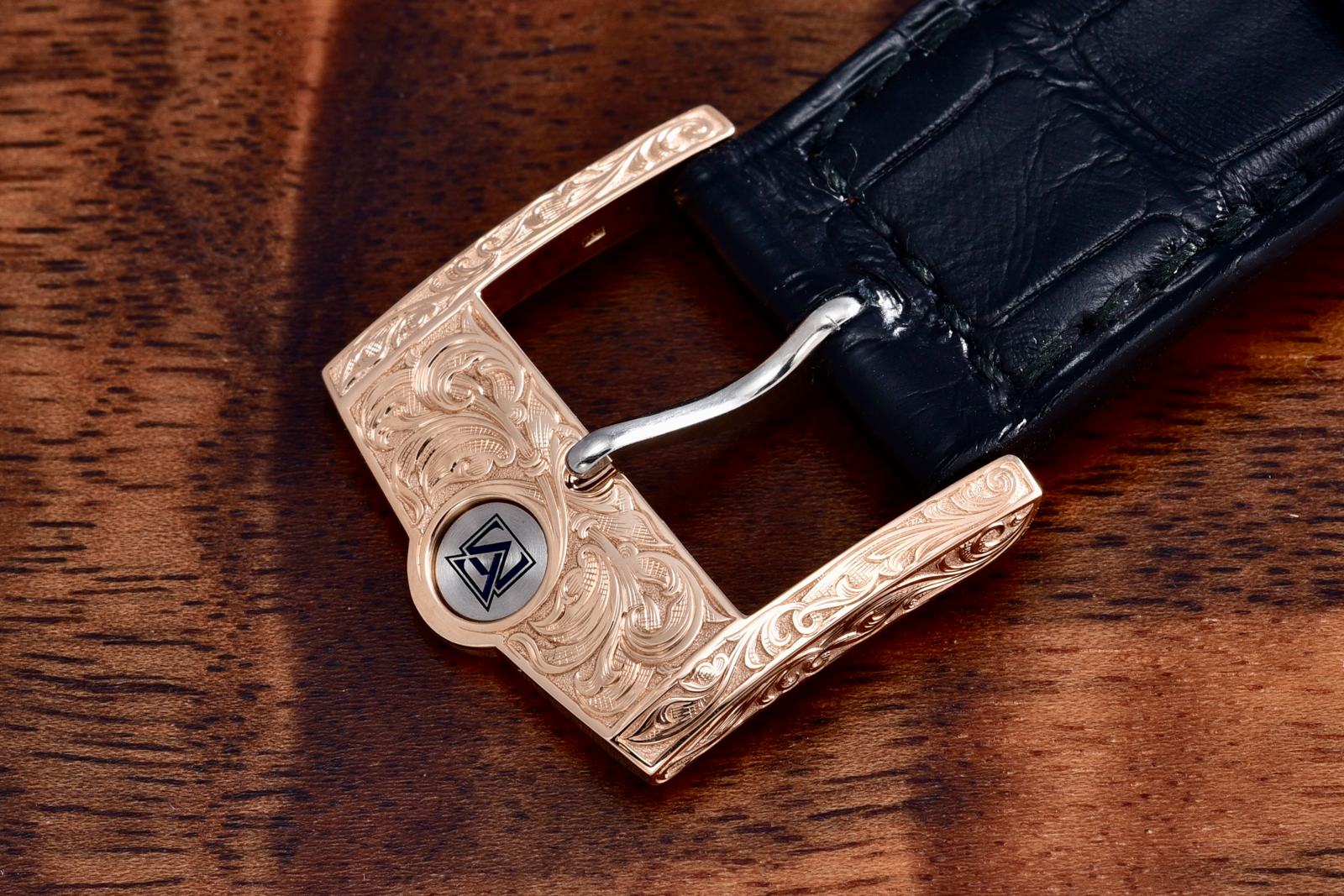
Strap: Leather with hand-engraved 18k pink gold pin buckle
Limited edition: Unique piece
Availability: Similar watches are available upon request
Price: Comparable watch will cost about €45,000 before taxes
For more, visit Molnarfabry.com.
Back to top.