

Andersen Genève’s World Time Gains a Split Seconds Upgrade
A "new old stock" movement finished by hand.
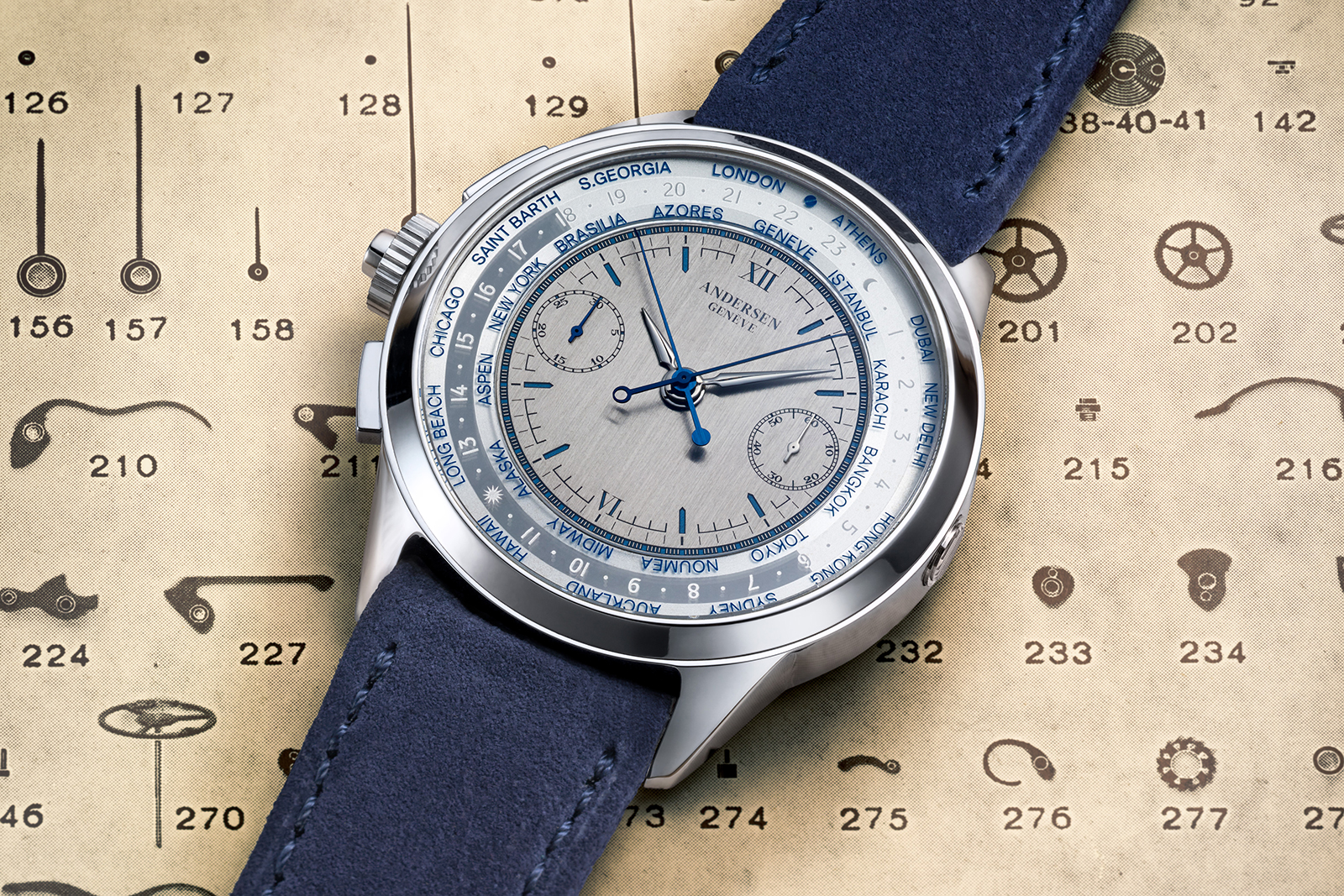
Historically a complication associated with Svend Andersen, the pioneering independent who cofounded the Académie Horlogère des Créateurs Indépendants (AHCI), the world time has been reworked and added to the Venus 179 split-seconds chronograph movement to create the Rattrapante Mondiale.
One of the most complicated offerings from Andersen Genève, the Rattrapante Mondiale features a clever two-level world time disc display while the cal. 179 inside is entirely finished by hand. Though the octogenarian Mr Andersen is now largely retired, Andersen Genève continues his artisanal approach to watchmaking that’s exemplified by the Rattrapante Mondiale.
Initial thoughts
Andersen Genève has produced a great many world time watches, but the Rattrapante Mondial is one of the most impressive. The movement is recognisably complicated, while the level of execution is high, especially for the movement and dial. Much of the work is also artisanal, as is typical for Andersen, which still operates out of Svend Andersen’s original premises.
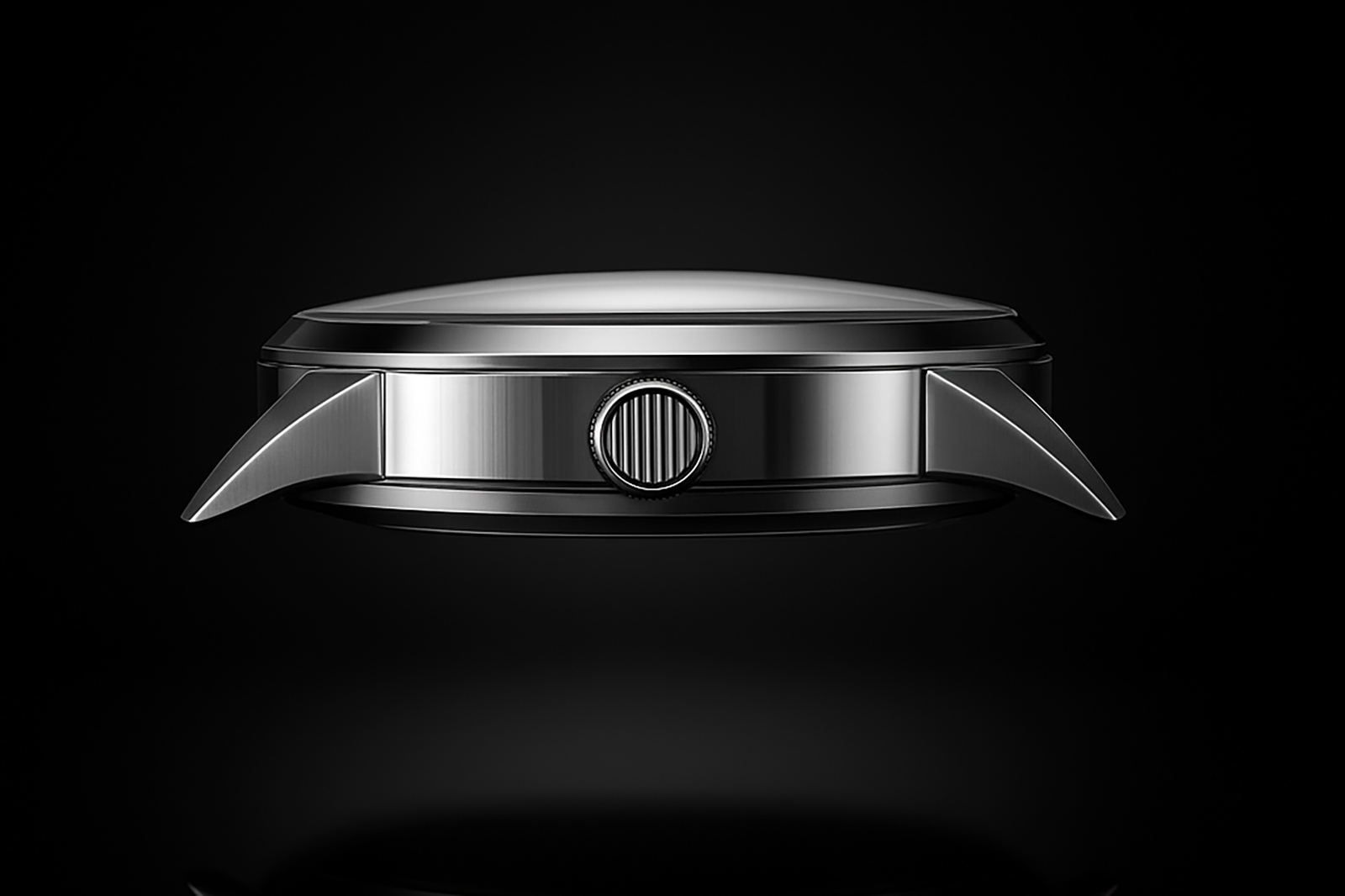
The Rattrapante Mondiale is appropriately sized for the design and movement, while the case styling is simple and good enough. Unusually, it’s a “destro” case with the crown on the left side and world time knob on the opposite side.
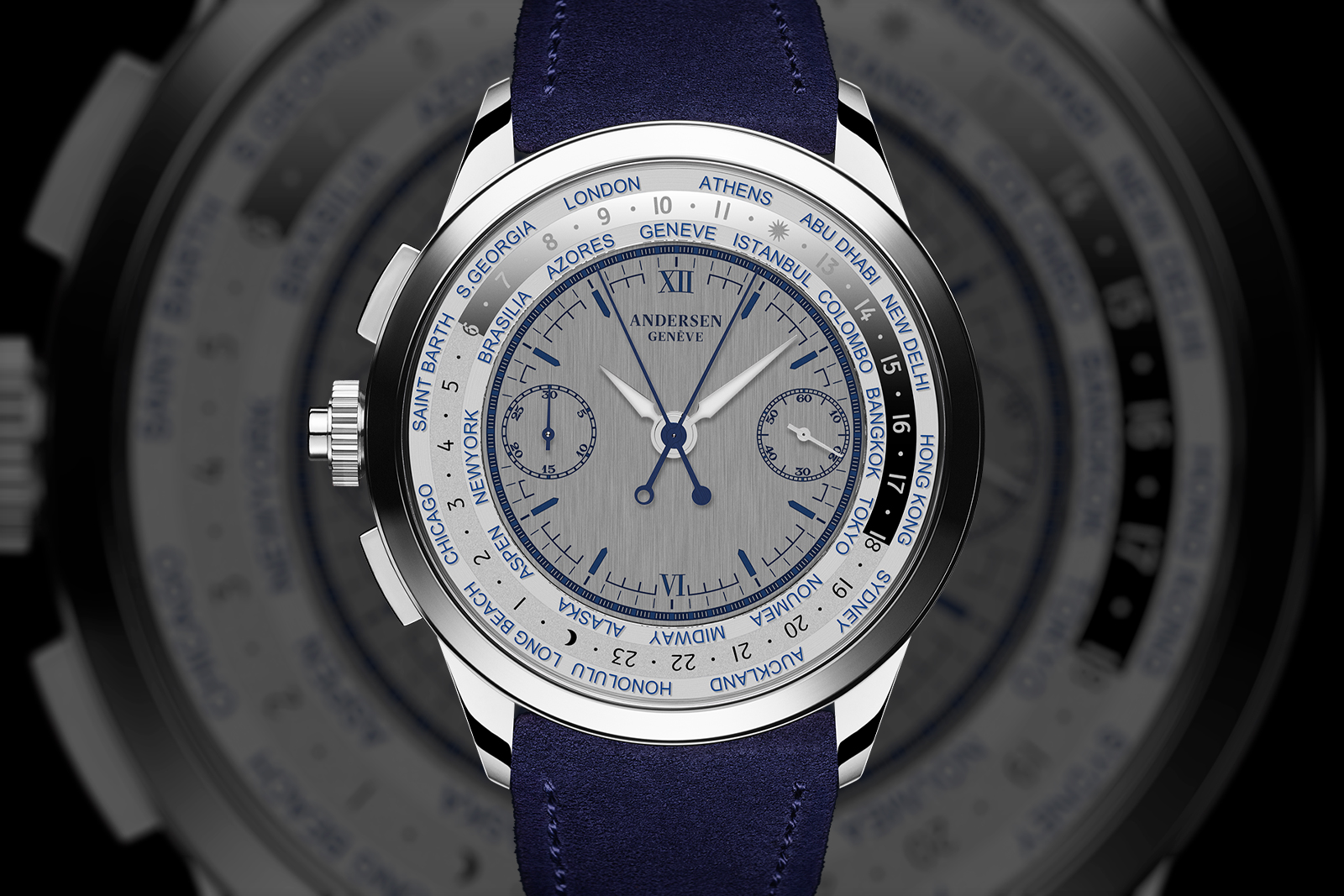
The brand says it made left-handed cases for some one-off commissions in the past, but here it feels a little too much like an unnecessary affectation. It is also reminiscent of the Patek Philippe ref. 5373P, which is not entirely a bad thing I suppose. I imagine the brand will happily make a conventionally configured version on request.
The Rattrapante Mondiale costs CHF184,000, which is a lot of money but fair relative to the current market for independent watchmaking. With new entrants to the space charging CHF70,000 or more for a time-only watch, the Rattrapante Mondiale justifies its price tag through complexity and artisanal execution. In fact, Andersen Genève arguably has all of the qualities of many hot newcomer brands, but lacks the buzzy appeal of a fresh face with an untold story.
Cottier reimagined
One of Svend Andersen’s earliest models was a world time wristwatch, inspired by his spell at Patek Philippe in the 1970s where he worked on vintage world time watches when he was part of the complications workshop. Like the world time watches made by Patek Philippe, Mr Andersen’s wristwatches were modelled on Louis Cottier’s invention that employs a cities disc and 24-hour ring in tandem to indicate the time around the globe.
The Rattrapante Mondiale features a Cottier-type world time display, but with a subtle twist. Instead of sitting side by side, the two discs are superimposed. The cities are printed on a clear sapphire disc that sits over a ring engraved with a 24-hour scale. According to Andersen, this construction allows for a more compact world time mechanism, a useful characteristic given that the base movement is already tall. Mechanically, the world time mechanism remains unchanged from prior Andersen models, so adjustment of the cities disc is done via a crown on the right side of the case.
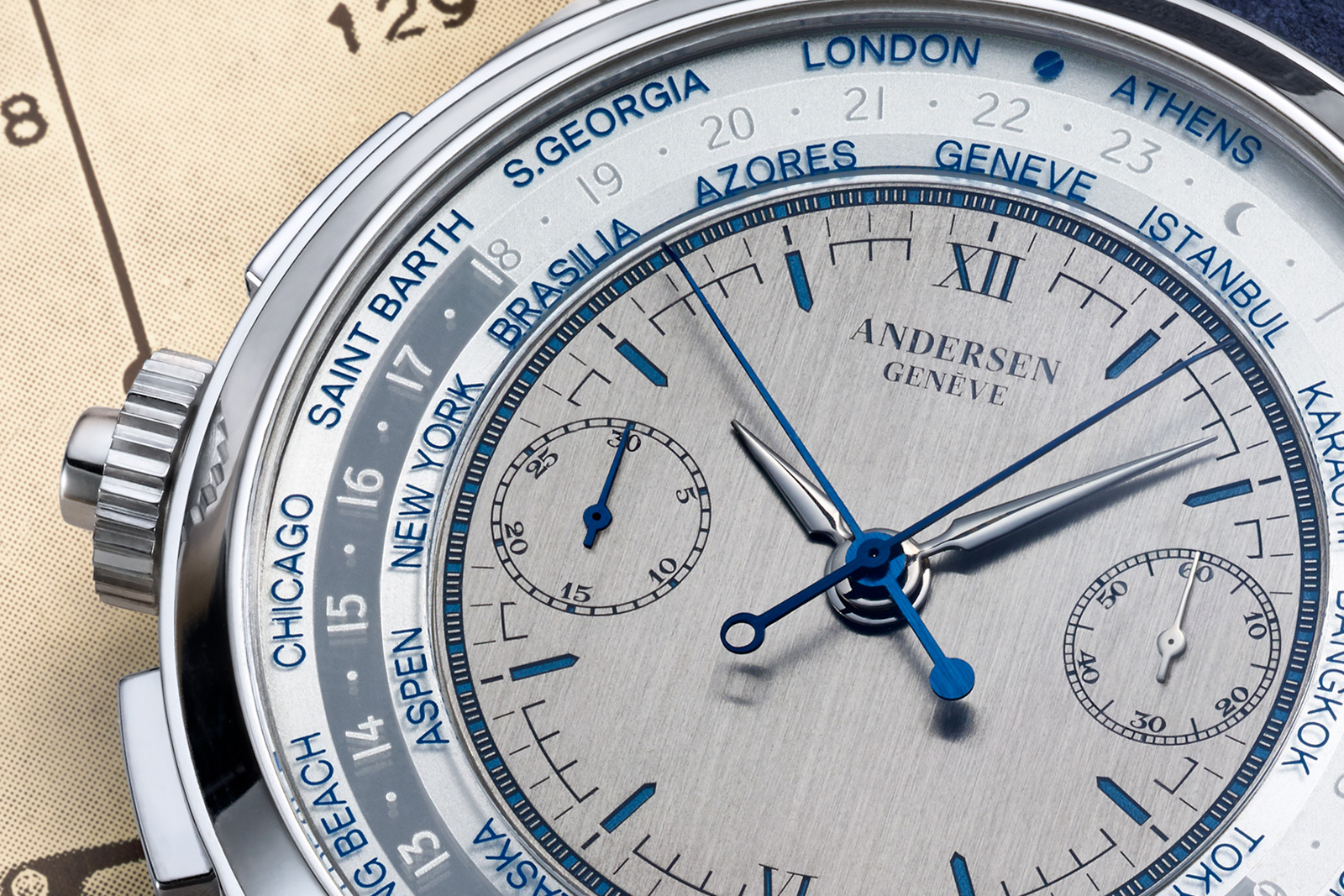
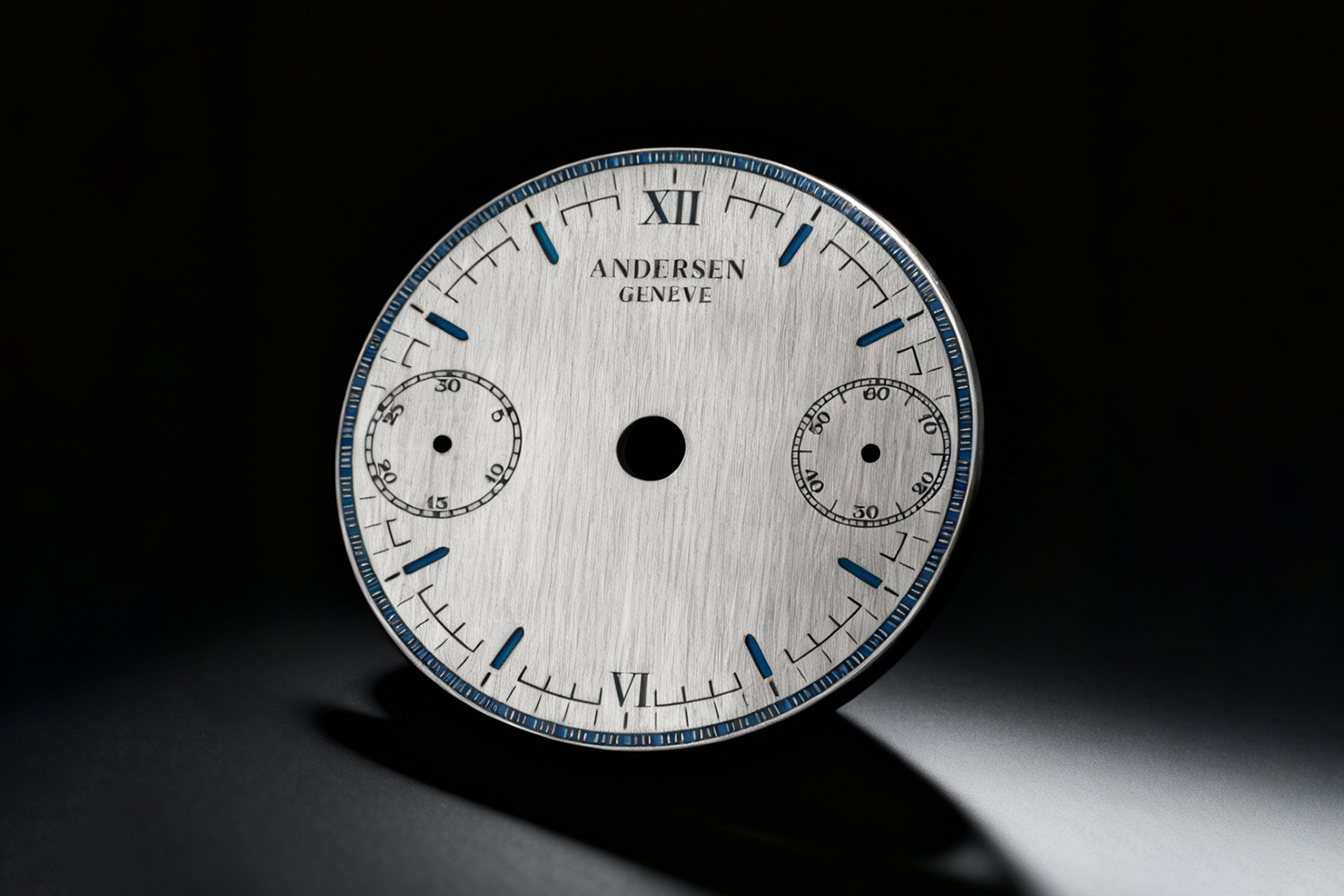
Though the world time mechanism is novel, the dial is old school in its quality and evokes vintage watches. It’s a disc of solid 18k white gold with engraved markings filled with dark blue fired enamel, a technique known as champleve that was often used for high-end watches in the mid 20th century. The aesthetic is also appropriately vintage inspired, with a serif typeface for the chronograph scales and a sector-like minute track on the periphery.
The proportions of the platinum case are suitably compact to match the design, with a diameter of 38.8 mm and a thickness of just under 12 mm. That’s relatively thin for a split-seconds chronograph, even more so for one with a world time module on top. It’s quite a bit smaller than the Patek Philippe World Time Chronograph ref. 5935A that is automatic but not a split-seconds.

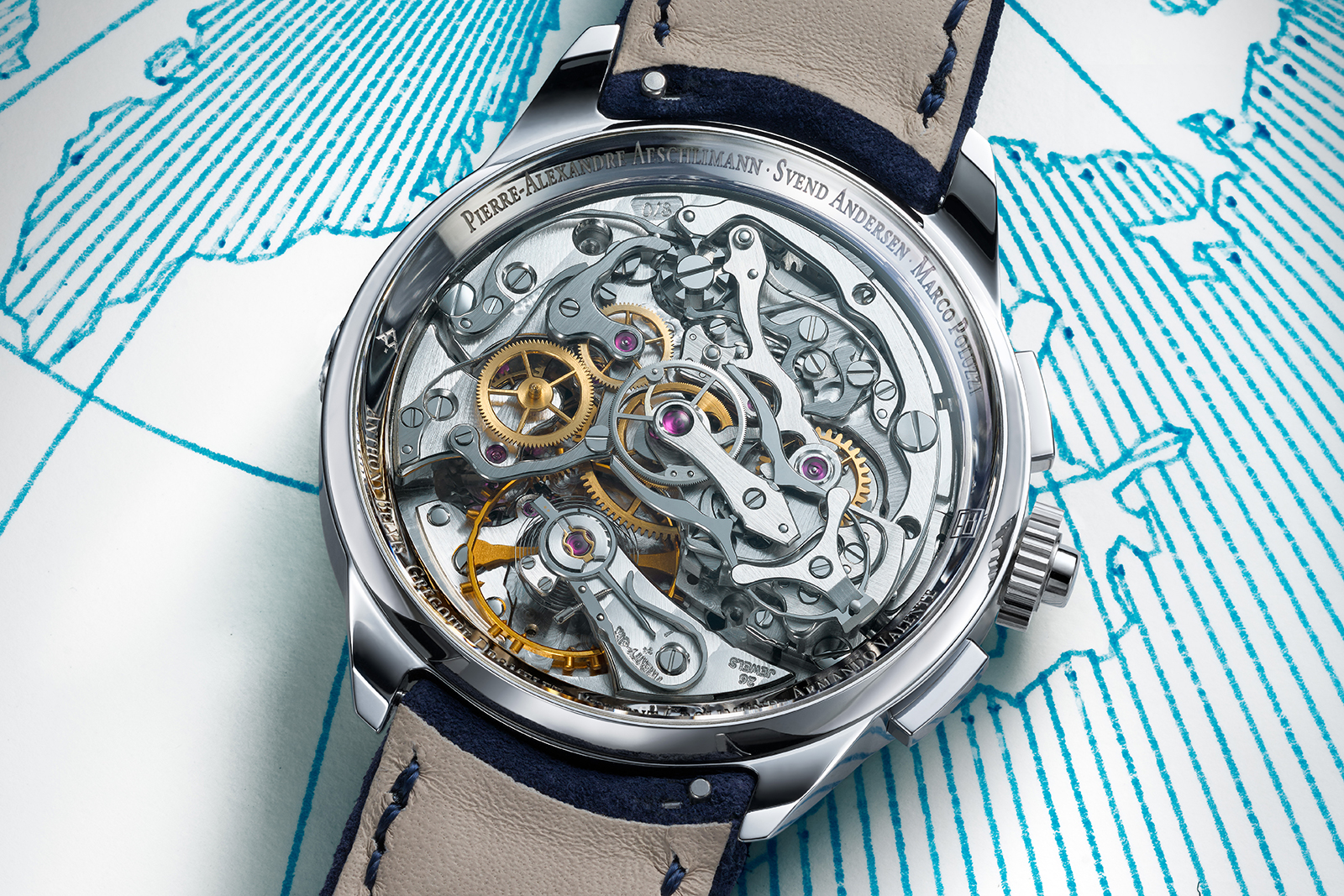
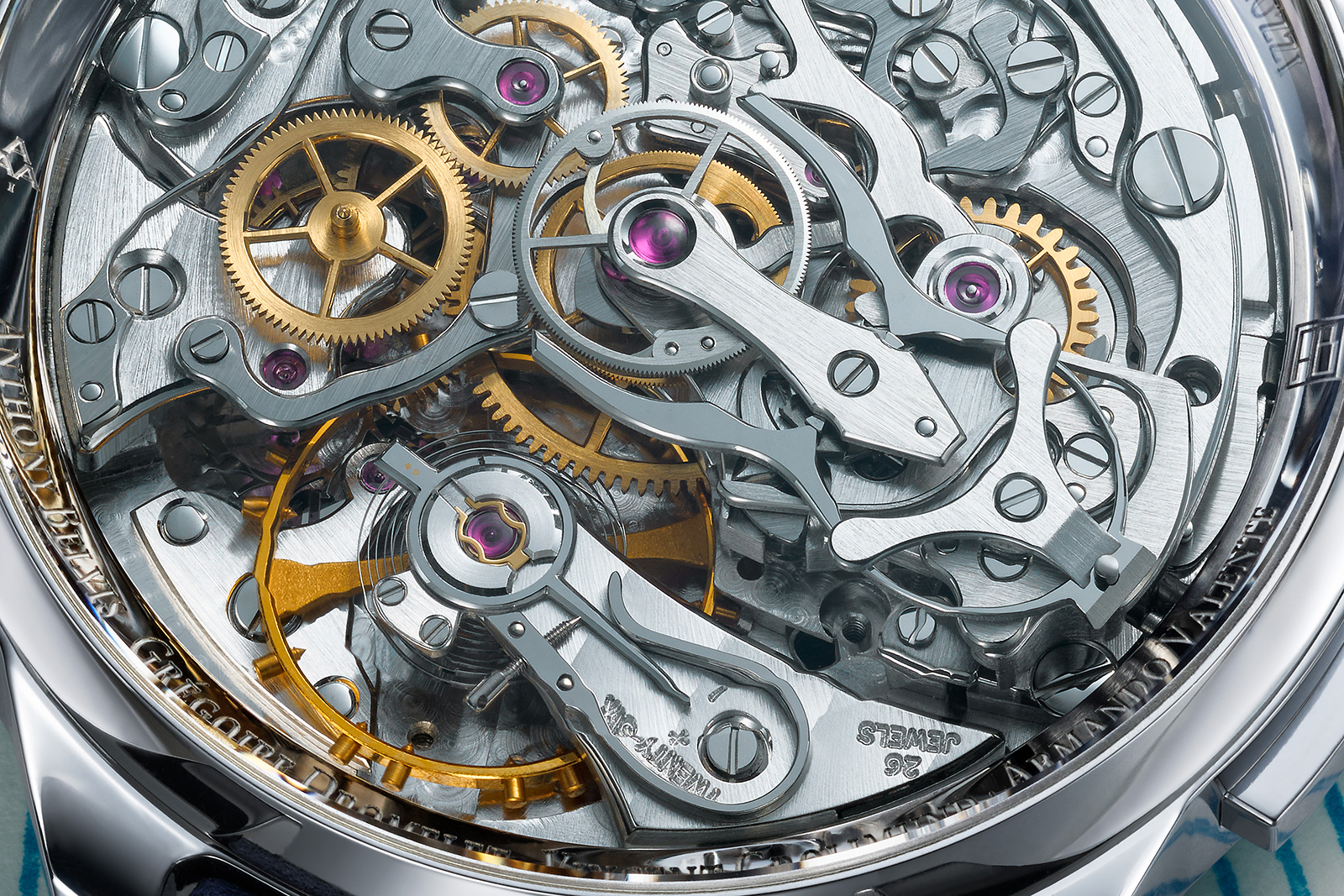
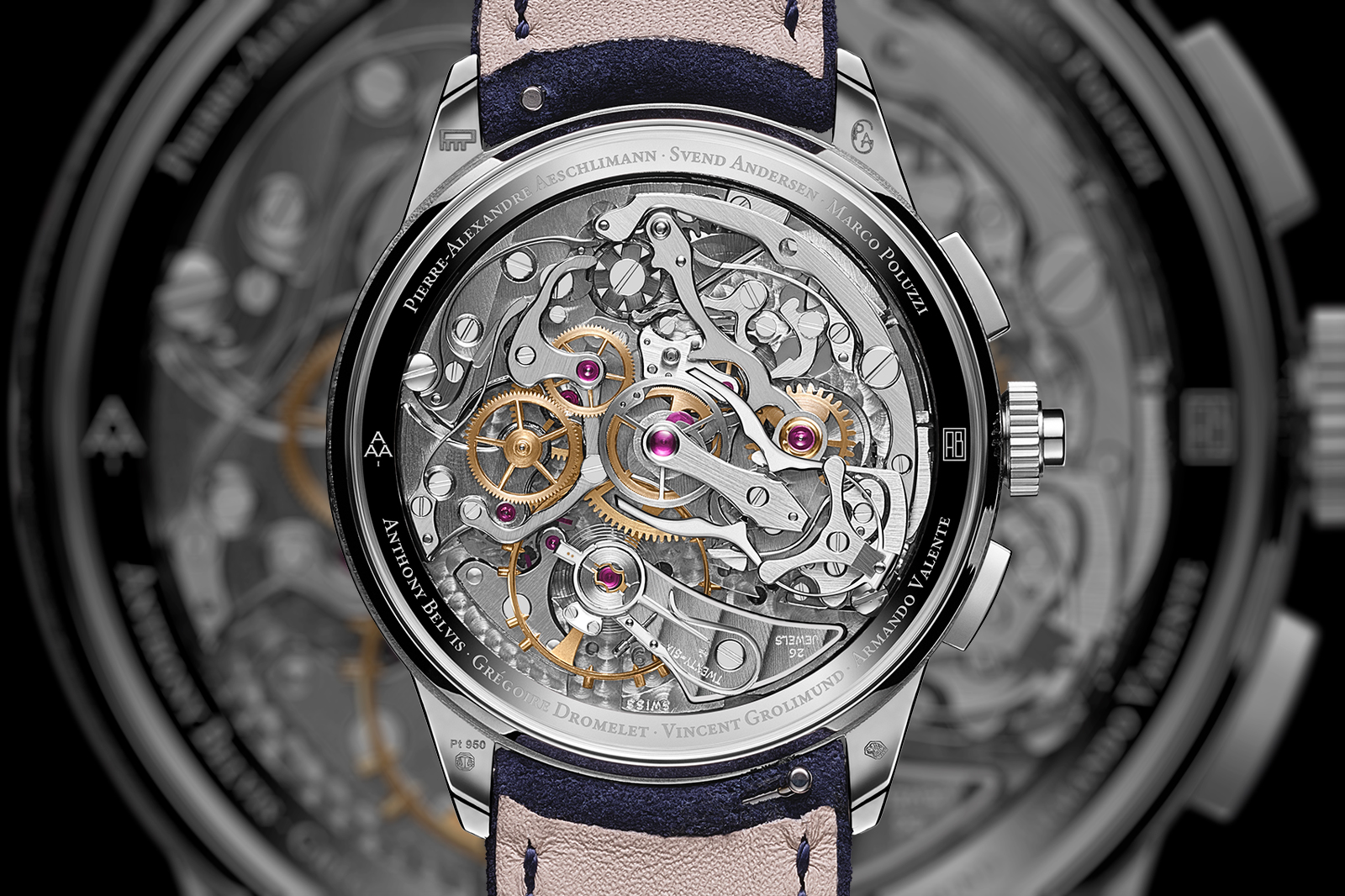
Over on the back is the centrepiece, the Venus 179. Produced in the middle of the 20th century, the Venus 179 is a traditional split-seconds chronograph. In its day the movement was sophisticated and refined, but typically found in high quality but mid-range watches, rather than the finest haute horlogerie.
By modern standards, however, the cal. 179 is high horology, even more so because here it’s been reworked by hand. The movements for the Rattrapante Mondiale are all “new old stock”, decades old but never used in a watch. Each movement was decorated by hand at Andersen’s workshop and the degree of effort shows.
Notably, the rim of the case back is engraved with the names of the watchmakers, engineers, and others involved in the production of the Rattrapante Mondiale, including Pierre-Alexandre Aeschlimann, who acquired Andersen Genève from its founder when the latter retired.
Key facts and price
Andersen Genève Rattrapante Mondiale
Diameter: 38.8 mm
Height: 11.95 mm
Material: Platinum
Crystal: Sapphire
Water resistance: 30 m
Movement: Venus 179, additional world time mechanism
Functions: Hours, minutes, seconds, split-seconds chronograph, and world time
Winding: Manual wind
Frequency: 18,000 beats per hour
Power reserve: 42 hours
Strap: Suede strap with platinum pin buckle
Limited edition: Eight pieces
Availability: From Andersen Genève
Price: CHF184,000 excluding taxes
For more, visit andersen-geneve.ch.
Back to top.