

Hands On: Biver Automatique with Exotic Stone Dials
Slices of eternity.
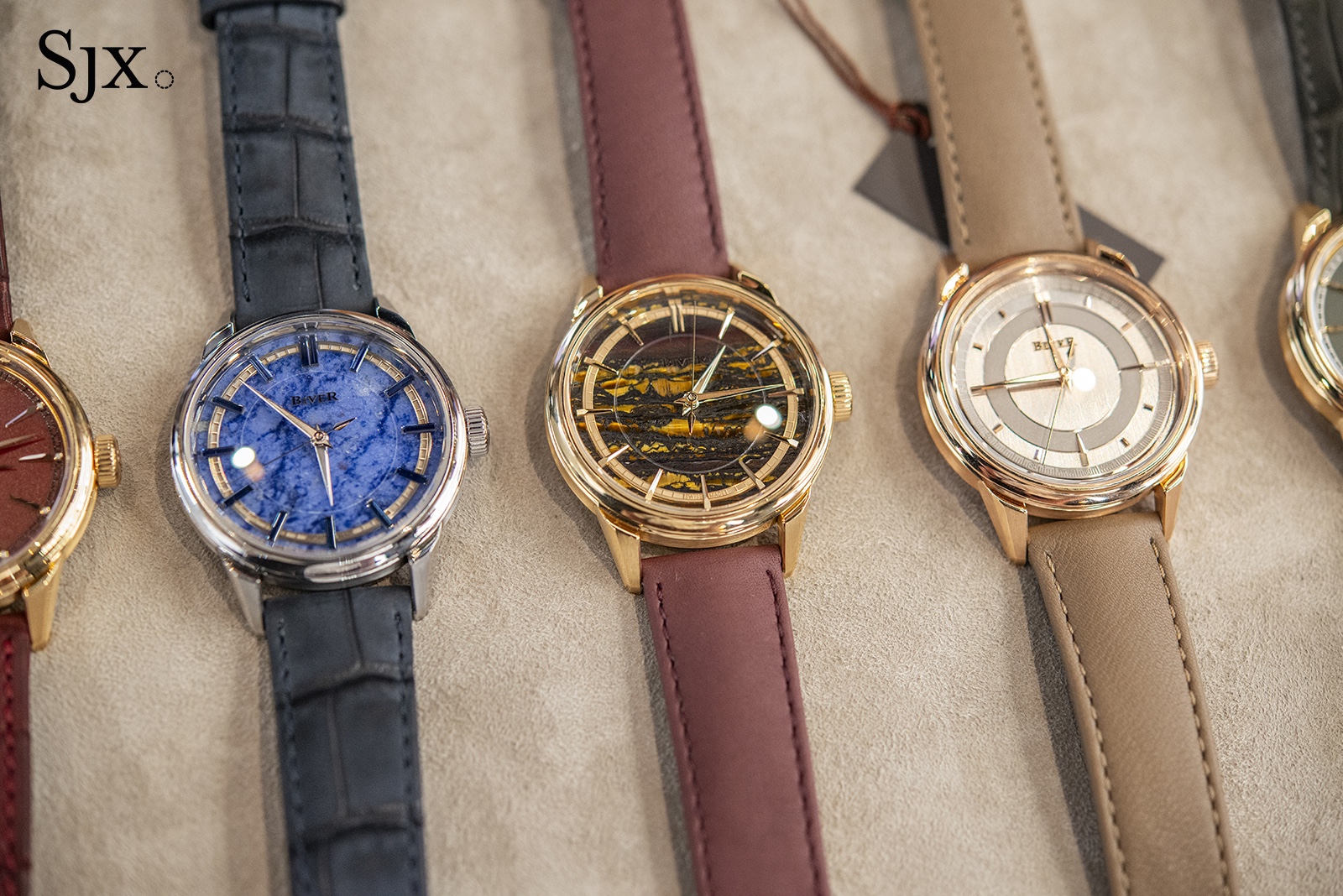
Biver expands its Automatique line with a diverse set of new dials that underscore the brand’s fascination with permanence, ranging from billion-year-old mineral stones to finely executed enamel and traditional guilloché. In a year crowded with stone-dial releases, the latest Automatique models stand out for the coherence of the concept and the quality of execution, offering collectors a mix of exotic materials, artisanal craft, and a technically unusual calibre across a wide price spectrum.
Initial thoughts
Jean-Claude Biver talks a lot about eternity. The slogan for his namesake brand, “eternity has no competition”, is an eloquent expression of what drives the Biver family enterprise, founded with his son Pierre and now led by chief executive James Marks.
Beyond the ability to keep time, mechanical watches appeal to enthusiasts precisely because they seem to exist outside of time. Few modern products are crafted from such noble or enduring materials, and for many people a mechanical watch is among the most lasting man-made objects they will ever encounter.
Biver’s obsession with eternity is clear in the products themselves. In the case of the Automatique, the brand has chosen to use especially long-lasting materials like gold for the movement plates and bridges, going so far as to used a high-palladium gold alloy that will not tarnish over time. The overly robust cases are another clue as to the motivations of the people behind the Biver brand. Water resistant to 80 m, these cases reduce the likelihood that moisture will ever have a chance to damage the dial or movement.
This is why, in a year when the trend for mineral-stone dials may have peaked, the selection from Biver feels especially on-brand rather than opportunistic. By using natural materials that in some cases are billions of years old, the brand is framing its ambitions in terms of the only thing that is truly eternal: nature itself.
Pretty but pricey
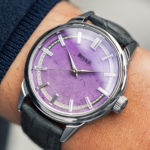
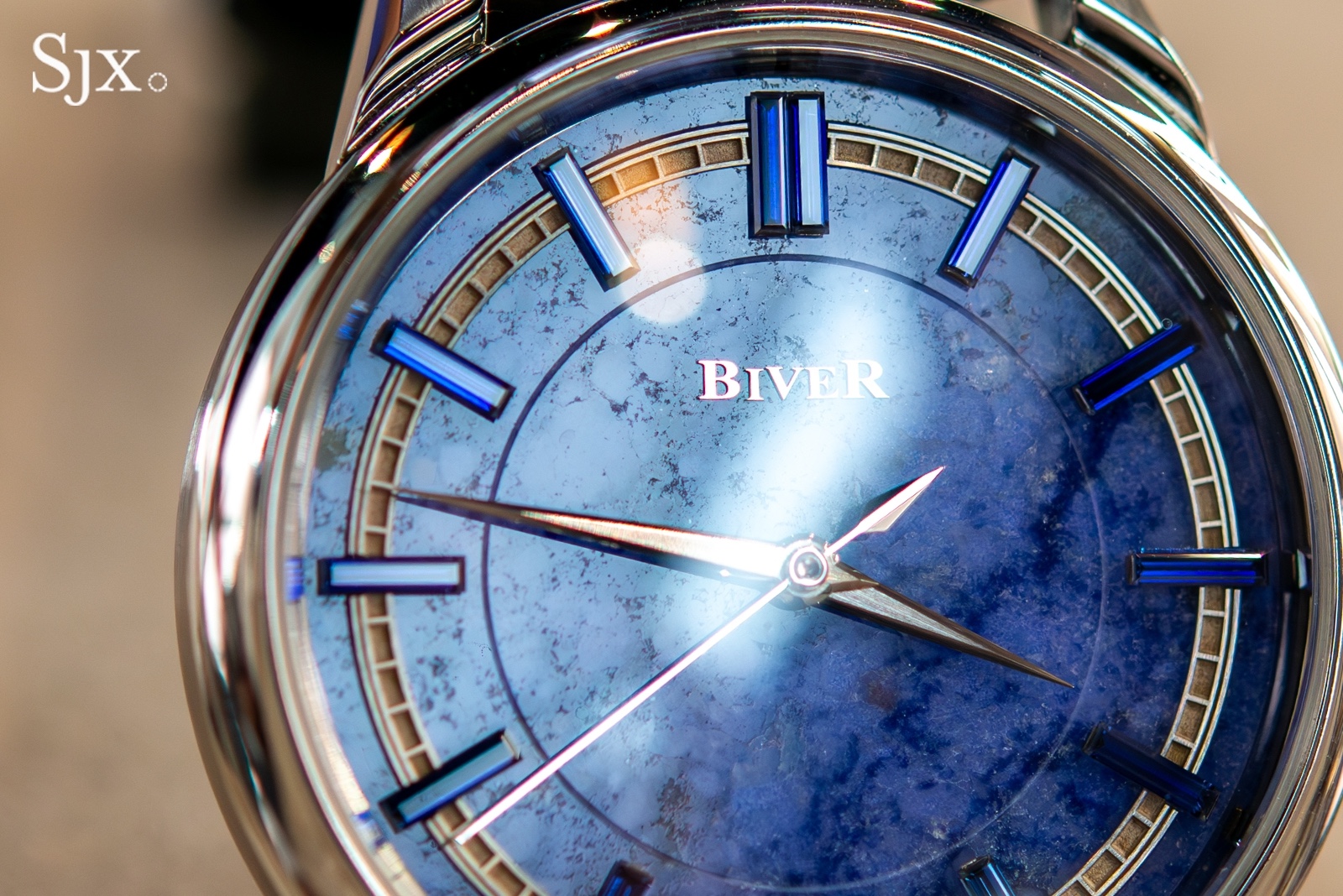
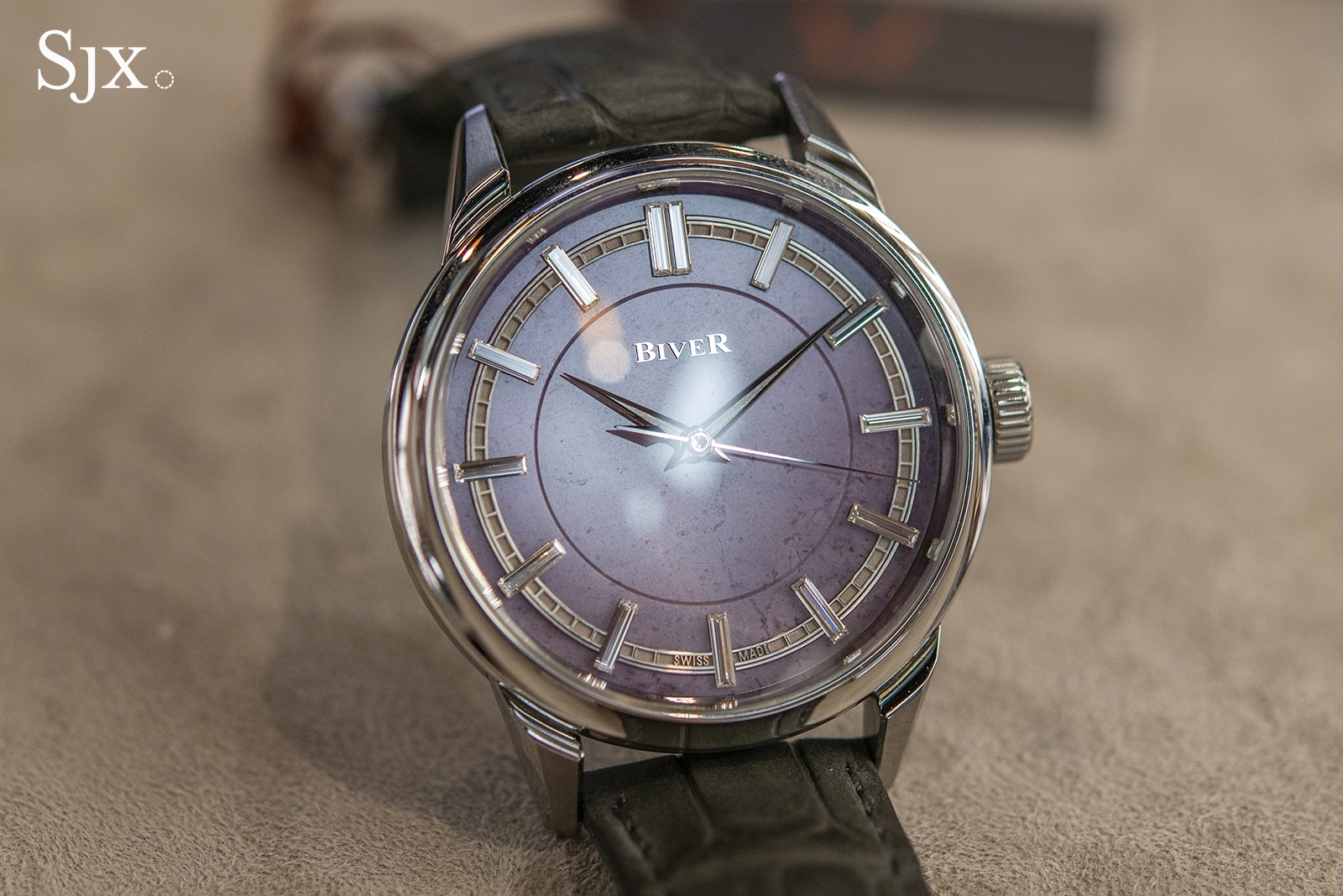
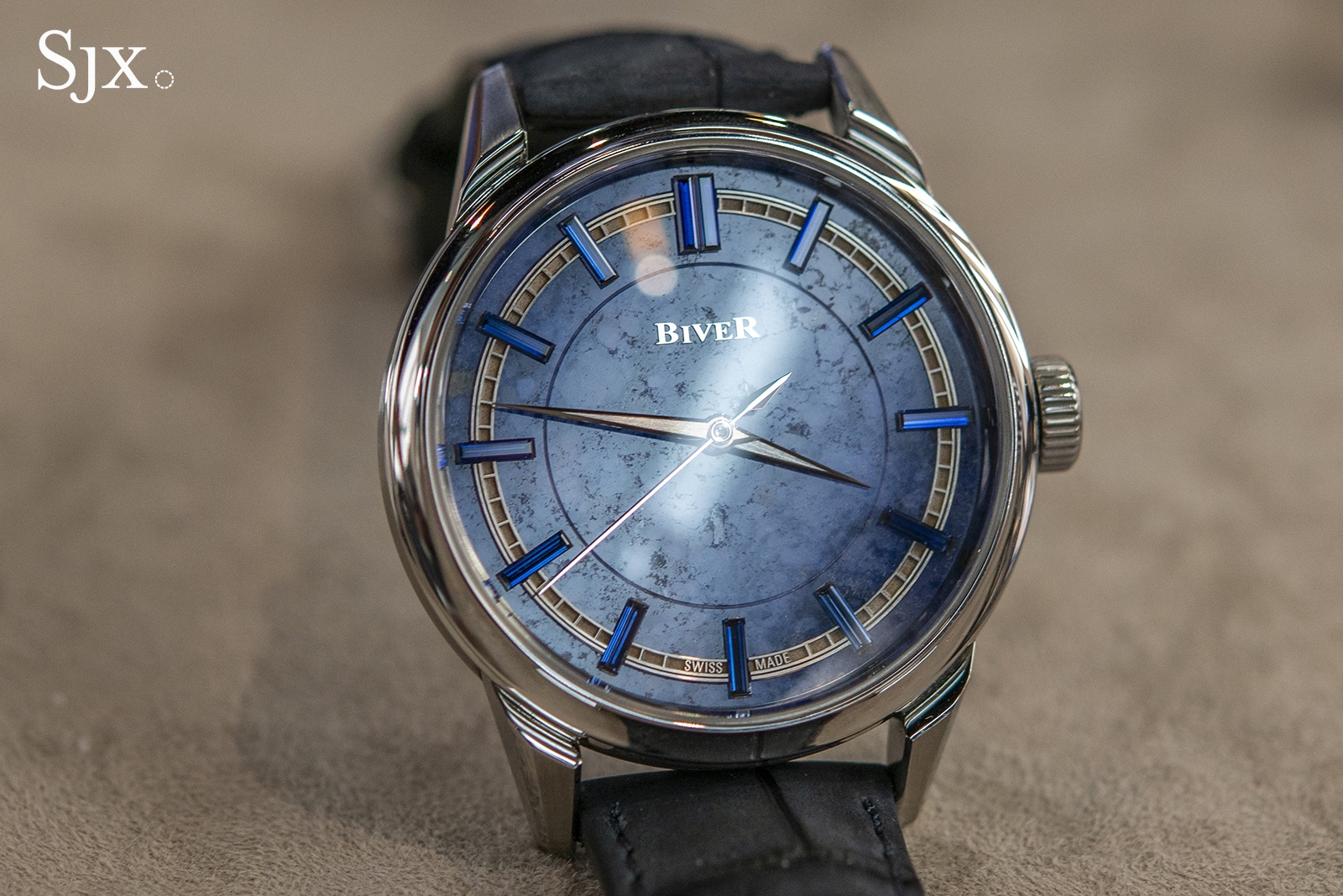
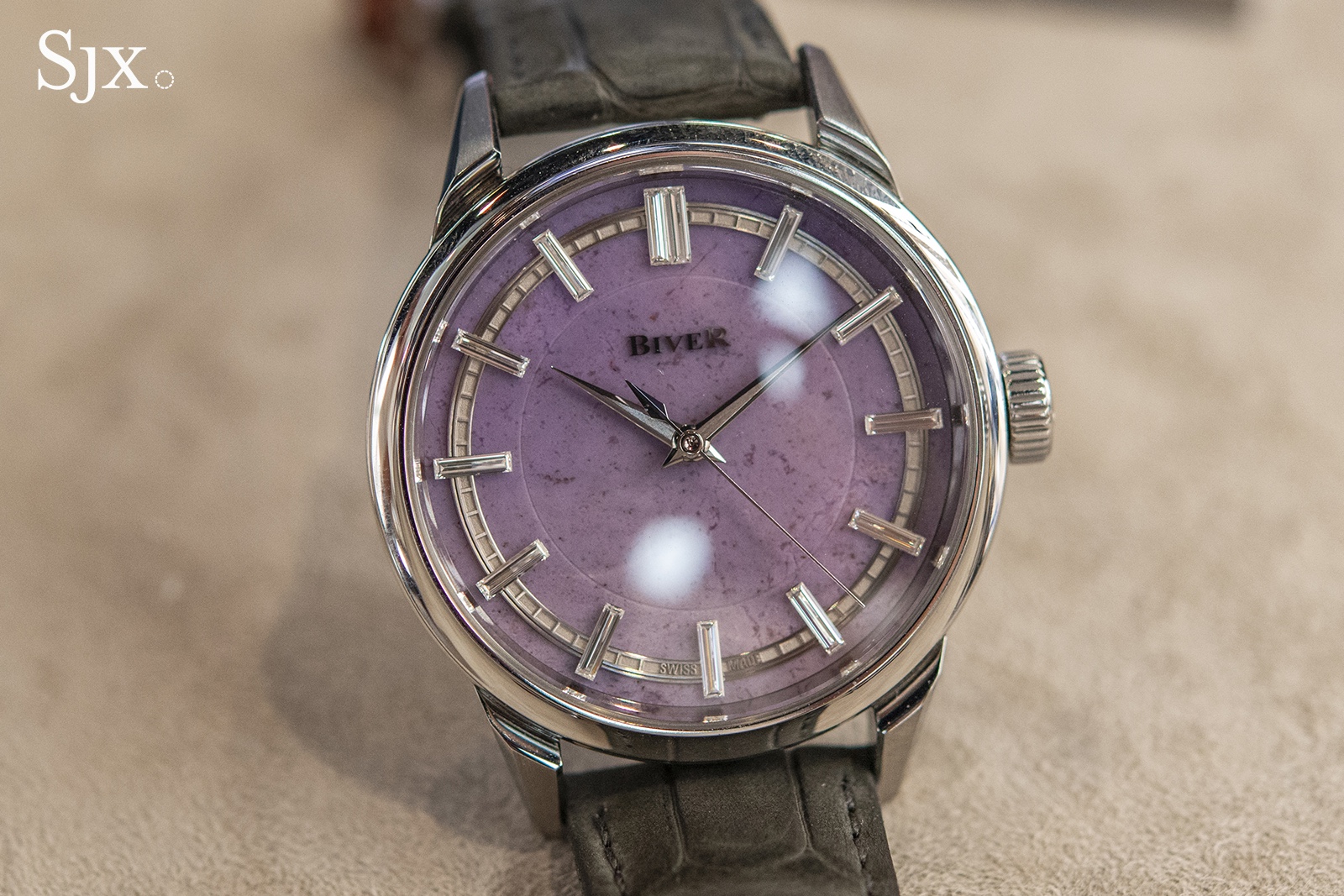
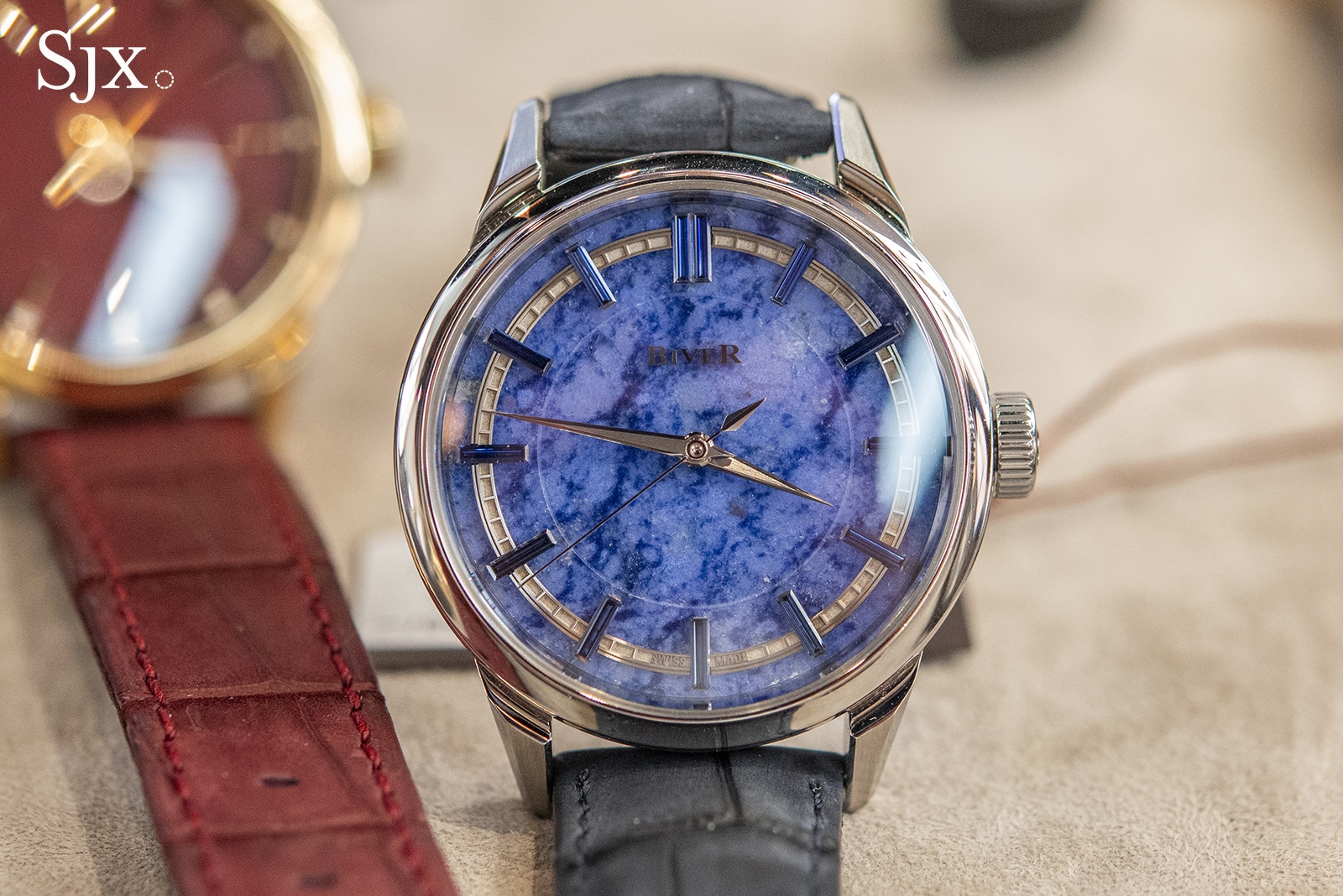
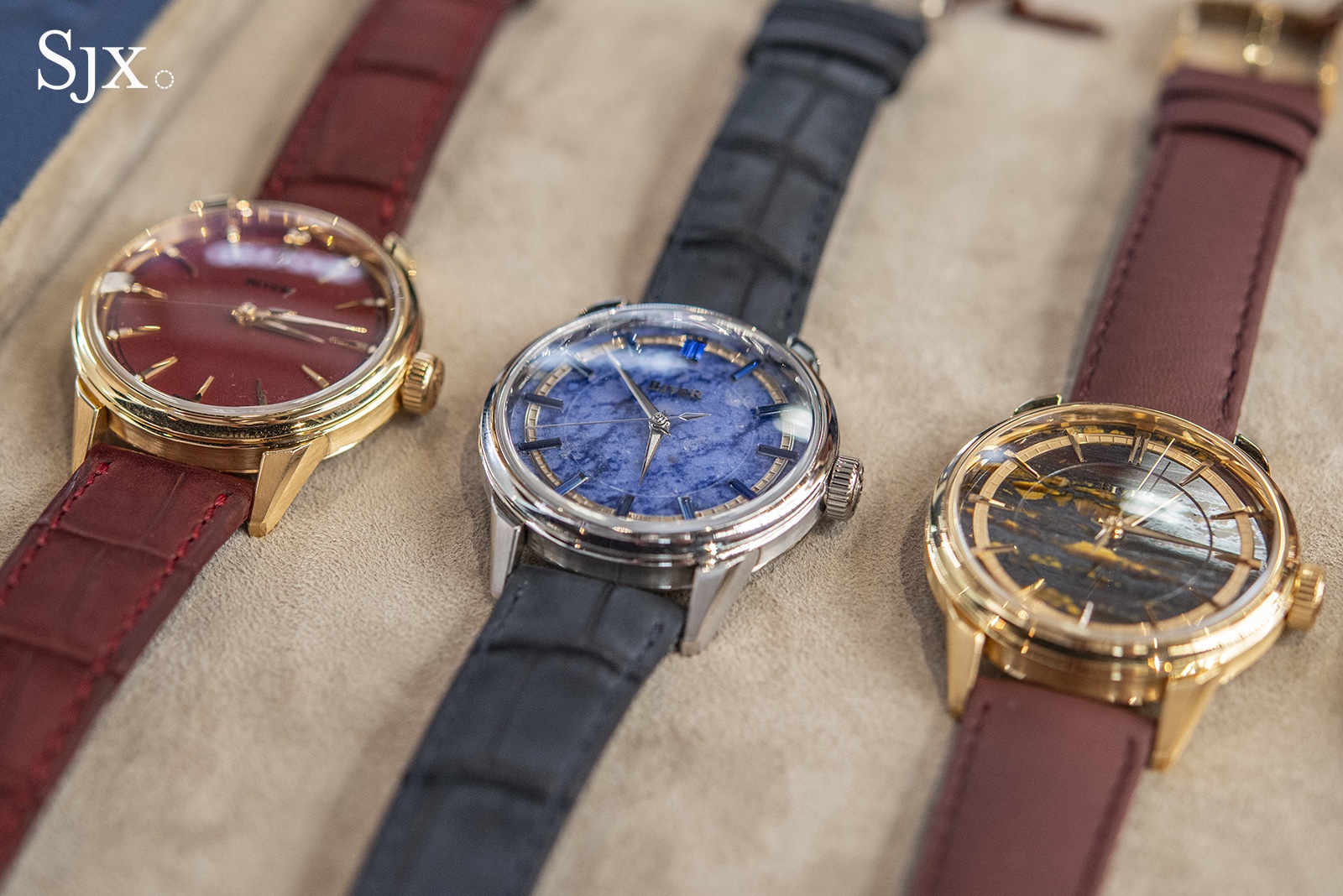
The Automatique exhibits the obsession with eternity in a variety of materials, including quartzite, lavender jade, mahogany obsidian, and tiger iron. The first two stones have the option of embellishment with baguette-cut diamond indices, while the quartzite dial offers the further option of matching blue sapphires.
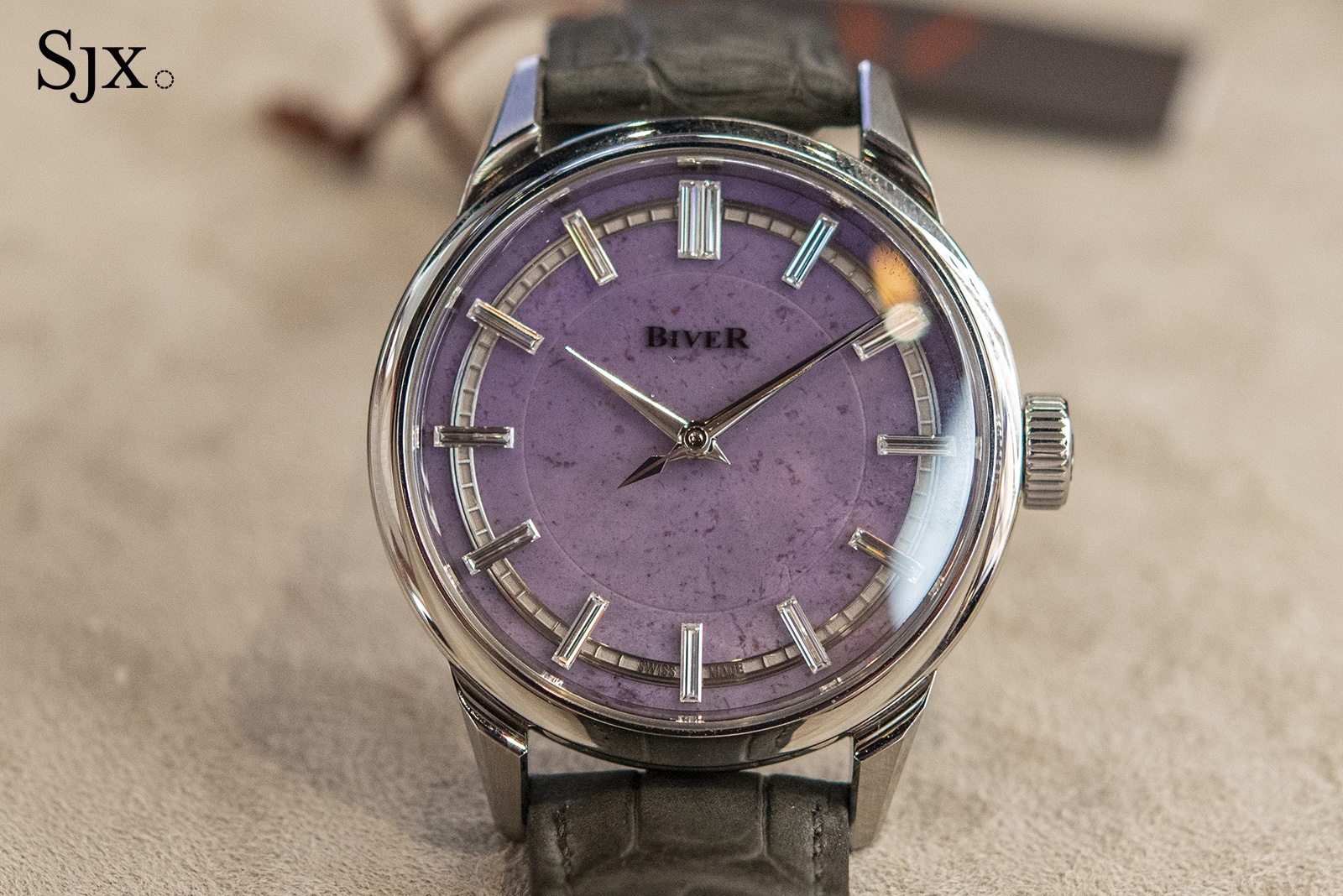
Setting aside the steep cost, which for the blue sapphire model is 50% higher than the entry level Automatique, the gem-set varieties are genuinely striking. The first observation is the size of the stones; they are visibly larger than those commonly used. They are also high-quality gems; the diamonds, for example, are uniformly VVS1 clarity.
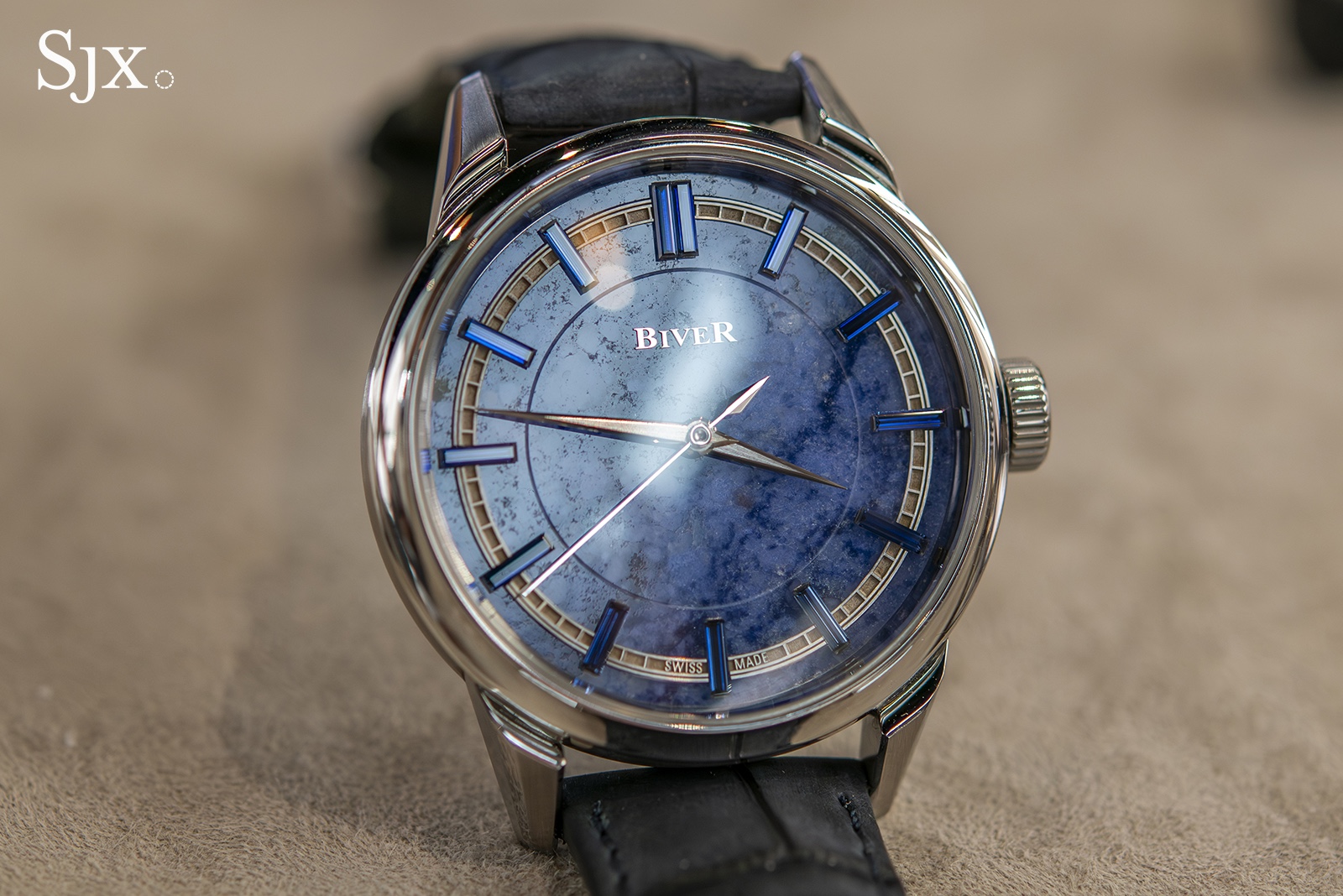
Beyond the timeless nature of the mineral stone dials themselves, the elongated baguettes are yet another expression of eternity. Too often, gem-set watches come across as a shortcut to higher prices; to some extent that’s simply a fact. But paired with ageless stone dials, the diamond and sapphire markers provide a degree of conceptual harmony that is often missing from the genre.
Philosophy and cohesiveness aside, most buyers will likely be moved simply by the look. Beauty is subjective, but the palette of colours and complementary textures should be widely appealing.

A geologic time scale
Earth may be 4.5 billion years old, but most of the surface is far younger because our planet is constantly reshaped by tectonic and volcanic activity. Only a few places expose rocks that come close to Earth’s true age.
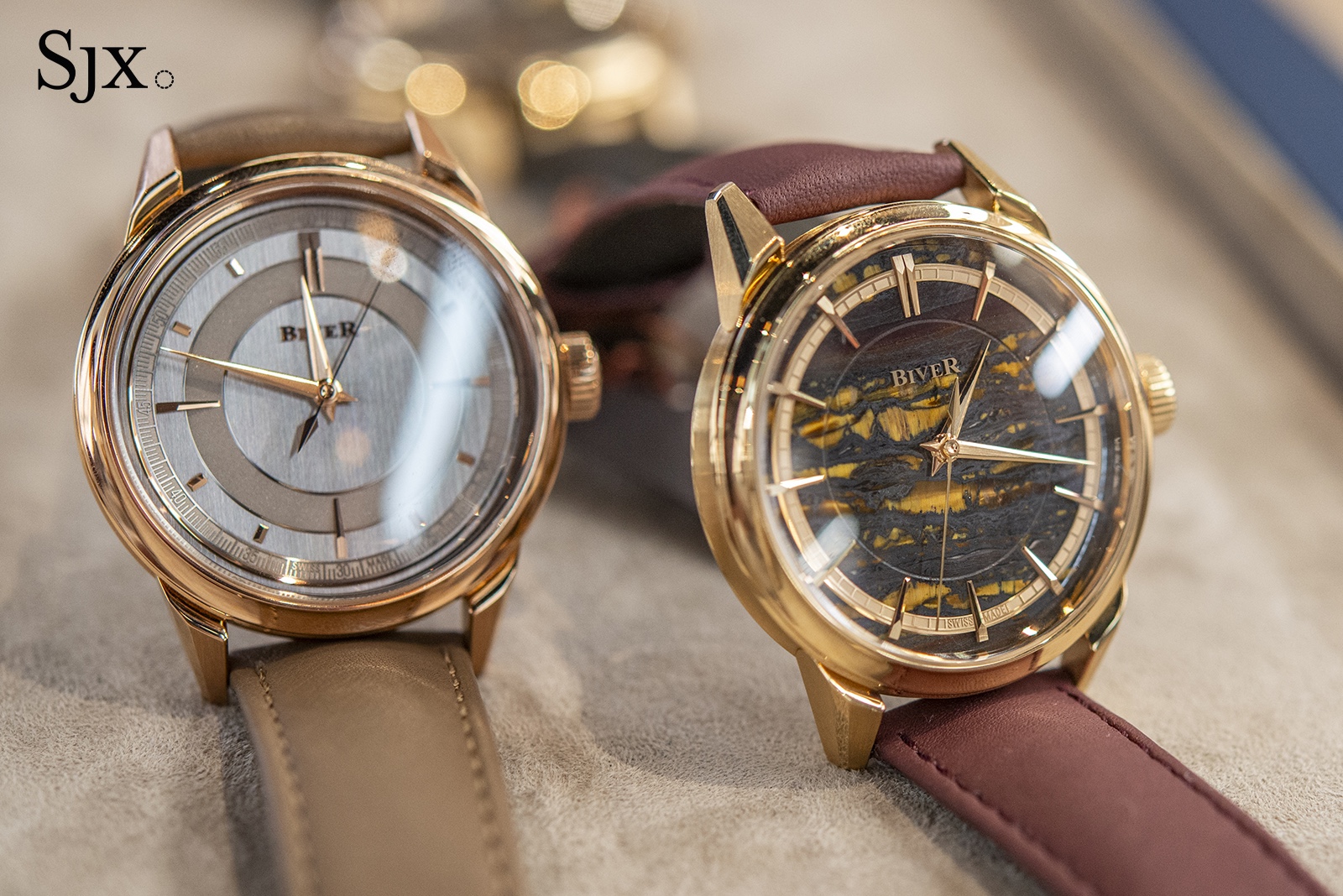
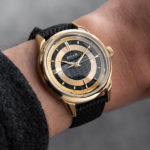
The two-tone model (left) and the dial made of tiger iron (right).
One of these rock formations is located in Western Australia, and it is here that a rare natural stone called tiger iron can be found. Called oeil de fer in French, tiger iron formed roughly two billion years ago, and is composed of tiger’s eye, red jasper, and hematite. These minerals imbue the stone with a fiery polychromatic look that is unlike that of any other stone found in nature.
Tiger iron has been used in watchmaking before, but it’s far less common than tiger’s eye. The extreme age of this material puts a lot of things in perspective, and its use in the Automatique, a watch that strives for the eternal, seems appropriate.
Eternal enamel
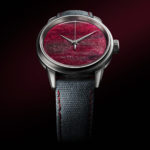
While the stone dials have grabbed the headlines, the Automatique also debuts in red and grey enamel. These enamel dials are made at Émailleurs de la Cité (EC) in the heart of Geneva’s old town. Part of Rexhep Rexhepi’s growing empire, EC employs a small team of artisans that produce enamel dials of extraordinary quality. While a few brands have the resources to produce comparable quality in-house, this is the exception rather than the rule, and outsourcing this type of work is almost always the right choice.
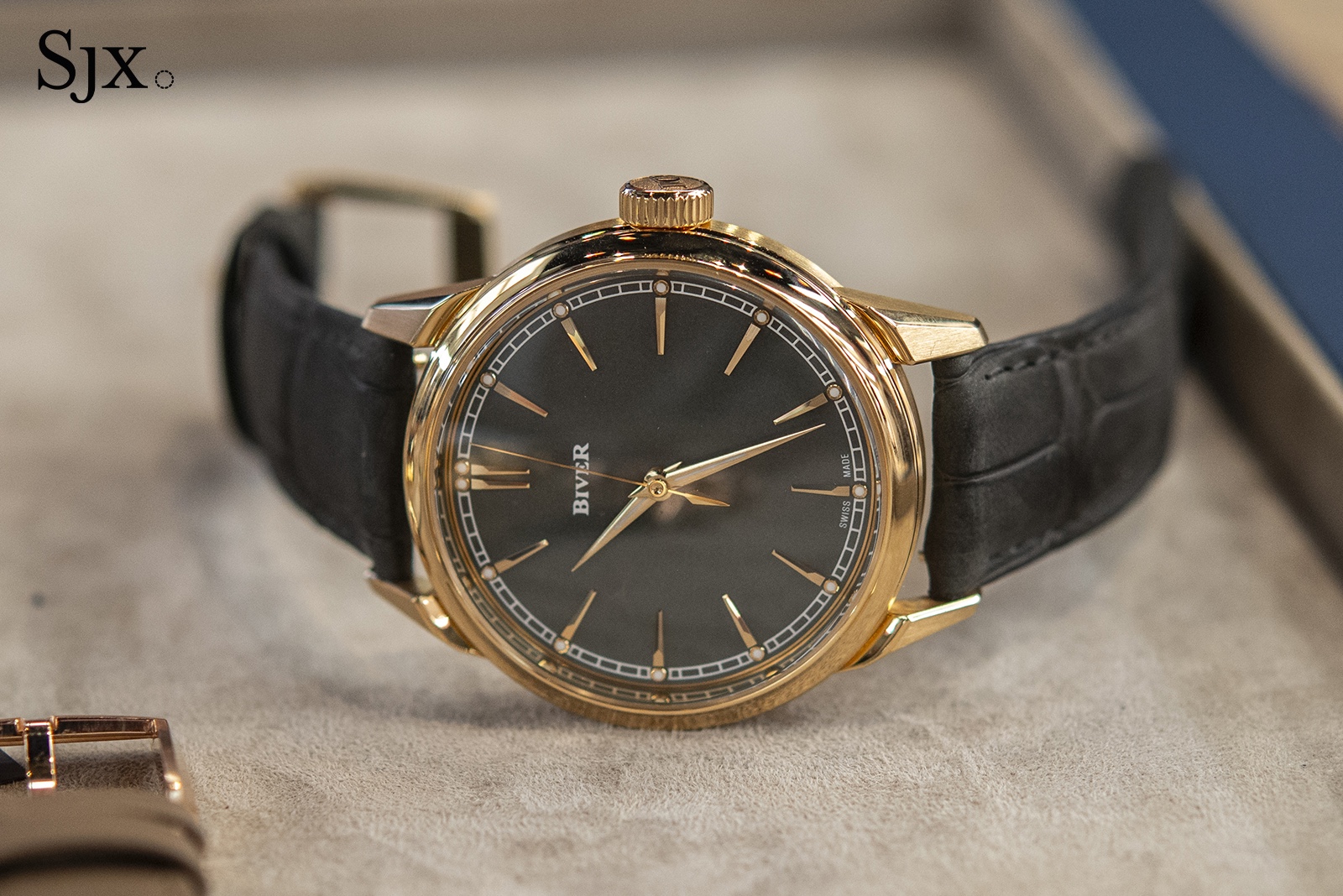
As a house style, EC produces dials that are almost perfectly flat and free of bubbles and defects. While some makers favour a more rustic style with more variation from one dial to the next, EC’s work stands out for its almost clinical perfection. This is all the more impressive considering each dial is made individually by hand.
Furthermore, the relationship between EC and Biver makes a lot of sense because the professional lives of their founders intersected momentarily when BNB Concept was acquired by Hublot.
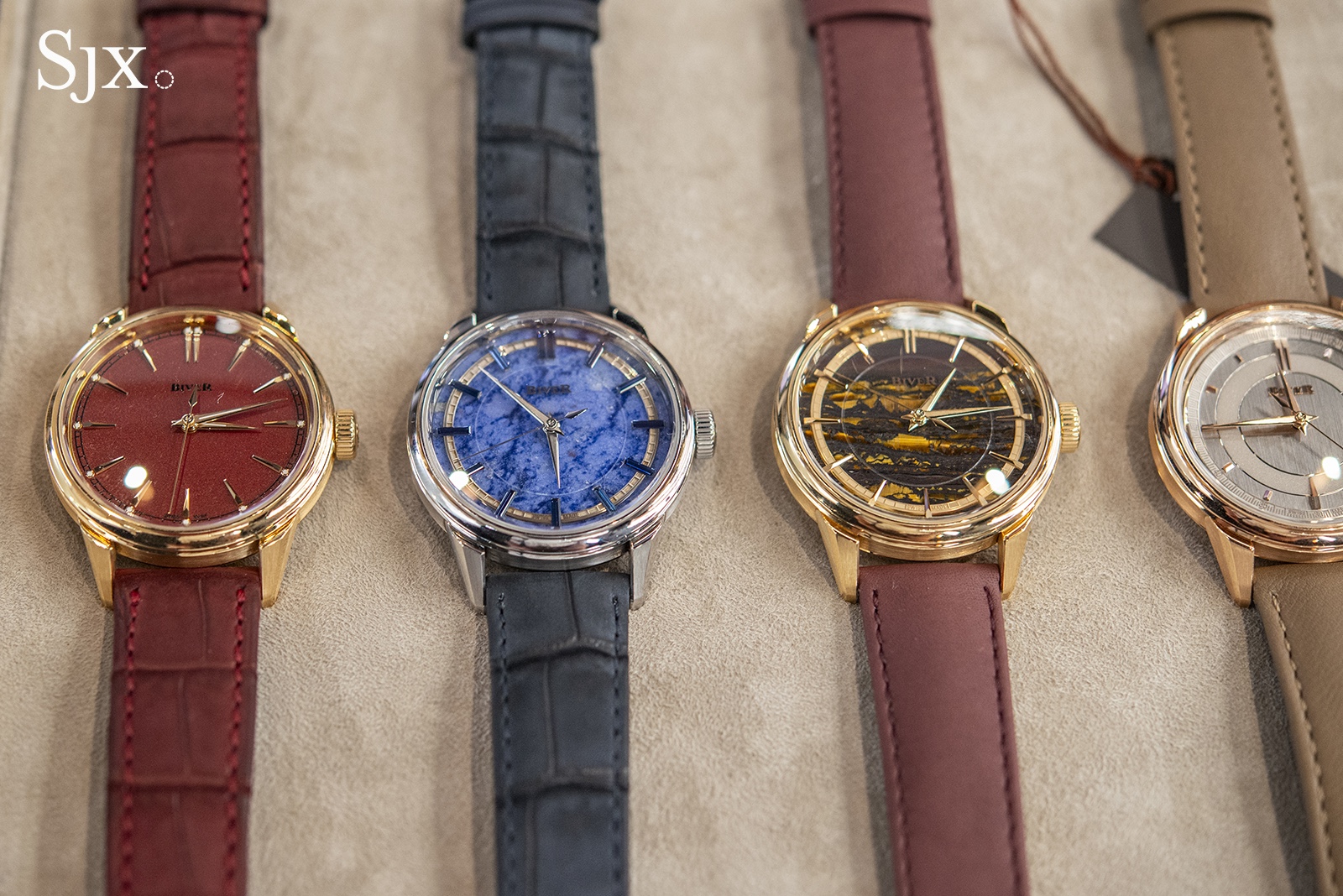
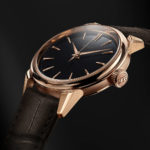
For the Automatique, Biver opted for a muted matte finish, rather than the mirror-like gloss typical of the genre. This finish gives the dials a low-key look, but still offers the longevity for which enamel is prized. The enamel dials are also notable for another reason: they are the first Automatique models with lume.
The vintage-inspired applied lume plots, combined with a thin strip of Super-LumiNova on each of the hands, give these editions a purposeful, instrument-like look that is intellectually cohesive with the zero-reset functionality of the JCB-003 movement.
Point of entry
For those looking for a more affordable entry point to the brand, Biver has also introduced two variants with traditional metallic dials from their friends at Comblémine, the dial maker owned by Kari Voutilainen that supplies a growing number of independent watchmakers.
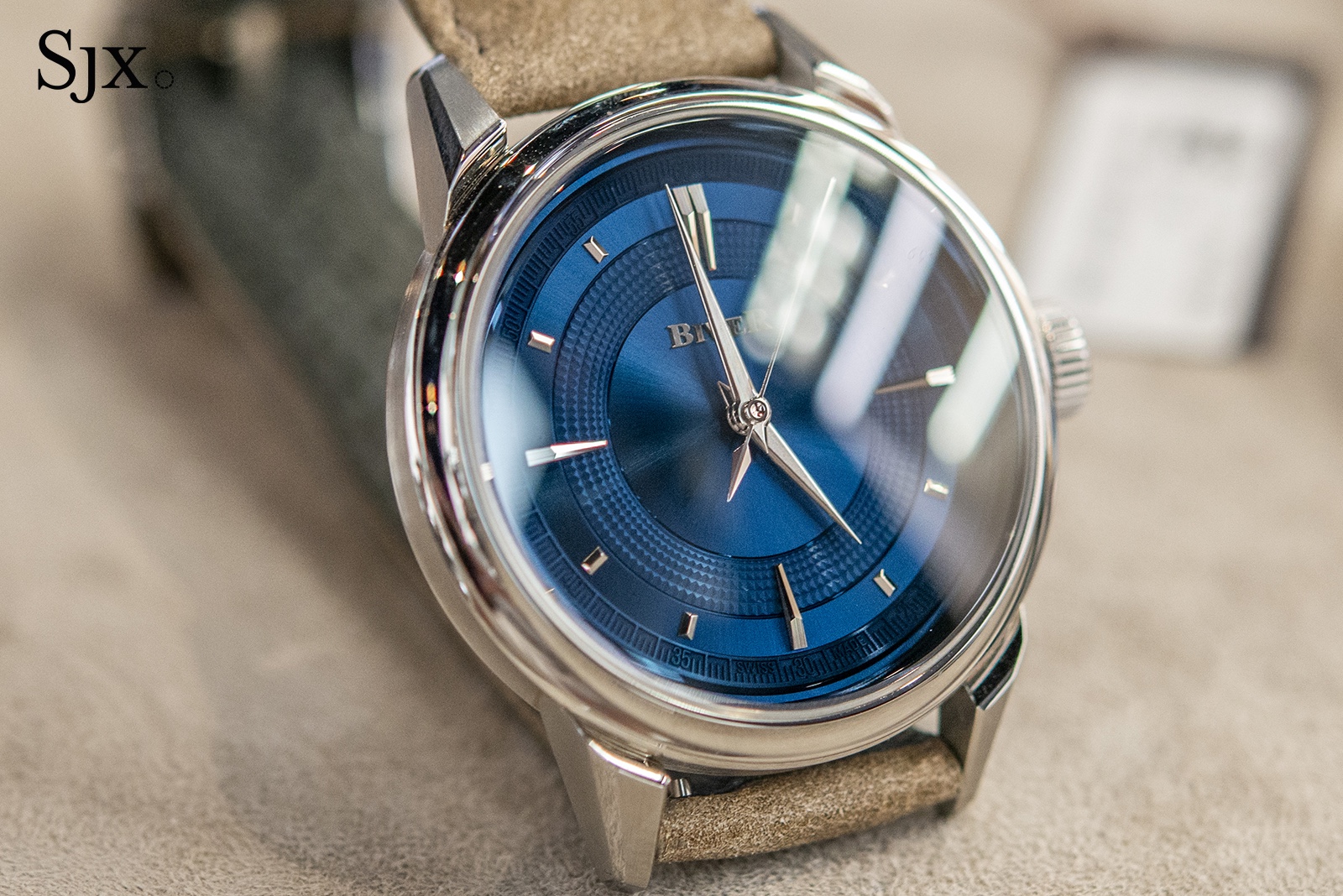
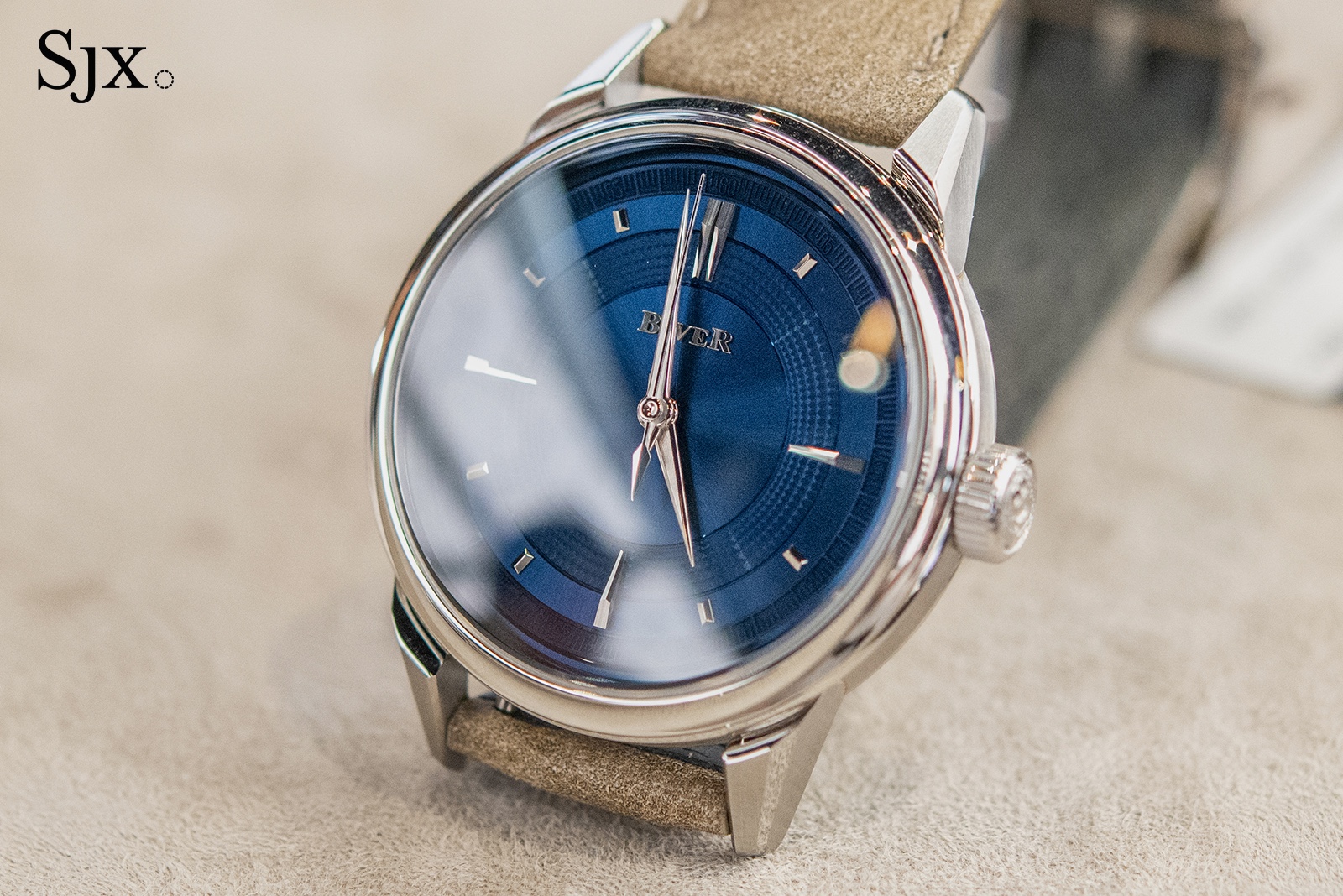
Although these dials are less showy than those of their counterparts, they exhibit a lot of nuance up close and the alternating textures give the dials a dynamic look in shifting light. The blue Clous de Paris dial, for example, looks nearly black at some angles, when only the polished edges of the white gold dial markers are visible.
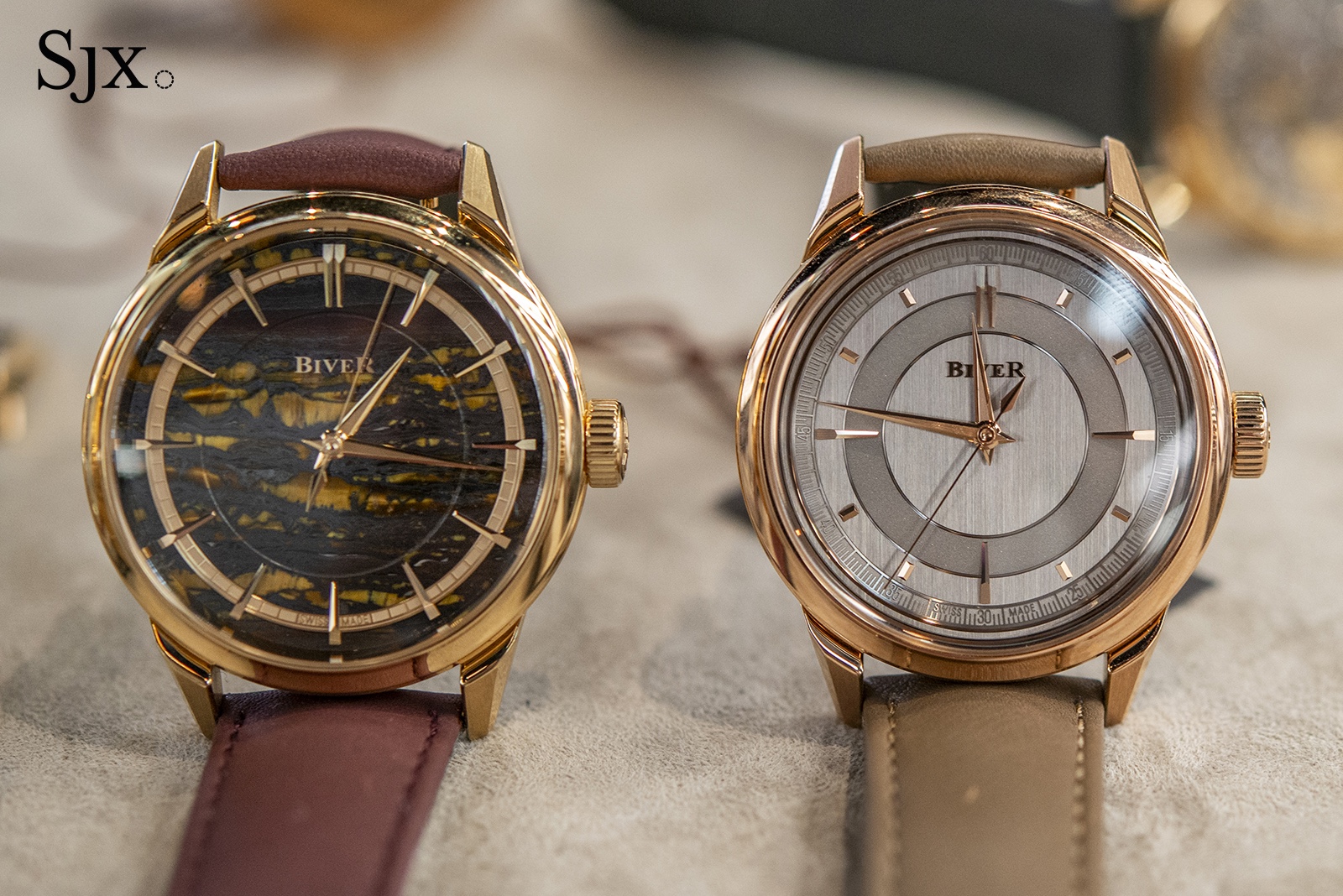
The two-tone model features an even simpler textural palette, with a matte-finished chapter ring that contrasts with concentric vertically brushed sections. Among this slate of new releases, the two-tone model is the one that most closely matches earlier references of the Automatique in terms of concept.
When time stands still
We’ve covered the JCB-003 movement in detail in the past, but it’s worth a brief examination of the unusual movement that powers the Automatique. Developed specifically for the Automatique by Dubois Dépraz, the movement components are fabricated off-site but finished, assembled, and adjusted in the Biver manufacture.
In the field of independent watchmaking, there’s a small handful of movements that underpins much of what gets created, especially when it comes to relatively simple time-only calibres. Against this backdrop, the JCB-003 stands out for its unusual architecture, combining both a micro-rotor and a grande sonnerie-style winding click. It also features a return-to-zero system for the seconds hand that activates when the crown is pulled, making it easy to set the time to a reference clock. The tactile action of this system is lively and satisfying.
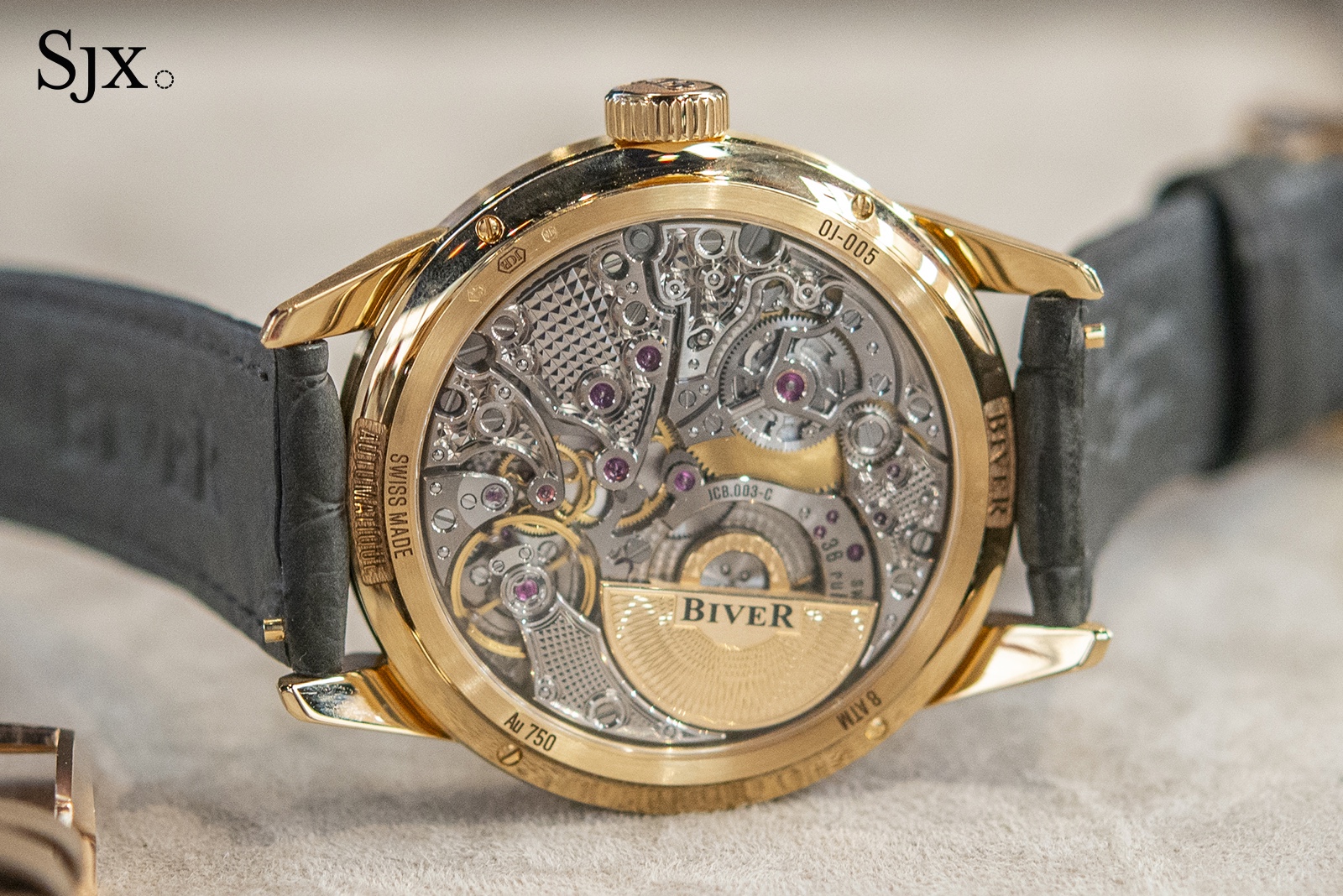
The finishing is also a novel, maximalist take on haute horlogerie decoration, featuring Clous de Paris guilloché cut directly into the white gold bridges. I initially found the effect a little too ornate; it felt as if the brand was trying too hard to to be different. Guilloché on such a small surface is very challenging, and any slip means the bridge must be scrapped — its gold returned to the supplier for melting and reuse — tying up both labour and working capital. But over time the design has grown on me, and my view has shifted towards the favourable. Even the prototype movements re-used for these demonstration pieces reward close inspection.
The effort lavished on finishing also serves as a message to watchmakers who may encounter this calibre in the distant future. Any watchmaker who opens this movement decades from now should recognise the intention behind it, and will hopefully reply by giving it a high standard of care.
Concluding thoughts
I’ve lost count of the number of stone dials that were introduced this year, but the Automatique is memorable thanks to the quality of execution and exotic minerals. It’s unclear how long the trend for stone dials will persist; it may have even peaked in 2025. Regardless, the appeal of the Automatique should remain durable since it’s rooted in tangible product quality and a cohesive expression of eternity.
Key facts and price
Biver Automatique
Diameter: 39 mm
Height: 10 mm
Material: Platinum, 18k rose gold, or 18k yellow gold
Crystal: Sapphire
Water resistance: 80 m
Movement: JCB-003-C
Functions: Hours, minutes, and seconds
Winding: Automatic
Frequency: 25,200 beats per hour (3.5 Hz)
Power reserve: 65 hours
Strap: Leather with 18k gold buckle, or five-row Biver bracelet available at additional cost
Limited edition: No, but limited quantities
Availability: Direct from Biver or at authorised retailers
Price:
Two-Tone: CHF80,000
Clous de Paris: CHF85,000
Mahogany obsidian or oeil de fer: CHF89,000
Quartzite or lavender jade: CHF95,000
Lavender jade with diamonds: CHF105,000
Quartzite with diamonds: CHF110,000
Quartzite with sapphires: CHF125,000
Enamel: Upon request
All prices exclude taxes
For more, visit jcbiver.com.
Back to top.